A steel chassis has been mandatory in factory-built homes since 1976, but >90% of those homes never move. Section 301 of the ROAD Act ends the requirement.
Many people counted the month of July in World Cup matches. Now that the month is ending, most have gone back to measuring the summer the other way, in heat days and fire events: the Canadian fires that threatened the air at the final in New Jersey on the 19th, the ones Spain lived through while we were there, even the small one near Pleasanton (called Little Fire) that we watched from the window while the plane bringing us home from Europe circled the Bay Area, waiting to land. Ninety percent contained now.
Unfortunately, the World Cup wasn’t the only global event this July. In the last 24 hours alone, more than 50 wildfires have been confirmed in Spain, down from 60 the day before; wildfires are also spreading throughout the Americas, from Northern Canada and the Pacific Northwest to the subtropical areas of Southern Brazil (it’s winter in the South Cone, so fires are less prevalent there now). Many of these fires are seasonal and occur every year, though wildfires are now larger and more widespread.
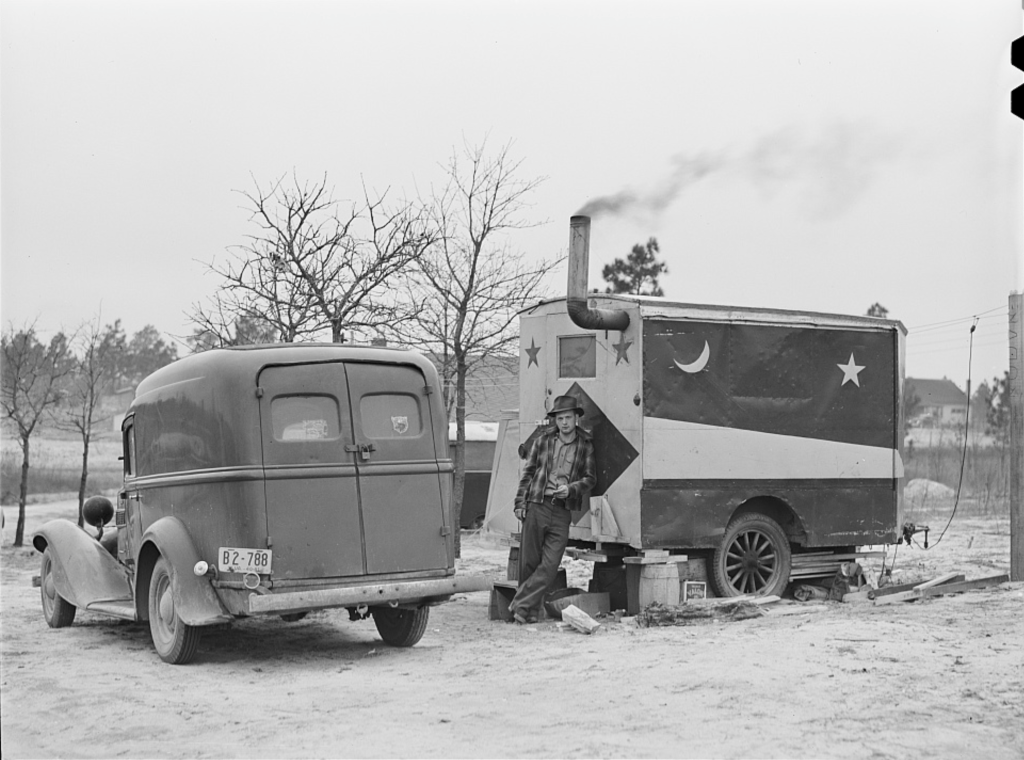
The Canadian smoke was the one nobody had planned for, and many only noticed because air quality in New York and New Jersey was so bad a mere two days before the World Cup final, before localized storms improved the situation. Close to nine hundred fires were burning up there that week, and the haze reached at least eighteen states, from Michigan to New Hampshire to Virginia.
Summer and HEPA filters
Toronto had the worst air in the world on the fifteenth and shut down its FanFest, canceling the England–Argentina watch party. New York handed out free K-95 masks, just in case. Philadelphia declared a Code Purple emergency day. Spain trained in it anyway, at Gotham FC’s facility north of the stadium.
Then a thunderstorm crossed the region on Saturday afternoon, and by Sunday the air was merely moderate, and by kickoff nobody was talking about smoke at all (which is its own small lesson in how we handle these things). The stadium in East Rutherford, renamed New York New Jersey Stadium for the tournament, is open-air and has neither a roof nor air conditioning. It got away with it this time. Many stadiums in the United States are already enclosed and air-conditioned due to warm weather; perhaps, wildfires will prompt the open-air ones to reconsider.
On the day Spain and Portugal played their round of sixteen, we left the Bay Area and flew to Barcelona to visit relatives and travel a bit through Spain, France, and a couple of spots in Scandinavia. We came back yesterday, five days after the competition culminated in a win our children celebrated as theirs.
Kirsten, our youngest, and I watched the final at our country house in the Penedès, an hour south of Barcelona. Our two daughters went to a gathering in Paris and sent pictures from the metro on the way there, faces painted with the Spanish and the Catalan flags, showing rather more enthusiasm than the three of us at home.
Now the tournament is over, and Spain has gone back to its everyday life, which this week means fire. The ones in Almería and Girona are contained. The ones west of Madrid are not. On Friday the three separate fires burning in the Comunidad de Madrid (threatening residential areas near Villa del Prado, San Martín de Valdeiglesias, Almorox) were merged into a single incident, the Sierra Oeste fire, and the government declared a national emergency for Madrid and for the province of Ávila.
How to deal with a new type of summer
Tens of thousands of people have been evacuated or confined across the two territories; the figure kept climbing through the day, and I will not pretend to a number that was accurate for one afternoon. Isabel Díaz Ayuso, the conservative president of the Community of Madrid, the regional government, said the Madrid burn might already have doubled to twelve thousand hectares, while noting there was still no closed perimeter.
As many shared dystopian, Mars-sky-style images of dim light and a heavy smoke veil surrounding the capital, ES-Alert messages went out ordering Fresnedillas de la Oliva and Robledo de Chavela to evacuate and Navalagamella to shelter in place. The wind is the whole problem, as it always is in such situations. Many Angelenos can attest.
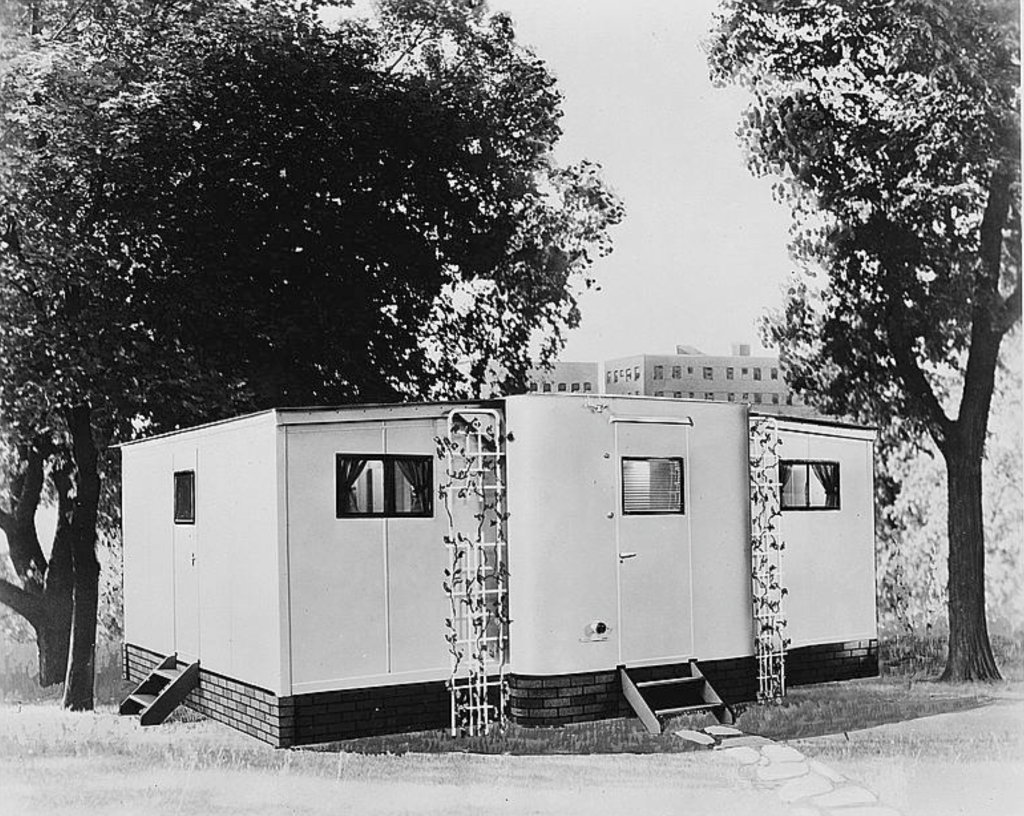
None of this is separable from the heat that has preceded this dire fire season. For example, Barcelona recorded its hottest temperature in 112 years on the ninth of July. Then it cooled down a bit, but temperatures stayed high across the Iberian Peninsula.
By July twenty-first, when we traveled to Paris to join our daughters before flying back to San Francisco, Spain’s meteorological agency, AEMET, had a bulletin out (number 23 of the year, which tells you something all by itself) warning that the southeastern third of the country, the Guadalquivir, the Ebro, the Pyrenean valleys, inland Mallorca, would pass forty-five degrees.
Copernicus had already counted three heatwaves in six weeks and called the relentless succession a hallmark of a warming climate, which is the sort of sentence that used to appear at the back of the paper and now appears in the weather. In Galicia, where my family is from and where the Atlantic is supposed to be the whole point, the health authority went to red alert above forty.
So: heat, a win, and then fire, on both continents. That was the shape of the summer, and I was still carrying it when I got home and started catching up on what had happened in the country I actually live in while I was gone.
What arrives while you are away
Another thing happened this July that is especially relevant to our site and to Kirsten’s channel, given our focus on housing: the United States finally passed a comprehensive, ambitious housing law that could change things for many people.
We aren’t talking about a bill, or a proposal, or a framework, but a law: nearly four hundred pages of it. The Senate cleared the 21st Century ROAD to Housing Act eighty-five to five on June 22nd. The House followed the next day, three hundred fifty-eight to thirty-two. And then, on July 11th, it became law without a presidential signature at all: Congress stayed in session, the ten-day constitutional clock ran out, and the thing simply became Public Law 119-101 the way water becomes ice, without anyone in particular deciding.
Interestingly, the most complete analysis I’ve read about ROAD was written within bike distance from our house by the Terner Center at Berkeley, which is either a coincidence or the reason I read them first.
The Terner Center calls it the most significant housing reform package Congress has passed in a generation. David Garcia and Julie Aguilar, who wrote that assessment, were also careful to say what it is not. Individually, they wrote, the provisions are mostly technical or narrowly tailored, and none of them alone changes the game. The law appropriates nothing for demand-side programs. It does not touch the staffing cuts at HUD. It is a landmark that is also, in a great many places, a memo.
But somewhere in the middle of those four hundred pages, in Section 301, Congress changed a single word in the federal definition of a house. And that word is the reason I am writing this instead of writing about the fires.
Why we keep coming back to the factory-built house
Kirsten and I have been filming small, budget, unconventional, and self-built houses for going on twenty years, and in that time I have watched the American conversation about housing circle the manufactured home the way you circle a relative you are not sure you want at dinner.
For one, unlike in Europe or other parts of the world, manufactured homes make up a sizeable share of America’s entry-level housing market: they house millions of Americans and, historically, accounted for a much larger share of entry-level housing, peaking at 25% in the 1990s.
There has been enough coverage (and enthusiasm) for other entry-level housing phenomena in recent years, among them the growth of tiny homes on wheels due to their lack of stigma. There has also been enormous enthusiasm for architect-designed prefab small homes, given the market promise of secondary homes in backyards due to favorable legislation.
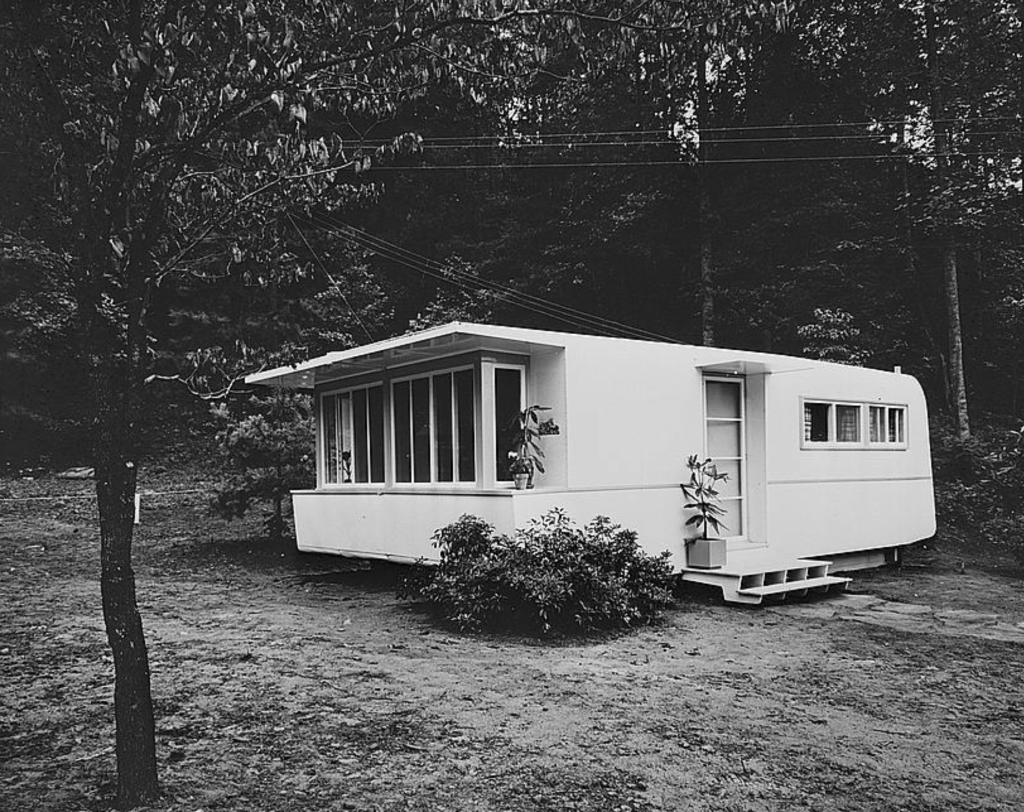
But, unlike those two still-marginal markets, there is the actual, unglamorous, load-bearing answer, which has been sitting in the middle of the room the entire time, housing people, and which nobody wants to be photographed with: manufactured homes.
The numbers are not ambiguous. The American Housing Survey counts about 7.2 million occupied manufactured homes in the United States, roughly 5.4 percent of all occupied housing. Analysis of Census data puts the number of Americans living in them at more than twenty-two million, and manufactured homes at about one in every ten new homes built in the country each year.
A bright future for manufactured homes?
For all the lack of glamour, shipments have been recovering faster than site-built construction: 103,300 units in 2024, running at an annualized rate near 106,000 by the middle of 2025. The Housing Assistance Council has found that more than half of all manufactured homes sit in rural areas, where they make up something like 13% of occupied homes in rural and small-town communities (though that analysis leans on American Community Survey data now several years old, and I would not swear to the decimal).
Price is where it stops being a statistic, and the main reason manufactured homes are a thing is that many families have been priced out of the market altogether. The Census Bureau put the median price of a new single-family home sold in 2025 at $417,400, with a median size of 2,194 square feet, whereas industry figures for the same year put the average new manufactured home at $115,557 (around $95,000 for a single-section, around $156,000 for a multi-section). The difference is staggering.
Those two numbers are not the same kind of number, and I do not want to pretend they are: the manufactured figure typically excludes the land underneath, which in California is frequently the entire problem. But even after you correct for that, and even allowing that the industry is quoting its own product, you are looking at housing that costs roughly half per square foot to produce.
This is the most affordable path to a new home in America; it disproportionately serves rural and lower-income households, and for 50 years, federal law has required every single one of these houses to be built on a steel frame it does not need.
Unfortunately, manufactured homes often lack quality and charm, and perhaps one of the most unseen market opportunities of the housing sector lies in designing and manufacturing a still-affordable manufactured home that has the quality and feel of high-end prefabs.
Ten inches of steel under a house that never moves
The ROAD Act could change what a manufactured home is allowed to be. Here is what Congress actually did. Section 301 amends the federal definition so that a manufactured home may be built with a permanent chassis (the steel towing frame that has been mandatory since the 1970s) or without one.
That wording matters. Nobody has to remove a frame, and nothing already standing becomes illegal. The frame simply stops being compulsory, which over time could simplify and cheapen the roughly one in ten new American homes that come out of a factory each year.
The second half of Section 301 will decide whether any of this reaches buyers. The law requires the Department of Housing and Urban Development to write updated standards for chassis-free homes, and it requires each state to certify that it has changed its own laws so that a home without a chassis is treated identically to one with a chassis: for financing, for sale, for installation, and for title. Those four words are the whole ballgame.
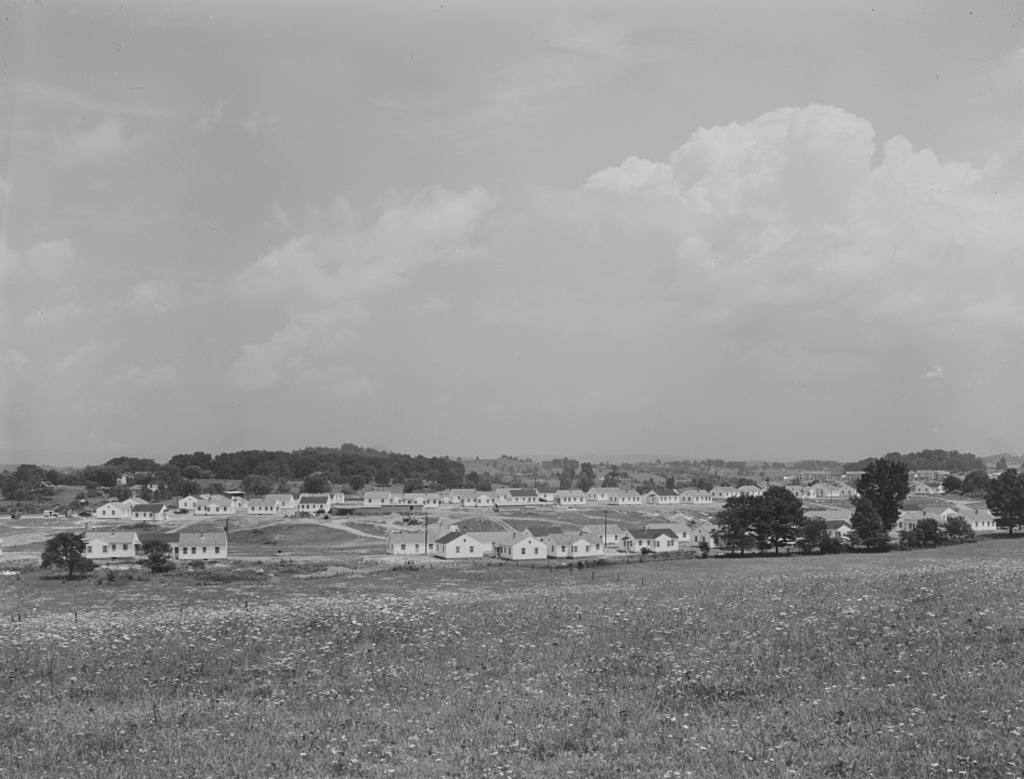
Section 301 also establishes HUD as the primary federal authority for approving any manufactured home construction or safety standard (construction, design, performance, and energy efficiency). The point is not that federal preemption is new (the HUD Code has overridden state and local building codes for these houses since 1976).
The point is that a chassis-free home stays inside that system rather than falling out of it into the modular category, where every jurisdiction reviews the plans separately. One code, fifty states, no local plan review — and now without the steel.
Take the chassis out, turn it into a home
Here is the object at the center of this: a chassis is a steel frame, roughly 10 to 12 inches deep, that runs beneath a manufactured home. It exists so a truck can tow the house from the factory to the site. That is a completely sensible thing for a frame to do, and on the day of delivery it does it well.
The problem is the word “permanent.” When Congress passed the National Manufactured Housing Construction and Safety Standards Act in 1974, and when HUD built its code around it starting in 1976, the statutory definition of a manufactured home required that it be “built on a permanent chassis”. Not delivered on one. Built on one, and left on one, forever. The frame stays. The house sits on top of it for the rest of its life, which complicates things unnecessarily for those who are not planning to move their manufactured home.
As it turns out, most manufactured homes never move, making the mandatory chassis useless and expensive. The Lincoln Institute of Land Policy estimates that the share of manufactured homes ever relocated after initial placement is 5-7%. Over 90% of these houses are set down once and never touched again.
A requirement that doesn’t square with reality
Adding a steel base to manufactured homes is not free. The Niskanen Center estimates that removing the requirement could take $5,000 to $10,000 off the price of a manufactured home (on a hundred-thousand-dollar house, somewhere between five and ten percent of the total cost, which in this market is the difference between qualifying and not qualifying. But the money is honestly the smaller half of it).
The amendment legalizing chassis-free manufactured homes could also speed innovation. Up until now, the frame wrote the architecture. A house sitting on a 10-inch steel deck is a house lifted off the ground, which is why manufactured homes have skirting, and why they have that particular hovering profile, and why a second story or a basement has historically been a nightmare to engineer.
That silhouette — the one an American eye reads instantly and unkindly as the culturally stigmatized “trailer” — was never designed by anyone. It is a towing fitting that outlived its purpose and hardened into a style. Then the style became a stigma.
Then the stigma became zoning, and thirty-odd thousand jurisdictions wrote rules to keep those houses out of neighborhoods, and the cheapest housing in America was legally confined to the places that would take it.
Manufactured homes and exclusionary zoning
There is a further consequence: because the chassis is what makes the house “theoretically” transportable, most states treat manufactured homes as personal property (chattel, like a boat or a car, which tend to depreciate over time) rather than as real property, like a house (which tends to appreciate over time).
That classification pushes buyers toward chattel loans, which carry higher rates, shorter terms, and fewer protections than a mortgage.
The Housing Assistance Council found that borrowers with loans secured by the home alone had a high-cost loan rate around 90%. If a steel frame, on a house that will never move, adds cost, dictates an unloved silhouette, invites exclusionary zoning, and helps push a family into a worse loan, why not get rid of it?
What the four hundred pages actually say
Only Congress could do this. The requirement lived in statute, at 42 U.S.C. 5402(6), which is why HUD could never fix it administratively no matter how many people asked (and why Terner’s write-up, which describes it as a HUD rule, is the one place I would gently correct an otherwise excellent summary).
Section 303 updates FHA lending rules so that home improvement loans can be used for manufactured homes deployed as accessory dwelling units. This is the provision we expect to matter most to the people who watch our videos: a factory-built unit in a backyard, financeable through a mainstream federally backed product. The same section directs HUD to study the cost-effectiveness of supporting housing finance for factory-built housing generally, and Section 302 directs it to identify what is blocking insured lending for modular builders.
Section 102 lets HUD establish federal guidelines for point-access block buildings (single-staircase apartments, which is to say the ordinary way Barcelona has built housing since before anyone reading this was born, arriving in the United States in 2026 as an innovation).
Section 107 has HUD writing zoning and land-use best practices for localities, non-binding, nudging toward reduced parking minimums and ADU allowances. Section 205 expands NEPA exemptions for most infill housing.
Section 204 allows cities to allocate up to 20% of their Community Development Block Grant funds to new construction, a change previously prohibited outright. Section 208 creates a $200 million innovation fund. Terner also notes that the chassis change lands alongside a recent HUD rule loosening restrictions on multistory manufactured homes, which is the other half of the same lock.
How fast can it go?
Now the part that almost nobody is saying out loud, and that I would rather you hear from us than from a dealer.
None of this is available: not this week, not this month, possibly not this year. HUD has to write the standards, the labels, and the documentation for chassis-free homes, and that is rulemaking, with everything rulemaking implies.
Then the states have to move: each one has a year (two, if its legislature meets only every other year) to certify that its laws treat a chassis-free home the same as a traditional manufactured home. A state that fails to certify cannot allow these homes to be built, installed, or sold within its borders at all. Then the FHA has to issue guidance, and then lenders have to update their own.
The most honest source I found on the entire subject was a mortgage broker’s blog, which told readers plainly that anyone offering to finance a chassis-free home today is making it up.
And the law does not preempt local zoning. It never claimed to. Every jurisdiction that currently keeps manufactured homes out can keep keeping them out. What has changed is that the excuse got weaker, because the thing they were nominally objecting to is about to stop existing.
The house we would draw
Which brings me to the daydream, and I will admit it is a daydream, because I have been carrying it around since the flight. Give me the eight thousand dollars and the ten inches back.
One could start with a single-section footprint to keep it affordable. Then you could set it low. That is the first thing the missing chassis allows: the floor comes down to within a step of the ground, and suddenly the house is not perched; it is sitting. No skirting. No shadow underneath. It reads, from the street, as a house, because it is one.
Orient it. A factory can build the same shell a thousand times, but nobody in the factory knows which way your lot faces, so the design has to be a kit of two or three orientations rather than one plan stamped out blind. Deep eaves on the south. Small, high, cross-ventilating openings. Enough thermal mass on the interior (and here the lost steel weight is a gift, because you have budget and payload to spend on something that stores cold instead of something that carries wheels).
Then make the design survive extreme events like strong winds and wildfires: metal roof, Class A assembly, ember-resistant vents (which cost almost nothing and are the reason houses live or die in a California fire), closed eaves, no combustible material in the first five feet.
The trailer that turned into a home
None of this is exotic; all of it is standard practice that the manufactured sector has historically been priced out of because too much of the budget was already committed to steel. And a foundation that qualifies the house as real property in a state that has done its certification, so the family buying it walks into a mortgage instead of a chattel loan and stops paying an extra three points for the crime of having bought the affordable thing.
Ninety-five dollars a square foot. Under $100,000 for the structure. Sited by someone who has looked at the lot, financed like a house, insured like a house, taxed like a house, appreciating like a house.
This shouldn’t be a fantasy. Every single element of it exists today, separately, in a factory somewhere. What has kept them from being assembled into one object was, in significant part, a single word in a definition written in 1974 by people who assumed these houses would keep moving.
They never moved. We are the ones who moved: out of a heatwave and into a fire season, twice across an ocean this summer, home to find that the country had quietly stopped requiring its cheapest houses to pretend they could follow.
Now somebody has to draw the thing. We are going to spend the next year finding the people who are trying.