Wendell Berry died on Monday at ninety-two, the age he gave the old farmer he invented at thirty-nine.
In a hyper-polarized world, many personalities reach for the low-hanging fruit of capitalizing on extreme views and othering opponents.
But if we’re in an era of tribalists, sectarians, and conspiracy theorists, it’s in part due to the systemic failure of institutional culture and power. Those who complain about mainstream powers have a point, but they fail to respond with healthy alternatives to dysfunction and entrenched interests.
That’s why most people respect personalities who excel in their fields by staying true to their craft and persona, transcending partisanship because they root their public identity in universal human values rather than what’s trending in every moment.
These special people focus on shared experiences, aren’t condescending to others, and have no hidden agenda. They take time to get to know the local communities they visit, and they practice radical empathy often rooted in their core beliefs (non-dogmatic religious views, philosophies of life, etc.).
Most importantly, by staying true to themselves and keeping a moral compass that stays the same regardless of the situation, they always find themselves sharing core values with those around them. They don’t change who they are, and by knowing where they come from and the values they represent, they don’t need to “otherize” people to root for something. They aren’t hollow, and they avoid being around airheads and empty suits as much as they possibly can.
Two deaths in a week, six days apart
In a matter of a few days, two such people died: singer Dolly Parton and author-farmer (or farmer-author) Wendell Berry. You could drop them anywhere across North America (or elsewhere in the world), and they would find a way to make the situation meaningful and special to all involved, not changing a bit who they were.
There’s little to say about Dolly Parton, who passed away on August 25, 2026, of cancer, at age 80; we’ve read notes and obituaries that do justice to her impact on pop culture, her staying relevant as society and taste evolved, and her ability to be remembered, respected, and celebrated across the many geographical and cultural lines that define the current American zeitgeist.
For example, the last California legislative session of Gavin Newsom’s governorship packed a lot into a few intense hours. They also passed a measure that makes September 25 (9/25) “Dolly Parton Day,” honoring the person more than the icon. SB 931 isn’t law yet, but it’s expected to be signed. Not strangely: the two senators behind it, Shannon Grove and John Laird, are a Republican from Bakersfield and a Democrat from Santa Cruz, respectively. Remember when such things were common?
As happens with only a few singers and poets, there’s one Dolly Parton song for anyone to identify with, and a certain type of Californian (with their “stay positive” and relentless “can-do” attitudes) can stand by her working woman’s anthem, 9 to 5, as much as they do by the view of the Golden Gate Bridge or an old-growth redwood grove.
The Kentucky countryside he felt he shouldn’t have left
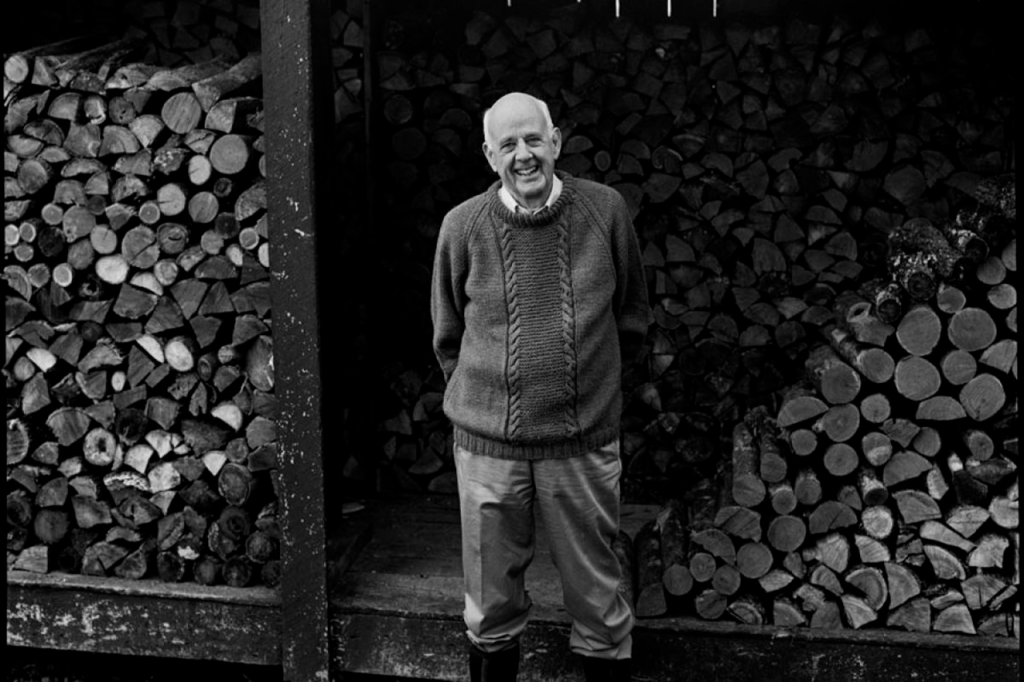
That’s why my thoughts go to the equally towering figure of Wendell Berry, who passed away last Monday, August 31, 2026, at his home in Port Royal, Kentucky. Self-defined as a “marginal” or unconventional Baptist (a Christian “attending church” in the forest and commune with nature on Sunday mornings), he aspired to live as he thought and wrote: as close to the way he sensed what’s true and meaningful as possible, and because of that, he already belongs to a rarefied type of man of letters who was also at home in the world around him, tending his words as much as he tended his animals and garden.
A Thoreau of sorts: if Thoreau had stayed in Walden and made his place flourish for decades, that is. Also an Aldo Leopold of sorts, even though he didn’t dedicate his and his family’s free time to restoring a weekend property while remaining a college professor, but decided to leave teaching at NYU to return to the Kentucky countryside he felt he shouldn’t have left.
Berry taught at NYU from 1962 to 1964, then at the University of Kentucky until 1977. He quit, went to work for Rodale Press, was let go around 1980, and lived several years on lectures, readings and a small retainer from his publisher before returning to the UK English department from 1987 to 1993.
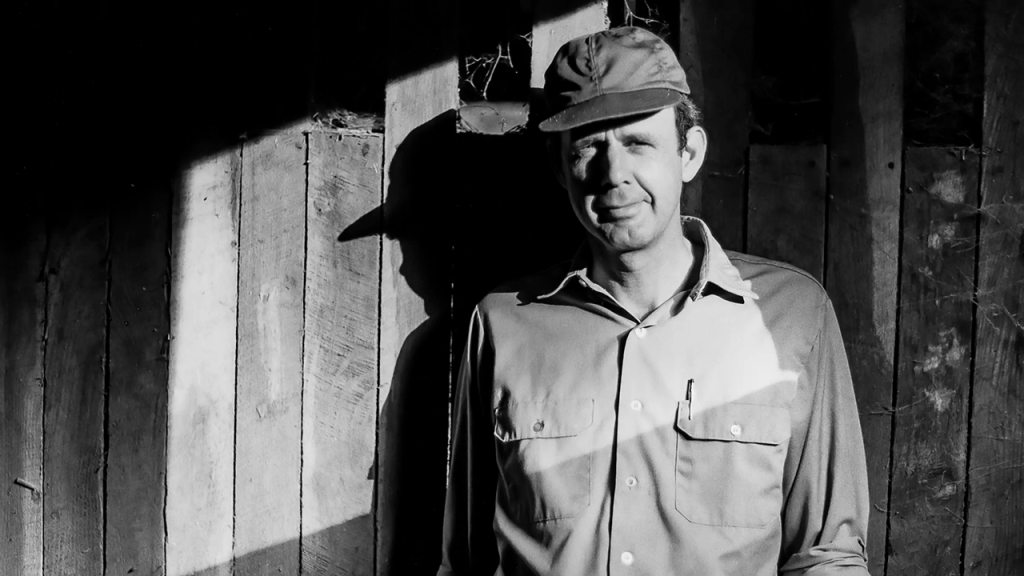
Wendell Berry shared with Dolly Parton many of the things that help people transcend the limitations of conventional fame or active partisanship: rootedness in place, radical empathy that was never perceived as condescending to the people around them, a (very American) taste for action over rhetoric, and a natural rejection of labels.
Tired of the constant fakeness and posturing, some of us are drawn to the life and writing of people like Berry, particularly because only a few public figures follow their pulse because they want to, not because they want to show and bank on a façade. In a moment when there’s a saturation of pretentious machoes with homoerotic looks (tiny shirts, massive muscles, manicured beards, fake punch lines through and through), reading Wendell Berry feels like taking a break to sync with the things that matter most, which are universal and don’t change much over the generations.
A ninety-two-year-old man invented by a man of thirty-nine
There are coincidences, and then there are writers’ stories and their intermingling with the writers’ very lives. As it happens, Jack Beechum, the protagonist of one of Berry’s novels, The Memory of Old Jack, is very attached to the world surrounding him. The aging mind is trying to grasp the marrow of things one more time, in their eternal repetition, which feels like the circadian rhythm of reality. This is how that novel starts:
“Since before sunup Old Jack has been standing at the edge of the hotel porch, gazing out into the empty street of the town of Port William, and now the sun has risen and covered him from head to foot with light. But not yet warmth, and in spite of his heavy sheepskin coat he has grown cold. He pays that no mind. When he came out and stopped there at the top of the steps, mindful of the way the weight of his body is taking him, he propped it carefully with his cane and, in the way that has lately grown upon him, left it.”
“From the barn whose vaned cupola was visible over the house roof against the pale sky, Mat Feltner was calling his cows. Old Jack listened with an eagerness that carried him away from himself; for all his consciousness of where he was, he might have been asleep and dreaming. Mat waited, and called again. And then from the quieting of Mat’s voice, Old Jack knew that the cows had come near and that Mat could see them moving up deliberative and shadowy out of the mists and the thinning darkness. And then he heard the barn doors slide open.”
Things look similar every day, but they are like a feast to Jack Beechum:
“In the afternoon he brought them out again and hitched them in the driveway of the barn and busied himself repairing and adjusting a set of harness for them. Though he is at the end now, looking back at the beginning, the pleasure of that work and what it anticipated comes to him again and fills his mind.”
We follow his perception of everything around him on the rural outskirts of the fictional town of Port William, Kentucky. Born in 1860, we get to know him on his final day on earth in September 1952, as he reflects on many decades of life, marriage, farming, friendship, weather scares, events that feel both close and remote, and many more things. He dies at 92, the same age Berry had when he died a few days ago, just one day short of it being September.
Proof of concept
The parallels between Berry’s death and his fictional character Beechum’s are mere coincidence. Or are they? He wrote the novel, the third one set in Port William, in his late thirties, and saw it published when he turned 40. Middle age was kicking, and the usual markers of intellectual achievement and professional success were alive and kicking; in many ways, leaving college life and the big city for the ill-perceived reality of small-town Kentucky might have felt crazy and backward.

Perhaps he decided to write about one rooted character in his last day, looking proud of his life while he could still tap into it with agency, as a literary proof of concept that would show him the way: Jack Beechum is telling him not to be afraid; he has to listen to his gut and not what others have to say about careers and respectability.
Looking at reality while at the same time reflecting back on a life worth living, at a farm on the first cold day of September. Like the writer, when we read about Beechum, we can borrow this precious vantage point, which reminds us of what Thoreau and others had to say about lives worth living: taking action sooner rather than later, and pursuing the tangible meaning of a life connected to the things and people surrounding us.
Nothing manicured about it
No matter what pretentious purists may say, especially those thinking that tradition might mean giving up on science, objectivity, modern medicine, or women’s emancipation (proof: the most successful tradwives are in reality anything but “trad,” working the hamster wheel of social media as hard as any manosphere pundit): Wendell Berry didn’t depict an ideal world that cut corners and prefers naïve manicured worlds over the real world.
That’s why Old Jack’s tragedy is not that he’s old. To the 92-year-old man, the real tragedy is the fate of his own bloodline: his daughter married a banker and “accomplished” a comfortable life in the city. So, instead of giving up his farm to his relatives, knowing that they won’t be able to keep it alive, he decides to spend his final moments securing the real “succession”: by arranging that Elton Penn (his tenant) and his wife Mary will keep it, he knows that the rhythm of things will continue in his corner of the world.
But old Jack isn’t the author’s alter ego across the Port William series. Instead, it’s Andy Catlett, a local who is sincere and loves the area but will leave anyway, like many people in the United States who leave to study and work in the most dynamic metro areas. In this particular book, Catlett is a young man leaving for college who stops by to say farewell to Old Jack.
They both know that this is the last time, though they manage to make it feel just like any other casual encounter. Berry wanted to embed himself in the novel as the one who leaves, but by then he was already settled back in Kentucky. It was a way to both understand his situation and also connect with the elder who had known the Civil War generation, the last who farmed with mules and local seed, before hybrid varieties, chemical fertilizer, and the tractor.
Little repairable things
In more than one way, however, Berry felt he was a bit like Old Jack when it came to his craft: he was one of the last major American writers composing everything in pencil, rejecting the computer and any other device that sucked too much energy from a purposely self-reliant and chronically underpowered house.
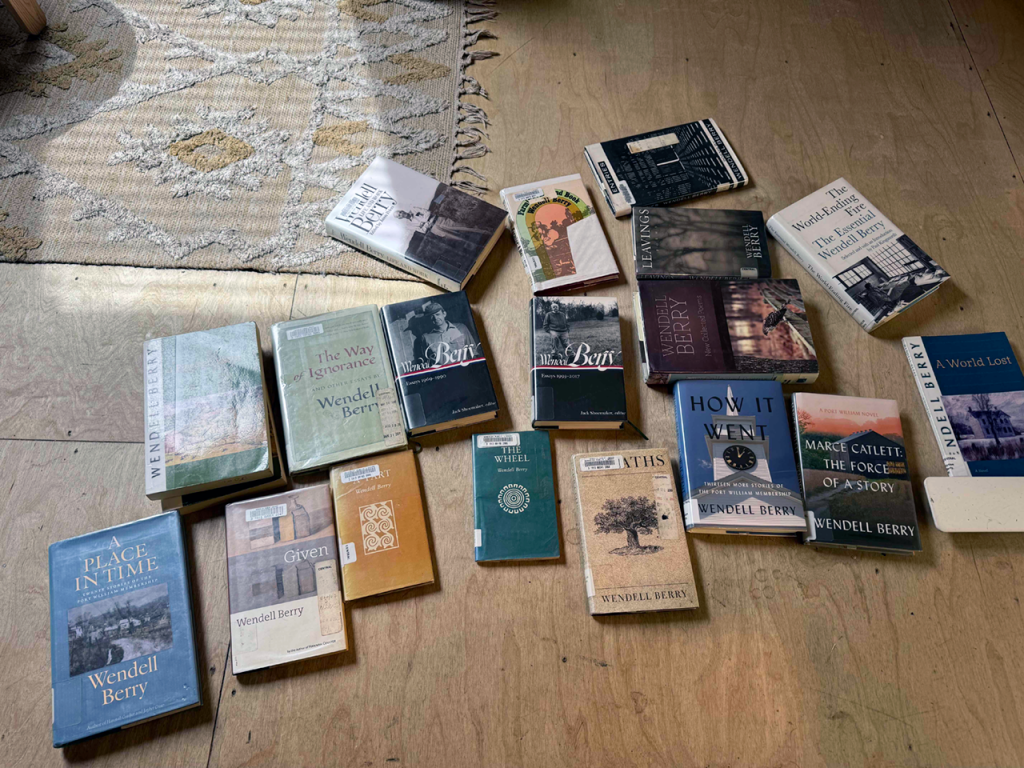
The author-authorized collection The World-Ending Fire: The Essential Wendell Berry (2017) includes Why I Am Not Going to Buy a Computer (1987). It reads a bit like the conceptual anteroom of things to come, especially generative AI:
“My final and perhaps my best reason for not owning a computer is that I do not wish to fool myself. I disbelieve, and therefore strongly resent, the assertion that I or anybody else could write better or more easily with a computer than with a pencil. I do not see why I should not be as scientific about this as the next fellow: when somebody has used a computer to write work that is demonstrably better than Dante’s, and when this better is demonstrably attributable to the use of a computer, then I will speak of computers with a more respectful tone of voice, though I still will not buy one.
“To make myself as plain as I can, I should give my standards for technological innovation in my own work. They are as follows:”
And then he goes on to describe what is basically his view of appropriate technology, which is very close to the definition of it given by, among others, people like Ivan Illich and E.F. Schumacher:
- The new tool should be cheaper than the one it replaces.
- It should be at least as small in scale as the one it replaces.
- It should do work that is clearly and demonstrably better than the one it replaces.
- It should use less energy than the one it replaces.
- If possible, it should use some form of solar energy, such as that of the body.
- It should be repairable by a person of ordinary intelligence, provided that he or she has the necessary tools.
- It should be purchasable and repairable as near to home as possible.
- It should come from a small, privately owned shop or store that will take it back for maintenance and repair.
- It should not replace or disrupt anything good that already exists, and this includes family and community relationships.
The daughter who married the banker
But again, Berry was no manosphere material, let alone a Ted Kaczynski type: for example, it’s Old Jack’s daughter Clara (the “modern” daughter leaving the countryside for the city) who is decorative and useless, a display case for her husband’s success and money. The actual “tradwife” is that type of “modern” woman who, despite going to college and marrying some assertive person, decides to give up their autonomy and agency, becoming dependent and giving up their potential.
I agree with Berry in many things, especially when I see that, like many men who feel that they don’t need to show off their virility because they aren’t insecure about it, he felt attracted to strong women, not the other way around. Or, as nicely put by French thinker Simone de Beauvoir (from The Second Sex):
“No one is more arrogant toward women, more aggressive or scornful, than the man who is anxious about his virility.”
To some, people like Thoreau or Berry glorify a backward, pre-technological world. This is not the case: they both reject the weak interdependence of a society that relies on technical systems built and owned by faraway entities that keep intellectual property and “black boxes” away from people, destroying autonomy and self-reliance.
A cabin of two small rooms
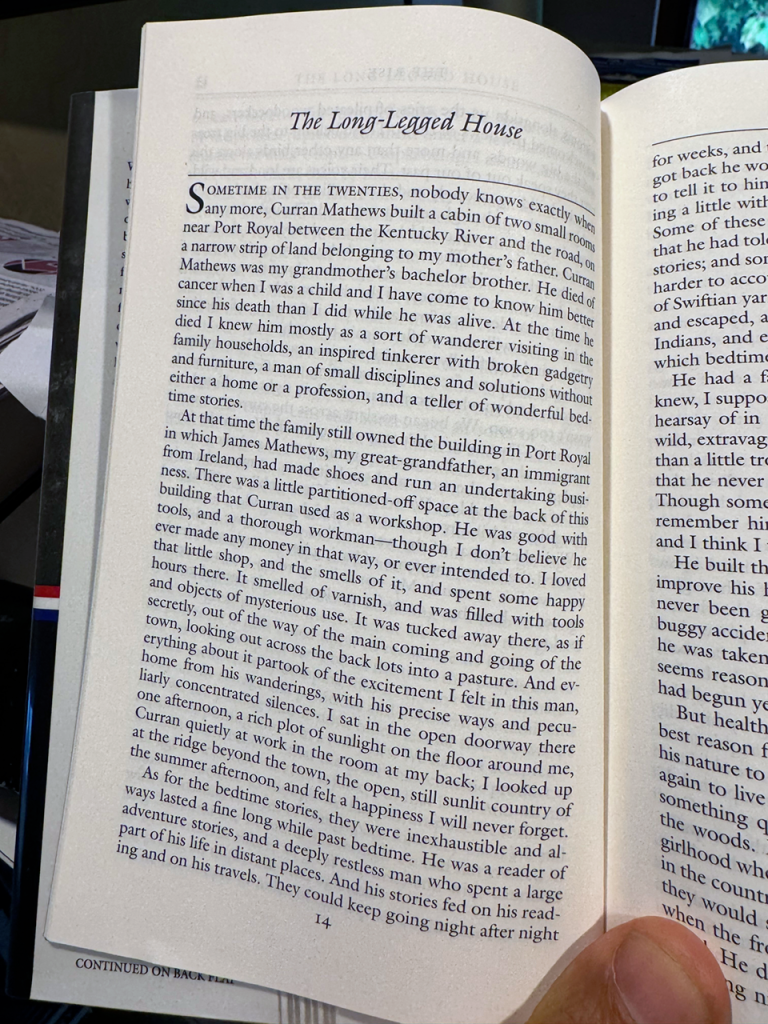
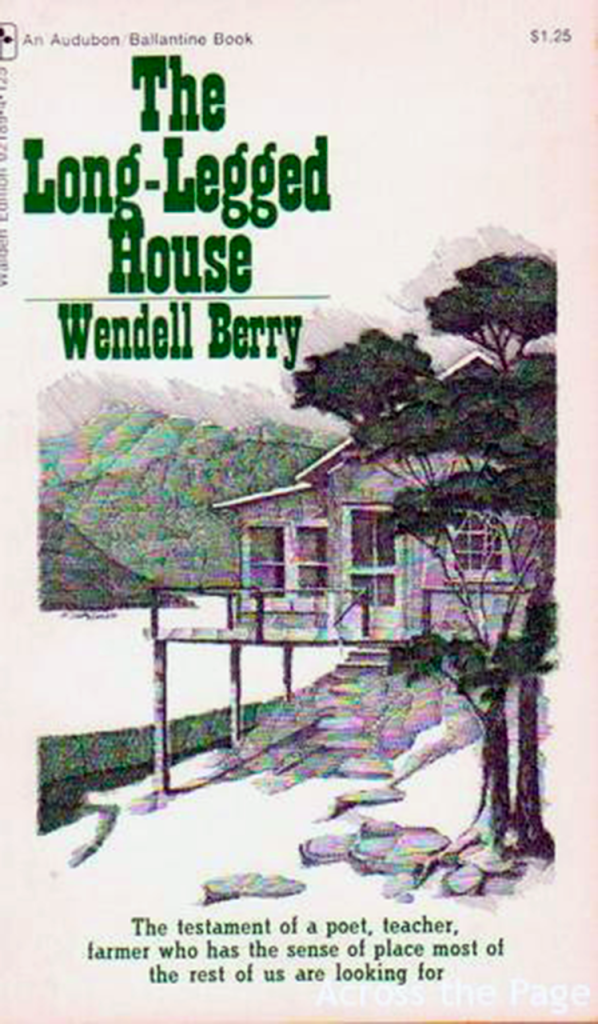
One of Berry’s most representative pieces is the collection of essays under the title of what is perhaps the main one, The Long-Legged House. The story refers to a small structure built by one of Wendell Berry’s great-uncles, Curran Mathews, on the bank of the Kentucky River “sometime in the twenties, nobody knows exactly when any more.”
Mathews had died when, in the early sixties, Berry decided to restore it. The cabin was a two-room place, self-built and off-grid, roughly twelve by sixteen feet, depending on who’s measuring. Berry wanted to change only one thing: perhaps he could raise it on stilts, and so make his design contribution only around the fact that the river rises and it would eventually come, but instead of choosing a levee or relocation, he thought about posts, not fighting the water, nor moving away from it.
The Long-Legged House is more and more prescient, as our society moves into unknown territory regarding extreme weather events, and people will need to quickly adapt the places they’ve come to love. Berry built it in the summer of 1963, at twenty-nine. He wrote the essay later, among pieces composed between 1965 and 1969 and published as a collection that year. He didn’t write because it was trendy, but because it made sense to him and to his sense of place, his experience.
“Only a few hundred yards down the river from the site of the cabin was Lane’s Landing, the port of Port Royal, with its coal tipple and general store, but even so Curran Mathews’ wooded stretch of riverbank was far more remote and isolated then than it is now. The voices of the frogs were here—there must have been summer nights when he sat awake a long time, listening to them. And there were other wild voices, too, that I know he heard, because I have heard them here myself.”
In a way, the long-legged cabin is the structural answer to the conundrum that brought Old Jack to solve the productive succession of his place by choosing an heir outside his bloodline. The old, beaten-down cabin solves permanence by accepting impermanence: the flood may come, but perhaps it can come underneath and then go, if one adds posts to the place.
But the place didn’t go up in new lumber. Berry reused the original logs, felled by his great-great-great-grandfather Ben Perry, one of the first settlers in the county (the same timber used for two different buildings and one restoration of the second, spanning five generations of the same family).
Half a dozen sharpened pencils in a row
Wendell Berry never stopped using that cabin on stilts, which he kept off-grid. It had one large window, a long desk, and half a dozen sharpened pencils in a row. There were a few photographs taped to the wall above a small safe: Stegner, Ernest Gaines, Donald Hall and Jane Kenyon, Thomas Merton.
He built a bird feeder and kept it attached to the porch rail so he could watch the chickadees.
He died on Monday. The room is still up there on its legs, above the water.
In 1973, in a poem he called a manifesto, he had already left instructions. It ends in two words: Practice resurrection.
Put your faith in the two inches of humus
that will build under the trees
every thousand years.
Listen to carrion – put your ear
close, and hear the faint chattering
of the songs that are to come.
Expect the end of the world. Laugh.
Laughter is immeasurable. Be joyful
though you have considered all the facts.
So long as women do not go cheap
for power, please women more than men.
Ask yourself: Will this satisfy
a woman satisfied to bear a child?
Will this disturb the sleep
of a woman near to giving birth?Go with your love to the fields.
End of Manifesto: The Mad Farmer Liberation Front; from The Country of Marriage, 1973, Harcourt Brace Jovanovich, Inc.
Lie down in the shade. Rest your head
in her lap. Swear allegiance
to what is nighest your thoughts.
As soon as the generals and the politicos
can predict the motions of your mind,
lose it. Leave it as a sign
to mark the false trail, the way
you didn’t go. Be like the fox
who makes more tracks than necessary,
some in the wrong direction.
Practice resurrection.