As AI squeezes entry-level office work, the trades still pay well, from Alaska’s remote camps to the kitchens Americans no longer remodel themselves.
Not long ago, many middle-class American teenagers scrambled around before college to take on their own initiation adventures, building their own cabins in the woods, leaving the city and suburbs to go work on idealistic organic farms, or take on apprenticeships aboard an Alaskan fishing vessel as “greenhorns.”
I have a brother-in-law who embarked on one of those ships, and he claims that the adventure changed him for the better; he went on to enjoy college and have a successful career as a software engineer, which, to Americans of his age, today means wealth (unflashy, but real) and the ability to help his children without spoiling them.
Such risks and adventures are overall receding, if we were to look at studies. Young American males seem now more interested in gambling, prediction markets, and other quick workarounds to make a buck than in embarking on old-school adventures that could be understood by the characters depicted by Walter Scott, Joseph Conrad, or Jack London.
After all, London’s Klondike adventure didn’t make him rich with gold, but the stories it inspired paid off more than enough, as we can still recall many of the stories he wrote as universal classics for teens and adults alike.
A farm boy heads north
The adventures of Chris McCandless (aka Alexander Supertramp) in Alaska were cut short by tragedy, but many other stories have a much more positive outcome, even when they aren’t celebrated by mainstream entertainment. Enter Richard “Dick” Proenneke, an Iowa farm boy born in 1916, son of a World War I veteran who drilled wells for a living.
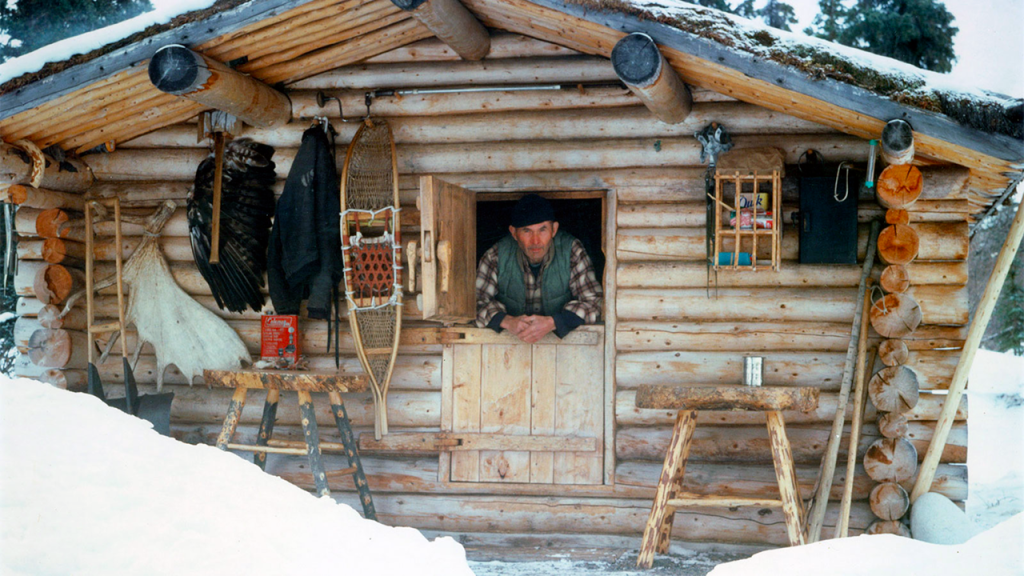
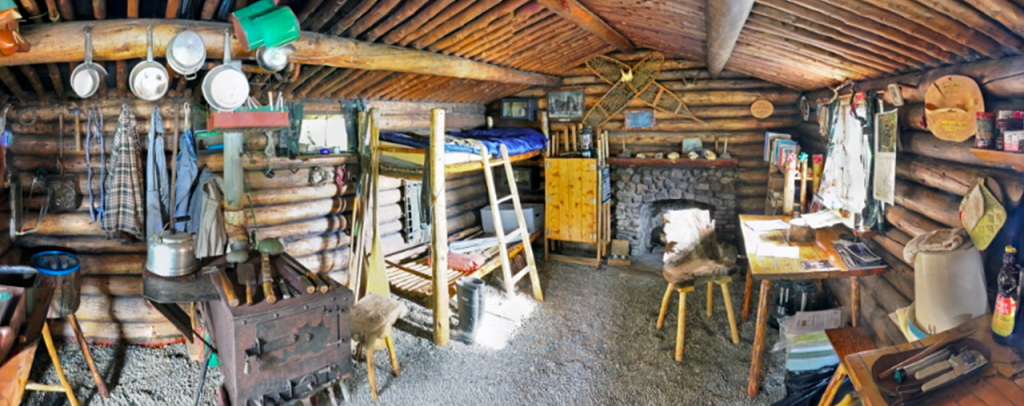
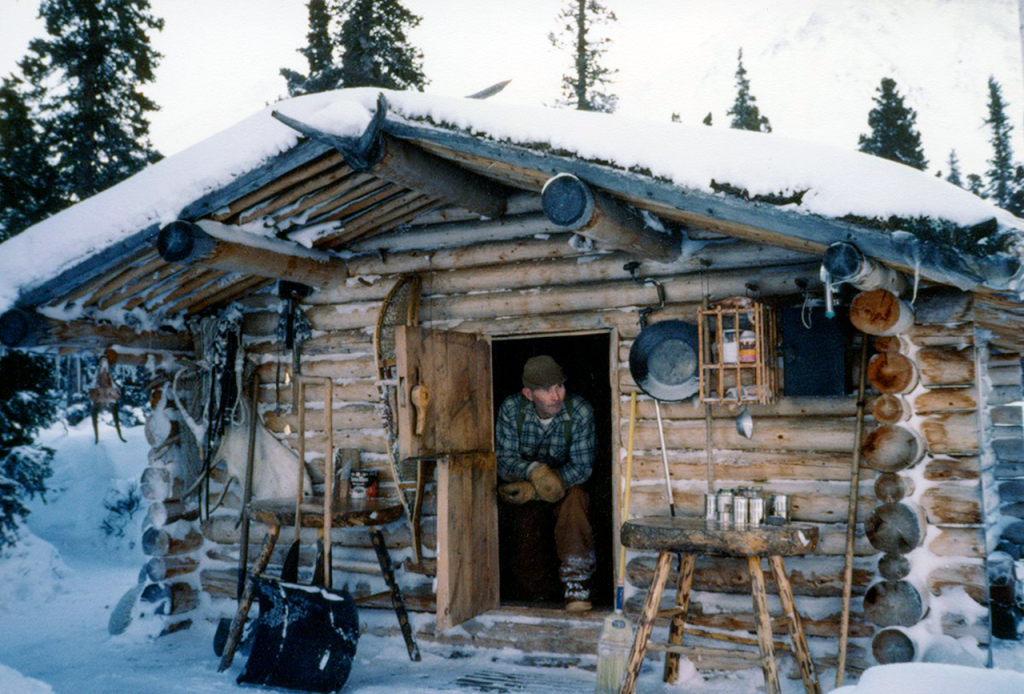
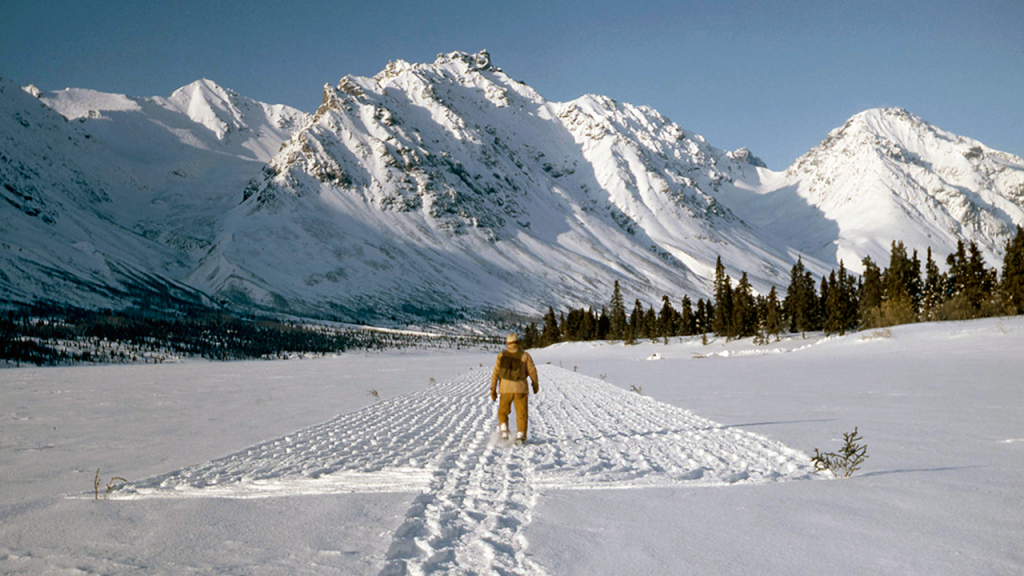
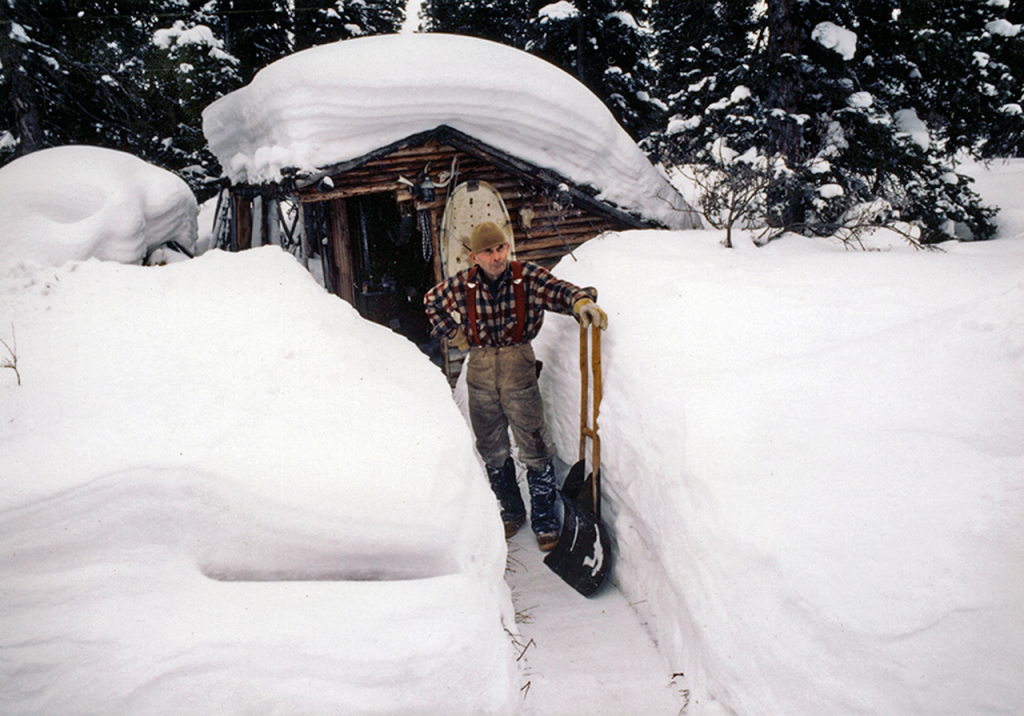
In his early teens and until 1939, Dick Proenneke drove tractors and worked farm equipment in his home state, but he craved adventures in what he saw as the last American open frontier, Alaska, earning his freedom through working-class trades and enjoying a survivalist simple life in the mountains of Alaska, observing every morning the majestic Alaskan wilderness from his log cabin constructed near the shore of Twin Lakes.
A Navy carpenter back when soldiers and sailors had to make and repair their own facilities, he enlisted the day after Pearl Harbor and served building things with wood. Soon, though, rheumatic fever made him falter for months, which (according to friends) pushed him to build physical strength. It worked.
Sixteen months at Twin Lakes
The decade went by, but something had happened. He moved to Alaska in 1950 and soon found work as a heavy equipment operator and repairman at the Kodiak Naval Air Station, then spent years across Alaska as a salmon fisherman and diesel mechanic. In the early 1960s, he was more than settled with his new life, working in his middle age as a powerhouse operator and mechanic at a satellite tracking station on Kodiak until about 1966.
Thinking about getting more freedom, he saved for retirement and planned the next move, arriving at the breathtaking Twin Lakes on May 21, 1968, at 52. The real fun was about to begin: he spent 16 months building and outfitting a log cabin using only hand tools, some of which he made, living there for most of the next 30 years and inspiring many others.
Proenneke’s legacy goes beyond what he wrote in his journals, inspiring Sam Keith’s book One Man’s Wilderness (1973), and his 16mm footage became the PBS documentary Alone in the Wilderness.
The trades he sought when he moved to Alaska as a World War II veteran are still coveted and pay a premium to those willing to take on the challenge: heavy equipment operators, diesel mechanics, and powerhouse operators are the jobs we saw paying well above national averages in Alaska, and Fairbanks employs operating engineers at 4.5 times the national rate. The frontier isn’t fully closed.
The white-collar correction
As we enter a new era for jobs, many occupations will evolve or vanish, whereas entirely new categories will emerge, even if some of them will have old names and will resemble previous tasks.
One thing is already clear: after decades of denigration of blue-collar jobs due to industrial automation and offshoring from the 1970s onwards, now it’s entry-level white-collar jobs that are poised to undergo a severe correction due to AI.
It doesn’t take much to speculate how this could happen. Up until recently, it took being an insider to see the potential of AI to make some jobs less strategic or even redundant, and only those who built custom agents on Anthropic, OpenAI, or their closest commercial, US-based rivals, or used the most capable open-weight models from Chinese companies instead, were already telling us what’s happening in fields such as coding, law, consulting, biomedicine, mathematics, education, etc.
Agents at home, premiums up north
Things have accelerated since Meta launched Muse, and suddenly many of us have seen our elders, and those relatives and friends least engaged in using AI, start tinkering with Meta’s new personal agent.
Unlike traditional chatbots, Muse wants users to hand over as much data as possible to quickly perform autonomous, multi-step tasks across apps and websites: booking travel, calling customer service, shopping, managing email, just like a personal assistant that turns the agentic web into a reality for mainstream users unaware of frontier models and their potential abilities, if one is willing to invest in the learning curve and recurring cost of running them.
For all the fear-mongering going on nowadays, there are sought-after types of blue-collar jobs in areas willing to pay the premium due to harsh conditions, like the US West and Alaska, where many trades are still in demand, mostly in remote locations, often industrial and marine, but also construction (yes, also construction of AI-driven data centers, as well as the energy facilities and redundancies they require to run).
No need to take over Greenland
One analysis by City Journal confirms that there’s such a thing as a blue-collar remote premium, and most of those jobs don’t require a college education. Anchorage employers, for example, are paying almost 20% more for construction and extraction workers; 18% more for workers specialized in installation, maintenance, and repair trades; and 43% more (!) for those doing transportation and material moving.
On top of that, Anchorage is the tame, convenient end of Alaska, whereas remote sites are willing to pay much more for experienced workers willing to work (and capable of enduring the remoteness and extreme weather conditions).
So, no need to take over Greenland: those willing to look for a blue-collar frontier in the US might find patches of it in places like Alaska and the remote West, where land is cheap, and companies dedicated to logistics, extraction, energy production, or IT infrastructure often find a fit, as well as local willingness to ease their projects. This will hold even more after the midterm elections.
The first wave
The first wave of automation, from the 1980s to the 2010s, hit both the most dependable blue-collar and white-collar jobs, but high-skill work at the top held steady. This isn’t the case anymore, and in some respects, the tables have turned.
For decades, job opportunities declined both in middle-skill white-collar clerical, administrative, and sales occupations and in middle-skill blue-collar production, craft, and operative occupations. Those feeling the most heat were workers without a 4-year degree, and especially men, so young Boomer parents, and later GenX and older millennial parents, insisted on their children getting a college degree, and in many cases paid for part of it, as college tuition skyrocketed and education loans grew to become one of the most controversial issues in American life and politics.

Over the years, we suffered, heard stories, read books, listened to songs, and watched films about people losing their jobs or working hard to barely make ends meet, as precision production workers, machine operators and assemblers, mechanics and repairers, laborers and helpers saw their status tumble.
Soon enough, many people found out that these jobs were full of procedural, rule-based tasks that computers and robots could take over in big industrial facilities. Entire industries in the Midwest were affected, changing the prospects of people and towns, and turning previously optimistic, progressive places into hotspots of despair and decomposition of part of the social fabric.
Where the good jobs went
Something similar happened to white-collar occupations like sales, administrative support, and clerical positions (also procedural, rule-based, easy to automate or optimize with personal computing, local networks, and the internet).
Things are changing now, and what was obvious two decades ago isn’t anymore. A working paper by researchers Gordon H. Hanson and Enrico Moretti (who happens to be at Berkeley: link to the study on his page) tries to explain where “all the good jobs” have gone in the period 1980-2021.
Hanson and Moretti define “good” jobs as jobs in industries that pay more than expected after accounting for education, experience, and region. This NBER working paper (read: not yet peer-reviewed) identifies industries that go under the radar for the media and for potential candidates seeking better-than-expected-paying jobs.
Among the main findings: not surprisingly, manufacturing has largely lost its role, even if it maintains a cultural status. The share of good jobs (those with a positive wage premium relative to other sectors that require a similar education level) held by manufacturing workers plunged from 39% in 1980 to 20% in 2021. That said, many of the factory jobs that remain still pay relatively well. So, the sector shrank, but not the wages of those positions that remained.
A K-shaped labor market
Also from the study, the K-shaped labor market widened as best-prepared college workers filled business and professional services, going from 20% of the “good jobs” share in 1980 to 49% in 2021, whereas for non-college workers, the shift to “good jobs” took place almost entirely in agriculture, construction, mining, and utilities, from 28.5% in 1980 to 43.5% in 2021.
But the true picture is that, for workers without degrees, most of the new service jobs near densely populated areas have become low-earning and easy to replace, like hotels, restaurants, personal services, and the lowest-wage echelon of health care.
This phenomenon didn’t only affect average blue-collar workers; white-collar occupations experienced a similar enshittification. After 2000, growth in “good job” service industries stalled in many roles affected by the first automation wave of the knowledge economy, and evolved into the so-called gig economy.
Not surprisingly, many places that started this evolution with a bigger share of “good jobs” (Florida, Texas, Utah, Nevada) kept their lead and often increased their share, whereas the areas where non-college workers experienced fewer openings in a shrinking industrial sector suffered more doom-loop-related contingencies (Illinois, Michigan, Ohio, Pennsylvania, etc.).
Frontier pay
And then there are “frontier jobs.” Places like Alaska pay the premium that comes with danger, remoteness, and harsh working conditions. Many of the best-paid blue-collar jobs in the state pay enough to put a household among the region’s high earners if combined with another salary: ship engineers earn $111,710 a year in Anchorage; captains, mates and pilots of water vessels earn $102,370 on average; transportation inspectors go even higher and are paid $128,300 on average.
As for plumbers, pipefitters and steamfitters in a place where freezing weather is a given, Alaska’s median reaches $93,920, only behind DC, Illinois, Oregon and Minnesota. Electricians get a mean of $82,160 statewide (May 2023), but rural Alaska tops the national list, paying $40.10/hour, $83,420 a year. First-line construction supervisors and building inspectors are also among the best paid in the country.
Remote working conditions aren’t for everyone, but they look like a fit for a certain type of adventurer: on top of the premium pay due to hazardous conditions and distance, many jobs require a rotation of two weeks on, two weeks off, and usually add free room and board at camp.
Construction stays local
But there’s one finding by Hanson and Moretti: construction is different. Overall, the sector has escaped the long stagnation, and economists believe it’s because construction is local almost by definition, protecting jobs from offshoring and automation.
Unlike manufacturing, which is tradable and went from a peak of 19.6 million workers in 1979 to 12.8 million in 2019, down 35%, construction went the other way, employing more people than before and maintaining a negligible unemployment rate of 3.1%. ICE raids are affecting the sector, and wages could go up as a consequence. But the complexity of zoning and locality is keeping construction costs high, and productivity has barely grown over the decades.
If construction jobs are well paid and it has become so expensive to build and renovate, why is it then that many Americans have stopped building their own dwellings and renovating their own kitchens and bathrooms? An analysis by Harvard’s Joint Center for Housing Studies shows how rare DIY construction projects have become in mainstream America.
Fewer Americans pick up the hammer
Given the strong following of communities around self-building and self-improvement, from mainstream offers to niche content like Lloyd Kahn’s over the decades, or ours at faircompanies and Kirsten’s channel, one would think that a bigger share of Americans are building and renovating on their own today.
What Harvard’s Joint Center found differs: the DIY share of discretionary projects like kitchens, baths and additions fell from 31.5% in 1995 to 19.1% in 2023. There’s, however, one caveat with the potential to shift this trend in the future: homeowners under 35 (a declining demographic, by the way, given property prices and changing career prospects) are the most enthusiastic DIY group. On the flip side, they cut their DIY spending in recent years, too.
The DIY share of all home improvement spending peaked at 26.9% in 2003, then declined for a decade, falling to 17.5% by 2013. The share slightly recovered during the pandemic to 19.9% in 2021, but has quickly reverted since, falling to a new low of 15.9% in 2023.
What the hands know
Harvard’s researchers point to an aging housing stock, older and wealthier homeowners, and home systems that keep getting more complex. That explains part of it. Another part, I suspect, is that two generations of American parents taught their kids that working with their hands was the fallback, not the plan.
Proenneke never planned to become a symbol of anything. He spent decades as a farmhand, a Navy carpenter, a heavy equipment operator and a diesel mechanic before he built his cabin at Twin Lakes, and all those years show in the way the logs fit together.
AI is getting good very fast at what can be written down. What gets learned with the hands, over years, next to someone who knows more, is much harder to copy. A teenager who spends a summer on a fishing boat or helping a contractor might still end up writing software, like my brother-in-law.
But he’ll also know how to fix his own bathroom, and when a contractor is cutting corners. Perhaps that’s worth more now than it was when we sent our kids off to college.