Running the Fontainebleau forest at dawn led me to a Scottish writer who slept outdoors by choice, then followed a married woman to California and honeymooned in an abandoned NorCal mine 70 miles from our home.
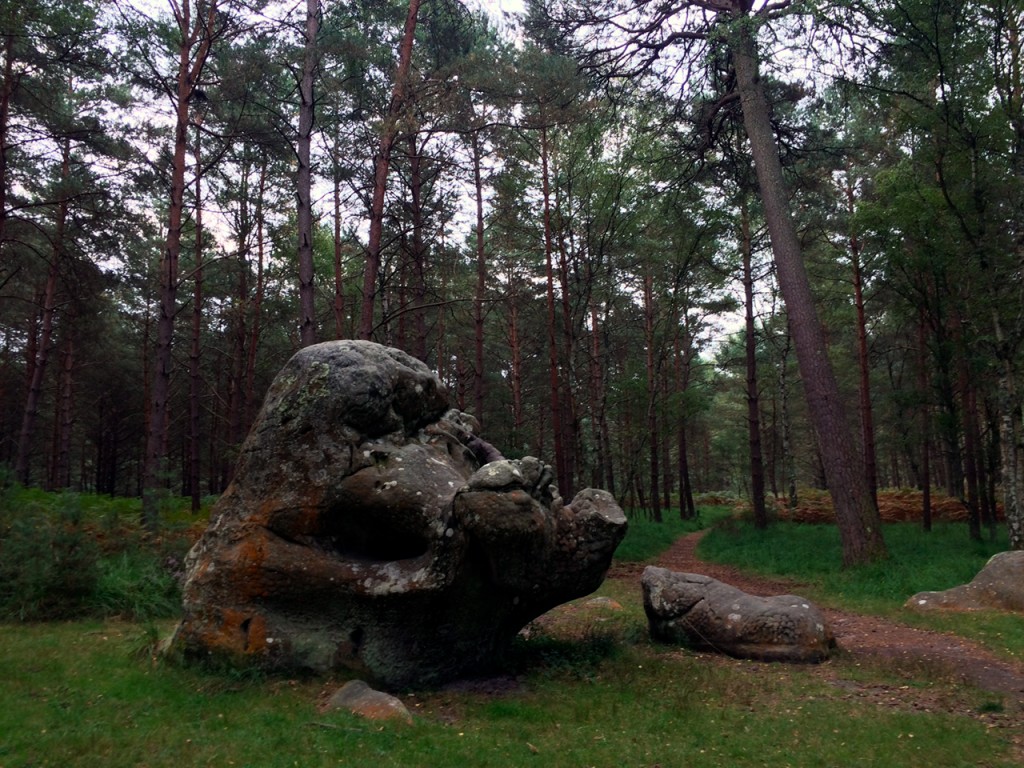
Fall of 2015. The first thing we did when we moved to Fontainebleau, a historic commune about an hour south of Paris, was to explore the surrounding forest: a sandy woodland filled with walking paths and oddly shaped rocks that people have painted and climbed for generations.
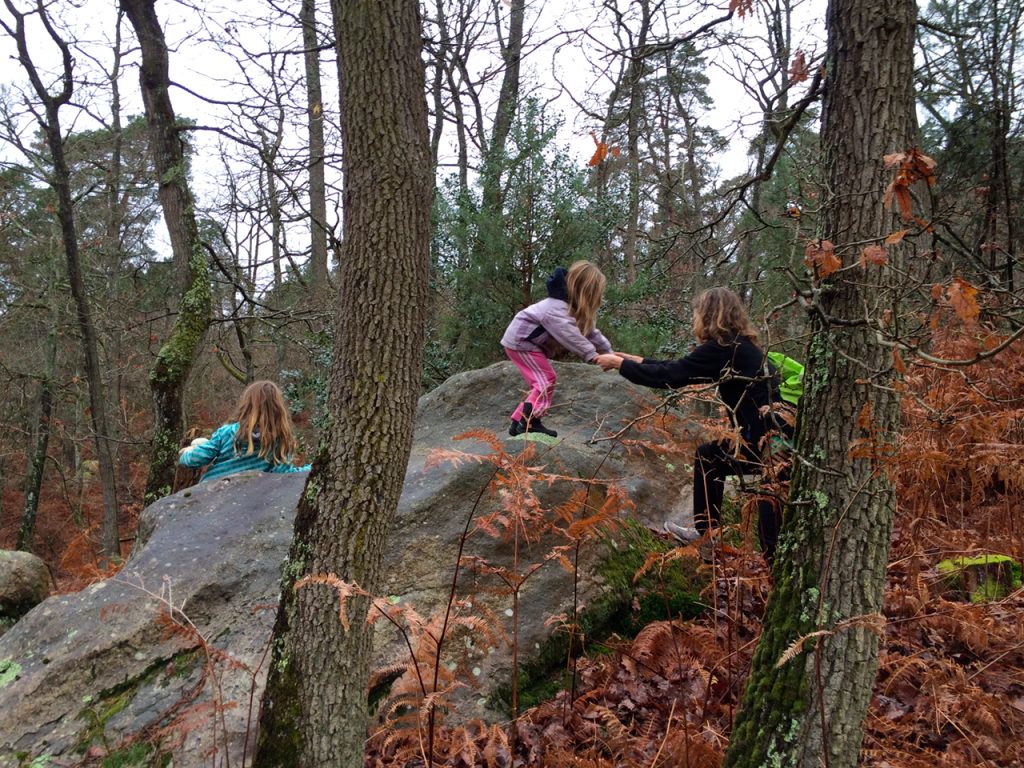
French royals, exiles, and artists alike have come to the area seeking a little fresh air, whether for short outings or to establish a longer residence, thinking it will give them perspective and help them return reenergized to their urban routine.
Many times, what begins as a little excursion or weekend turns into a longer stay. We visited the area only once before renting the townhouse on Rue St Merry that was to become our home until the summer of 2019.
Why Fontainebleau
What brought us there was a need and one conscious intention: leaving a crowded city environment while the kids were young, while keeping the perks of cities where young families can thrive, from a school that’s a fit to a culturally stimulating, dense-enough mixed-use urban core where one can do chores, shop, and wander around, just with a little more space and paying less money than aiming at the same core goals in a tier-one city.
When picking a place, we first considered the French side of the Pyrenees for cultural and geographical proximity to Barcelona, though the big city nearby continued to be the same; the Alps were also a contender, but we had decided to aim at France and wanted to avoid either places that felt too cold and seasonally skewed towards winter tourism, or places that lacked the proximity of a city to explore.
It all pointed to the least populated areas of Île-de-France, still close enough to the city and the two international airports, and a little over ten hours by car from Barcelona, a road trip we would soon turn into one of our family’s memorable routes.
The area had attracted city dwellers for generations. As Paris grew and its air grew thick with early factories and fireplace smoke, city dwellers used the new trains to get some fresh air. The painters who had settled in Barbizon got there first, and when the state began cutting the old oaks to plant pine, they protested. In 1861, a decree from Napoleon III protected parts of the forest for their beauty alone, which is why Fontainebleau is often called the first nature reserve in the world.
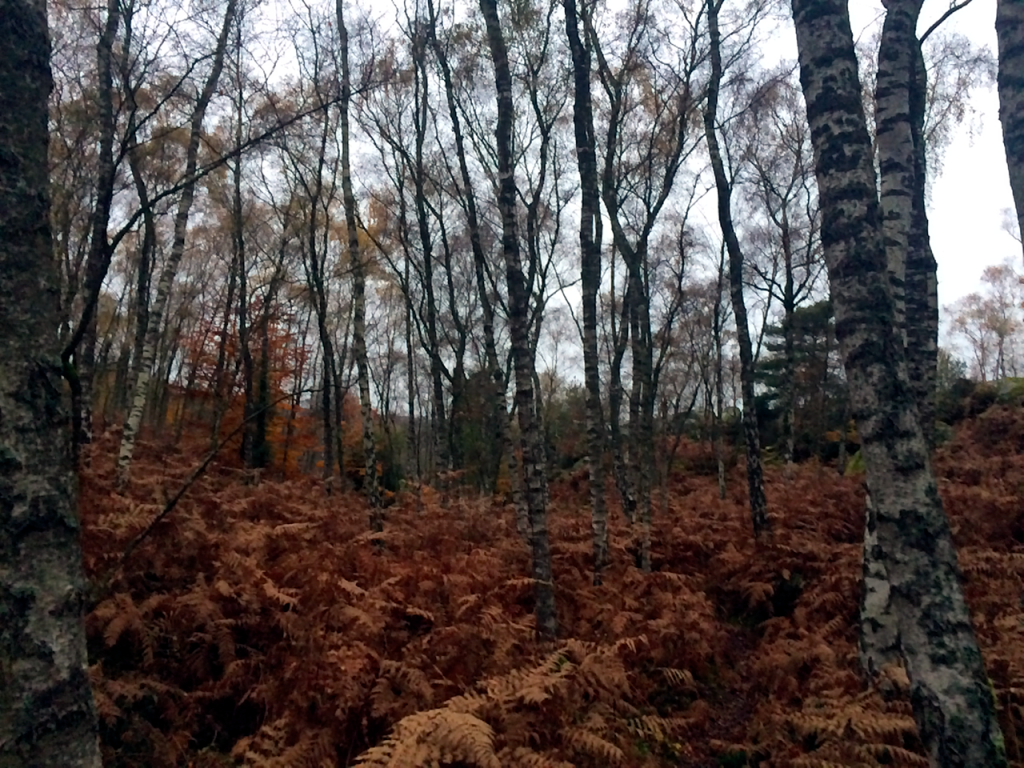
We knew little of this when we got there, and by November 2015 I was finding more and more references to the places I was visiting early in the morning on weekdays, and as a family on some weekends.
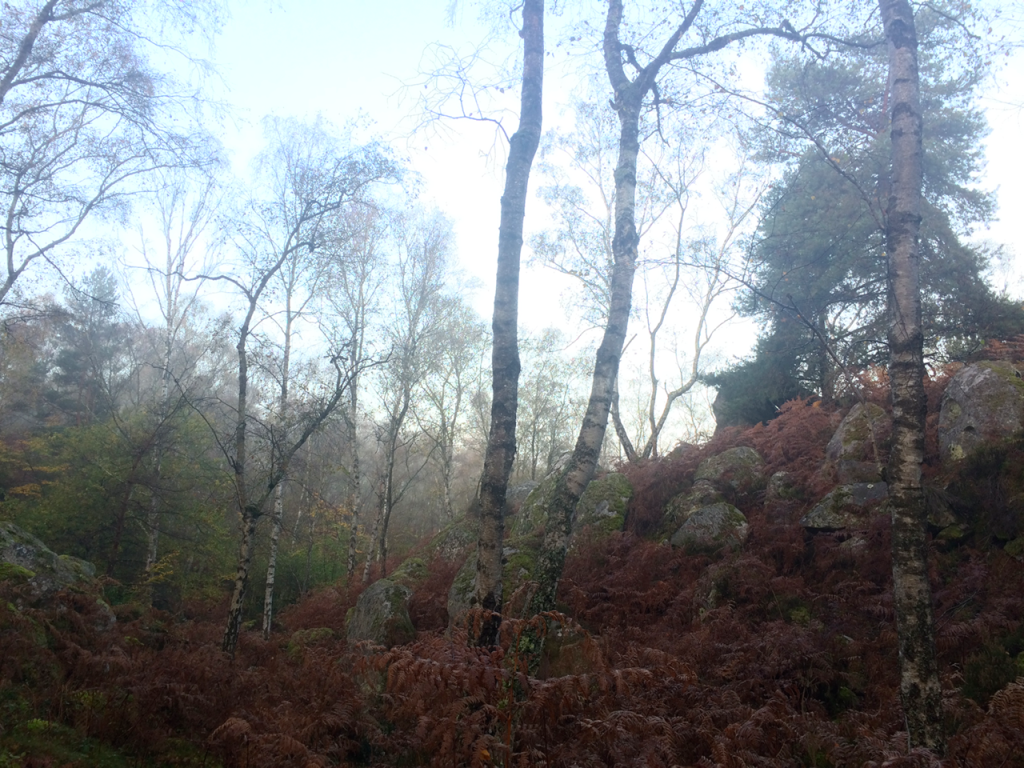
Running among the boulders
Little by little, we ventured into the quaint towns nearby, some of which were described in nineteenth-century novels and paintings. I soon ventured into the forest on my own and explored it for years until we moved to Paris, especially while running in the morning.
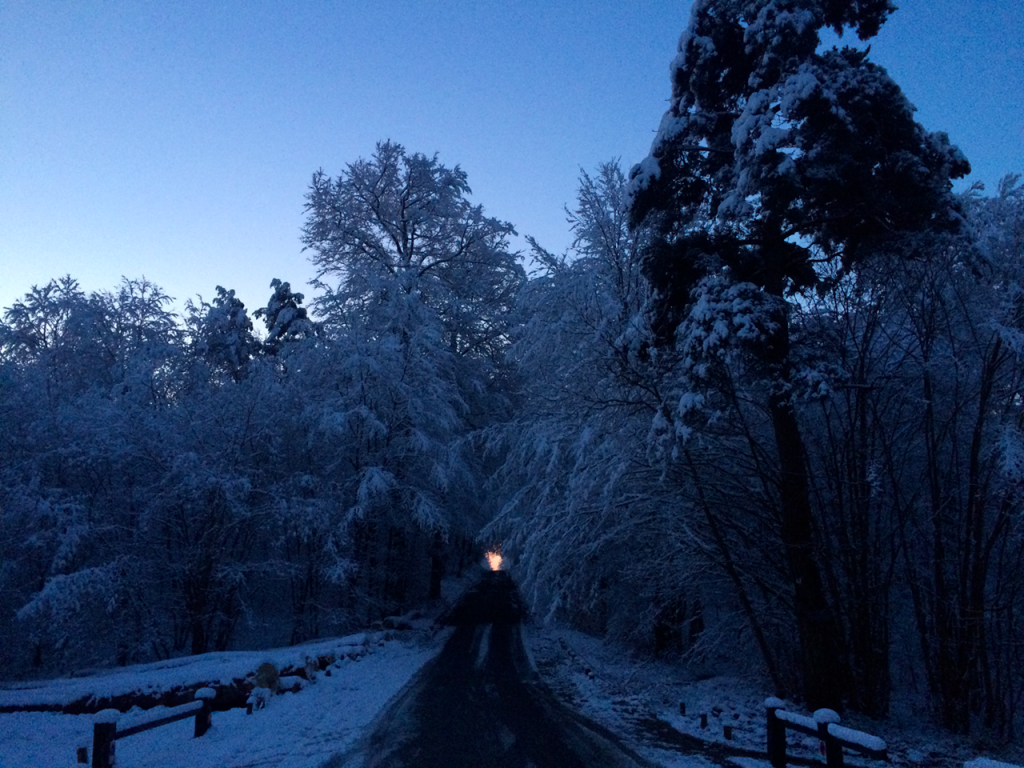
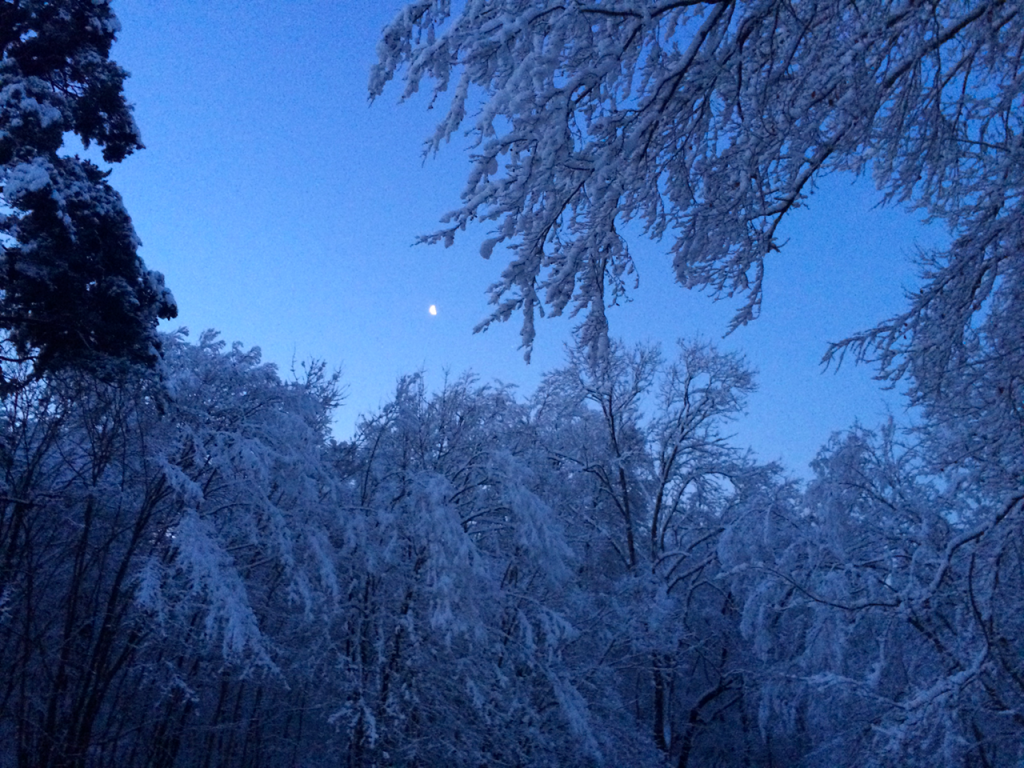
I’ve seen the paths that go through the countless sandstone boulders in different seasons, weather, and daytime: with a headlamp in the winter morning darkness, or when foggy, or on rainy days, or blanketed in snow. I recall listening to audiobooks in French to improve my cultural immersion, and finding the versions of Nietzsche’s Zarathustra or some of his books of aphorisms (available on Littératureaudio.com for free) can be an impactful experience, a truly unique set and setting.
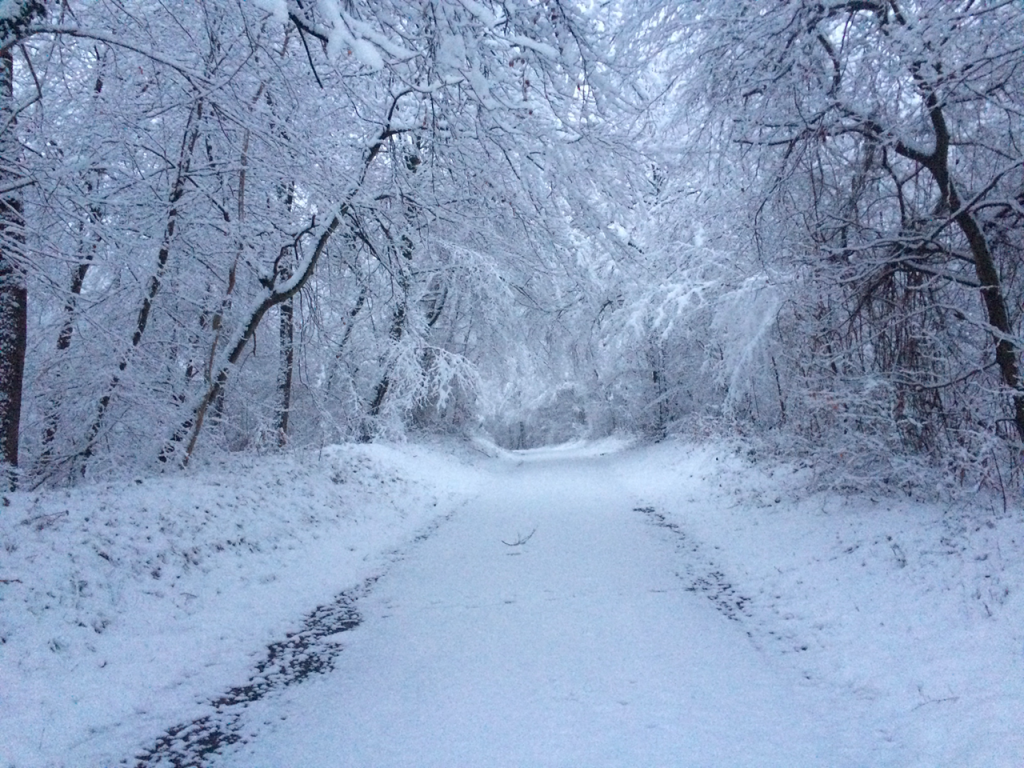
Once in a while, I would twist an ankle or trip over and fall, ripping apart my shoes with unseen roots or slipping on dark ice (until then, my outings had been mostly urban, and even on dirt paths in the hills surrounding Barcelona).
The sleeper of Apremont
When things still felt foreign, and we were trying to adapt to the light shift compared to Barcelona, I remember running early in the morning by a remote area in a scenic rocky gorge that locals call Gorges d’Apremont, and seeing a homeless camper sleeping under a rock with nothing but a sleeping bag covered in ice.
I say “sleeping,” even though at first I thought I was seeing someone in need of help or even dead, but I approached, and he was clearly sleeping; how he wasn’t freezing, I don’t know, because it was the coldest moment of the day, and probably near or just below freezing.
The first day I spotted him, I got scared to the point of asking him if he was alright, and he nodded, waving me to keep going and mind my business. The second day I saw him, he had switched places in the same area and I got scared again, so I changed my route after that.
Eyes in the dark
We walked the kids to the bilingual school they had begun to attend, so I needed to do my outings before that, early enough to leave the house in almost complete darkness. Sometimes, I’d reach a path deep in the forest in late November when the day hadn’t broken yet, and I could see families of deer and wild boars, foxes, and the like moving solitarily, or in pairs or groups, surprised in their sleep.
You could tell their presence because their eyes had an inner brightness, almost iridescent, and if you stopped running and paid attention to the area where the eyes shone, you could guess the shape and the animal. I remember doing a quick search online to reassure myself there were no wolves in a forest so close to Paris and shaped by humans for thousands of years.
I was glad to see that the established range for the species was well to the east and southeast near the border with Germany and the alpine areas close to Switzerland and Italy, though there were some sightings nearby. I never saw one, but sometimes it felt possible.
Wilderness next to Paris
Fontainebleau is a forest next to the largest metropolitan area in the European Union, scarred, shaped, and tamed by humans with rectilinear paths designed for carriage picnics back in the day, but make no mistake: deep in the forest, especially in the early morning, you’re surrounded by the wilderness beyond what you can see in any direction from a vantage point.
I got lost many times, which isn’t great when dark and cold, but I always found my way, knowing there was cell signal almost anywhere if I found myself in need of calling Kirsten, which never happened.
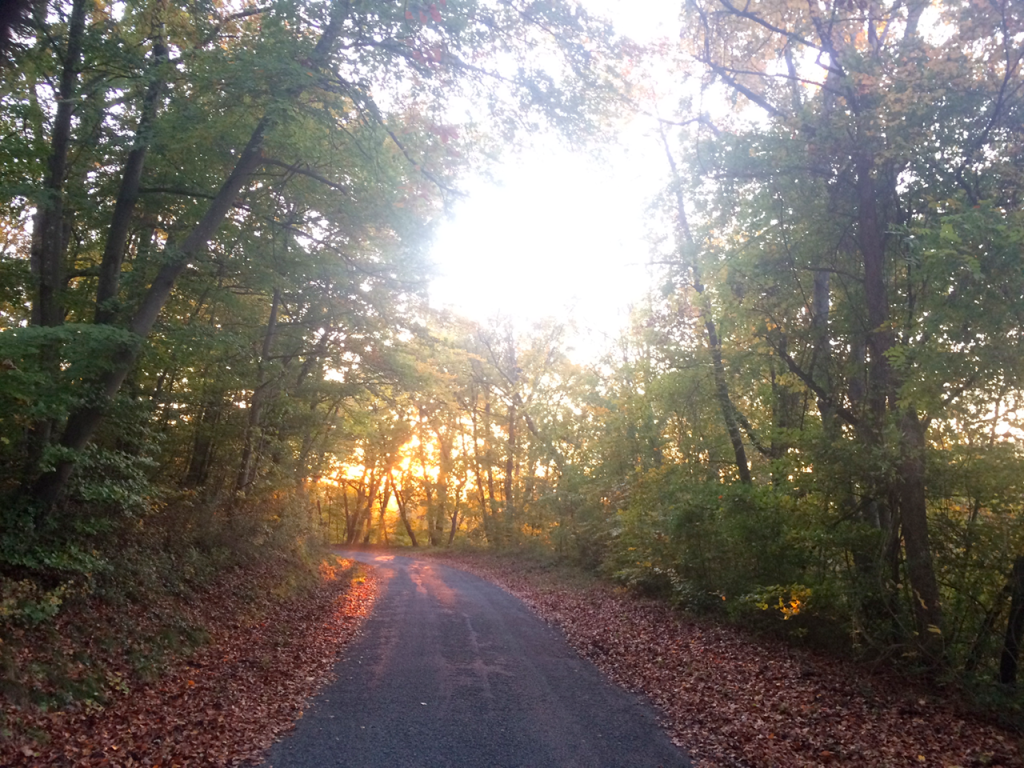
When we left, the forest is what I most missed, and it fell back to those memories that end up being a part of the hodgepodge of memories you associate with good times, or the idea of home, or the smells of a particular type of forest: sandy, foggy, and humid, full of rocky shapes that can trigger your imagination as you run past them at dawn.
A Scot among the painters
Our days in Fontainebleau came back rushing on a very rainy day in the San Francisco Bay Area, reading about the life of Scottish writer Robert Louis Stevenson, who spent several summers among the painters around Fontainebleau.
There, he met Fanny Osbourne, née Frances Matilda Van de Grift (Indianapolis, 1840). She was an independent woman ten years older, estranged from her husband. She had left for Europe with her three children, and, when one of them died, she settled in Grez-sur-Loing near Fontainebleau.
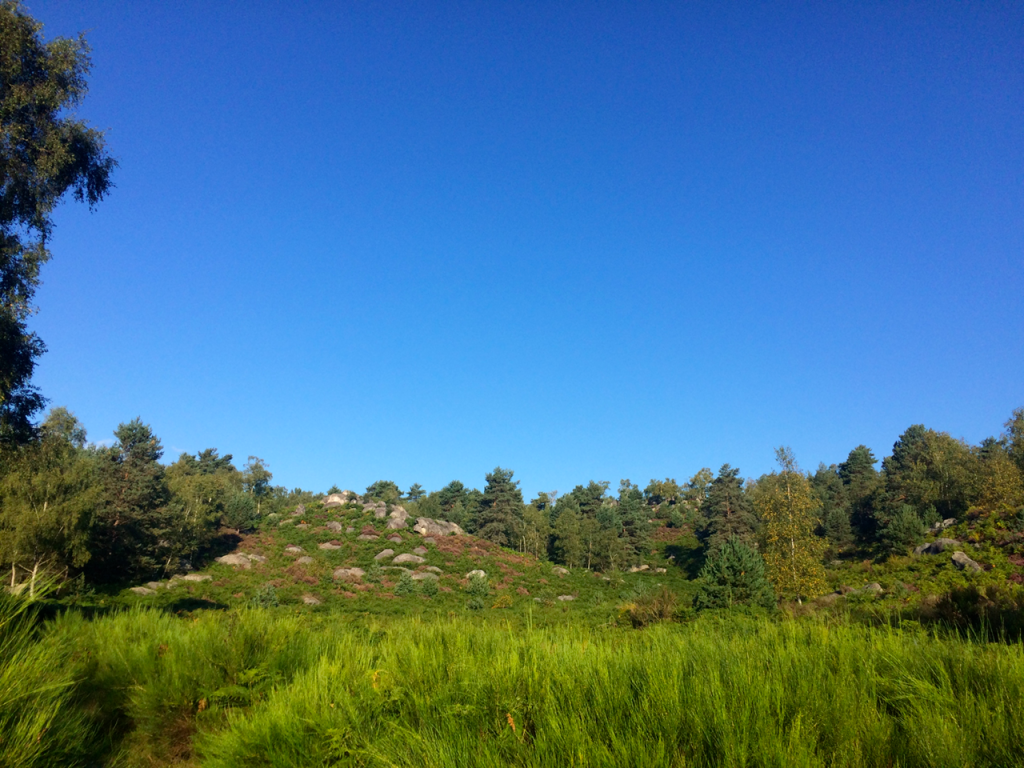
I try to picture the young Scottish man, getting back in shape and at the same time trying to experience the adventurous life that his health wanted to take from him. Meeting a married woman, older than him, must have been the improbable ultimate adventure to fix his destiny.
A donkey named Modestine
In 1878, after several summers near Fontainebleau, the incipient writer set off with Modestine, a tiny donkey, through the Cévennes, a mountain range and cultural region with unique idiosyncrasies on the southeastern edge of France’s Massif Central.
Perhaps our days in Fontainebleau appeared in a flashback as I read the opening pages of the resulting text, Travels with a Donkey (1879), where Stevenson describes his strategy to travel light and sleep outside without getting in trouble with locals or being taken as a tramp: travel with little and don’t disturb the place with an excess of fancy and superfluous gear.
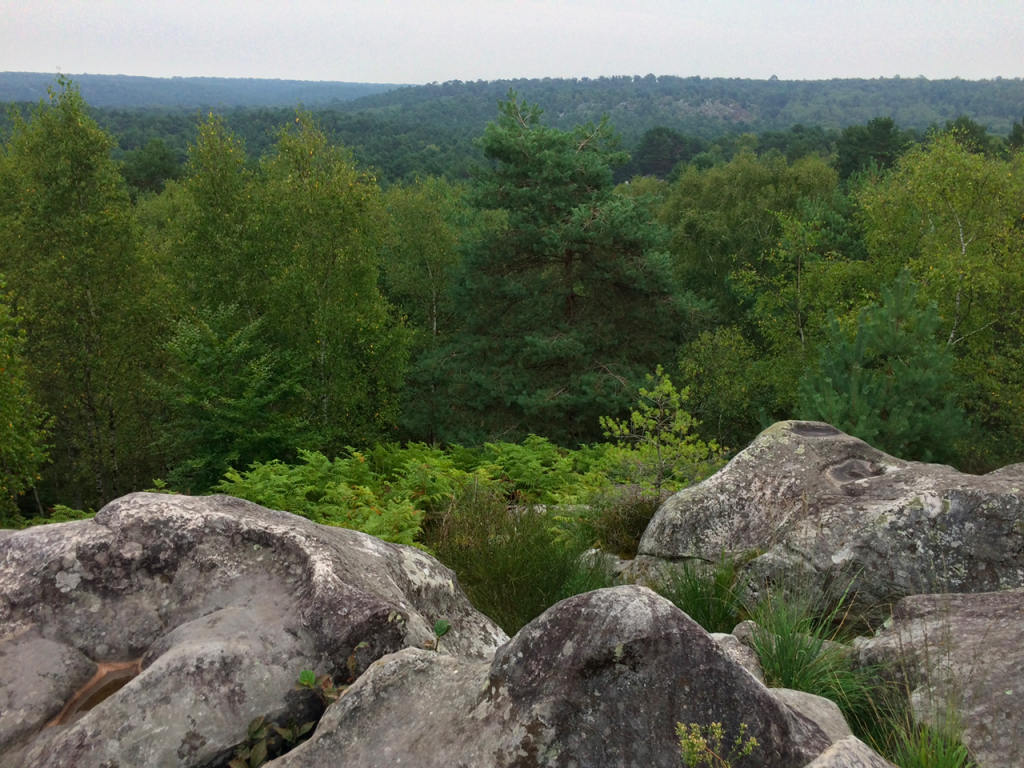
Just like the stranger I stumbled upon a couple of times, sleeping rough under a boulder in the Gorges d’Apremont right before sunrise when it was so cold that I needed gloves so my hands wouldn’t freeze, Stevenson also thought that a good sack is what you need to lie in the forest and have the rocks, animals, canopies, and stars as the furniture of your room for the night, which reminds me of the way Geronimo remembered his childhood:
“I was warmed by the sun, rocked by the winds, and sheltered by the trees as other Indian babes.”
Child of his invention
There are two paragraphs in the first chapter of Stevenson’s account of his Cévennes adventure that describe the sack. The first reads like good advice:
“It was already hard upon October before I was ready to set forth, and at the high altitudes over which my road lay there was no Indian summer to be looked for. I was determined, if not to camp out, at least to have the means of camping out in my possession; for there is nothing more harassing to an easy mind than the necessity of reaching shelter by dusk, and the hospitality of a village inn is not always to be reckoned sure by those who trudge on foot. A tent, above all for a solitary traveller, is troublesome to pitch, and troublesome to strike again; and even on the march it forms a conspicuous feature in your baggage. A sleeping-sack, on the other hand, is always ready—you have only to get into it; it serves a double purpose—a bed by night, a portmanteau by day; and it does not advertise your intention of camping out to every curious passer-by. This is a huge point. If a camp is not secret, it is but a troubled resting-place; you become a public character; the convivial rustic visits your bedside after an early supper; and you must sleep with one eye open, and be up before the day. I decided on a sleeping-sack; and after repeated visits to Le Puy, and a deal of high living for myself and my advisers, a sleeping-sack was designed, constructed, and triumphantly brought home.”
The second describes the sack itself. It needed a donkey to carry it, which is still a lighter footprint than any camper van:
“This child of my invention was nearly six feet square, exclusive of two triangular flaps to serve as a pillow by night and as the top and bottom of the sack by day. I call it “the sack,” but it was never a sack by more than courtesy: only a sort of long roll or sausage, green waterproof cart-cloth without and blue sheep’s fur within. It was commodious as a valise, warm and dry for a bed. There was luxurious turning room for one; and at a pinch the thing might serve for two. I could bury myself in it up to the neck; for my head I trusted to a fur cap, with a hood to fold down over my ears and a band to pass under my nose like a respirator; and in case of heavy rain I proposed to make myself a little tent, or tentlet, with my waterproof coat, three stones, and a bent branch.”
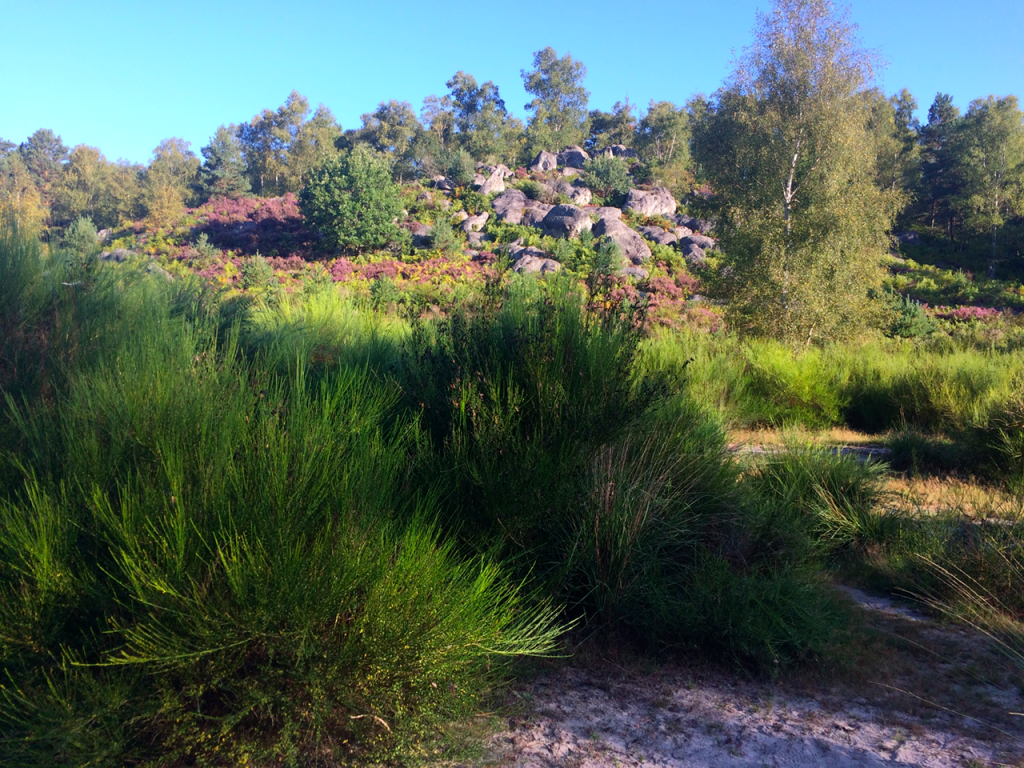
If one knows that Stevenson, an eloquent man who struggled with his health, had chest problems since childhood, and, at age 22, was sent to Menton in the French Riviera to recover, one appreciates even more his willingness to sleep out with so little, a sack and a donkey, in the mountains of central France, where nights get cold fast. Compared with today’s van-life rigs, it was traveling light.
Barbizon, canoes, and a night in custody
Before his trip to the Cévennes, however, Stevenson had time to enjoy the forest of Fontainebleau and acknowledge the irreversibility of his call: to become a writer.
Northern France was too cold and humid in winter, but he was determined to write and thought he needed adventures to pull it off, so he planned the following summer months accordingly, when he was less prone to get dangerously ill.
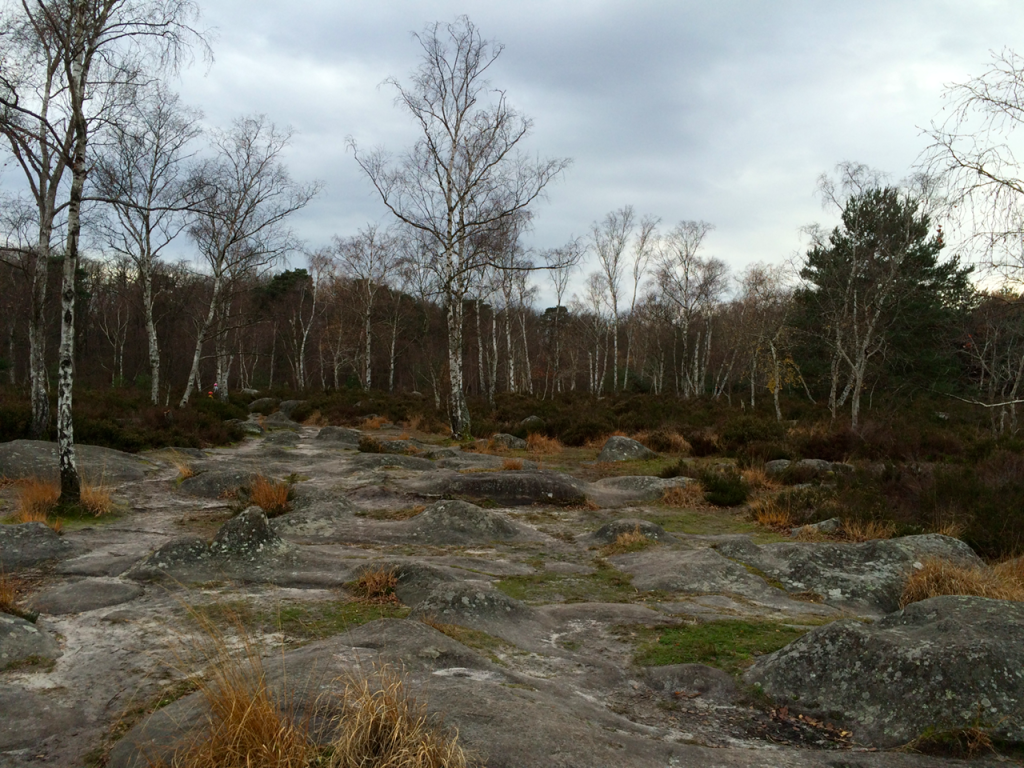
Stevenson heard about Barbizon and the forest of Fontainebleau through his cousin Bob, a painter. He first visited Barbizon in the spring of 1875. It was then a small, humble village taken over by the painters who would make the town’s name resonate ever since. The village at the edge of the forest promised long walks and an environment to create while living simply. He wrote his Forest Notes (1876) there. When we visited, the place had become a gift-shop version of those early years of innocence, when outside visitors enjoyed the slow and affordable country life it offered.
In the late summer of 1876, Stevenson, then 25, and his friend Walter Simpson paddled two sailing canoes from Antwerp through the Belgian canals and down the Sambre and Oise rivers into France. It was a trip in which they mingled with the river life during the booming Industrial Revolution in the core of Europe, surviving under the rain and stopping at cheap inns along the way. Perhaps his sleeping setup in the Cévennes owed something to an earlier humiliation: during a walk along the Loing, he and Simpson had been arrested as suspected vagrants.
The half-door at Grez
Which brings us back to the village of Grez-sur-Loing in 1876. The place was attracting painters, mostly British and Americans who had heard about the French painters nearby at Barbizon. Bob Stevenson was already part of the local scene.
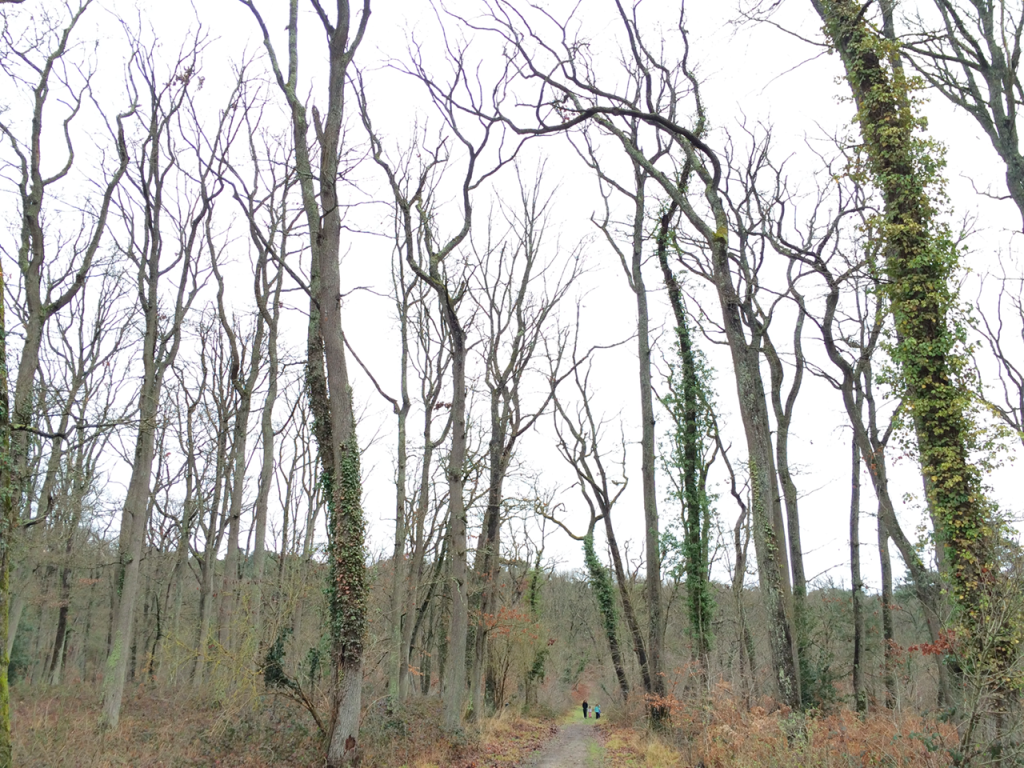
At the time of the encounter with his future wife, Fanny Osbourne was 36 and grieving. They might have been introduced by the community of English-speaking expatriates. This artistic colony followed in the footsteps of the Barbizon school, the circle that had formed decades earlier around Théodore Rousseau and Jean-François Millet.
There’s one account of the encounter between Stevenson and the traumatized mother approaching middle age: he’s described by Fanny’s own daughter, who was there, as a young man standing in the half-door at dinner. The Scotsman staring at the married American might have been a sight to see.
An affair that wouldn’t end
We know that their encounter changed their lives forever. They met in Grez at the beginning of autumn of 1876. But Edinburgh was still Stevenson’s home, especially as long as his father contributed to pay the young writer’s bills. His father, Thomas Stevenson, the famous lighthouse engineer, wanted to lure his son into settling back as soon as his Grand Tour years were over. Or so he expected.
The young writer’s return was temporary. Still, the prospect of living with a married woman and mother of two surviving children (Belle, 18, and Lloyd, 8 at the time) must have felt far-fetched. Divorce was a scandal in the 1870s, especially for a woman, and it could cost her the children’s standing. Reason and custom told them it should stay a short-lived affair. It didn’t. By 1877, they were lovers, and that summer they were together again in Grez.

So Fanny went back to Oakland, California, in 1878, to her husband Sam Osbourne. With Fanny returning to her life, Stevenson decided to walk the Cévennes a few weeks later; that’s why, when read now, the book is the account of a man who misses someone he never names.
Things weren’t meant to stay like that, however. A year later, he followed her on an emigrant ship to New York, and from there by emigrant train to the West Coast, coughing most of the way. After Fanny divorced, they married in San Francisco in May 1880, with few prospects for economic success.
Squatters on Mount St. Helena
Stevenson had not yet achieved notoriety, let alone anything resembling fame or success, when the newlyweds arrived in Calistoga by train in the spring of 1880 with little money for a honeymoon. Despite living on a shoestring budget and dealing with illness, the couple and their dog, Chuchu, must have looked optimistic and high-spirited to onlookers.
They spent the end of May in a hot springs cottage, but money ran out, so they sought more affordable accommodations. Joined by Fanny’s son Lloyd, then twelve, the little group traveled to Mount Saint Helena.
There, they climbed to the old Silverado mine, where they explored a dilapidated bunkhouse against a hillside. There was a rundown office on the first floor, and a bunkhouse on an upper level. The two main levels weren’t connected indoors, and the only way upstairs was to leave the building, climb the hill, and cross a wooden plank.
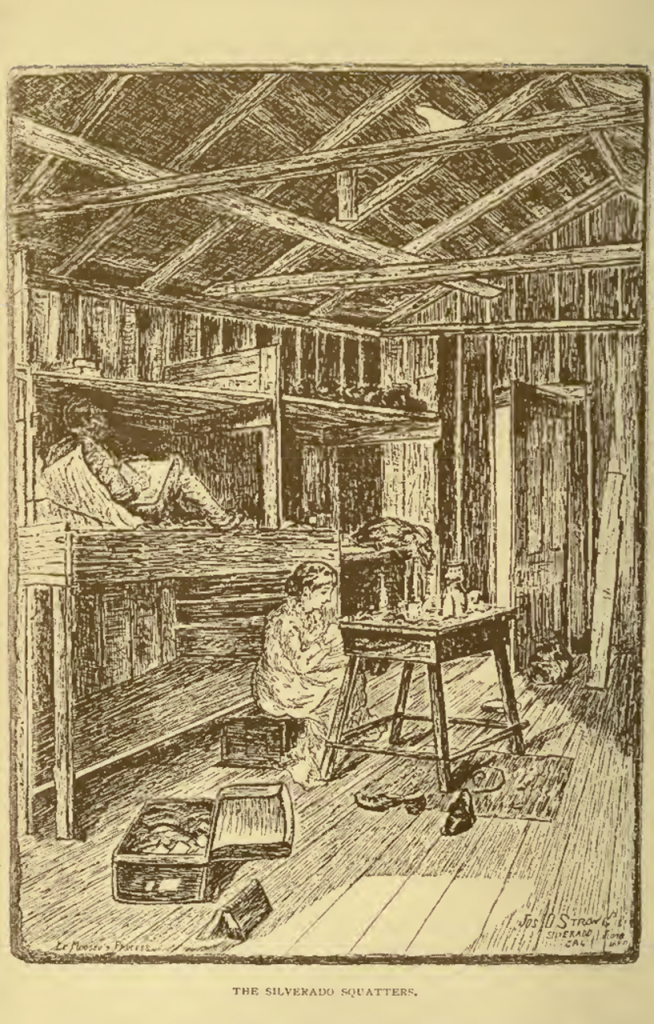
But it could work. They had one outlandish idea: how about cleaning up the place and staying there enjoying an idyllic summer? The “Silverado squatters” patched the windows with cotton cloth and carried water from a spring.
“There is something singularly enticing,” he wrote, “in the idea of going, rent-free, into a ready-made house.”
70 miles north
The mountain is about 70 miles north of where I’m writing this. The bunkhouse is long gone, and only a marker remembers the ledge where it stood. I haven’t hiked or run there yet, but it’s happening.
When I do, I’ll probably think of the man in the Gorges d’Apremont, asleep under a massive boulder in a bag covered in ice, waving me on.
Stevenson, who had not yet written Treasure Island or Jekyll and Hyde, didn’t need much to feel at ease somewhere, despite his chest condition.
For twelve days in the mountains of France, he used a sack and a donkey, and in a few of his happiest weeks in California, all he had was a ruin to call home.