Tiles, mosaics and the anonymous artisans who kept places from becoming placeless.
Many years back, on one of our trips through Iberia, we ventured into Portugal from the Castilian province of Salamanca and headed north to the Serra da Padrela mountains, a rugged though modest mountain range in the relatively remote (there’s nothing really remote, distance-wise, in long-and-narrow Portugal) and historically isolated area of Trás-os-Montes (literally, “beyond the mountains”).
There, in the small town of Vila Pouca de Aguiar, the hometown of Count António Teles de Meneses, a 17th-century Governor of India, Brazil, and Angola, we experienced from our slow car the transition from raw, high-altitude mountain terrain that reminded me of the interior of Galicia across the area’s northern border, into a dense, lush valley with ancient thermal waters. The area, I read, had been mined by Romans, transforming part of the landscape.
Dense woodland (oaks, cedars, opportunistic pine trees) gave way to agricultural groves as we approached a corner of the valley famous for its mineral waters, known as Pedras Salgadas.
Salty stones and healing water
Coinciding with the 19th-century frenzy around the healing power of thermal waters and natural spas, local doctor Henrique Manuel Ferreira Botelho certified the water’s qualities in 1871: hypersaline, gasocarbonic, and radioactive, ideal for the then-emergent field of balneology, or spa therapy.
He showed the water two years later at the Vienna International Exhibition, winning a prize, which propelled the more ambitious idea of opening a thermal spa with the name of Pedras Salgadas.
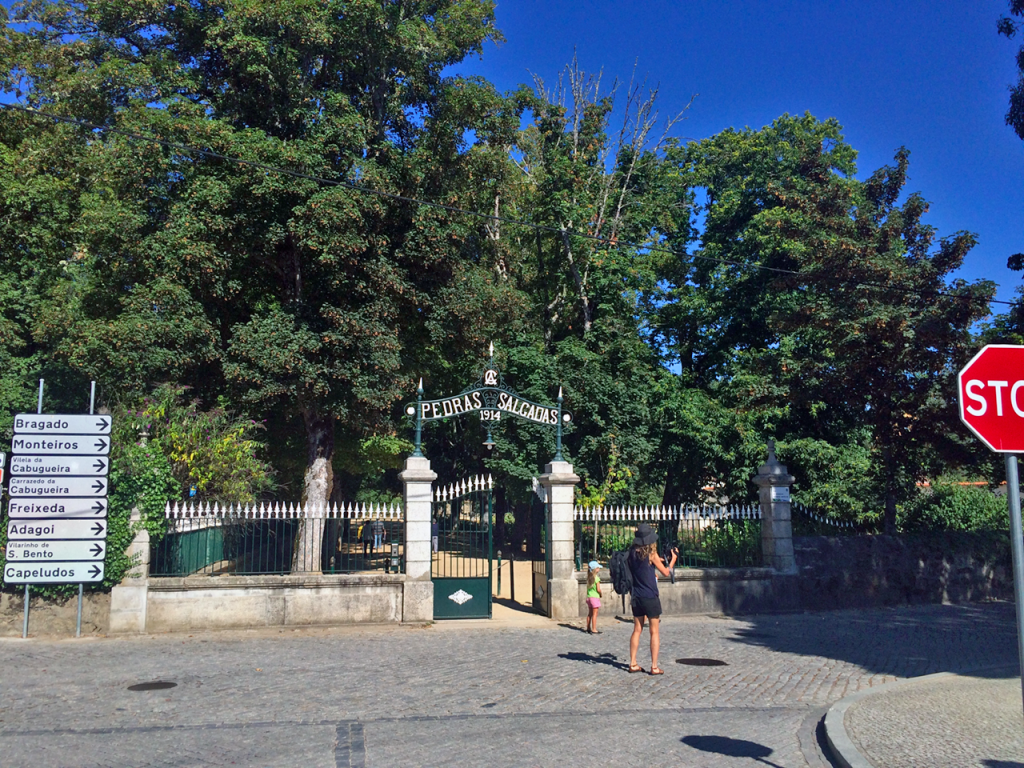
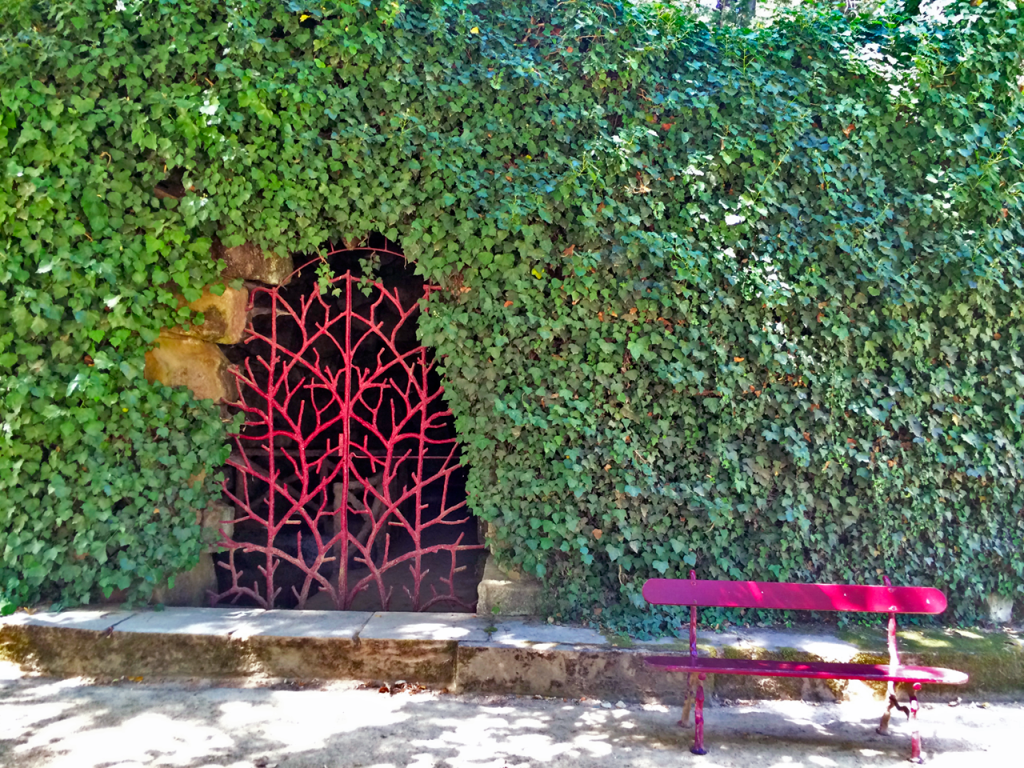
As we approached the place with our car, we traveled back to an earlier era as we saw the stone enclosure, the ironwork of the door (“Pedras Salgadas, 1914”), and the Romantic park inside, designed by Jacinto de Matos in the 1800s.
Cabins in the canopy
We met middle-aged architect Luís Rebelo de Andrade. Lean and energetic (youthful plastic glasses, casual-but-elegant attire), he’d been in charge of the park’s restoration from 2012 to 2015, following earlier work by another towering architect, Álvaro Siza, from 2002 to 2010. Siza had restored the spa building and the public pools, whereas Rebelo de Andrade took care of the park’s romantic, peak-spa identity.
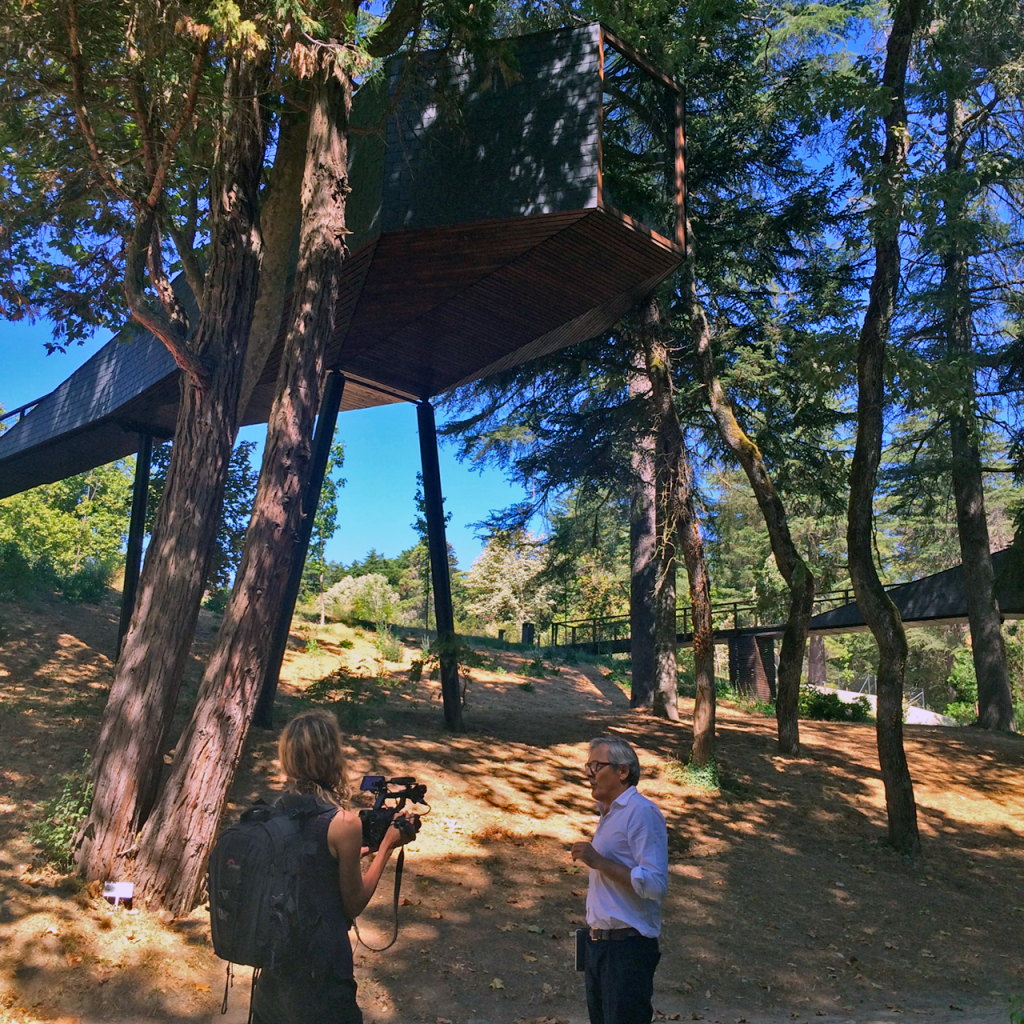
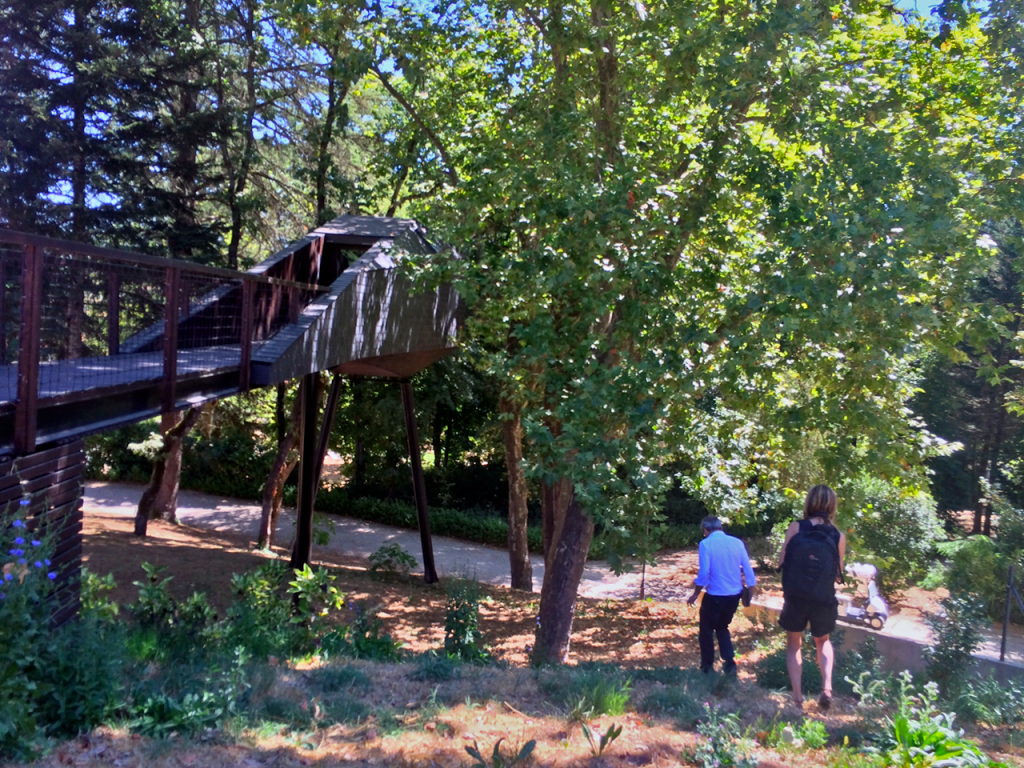
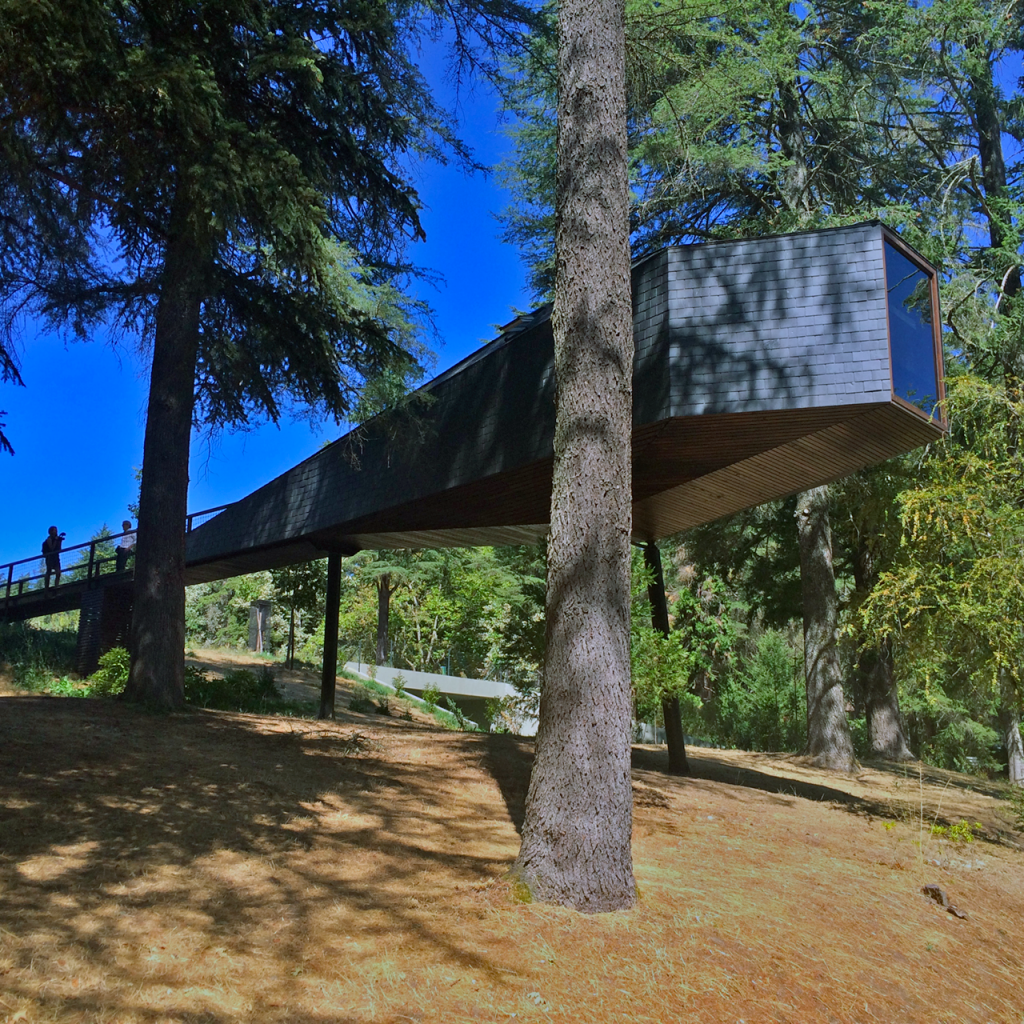
He created, among other things, a set of prefab modular cabins in slate tile perched on the park’s canopy, which he proudly showed to us. It was a truly special day for our kids and us, and Luís was very patient with our unconventional setup (our kids were much younger back then, and they traveled with us at all times).
There wasn’t much time to walk around, see the structures, and immerse ourselves in the park, and Luís had to head back to Lisbon, but we had time to talk about a few other things, mainly in English (despite both of us being Iberian and me having Galician roots).
I asked him about the importance of decorative tiles as one of the identities of the perceived Portuguese building vernacular (the other being an innovation: the Marquis of Pombal’s earthquake-proof “Pombalino” building style, developed after the massive 1755 Lisbon Earthquake, whose waves of devastation reached as far as Cádiz and Seville, killing thousands in the Guadalquivir River Valley). Landmark structures (the Seville Cathedral, including its Moorish tower, the Giralda, as well as the Torre del Oro) were affected.
A flower set in the stone
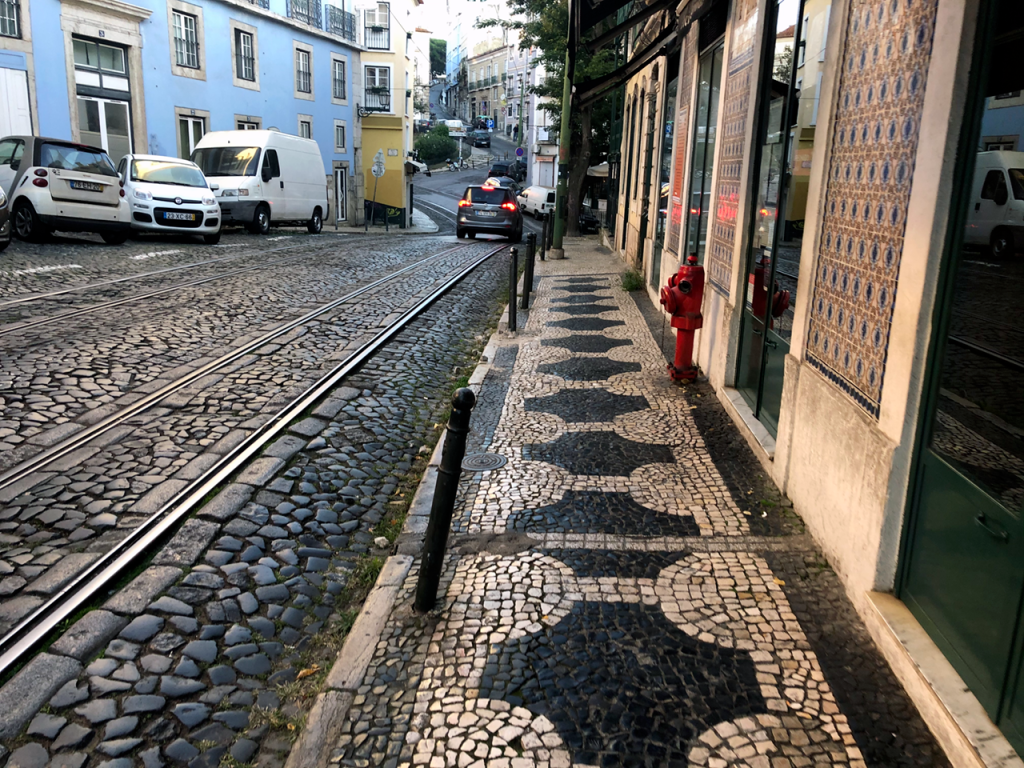
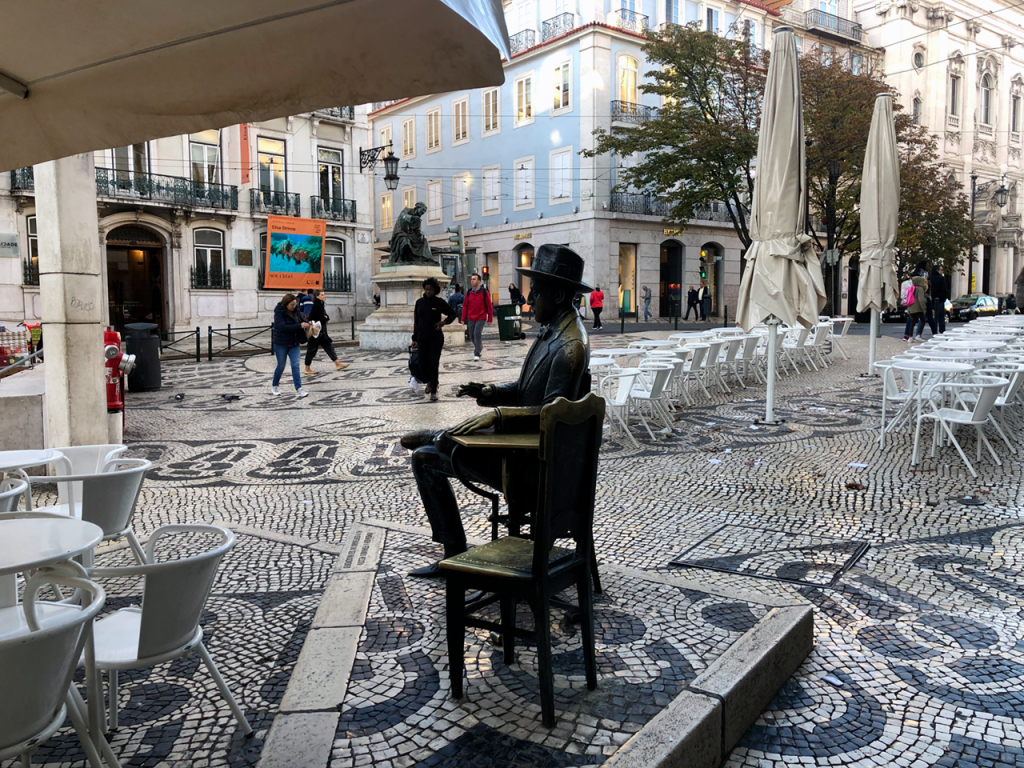
I’m not sure how, but we ended up talking about the signature mosaic sidewalks of Lisbon and other Portuguese cities and towns. As it happened with decorative tile designs and techniques, or even with the construction of palaces and temples, the mosaics were the work of many anonymous generations of artisans, relying on the savoir-faire of their respective guilds to pass on the secrets of great materials and designs.
When I mentioned the anonymous, selfless commitment of these artisans to their craft, Rebelo de Andrade was quick to add one big caveat that had turned into one of his secret passions: discovering the “hidden signature” of the masons who had laid many of the most legendary sidewalk mosaics in the country. “They signed their work; you only have to look for their hint-hint in the mosaic itself.”
I asked how that could be: I had been to Lisbon a few times and had not seen such a thing. Luís Rebelo de Andrade said that the “calceteiros” called these signatures within their mosaics “assinaturas,” and they appeared taking the shape of tiny figures set into the stone outside the official pattern: a flower, a small boat, a clock, a star, a four-leaf clover (because of course).
There he was, a notable architect from Portugal who counted 1992 Pritzker winner Álvaro Siza among his peers, showing the enthusiasm of a young comic-book or sports-card collector, but for masons cryptically signing their mosaic work in Lisbon’s public sidewalks; I can’t fully recall the whole conversation, but I’m confident he told me that he planned to write a book on it if he didn’t find at least a worthy academic thesis documenting the phenomenon. His question, or concern, seemed clear to me: Who’s taking care of things when nobody is?
Who looks after the sidewalk
Fortunately, the Calçada Artística has gained recognition, and mosaics were included on Portugal’s national intangible heritage inventory in 2021. I’m sure that, among those who pushed the hardest to get the trade and its work recognized, were architect Luís Rebelo de Andrade and his brother Tiago, whom we don’t know personally but have heard about. Calçada portuguesa is also a candidate for a UNESCO intangible heritage bid, which should come sooner rather than later.
There are also books documenting the trade, and Lisbon’s Escola de Calceteiros keeps teaching the art of creating the unique mosaics despite the city’s constant need to damage the work to run or repair services under them, in a constant struggle between utility and beauty that seems to be the metaphorical battle of our time.
Many calceteiros are all-in on their work, not because they get recognition or astronomical salaries, but because they are working with a purpose, making their place (and the world) more beautiful as a result. Who wouldn’t want to work having such an end in mind? That’s perhaps why people like Vítor Graça, who became a calceteiro at almost 50, exist.
Portugal might be, by the way, a paradise of late bloomers: José Saramago’s real breakthrough novel, Levantado do Chão (1980), came at 58 (Memorial do Convento, which made him famous internationally, appeared at 60), and film director Manoel de Oliveira’s real career started around 70, when Amor de Perdição (1978) came out. He was the oldest working director in the world. His last feature, O Gêbo e a Sombra, premiered in 2012, when he was 103. Which makes one think: is it a good bet to retire early? (De Oliveira died in 2015, at 106).
Signatures without names
The so-called assinaturas from calceteiros were often made on such a small scale that they existed only because the mason chose to add one, and it was concerning that the ongoing transformation of Lisbon, which required improving sewer, electrical, and telecommunications lines, was bringing mosaics back only partially, with varying qualities.
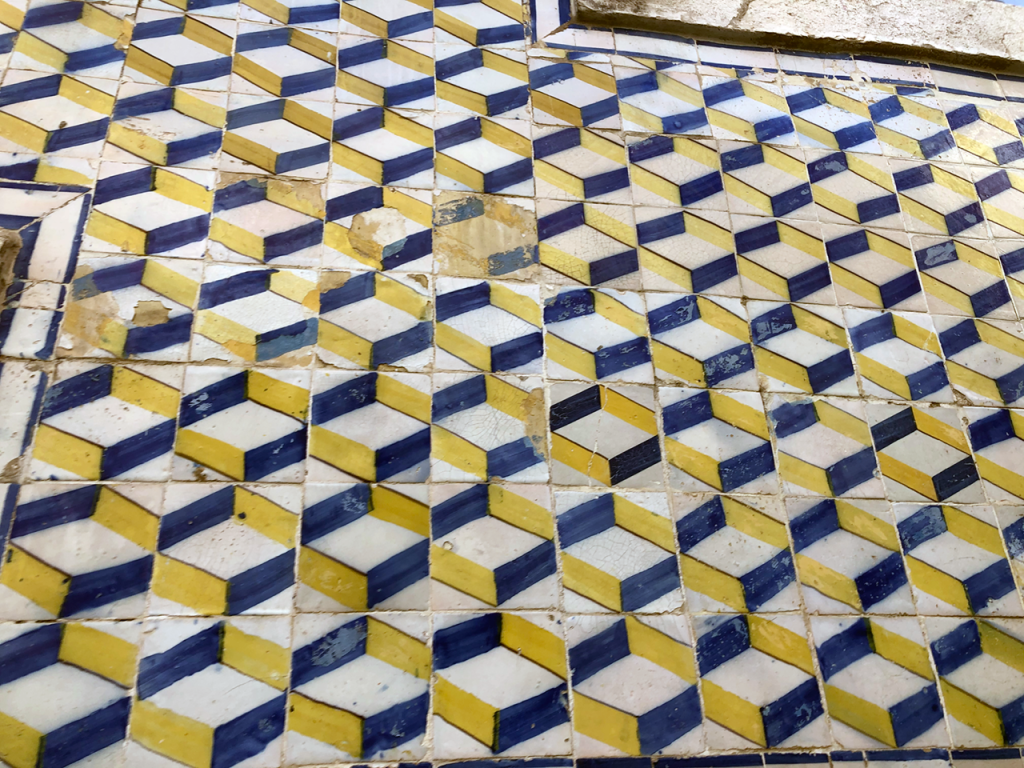
Historical assinaturas were unofficial and unsigned (not associated with the calceteiro’s real name). That said, they belong to an era when proud work was possible among the humblest of artisans, to the point of having them make a cryptic imprint to show their colleagues in the guild where the work of a certain stretch of sidewalk came from.
Once you know this is the case, Luís Rebelo de Andrade said, you won’t walk the same streets the same way ever again. I imagined at least a few of Fernando Pessoa’s heteronyms walking the streets of Lisbon, dwelling on the origin of the poetic, hard-to-decipher signatures.
Pessoa’s walk to Belém
I’ve seen blurry pictures of Pessoa walking down the street in Lisbon, elegantly dressed as an Englishman lost in translation, going on foot from Avenida da Liberdade, where dozens of assinaturas survive on the ground, to his solitary apartment, and from there to the historic riverfront district of Belém. There, many (perhaps Pessoa himself) have marveled at the mosaics surrounding the fountain and the corners in Praça do Império, where the zodiac pavements carry many signatures by anonymous masons.
Many poets write as if they were to imprint their words in stone. A mason doing such work is also a poet; maybe a poet of a different kind to the eyes of society, but a poet in the end, all things considered.
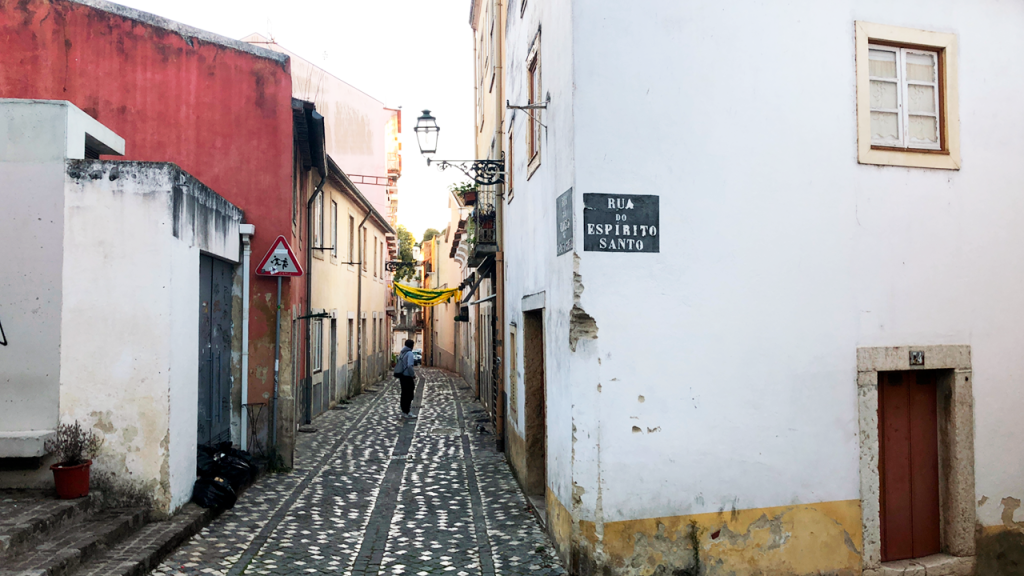
Assinaturas are spread all over old Lisbon, unofficial and unsigned, with names or initials. Only other calceteiros could tell in the past who made each one, from the technique used to the motif; there were schools, but there were also masterful calceteiros rising above their school and making their own individual imprint. Artisans of the sidewalk.
From 400 masons to 11
Despite the efforts by authorities and people from civil society to preserve the trade and the guild, the craft is vanishing, just like many other ways of expression whose tangible value is difficult to assess, while their non-tangible worth makes people’s lives a little less beige and placeless.
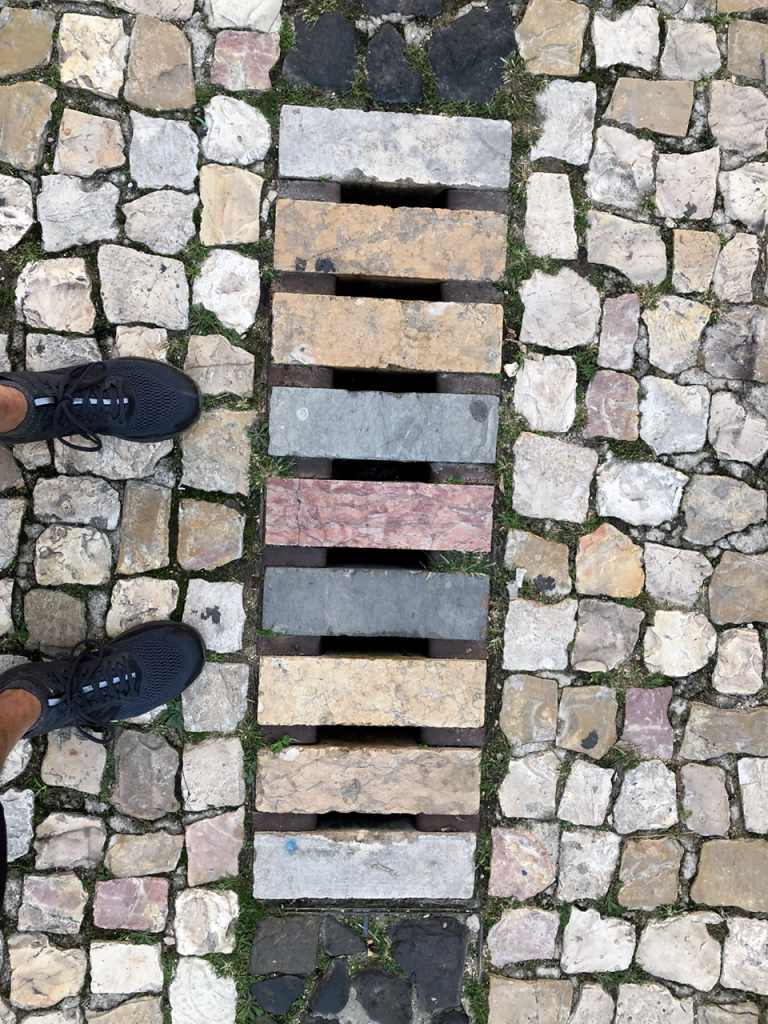
Lisbon had about 400 calceteiros in 1927, whereas there were only 18 registered in 2020, 11 of them working.
Other areas of the world once cherished their own version of calceteiro, even if it wasn’t a trade making mosaics in public sidewalks. Until recently, for example, decorative tiles had guilds, troves of artisans, and recognizable local traditions that spread worldwide, from Europe and the Americas to the Middle East, Central Asia, and the Far East.
Blue bricks before the Bible
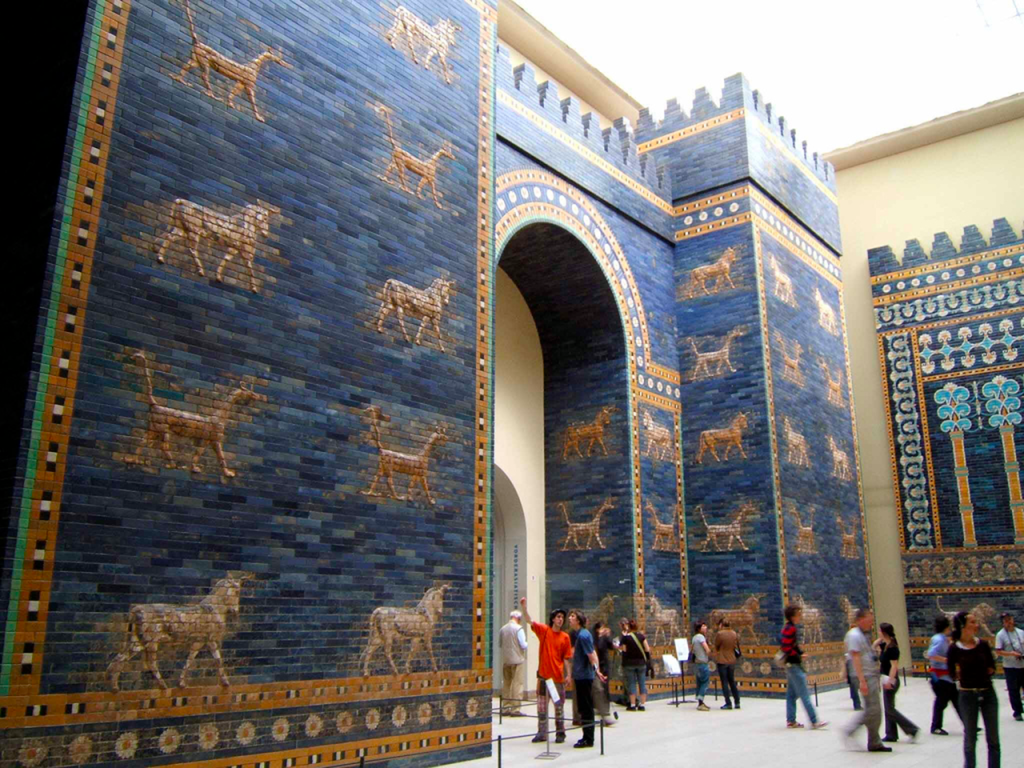
Decorative tiles date back to pre-Biblical times. As early as the 4th millennium BC, the Egyptians decorated their homes with blue-glazed bricks, a trade that evolved into decorative tiles by the 14th century BC. Later, tiles with designs pressed into the clay under a protective glaze appeared, and anonymous artists competed for the best designs just as calceteiros would with their work 3,500 years later.
In Mesopotamia, glazed bricks were also used early on, most notably on the Etemenanki ziggurat (possibly the Tower of Babel) and the Ishtar Gate in the city of Babylon. The technique spread, and tiles evolved into a true expression in Mesopotamia and Persia (over 10,000 glazed bricks from the Ishtar Gate are now in the Pergamon Museum in Berlin), with cities across the Silk Road showing legendary mosaics of decorative tiles on their religious and civil buildings. With the Caliphate, the technique reached the Western world.
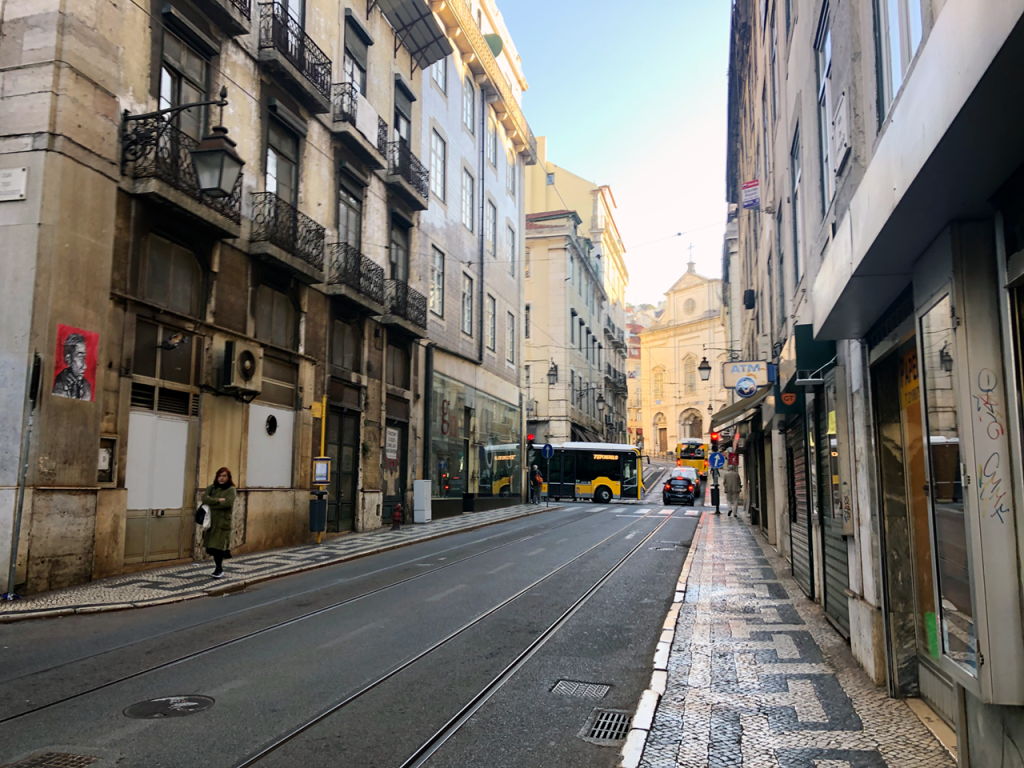
During the Age of Discovery, Iberian, Dutch, and English builders competed in decorative tiles, and then the trade faded, peaking again with the Romantic wave of the 19th century, the Arts and Crafts movement, Art Deco buildings, Catalan Modernisme, and their equivalents.
Tiles in the rubbish container
Being from Barcelona and having traveled throughout the Iberian Peninsula, I can attest that the reminders of medieval, early modern, and modernist decorative tiles are so abundant that I’m worried so much could be lost as old buildings get “refurbished.” I know what I mean: when Kirsten and I bought our first apartment in Barcelona’s Gothic Quarter, we met a woman (an expat, perhaps English, married locally) who had helped restore apartments in the modernist part of the Eixample district.
There, entire rubbish containers filled with old mosaic tiles were discarded to install bland contemporary alternatives produced on the other side of the world to much worse standards. Fortunately, things changed later on, but much damage has been done, and entirely unique collections of “mosaic hidràulic” were lost in the process.
Nobody disputes that decorative tiles and even floors are a vernacular signature, but it can be hard and costly to preserve heritage pieces, or live on them, for that matter. That said, preserving Valencian rajoles, Seville azulejos, or Gaudí’s trencadís is a way to engage in the Quixotic battle of preserving vernacular beauty against the advance of what French theorist Marc Augé called non-places.
Chimneys standing in Altadena
I’ve thought about this many times but never clearly written about it, though it keeps coming to me. For example, I was glad that, after the 2025 Eaton fire (a tragedy for the modest but beautiful bungalows of the San Gabriel foothills), LAist ran a story about the race to save historic Altadena fireplace tiles from the humming bulldozers speeding the cleanup to rebuild asap.
Altadena fireplace tiles, I learned, were the only thing left from a place and time. The houses and surrounding vegetation were obliterated, but many old chimneys and their tiles outlasted the disaster and are a reminder that there are many ways to rebuild a house and a neighborhood, but some of them are more concerned than others about beauty. In the eternal struggle between beauty and utility, decorative tiles, sidewalk mosaics, or glazed bricks can play a role.
Many of those Altadena fireplaces carried tiles by Ernest Batchelder, a New Englander who moved to Pasadena in 1901 to teach art at Throop Polytechnic, the school that later became Caltech. In 1909, he built a small kiln behind his house on the Arroyo Seco and started making tiles for his own home. Not long after, “Batchelder tiles” were a thing.
They were brown and earthy. They belonged in the houses where they were popularized, with low-relief birds, vines, ships, and even old California missions.
By 1920, his company had moved to Los Angeles, to a plant that would grow to seven acres and employ close to 175 people. Batchelder once said that a fireplace wasn’t a luxury but a necessity, and he priced his tiles so people of modest means could have one. Not even the Depression, which closed the plant in 1932, erased a true local heritage in bungalows across Southern California, some of which are now only chimneys.
A tile shop on San Pablo Avenue
Up in Northern California, where we live now, there was a local tile shop that made its impact across the Bay Area and beyond. It started on San Pablo Avenue, in the flats of West Berkeley, run by two former classmates from Alfred University in upstate New York, Chauncey Thomas and William Bragdon.

Both taught on and off at the California School of Arts and Crafts in Oakland. Their company, later called California Faience, pressed tiles by hand into plaster molds, and some of them were made with cuenca, the method of raised lines that keeps one glaze from bleeding into the next. It’s the same technique potters had used in Seville for centuries.
Early on, the tiles came in matte glazes meant for the brown-shingle bungalows going up all over the East Bay. After 1920, the colors turned bright to match the Spanish Revival houses that came into fashion, and Julia Morgan ordered a whole world of tiles from them for William Randolph Hearst’s estate at San Simeon.
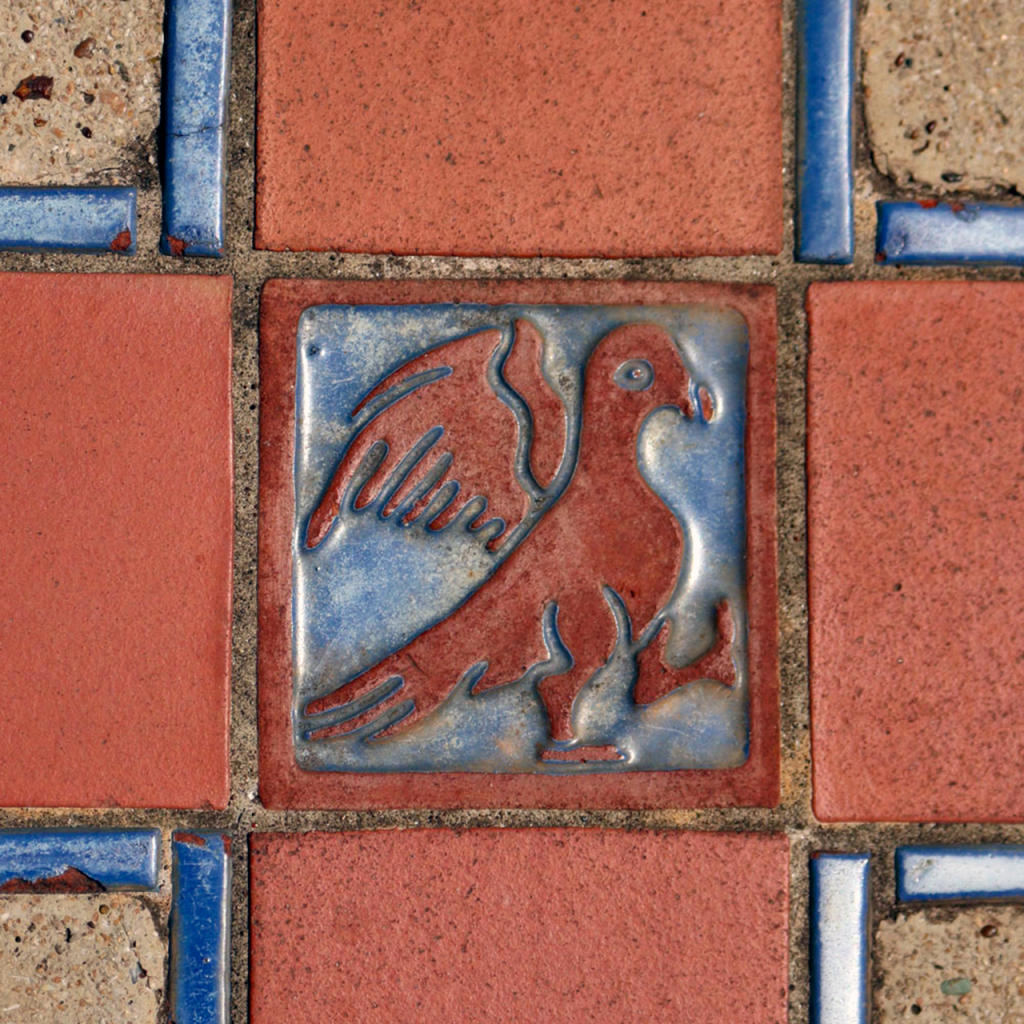
The shop never grew big. Local schools bought its clay and glazes, students made their own pieces, and the company sold them. The longest of those arrangements seems to have been with Berkeley High School, an institution I know well.
Bragdon’s grandson, Kirby Brown, spent years on the company’s history and wrote a book about it. His research is now in a UC Berkeley library collection, along with the company’s own ledgers and correspondence.
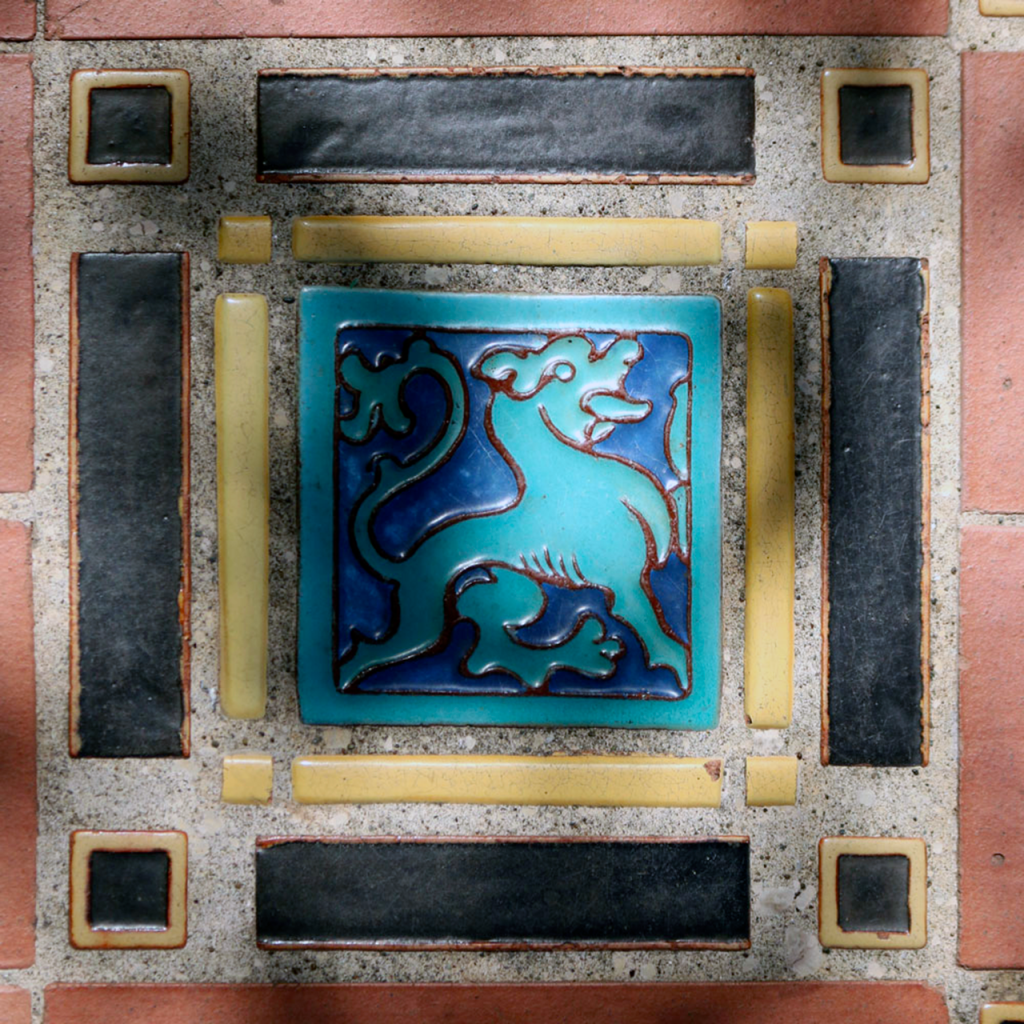
There are also small pieces of tile in the boxes, each one fired with a test glaze, so the potters could see how a color came out of the kiln before they used it on someone’s fireplace.