On an Ozark hillside and in the Maine woods, the quiet engineers of the postwar era are leaving, and handing off.
My father-in-law, now suffering from Alzheimer’s and unable to recognize us, grew up with a twin in the Bay Area. Those were times of free-range rearing, and the twins, growing up in the steep streets of Sausalito overlooking the bay and the City in front of them, set to sail and had many early jobs.
Among them, they helped the Forest Service to map the still-remote areas of Northern California, which he did by mule and horse, helping his stepfather (his own father had died years before, when he was a teenager). He didn’t go to college right away but was lucky to be born in that time and place, and to look the way he did.
Because of that, he had a few good mentors, among them a dentist who, many years later, would still show his appreciation to him by inviting his family over and looking after the dental health of Kirsten and her siblings. But he also worked his way out of a more or less directionless early youth, entering the Army and studying while, among many other early missions, he was stationed in Japan.
World War II was still in everyone’s rearview mirror, although the perceived threat was now the Soviet Union at the peak of the Cold War. He got to study in the army, finishing his degree at Reno because he wouldn’t wait for a new year, despite having been accepted into UC Berkeley following freshman year.
A different world, perhaps more honest
I can’t imagine how many more responsibilities and adventures young postwar Californians (still too young to serve in Korea and old enough to be just past draft age by Vietnam) had. How many more life-changing and life-affirming experiences they endured before settling and having a family.
It was a different world, still brutal and perhaps more honest, one affected by the consequences of Pearl Harbor and the United States entering the war, by Japanese-American internment camps and by the rise of the new military complex across the West Coast, as he saw with his own eyes growing up in Sausalito.
When he headed to college in Reno with a friend, they stopped the car in the Sierras and went hunting. They got their deer, which they prepared upon arrival and stored in the freezer, and that was the meat they ate that whole freshman winter in that backwater college, because he just wanted the education, not the fancy title.
Tender and manly
An engineer by trade, he was (he is, bear with me) probably the least aggressive adult I’ve ever known, yet many silent generation and older American men seemed to get that you could be tender and manly at the same time. Active and strong, you’ll see no picture of that generation showing off muscle or aggression, for their era had enough of it, and they were probably more embarrassed about it than anything else.
After looking at brutality and horror in the eye, all they could think of in times of peace was to create a safe, better life for them and theirs, and so they probably understood they didn’t need to show off with pose but rein in the lives they wanted to build by just going ahead and building them.
I have the impression many more people of the GI Bill era (which had its structural injustices by favoring certain demographics over others, but that’s another story that would require its own dedicated chapter) shared many of the traits of my father-in-law, born in 1934, who is about to be 92. GI Bill beneficiary, studying partly in the Army, a pacifist at heart who worked to defend his country from the possibility of nuclear obliteration.
Defense satellites, and no war at home
Knowing him, mellow and tall, you would have never guessed that, until his late forties, he’d worked as an engineer designing first-generation defense satellites at the same time that the Space Race gained steam. When he got married, he agreed to be deployed to Germany through the company he worked for under contract with the military, and that’s why Kirsten, as well as an older and a younger sister, were born, technically, in American military hospitals, having “Munich” as the official place of birth.
Those were circumstances issued from the horror of war, yet there was nothing about war with him and his environment. This dichotomy was probably a defense mechanism that many Americans and people from other places had to endure, so they could build a better reality from scratch, a world of their own.
I thought about this when, over the years, Kirsten and I have visited people who open their houses and their life experiences for us to document, and in such encounters I discovered that John’s story was one that shared similarities with many other people coming of age within the decade or so after World War II. Instead of rejecting society with nihilism and dissoluteness, many just wanted to see the future with optimism, and created places for their families to thrive, environments that were safe to play and experiment.
Jim’s six hundred acres
When Dustin first emailed us about his family property in rural Maine, a place he had come back to spend time with his dad and his sister’s family, we knew Jim, a Vietnam veteran and also an engineer by trade, liked unconventional homes (our fit), but not much more. Upon our visit to their property in June of 2024, we got to know a genuine, creative, modest, bigger-than-life character who had created his idea of paradise for his family to live in.
During our interview across the property, which includes a 1-mile zipline that descends a hill over a lake to get from one corner of the homestead to the cluster of houses on it, Dustin sometimes talked us through the inventiveness of a man who had seen many of the dark things of the human condition, and, after all of it, managed to see the upside of life, building more than a safe shelter for him and his family.
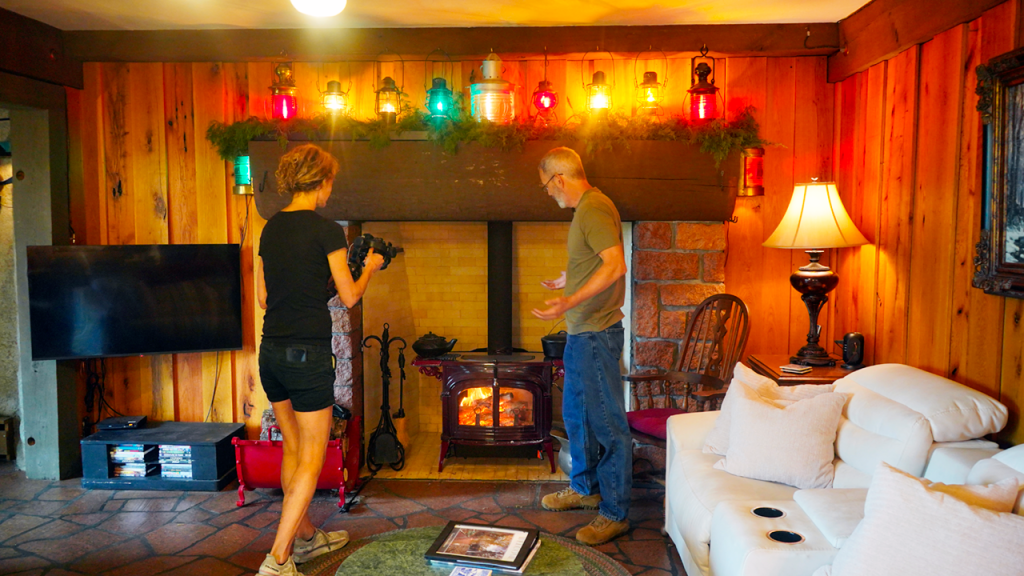
As the day went on and we walked around the property with Jim and his son Dustin, we got the feeling that the place was less a homestead than a small family hamlet, what some people would call a family compound. It had started with Jim coming back from Vietnam in the 1970s, having no appetite for the beaten path and with little money. Finding no ready-made path to throw himself into, he bought 600 acres of dense Maine woods and began building roads where there were none, bridges, ponds, dams, and even a hydroelectric station of his own.
He also built every home on the property, first his, and as his children became adults, then theirs. Later, in his mature years, he took on a challenge he had dreamt of: building an underground home of his own design at the bottom of the mile-long zipline.
The land’s interpreter
Dustin, the son, walked the land as its interpreter, showing real connection and admiration for his dad. It really impressed me to see their easy, pure connection, a blend of playfulness and respect that my father-in-law also fostered with his kids. I thought then that, to me, those are the real men; that’s actual manliness, and not the repertoire of poses promoted as such in our present tense.
Dustin, who was doing maintenance work and building a new zipline, among other things, put it this way:
“My father never accepted the limitations society imposes,” he told us. “He questions what’s possible, then figures out how to make it happen.”
Into the Ozarks
This past May, almost two years after Maine, we drove into a region we had long wanted to visit: the Missouri Ozarks, where the hills roll deep, and strangers get treated as neighbors.
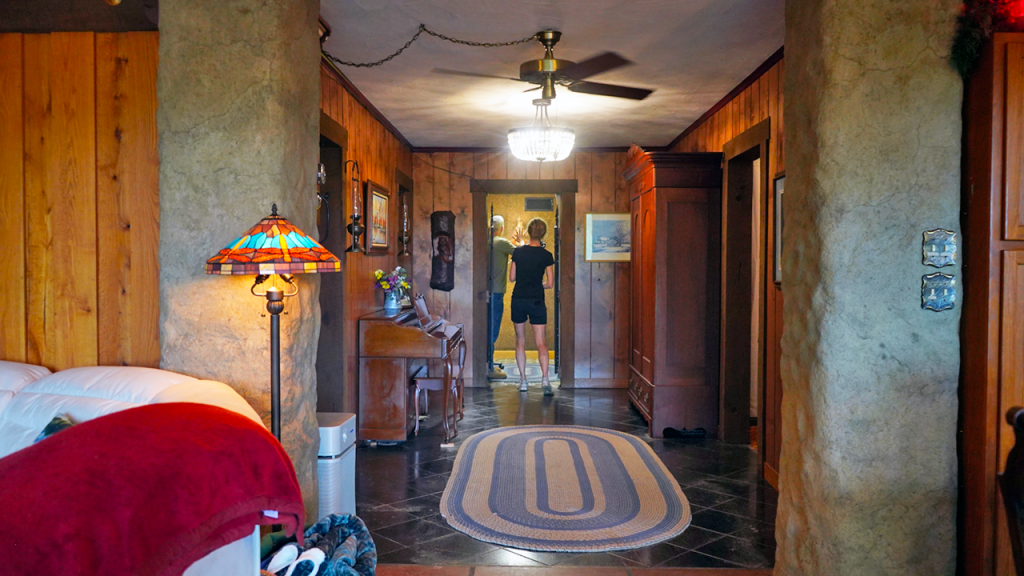
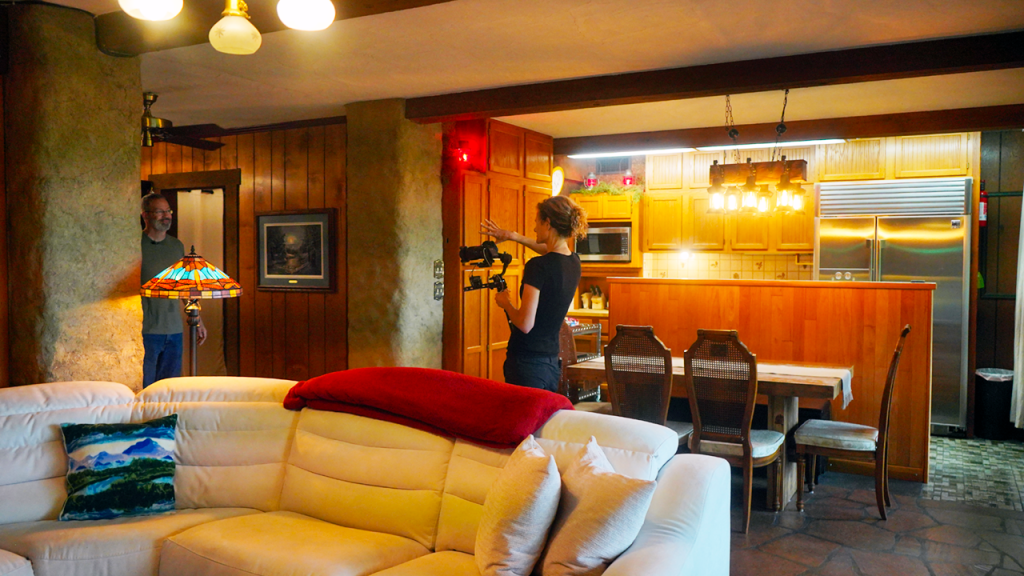
Among the many strangers who became friends, consider, for example, our visit to Zane and his kids, who welcomed us to the place that Conway, Zane’s dad, had created in the Missouri wilderness, his son handing him tools from boyhood on. For decades, Conway worked to build a one-of-a-kind house into the mountainside.
Conway is the third engineer shaped by the upside of the Cold War, another modest, family-first man formed in uniform who came home and created much more than a shelter for his family. He has been gone eight years now; it fell to Zane to receive us, and through his son’s wholehearted homage over the course of a day, we got to know Conway all the same.
As the interview advanced and we got to learn the place and its main creator, we also heard from Zane that, having been a missileer, spending countless hours underground as a cog in the Cold War machine that wanted to guarantee nuclear deterrence by upping the nuclear responsiveness game, he got to cherish being underground. So much so that Conway’s dream home evolved into a home sheltered by the earth.
Three engineers, three tenses
All three engineers mentioned in this story were, in a way, sons of the dispensation the GI Bill built, each claiming it in his own currency: John through the Bill itself; Jim, perhaps, through the plain confidence of the era — the assumption that a man could buy six hundred acres of woods and expect his hands to be enough; and Conway, as far as anyone can tell, through the Air Force and a tour crewing a Titan II nuclear missile silo, in years when the world seemed one misread signal from ending.
Perhaps all three came to this article as they seem to reinforce each other. John is alive, and his memory is leaving him, which is the cruelest thing to my mother-in-law and to his children, although his memory, and many of his stories (though he was reserved), live in them now. Jim is also alive and able to tell his own, standing on the place he built for his family as evidence of purpose.
Finally, Conway is no longer with his family, but Zane has been restoring the underground home his father built, room by room — perhaps a way of keeping his father company, and of bargaining with impermanence, which presses hardest just as our children turn into adults and our elders weaken or leave.
Jim’s and Conway’s are also father-and-son stories, for both sons decided to share their family stories as a testimony of a generation that found a world that offered many reasons to feel pessimistic about the future and decided to work in their vicinity to build a better reality for them and theirs. Perhaps things were less expensive back then for those who started with little, but they didn’t count bliss in monetary terms, either. They didn’t need to.
Wow, wow, wow
On our visit to Zane’s property in the Missouri Ozarks, we ran out of pavement and followed a well-maintained dirt road, which kept narrowing until the oak trees closed over it, and that is when the birds of prey crossed: two of them, big, hovering low, unhurried as they glided from a tree on the right side to a tree on the left, less than 50 feet ahead of our car.
I yelled, “Wow, wow, wow!” There’s only one other place where I’ve seen such big birds of prey so close in the wild, unhurried by humans: in Monfragüe National Park, at the confluence of the Tiétar and the Tagus in northern Extremadura, west of Madrid on the Tagus’s way to Portugal.
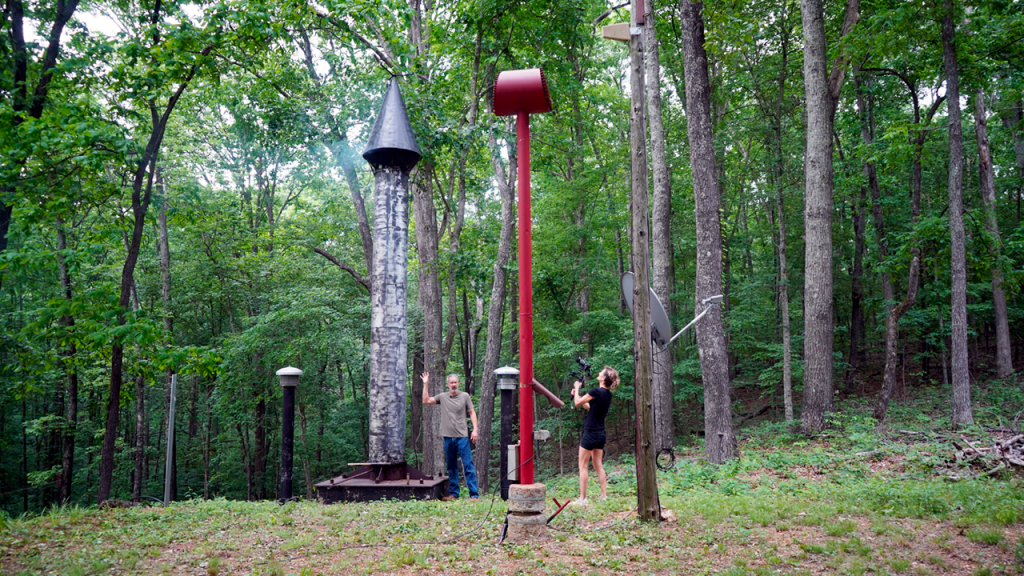
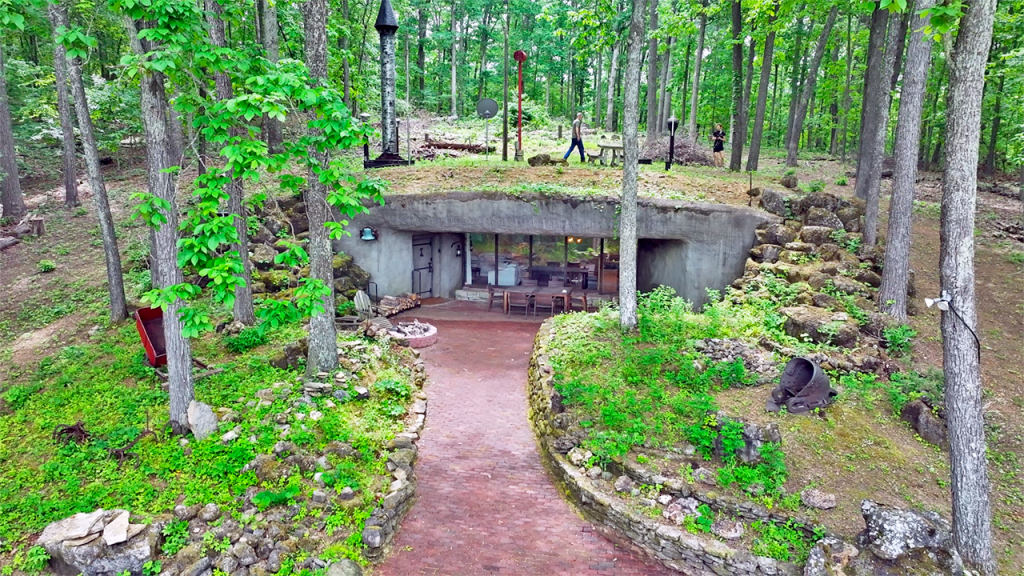
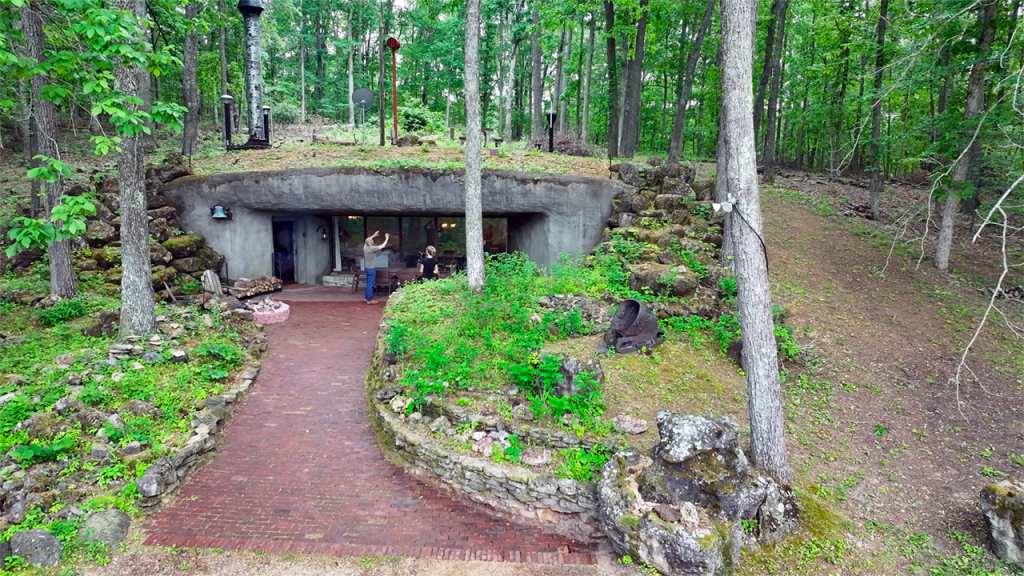
The visit showed promise. We were about to see a house inside a hill, and seeing the birds, we realized that Conway had chosen to build his house in that spot also as a way of staying in touch with such a natural force, designing a house in which one visitor could be standing on top and not know it, such was its integration.
A rocket in the leaf litter
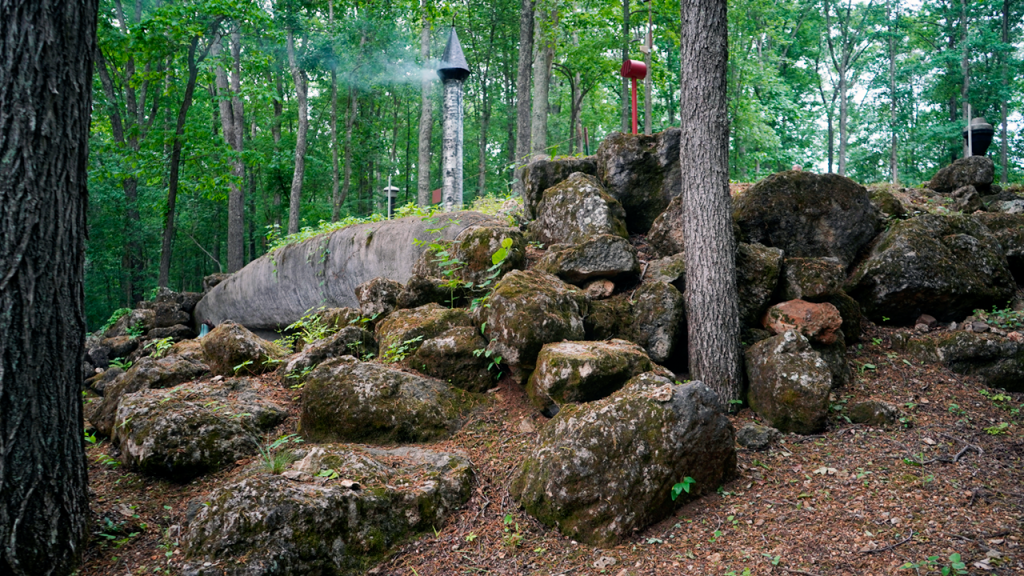
That’s what a hunter once did. Conway had given an acquaintance permission to hunt the property. A man who had never seen the place. He worked his way up a wooded slope, stepped onto a stretch of oddly level ground, and stopped in front of a great pipe rising out of the leaf litter “like a rocket,” as Zane tells it.
The visitor reasoned it out on the spot: I see this pipe; I believe I may be standing on top of the house. He was. Beneath his boots lay five feet of packed rock and clay, beneath that a foot of steel-reinforced concrete, and beneath that the idea of a dream home of a former missileer.
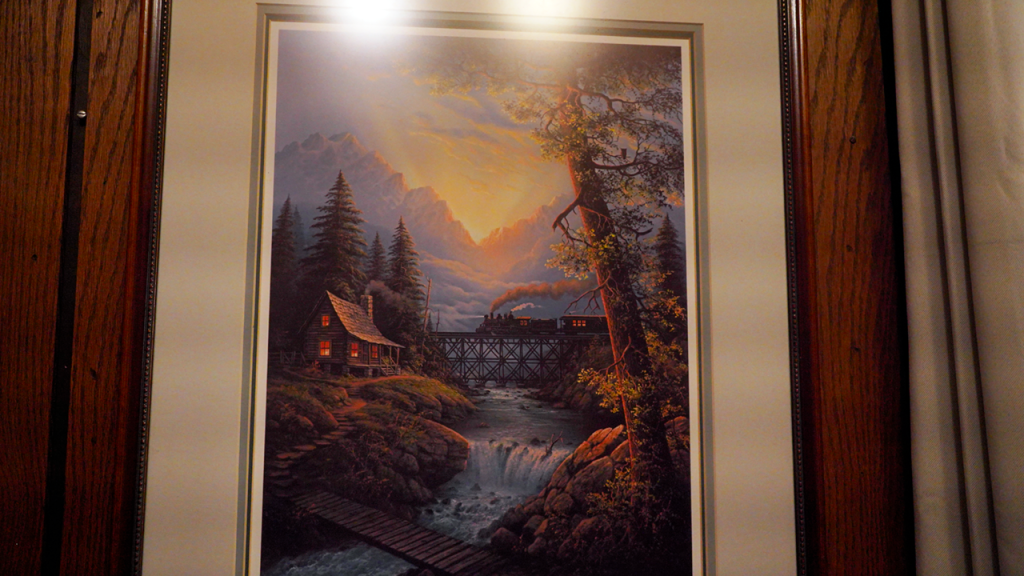
Sometimes, when we visit places, we meet the people who designed them before we meet anyone living. When visitors ring the bell at the entrance (a genuine locomotive bell), they know the designer loved machinery: its mechanisms, its symbols, and the industrial culture that made them possible.
First a cabana, then a camper
Conway was, by his son’s account, a blacksmith who happened to carry an engineering license, working a profession to finance a vocation. Zane greeted us near the carport with his two adult children, who declared themselves channel followers and talked with Kirsten about their all-time favorites. Then, as we approached the natural-looking entrance of the underground home, we knew that we were about to get the story of how such a special place had come to be.
Zane had just set a fire outside, and the scene was welcoming, timeless. That quality was the designer’s aspiration since he began daydreaming about the place while stationed near Tucson, in southern Arizona. In the Air Force, living in a small trailer with no money to buy more room, Conway built more room: a whole cabana grafted onto the trailer’s flank, his first structure.
Before his discharge, he built a second, a riveted aluminum camper sized to a Jeep pickup; he and Zane’s mother lived out of it for a stretch when he came home to Missouri. By his early thirties, he had already lived underground and set out to design his ultimate place in Missouri, which would be much homier than the Titan II silo he got to know so well in Tucson.
Paid for in lead
Between his missileer years and the underground project, Conway funded the dream by working as an engineer in the nearby Missouri mines, a district geologists were calling the largest lead-producing region on earth. And, though the place looks remote, it was just fifteen miles from home as the crow flies, a mere half-hour commute.
Conway got the land in 1970, an old homestead with a hill over a valley and a year-round spring at its foot that starts a creek. What he wanted was a house at the top, looking down the valley, invisible. The first cut came around 1973 (as it happened, the autumn of the Arab oil embargo, the season America briefly fell for the buried house).
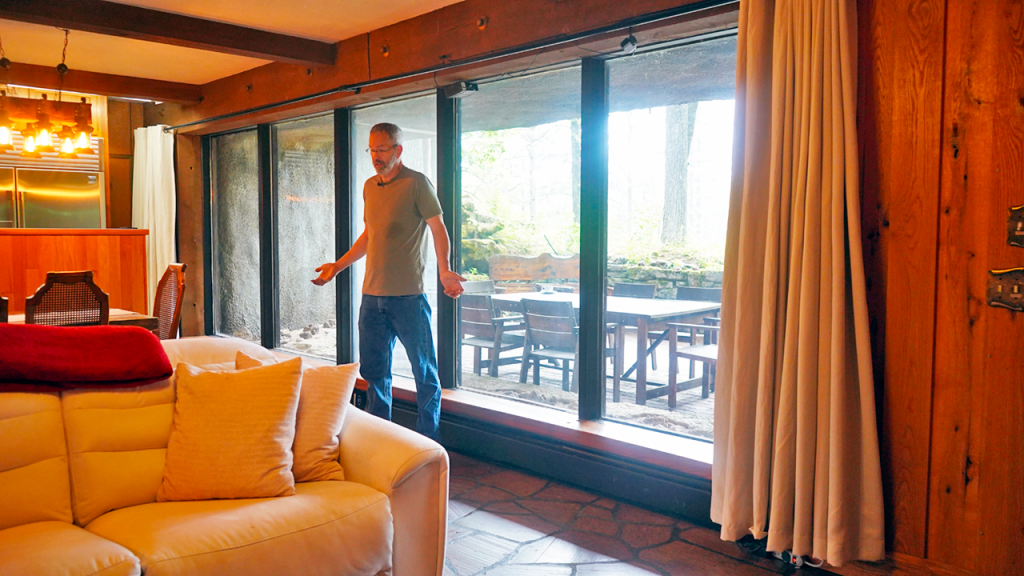
What he engineered, alone, was a building that breathes through the hill and readily adapts to weather that can be cold in winter and suffocating on summer days. Conway was precise about the building, ventilation, year-round temperature, and performance over time: Zane, who is restoring the property and the house, told us there hasn’t been a single leak in fifty years. Zane is as precise as his father was. Earth, he corrects gently, is not an insulator but a temperature moderator. “I don’t really call it dirt,” he says, standing on five feet of it. “I call it earth.”
The decade of evenings
How the place came to be is a story of a man of his era: for roughly ten years Conway worked the mine by day and the hill by everything else (evenings, weekends, holidays, whatever other men meant by vacation).
Back in those days, many people still built their own houses while holding their full-time jobs. To avoid extra expenses, families would move in as soon as the place was minimally livable, an old television glowing in the unfinished big room; which is when, in the case of Conway and his son Zane, the rest of the work began (hiring help is never a philosophy when money is extra tight; plus, if you want it done a very specific way, you’ve got to do it yourself).
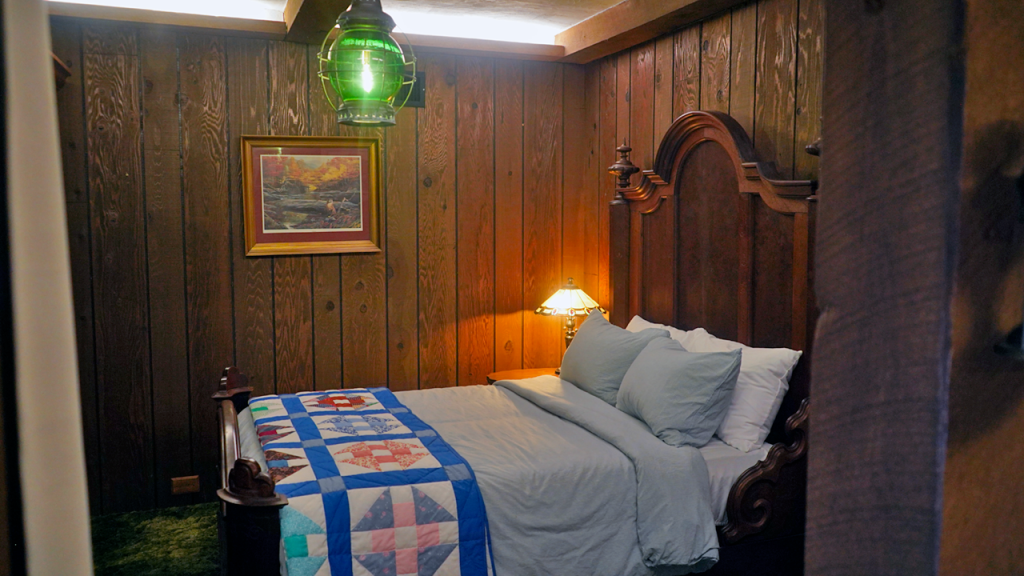
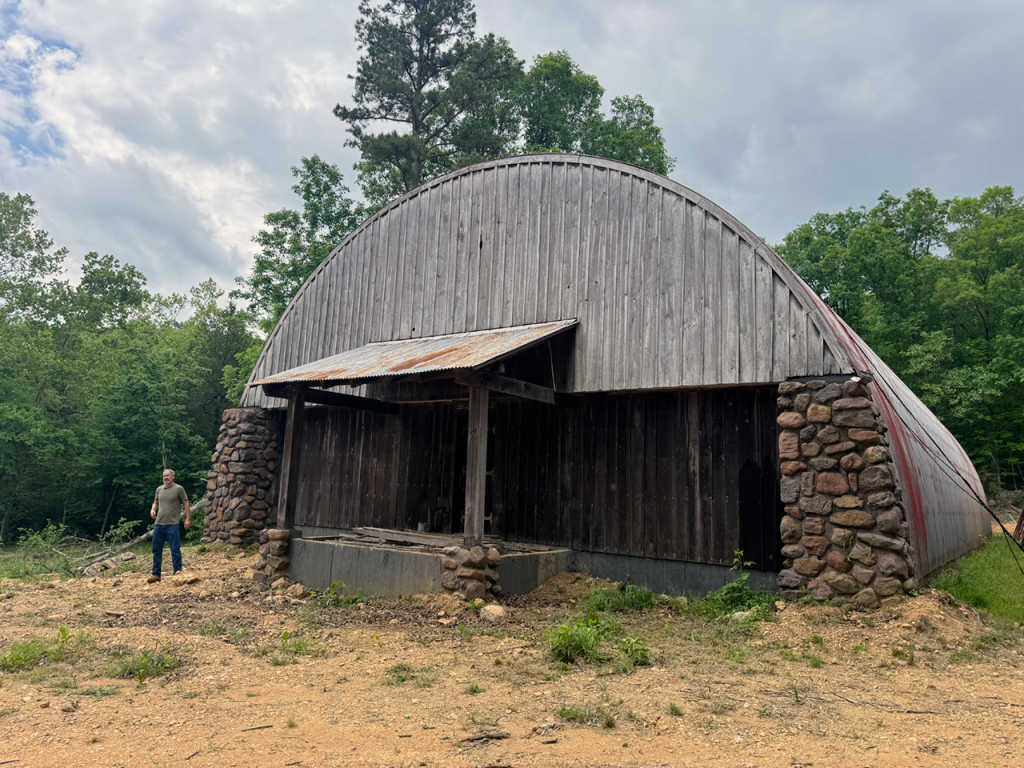
Zane’s mom always worked on every project, and there isn’t (almost never) a lone-wolf legend that can stand scrutiny; there’s always a significant other pushing as much as the person leading the way. She helped raise the Quonset, a workshop that predates the underground home: eighty feet by forty-five of clear span under wooden trusses the two of them assembled on the ground and hauled upright by rope.
She also fiberglassed most of an airboat around the aircraft engine her husband had decided he could not afford to buy and would therefore build: bigger, better, faster than the friend’s boat that inspired it, because that was how he built everything. “The way she got out of it,” Zane says, “she gave birth to me.”
The smallest bedroom in the house
All these years passed, and this is also a father-and-son story. Zane wasn’t afraid to go back to his memories growing up on the property, and when his dad was gone, he decided to pay his parents the biggest homage: like them, he took on the whole restoration project on his shoulders, doing all the work. And even if he’s in charge now, he still sleeps in his original bedroom, which is the smallest in the house.
It was his as a young teenager when the family moved underground, and it is his now; he has tried the other rooms over the years and keeps coming back. “Through this threshold,” he says at the door, “this has always been home.”
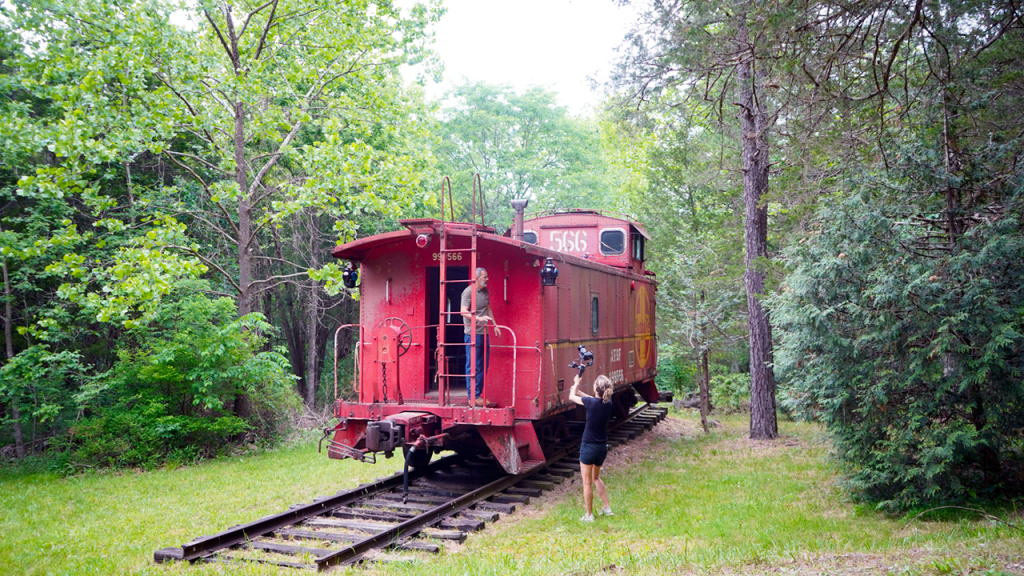
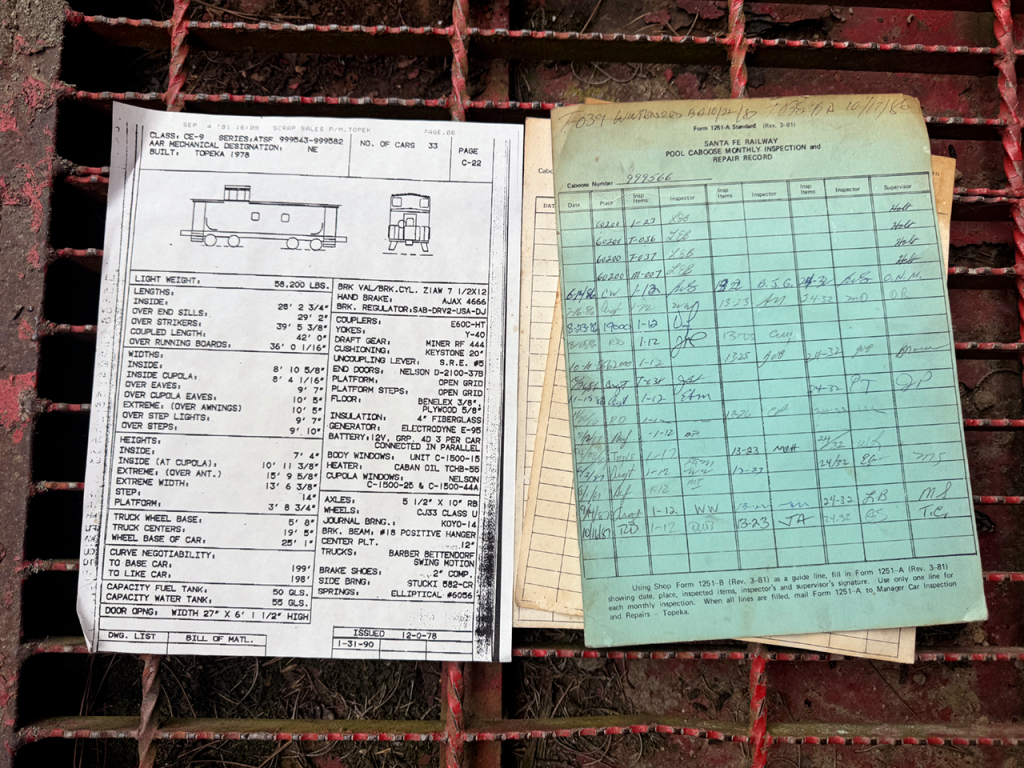
The house itself required no rescue, though homesteads demand upkeep. On the slope leading to the underground home, on a length of hand-laid track that runs from nowhere to nowhere, sit fifty-eight thousand pounds of the Atchison, Topeka and Santa Fe: caboose number 566, riveted rather than welded, which by the rivets and the number series Zane dates to about 1927.
The first thing we thought when we saw the massive caboose parked in a little meadow between the trees was how they managed to get it there, which is the question everyone visiting the property has asked since. It arrived on two cranes, frame separated from its wheel trucks, up the dirt road with inches to spare, and inside it remains a sealed jar of its working life: the conductor’s desk, the fuel-oil stove, marker lamps with their red faces turned rearward, inspection sheets from 1986 and ’87 still on the clipboard.
One might think that Conway’s love for old cabooses came out of nowhere, until Zane tells you that his grandfather braked freights on the Missouri Pacific out of Bismarck and would have thawed out in a hundred like it. In middle age, Conway took on a project that folded in his son (and the memory of his own father).
Conway meant to make it a guest house and ran out of time; Zane means to finish the thought and cannot quite bring himself to gut the evidence. “The history is still here,” he says. “As much as I can, I’ll leave in here.”
Nothing to prove
Before leaving, we climbed back to the top of the house, to the spot above the glass that faces east. Zane takes his coffee there in the morning; an underground home is short on daylight, and the ledge, catching the sun as it comes up the valley, is how the house compensates.
The restoration isn’t finished, and it probably isn’t meant to be. The house, for its part, asks little. Air still enters through the earth, cool in summer and warm in winter, exactly as drawn. More than fifty years after the first cut, the roof has never leaked. Conway built it to outlast him, and so far it has done that, too.
Driving out, I thought about Conway, about Zane and his children. It struck me that Conway seemed to share a good deal of the character of old men I’ve gotten to know in the United States. None of them ever seemed to argue about manliness. They didn’t need to prove anything to anyone; that’s the thing.
They didn’t have to cosplay strength; they had met the real thing early (the wartime build-out John watched remake Sausalito, the jungle Jim came back from, the launch keys Conway sat beside), and wanted none of its costumes at home. Compare it to the posing of the muscular podcasters and influencers of our present tense.
What they practiced instead was a kind of competent gentleness. John, the mildest adult I have known, designed machines to watch for the end of the world and never once brought the war home. Jim strung his children bridges, raised them houses, and built them a mile of flight over the family pond. Conway put a bell at his door, oak over his fireplace, and his son’s bedroom at the heart of the hill.
This generation is on the way out, and it shows. Except where a son picked up the tools.