A borrowed Camry near Barstow, a Czech escapee in a Utah ghost town, and a German cult film: what the Mother Road taught a few outsiders about freedom.
A little over two decades ago, I was still working and living in Barcelona; Kirsten, whom I’d met in late 2003, was sharing an apartment with several people in NYC’s Village and freelancing as a TV producer after working for a cable channel gone bust. At that point, we were already planning to get married.
I was still working at an office, so the plan was for her to move to Barcelona and work remotely, even though, back then, working with video production remotely was cumbersome and required physical tapes, enormous hard drives that barely contained 5 GB of data or so, and lots of patience from her producers in New York.
In the summer of 2005, we flew to San Francisco from JFK and visited Kirsten’s parents before borrowing an old Toyota Camry (mid-1990s, peeled dark green trim, maxed-out odometer, but very smooth) and heading south to meet a Mexican friend of mine with whom I had worked in Barcelona a few years back.
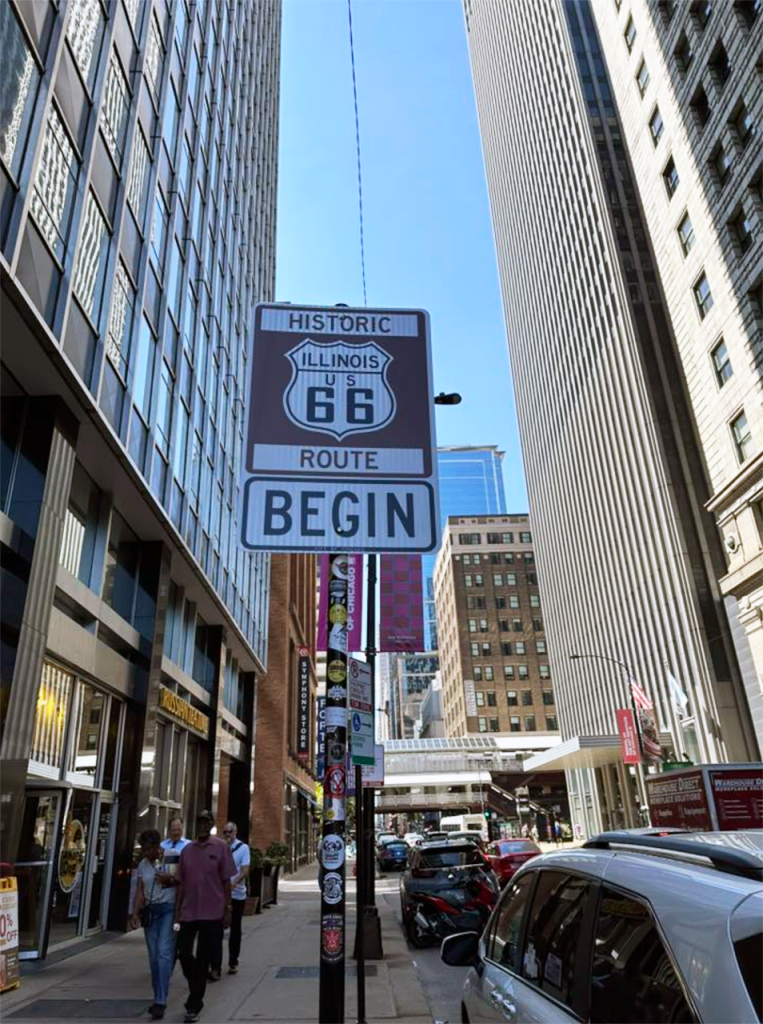
We drove inland through Bakersfield and Barstow, headed to the Mexican state of Sonora; I was excited; I had never seen such beautiful skies, which felt bigger. Old-school paper maps told us we’d cross the border in Nogales a couple of days down the line. Meanwhile, we drove small roads, then I-40 east to Kingman, and soon all roads seemed to point to Phoenix.
The sign near Barstow
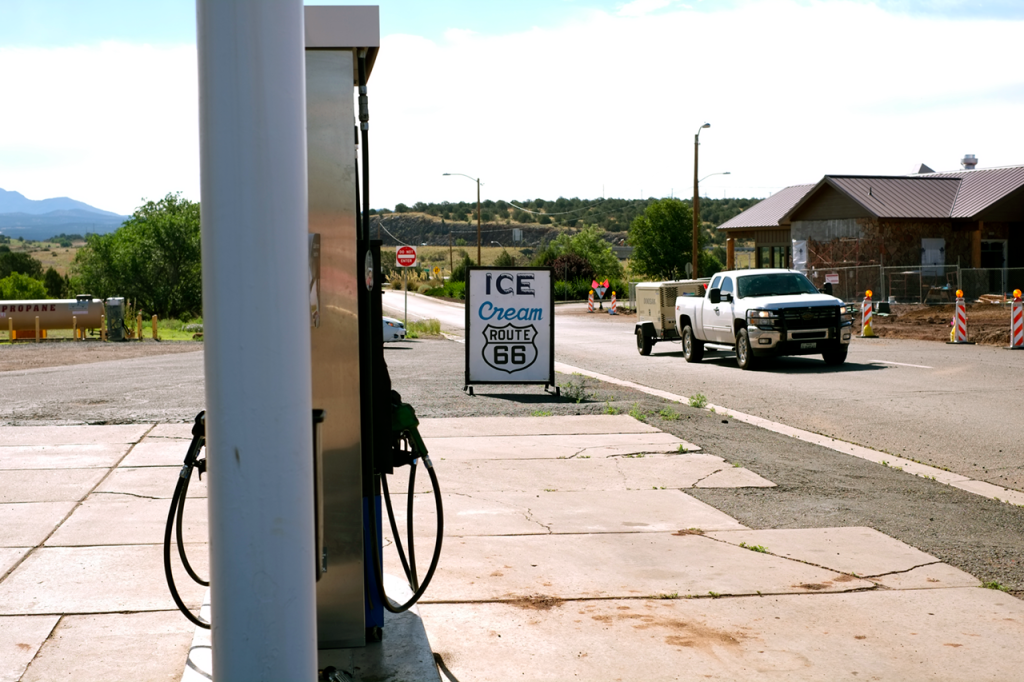
Near Barstow, we took a secondary route, which had been the main road from east to west in that part of the country for a long time. The sign: good-old Route 66. Seeing it by the road brought cultural “memories” I had never thought I had.
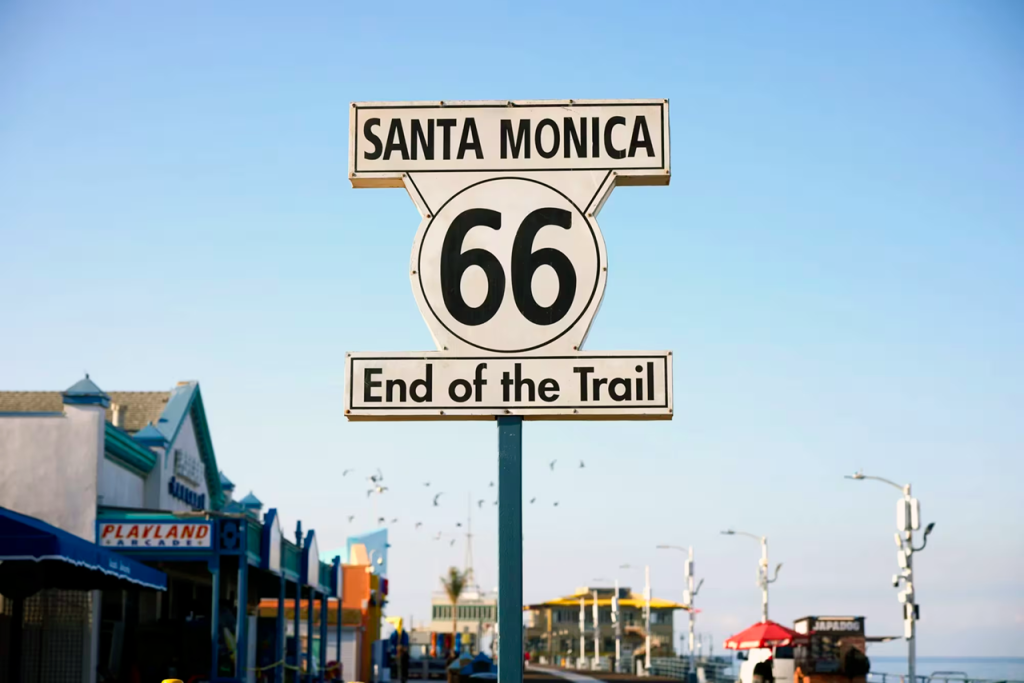
Soon, stretches of Route 66 from Barstow to Needles and on to Kingman would be a part of our memories, not a scene from a movie or some book’s passage. So, there it was: it wasn’t fiction, but an actual road you could drive.
“66 is the mother road, the road of flight,” says The Grapes of Wrath‘s omniscient narrator in Chapter 12, one of the short interludes stepping away from the Joad family and describing the whole migration from the zoom-out perspective of a biblical God, which fits Steinbeck.
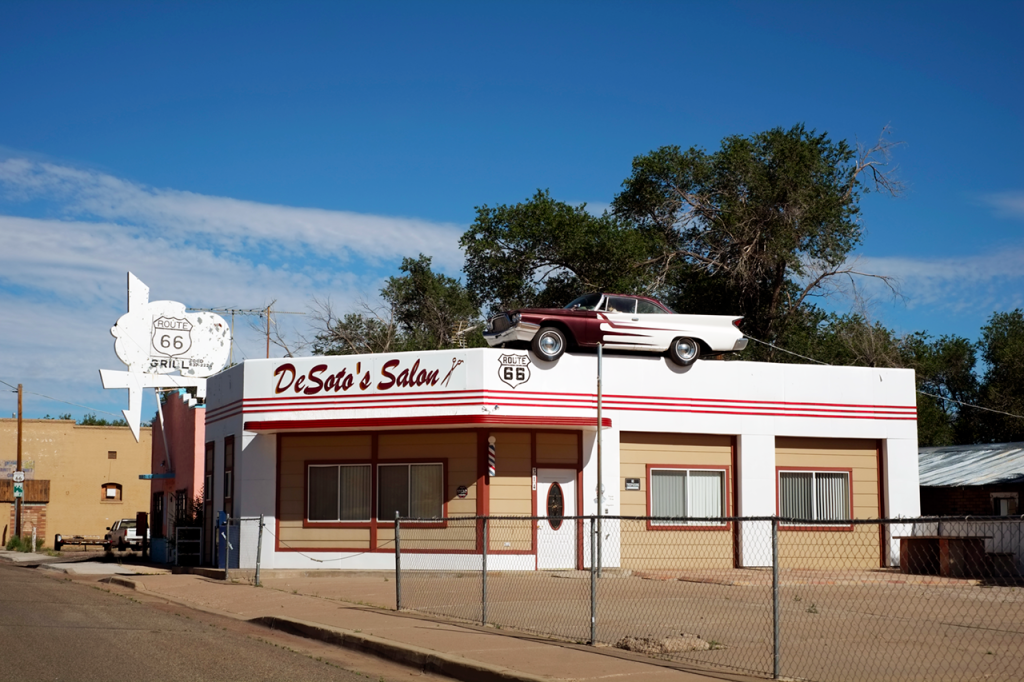
I felt nothing of it, especially as I checked some of the few open places along the route, which sold trinkets and souvenirs made cheaply somewhere else, as our times dictate: the old route traversed by Dust Bowl travelers was now a landmark for tourists.
One road, many dreams
The mythic Route 66 turns 100 this November. It’s much more than a road, and its decrease in traffic and centrality hasn’t dented its status as a symbol of American mobility and freedom. One has to ask why.
When the country is celebrating its 250th anniversary, few things are more relatable to Americana than Route 66. It isn’t a regular highway since it contains the little left from the golden age of American road travel, small-town hospitality, and the pursuit of the American Dream: a time when small mom-and-pop businesses weren’t facades of homogeneity and part of a chain owned by funds.
Just as there’s not one American Dream but as many as individuals long for it, there’s not a single Route 66, and the road means different things to each person connected to it. Going through eight states (Illinois, Missouri, Kansas — only a 13-mile stretch —, Oklahoma, Texas, New Mexico, Arizona, and California), it was first a path of migration and survival where people carried their belongings and hopes, but also culture and values, just as the Mississippi or the Oregon Trail had done for previous generations.
Before driving through it, many of us born outside the US got to know the fabled highway through pop culture references. But before pop culture praised the road, people from the heartland displaced by the Dust Bowl were using Route 66 to settle out West. On the horizon, there was the promise of California and its never-ending orange groves.
Freedom on four wheels
Then came World War II. After it, the economy boomed, and it was clear that the country was poised to be the West’s superpower facing its Soviet antagonist. And the road became once again a migration corridor and a symbol, especially for those wanting to escape and reinvent themselves, from the survival of seasonal workers to the beatnik rebellion of the 1950s.
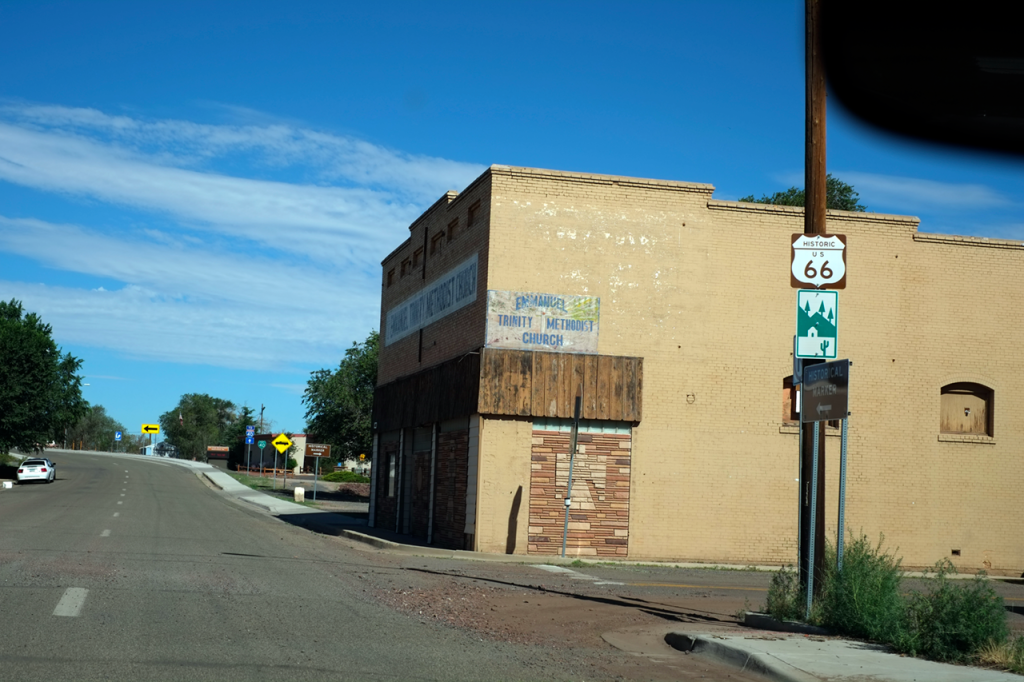
After the war, cars were much cheaper and became pervasive, changing the country forever. There was the idea and manifestation of freedom, which felt more or less “real,” depending on who you read or asked back then. This openness and liberty contrasted with the reclusiveness of the opposing sociopolitical model of the Cold War.
Communism lost the plot with its young people many years before imploding, by prohibiting music and literature that referenced a very palpable sense of freedom that coincided with the idealization of Route 66: there was, above all, the ability to seek one’s destiny, escaping social rigidities or even poverty, like the Dust Bowl Okies going West depicted by Steinbeck in The Grapes of Wrath, and adapted to film by John Ford.
And the songs, books, and movies worked. The route became forever linked to a boundless open sky, as big as western movies; anyone could be the individual taking the road, meeting the horizon with sagebrush on either side. Then, little by little, as the Interstate Highway System transformed US roads, Route 66 waned, but it never vanished from the collective unconscious. Despite its outdated, narrow, and curvy two-lane design, or perhaps because of it, the road stood for something.
Over the Iron Curtain
We sometimes forget about the divided Europe of the Iron Curtain, but many people in Europe born a few years before 1989 have living memories of what this meant. It wasn’t fun, and a handful of stories show why in a crude, palpable way (The Lives of Others, a German movie from 2006, is proof).
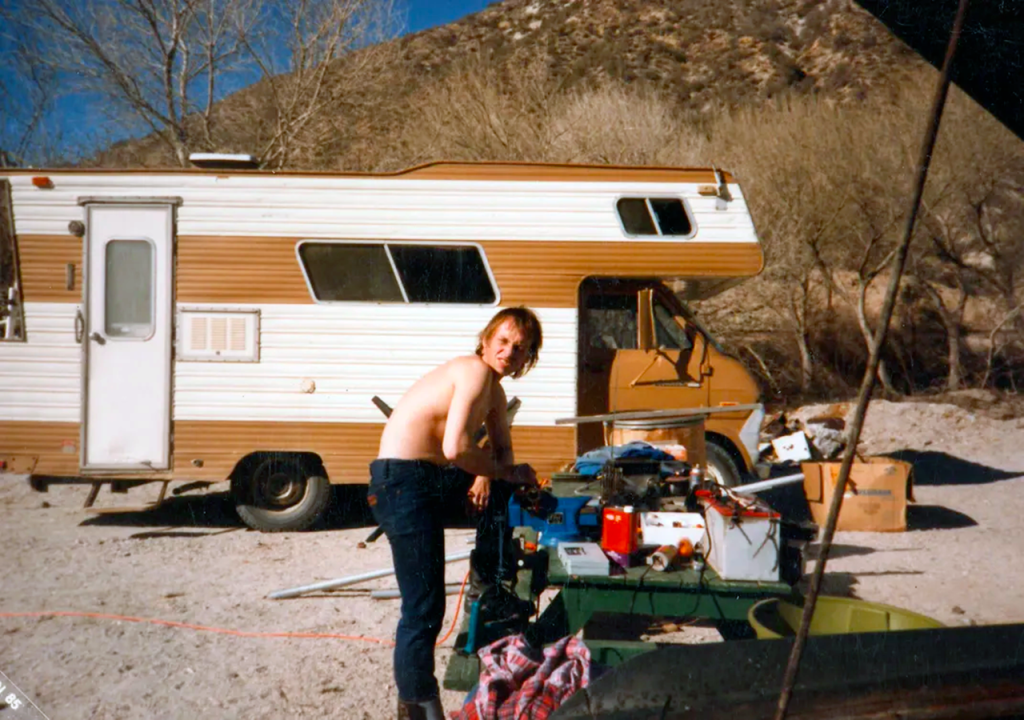
When we met Ivo Zdarsky in the “1-person Ghost Town” where he lives in Lucin, Utah, a place so desertic and remote it doesn’t register on most maps, we had read about his incredible story. Zdarsky grew up in Czechoslovakia, on the other side of the Iron Curtain, but in 1984, at 24, he’d had enough.
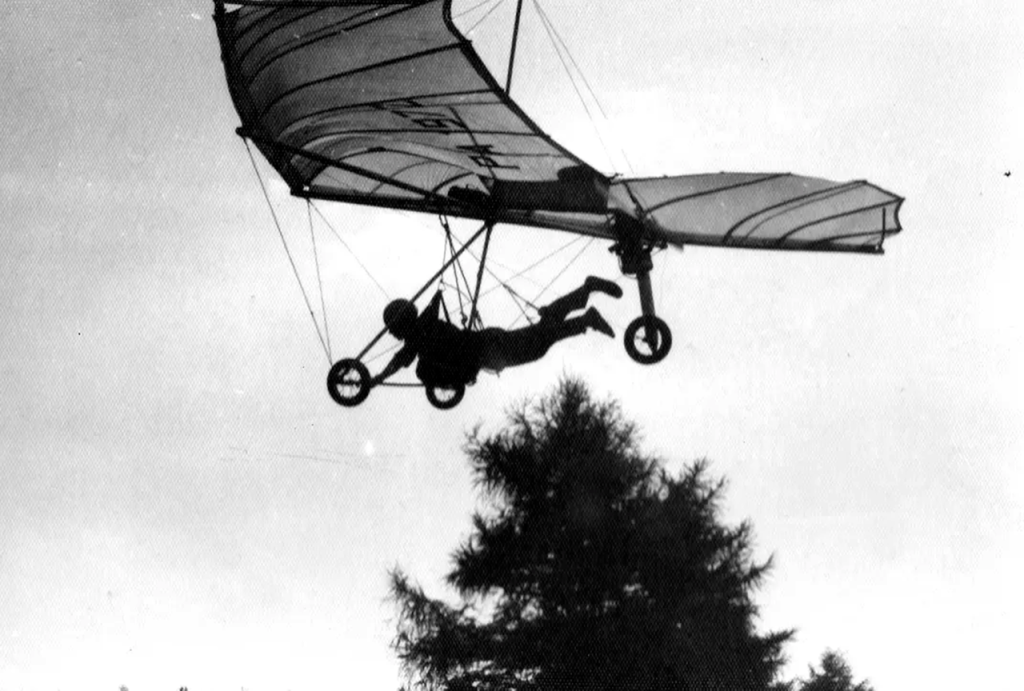
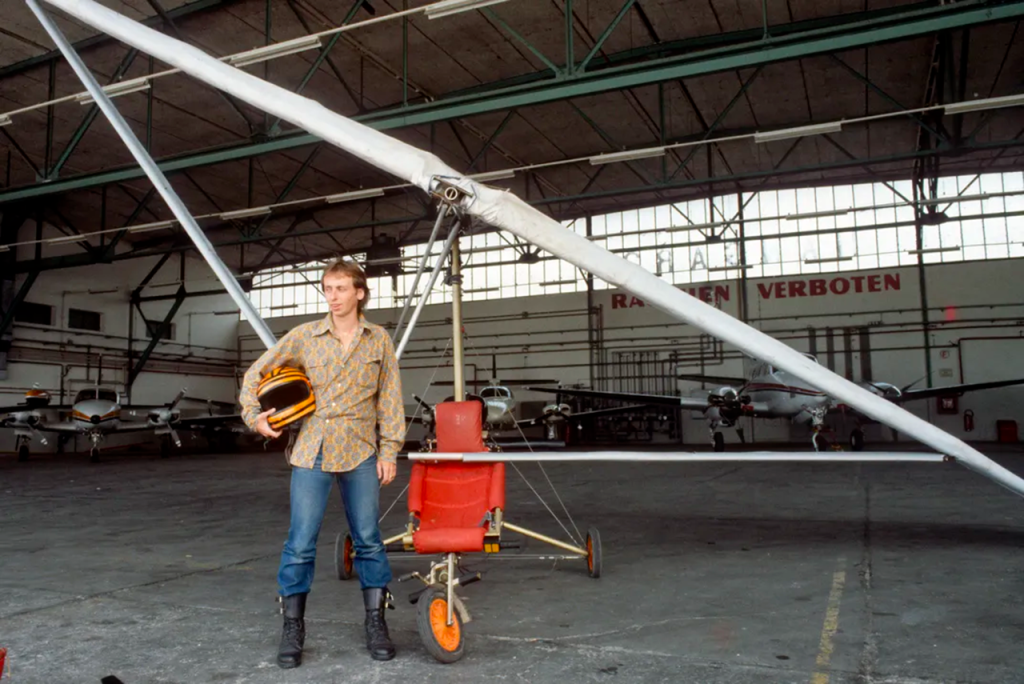
A rebel in the way he dressed, the music he listened to, and his self-drive and sense of autonomy, Zdarsky built a makeshift aircraft from spare parts (a tiny two-stroke engine from a Trabant Tramp, hang glider wings, and a hammock-like seat suspended in a skeletal metal frame) and flew over the sealed border to Vienna, landing at the city’s airport, to everyone’s shock. We can imagine what the airport personnel must have felt when they saw the makeshift plane landing at the break of day.
He demanded asylum in the West and left for the US, flying to San Francisco in 1984. In the US, all he wanted was to be the one in charge of his own destiny, inventing a type of small plane propeller that has a cult following. That same year, Williams, Arizona, became the last Route 66 town bypassed by the interstate. A year later, the road was officially struck from the federal highway system.
Two Europeans and a road
One idea of freedom and the frontier closed, and a man who flew over a border to find open space landed in California, the western terminus of the mythical Route 66 (Ivo lived for many years in Southern California and bought a motor home in Long Beach, where he based his business).
Of course, the road had little to do with my biography or Ivo’s, for that matter; I’m a young GenXer born in Barcelona, Spain, and Ivo’s experience behind the Iron Curtain is legendary Cold War material with a twist.
But here’s the thing (especially after meeting Ivo and talking to him at his remote Lucin compound, freaking out as he flew at full speed near the ground around the surrounding hills with Kirsten on board, while I piloted my drone to get some B-roll and, like any post-modern agnostic-Spinozist, prayed like the well-brought-up Catholic I am): we’re two anonymous Europeans who learned a bit about what freedom meant from references to a road they had never seen.
A German film about America
We are far from being the only Europeans showing curiosity about this old two-lane highway. In 1984 (the same year Ivo escaped Czechoslovakia and Williams was bypassed by Interstate 40), German film director Percy Adlon and his wife Eleonore took a road trip along the existing stretches of US Route 66. When they reached Barstow, California, the town reminded them of some sort of dusty “purgatory.” From the experience came the script of Bagdad Cafe (1987), described as a fish-out-of-water tale showing how the arrival of an outsider can transform a close-knit community.
The film follows a German woman stranded in a desert truck stop near Barstow. The original Bagdad Cafe stood in Bagdad, California, a Route 66 town razed after Interstate 40 bypassed it in 1973. So the crew shot at the Sidewinder Cafe in Newberry Springs, 50 miles west, just east of Barstow.
According to a 2021 count by the California Historic Route 66 Association, 70% of visitors to the truck stop that the film turned into the Bagdad Cafe (which looks like many of the places we stopped to fill the Camry’s tank and eat something) came from France. The reason: Bagdad Cafe became a cult favorite in France. No wonder most of the cafe’s guests are European pilgrims in search of the aura of an indie German film about America.
Easy riders and outcasts
For Americans, the road came with its own cast of characters. Those not owning a car or a campervan met their Route 66 fate on a motorcycle — like Peter Fonda and Dennis Hopper in Easy Rider — or perhaps even hitchhiking — like Brad Pitt in Thelma & Louise — or even biking or running like Forrest Gump.
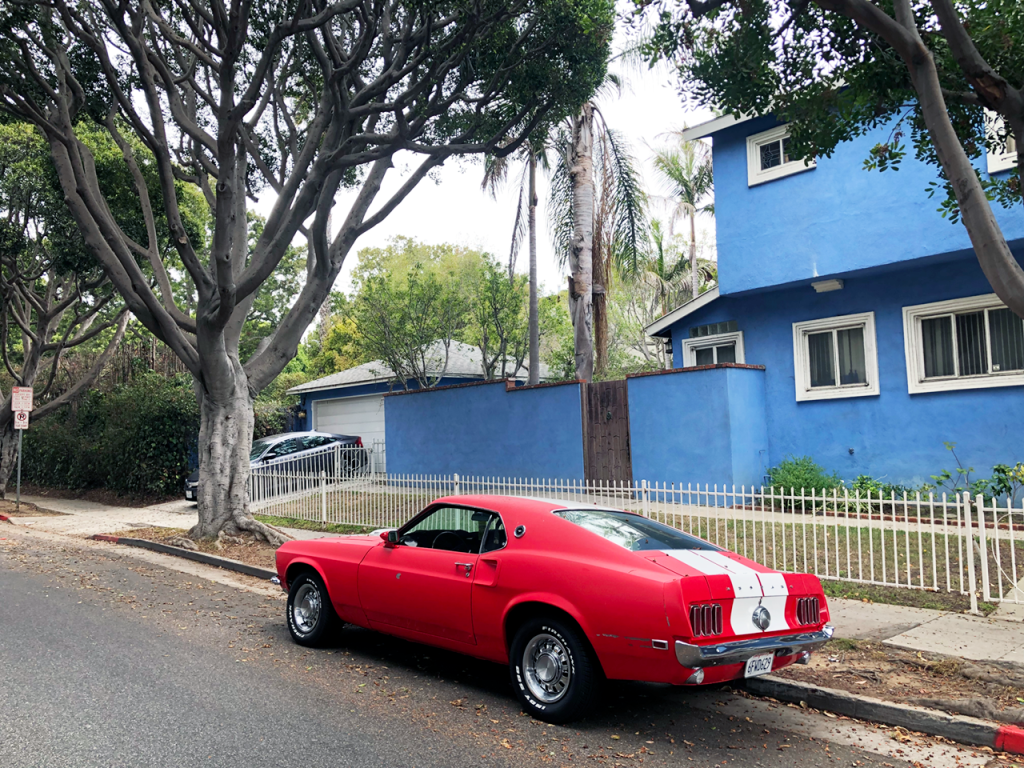
Well, with Forrest Gump and Thelma & Louise, it’s safer to say “on and off the route,” but you get the spirit. To outcasts, estranged youngsters, and hobos, Route 66 meant opportunity: stories, like seasonal work, came and went on the route like a predictable tide of an interior sea of dust that registered the pulse of American society like no city or newspaper could.
How come? Route 66 was the poster child of it all: if the Eastern Bloc was sealed and endured top-down absolute control, American roads were filling with automobiles and people choosing where to go and how, and Route 66 was the archetype of the new car culture, connecting the biggest agricultural and food manufacturing and distribution hub in North America and the world, Chicago, to the quaint town of Santa Monica, proud of its idiosyncrasy and autonomy next to Los Angeles, right when Southern California was pivoting from farm country into an industrial and entertainment behemoth.
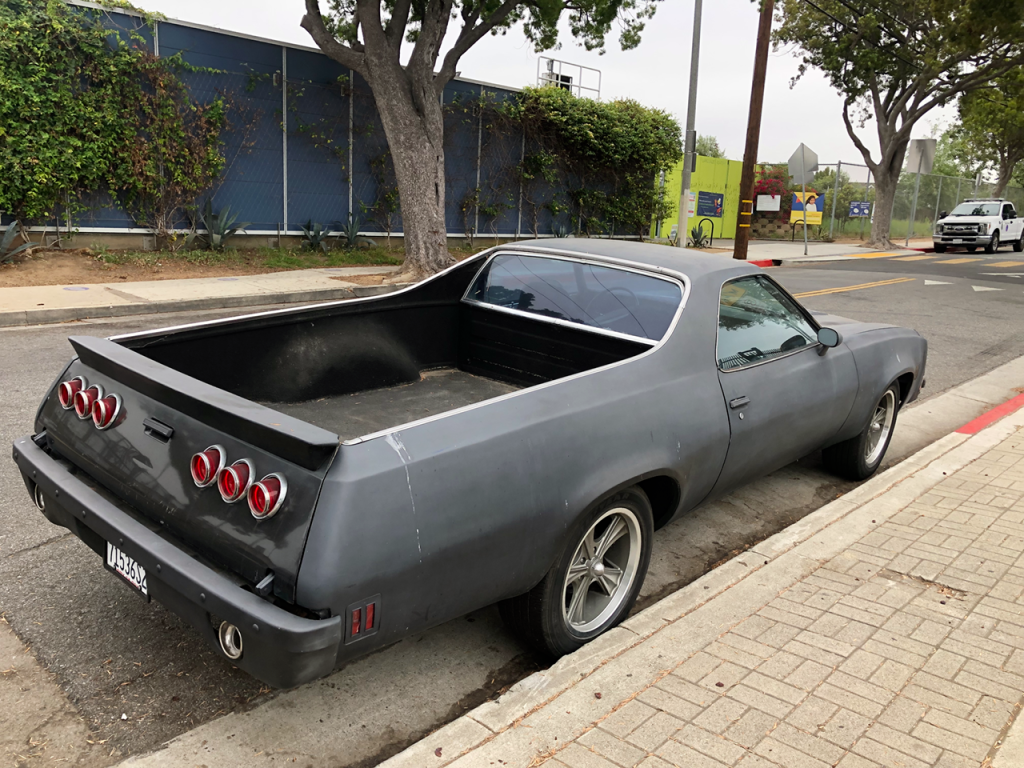
Route 66 wasn’t only the promise of California, of Hollywood, nice weather, fresh produce, melodic music, and surfing; it was also the western end of the continent right when the world was poised to transfer power from the Atlantic to the Pacific; and California was about to capitalize on it, in part thanks to Route 66 as a substitute for the railway.
Blue highways and cassette tapes
After that first drive in the borrowed Camry, I promised I’d be back, and we’ve been back over the years, if only to acknowledge the irreversible demise from major highway at the beginning of motorized travel (and hence drawn in red on maps) to forgotten backroad: later on, William Least Heat-Moon wrote about the magic of driving through the back roads, drawn in blue on the original maps, or “Blue Highways.”
In spirit, Route 66 is the ultimate blue highway, a quiet two-lane route where there’s room for experience, unlike the non-place, point-to-point travel of the efficient Interstate System approved by the 1956 Federal-Aid Highway Act, signed by President Dwight D. Eisenhower.
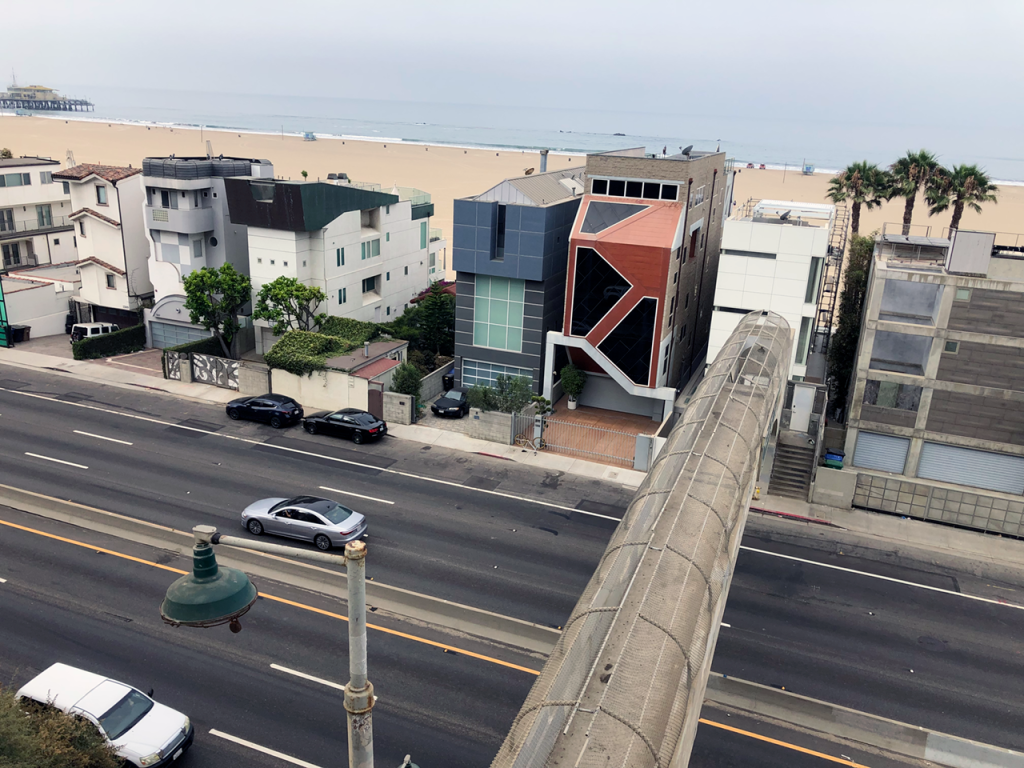
Like many teens before and after me, born inside and outside the US, I barely knew the name of any important road we used with our families on an everyday basis, but I wanted to know what Route 66 was. Growing up, there was even a magazine that covered alternative music called “Ruta 66” in my part of the world.
Through those magazines, recorded cassette tapes, and references from friends and movies (The Blues Brothers and The Outsiders are the usual suspects for younger GenX people), many of us ended up reading Kerouac’s On the Road and being insufferable about it, especially when there were people we wanted to impress (plus, many of the coast-to-coast references in the book with the mythical character of Dean Moriarty — in real life, the outcast Neal Cassady — at the wheel, happen on roads to the north connecting New York and San Francisco through stops in the Rockies like Denver, not the downward routes leading to Southern California).
Somewhere around Barstow
Route 66 was merely a distant totem, a cultural artifact referenced in magazine names. College didn’t make me outgrow the sense of personal freedom, even though I learned about the limits of an image that could work like a mirage for many; in a society optimized for conspicuous consumption and superficial relations with one’s surroundings, places like Route 66 could become the ultimate escapism, which could lead to reinvention but also self-destruction.
Perhaps this holds even truer when one realizes that Interstate 15, the busy corridor connecting Los Angeles and Las Vegas, intersects with historic Route 66 in Southern California, and thus gonzo journalist Hunter S. Thompson and the character played by Nicolas Cage in Leaving Las Vegas carry indirect references to Route 66, whose importance waned once the interstate network took motorists off old roads going through towns.
“We were somewhere around Barstow on the edge of the desert when the drugs began to take hold…”
Fear and Loathing in Las Vegas‘s opening lines are set near Barstow, California, the major hub where I-15 and Route 66 meet. The cheap gas, motels, and fast-food joints that profited from that ill-reputed cross-pollination are part of the aura, but the old Main Street motels and life on the streets have long faded.
Finisterre on the Pacific
Before deciding to go live off-grid in a desolate corner of Utah’s high desert, a place where he can fly his plane as low as he pleases, Ivo settled in Southern California, not far from the US Route 66 western terminus in Santa Monica, which officially lies a mile from the ocean.
That the road doesn’t end at a pier kissed by the ocean doesn’t deter modern pilgrims from going to see the Pacific, the same way medieval pilgrims walked past Santiago de Compostela and arrived in the Galician Costa da Morte to salute the Atlantic’s Iberian “Finis Terrae” or Finisterre (Latin for “end of the world”), as a symbolic closure of the Way of Saint James. I walked the Camino twice, and ending it in Santiago felt like an interruption; walking on to the sea connected me to a long tradition linking the ocean with a terminus.
Or, as the pre-Renaissance Spanish poet Jorge Manrique put it, “Our lives are the rivers that flow into the sea, which is death.” Just as a river (or a road) cannot stop or turn back from its path to the ocean, human life moves steadily toward its end. And, more importantly, in California, ends can be beginnings.
The end of the trail
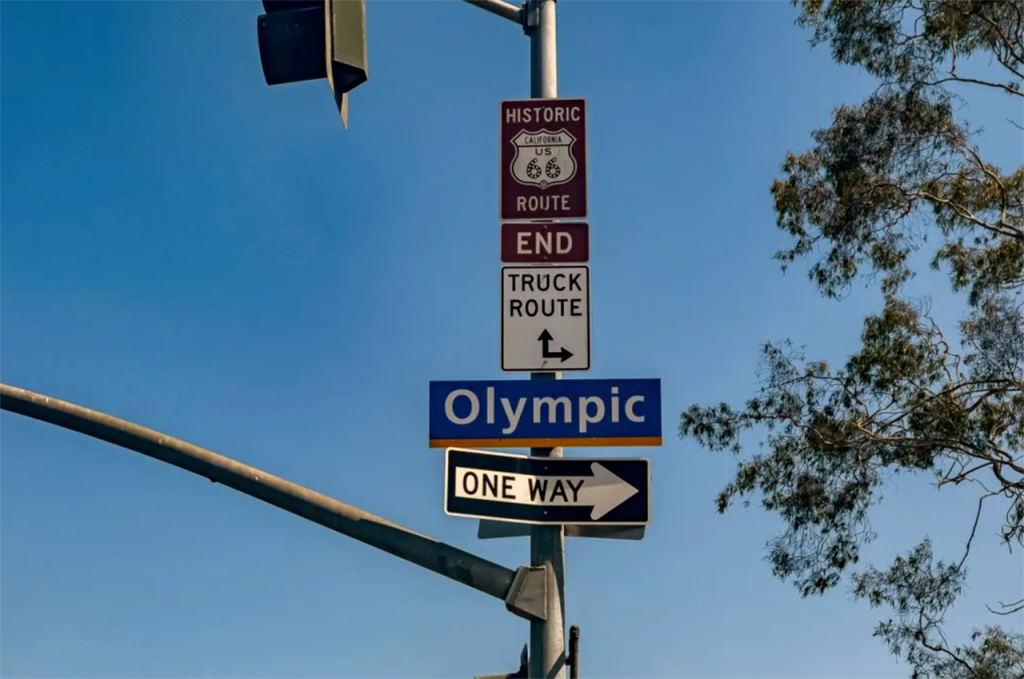
The road ends at a traffic light on Lincoln and Olympic, a mile inland, leaving visitors to speculate about California’s utilitarian mentality: why end it there? It sounds like a question that Joan Didion should have answered in one of her short essays.
Two brown signs stand on the curb, one reminding people the Mother Road ends here, and the other pointing back to Chicago. The Santa Monica Freeway is not far from the place, and at night one can hear the traffic up and down, reminding anybody of the way Angelenos travel between neighborhoods.
When we visit Los Angeles and need to stay there for a few days, we always choose Santa Monica. There’s something about it that attracts newcomers. According to the city’s tourism bureau, in 2025, nearly 3 in 10 visitors were European. The place has acquired a mystique.
To us, it blends the promise of the ocean with the nostalgia of the road trip.