As we accumulate things, analog and digital, it gets easier to lose the battle against entropy. Some things survive anyway, but rarely the ones we planned for.
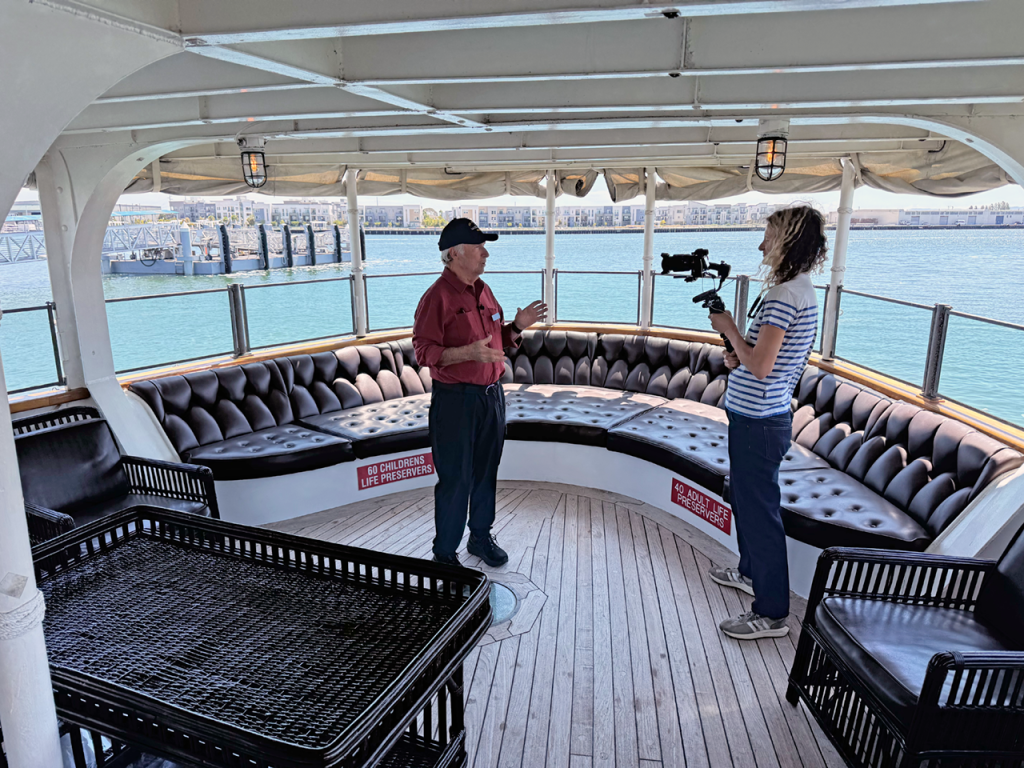
When we recently met Ford Roosevelt, grandson of Franklin D. Roosevelt and executive leader in charge of preserving FDR’s yacht, which Ford explained served as a “floating White House,” we couldn’t believe our luck.
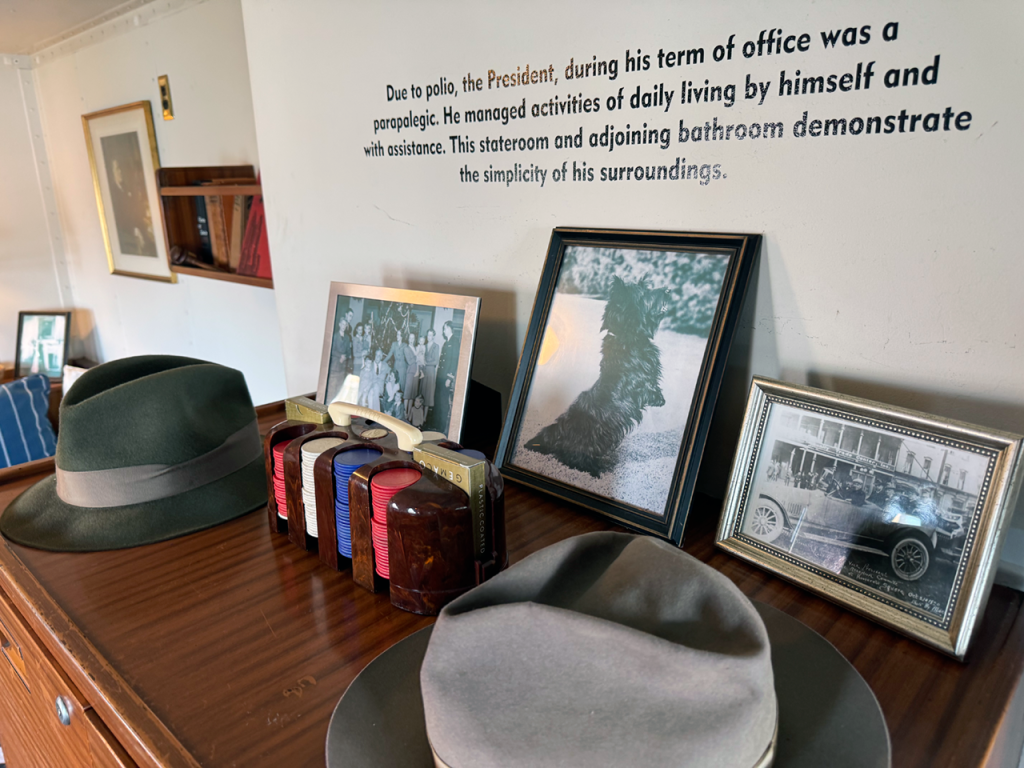
Our meeting and interview with Ford was a few days ago, yet Kirsten already published a video on our visit worth watching. As we explained to Ford Roosevelt, we had already visited another crucial location and piece of history intimately linked to the Allies’ victory against the Axis powers in World War II: the Cabinet War Rooms beneath what is now the Treasury building, Churchill’s bunkerized underground complex in London to protect key figures of the British government during the Blitz.
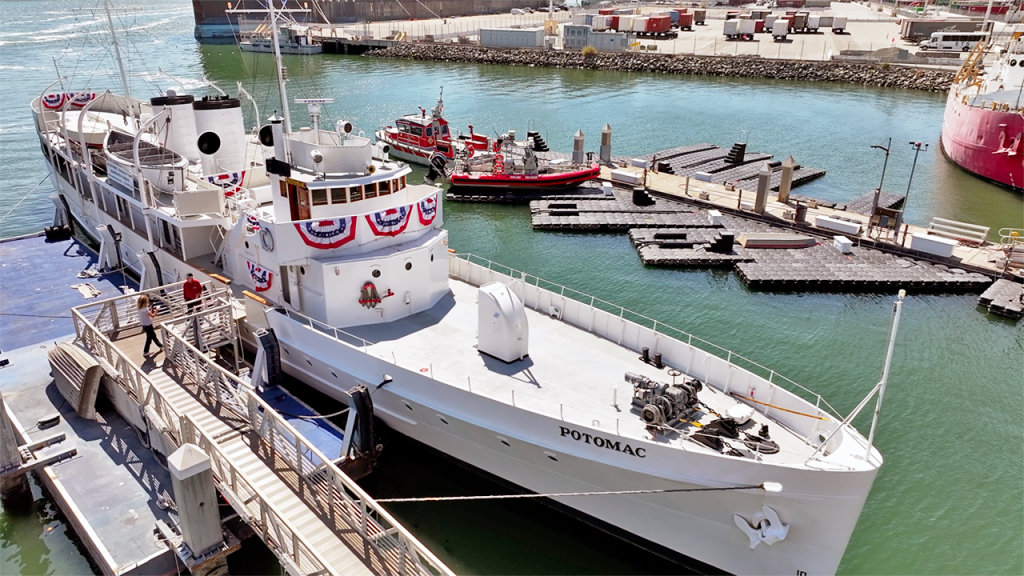
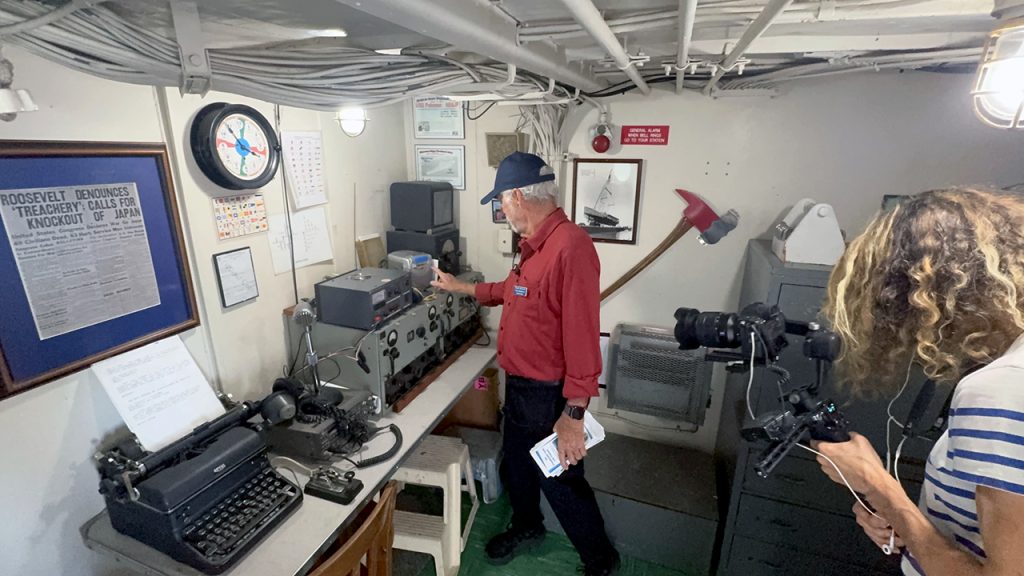
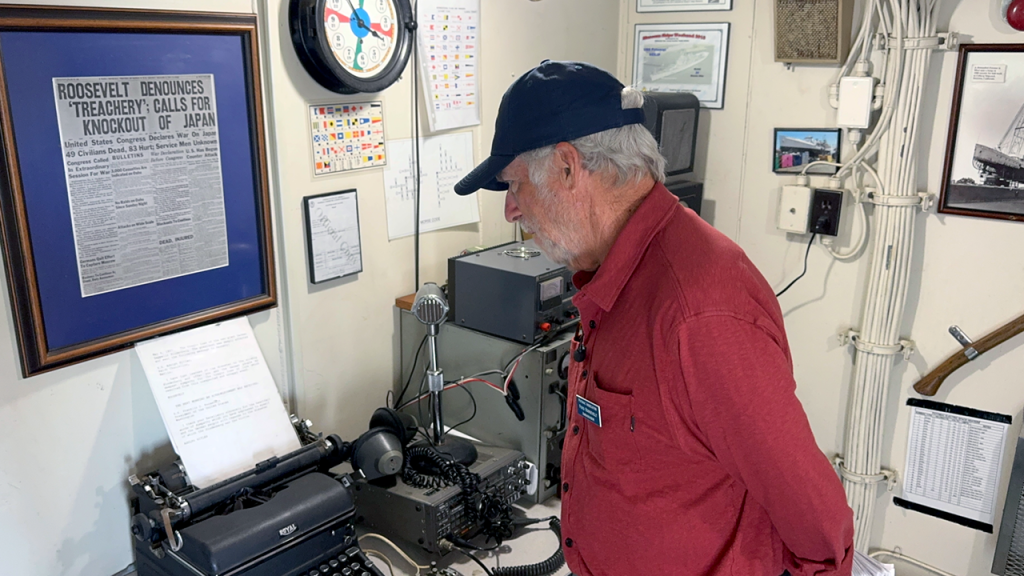
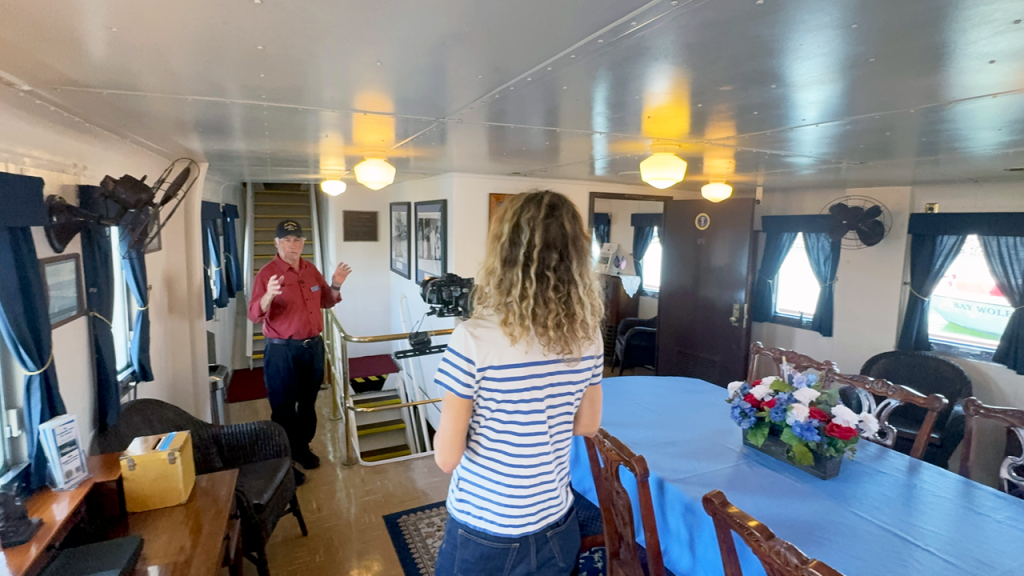
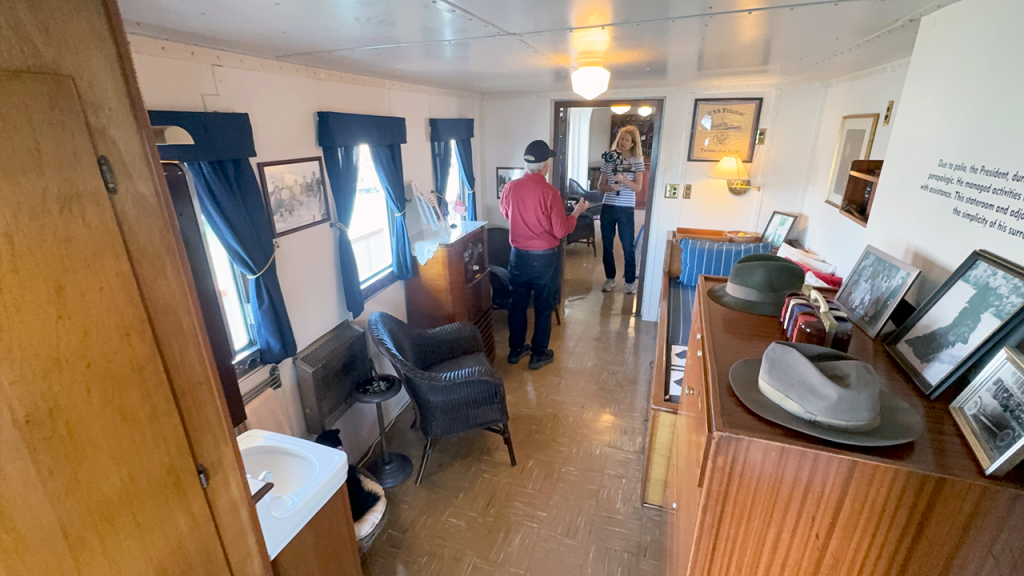
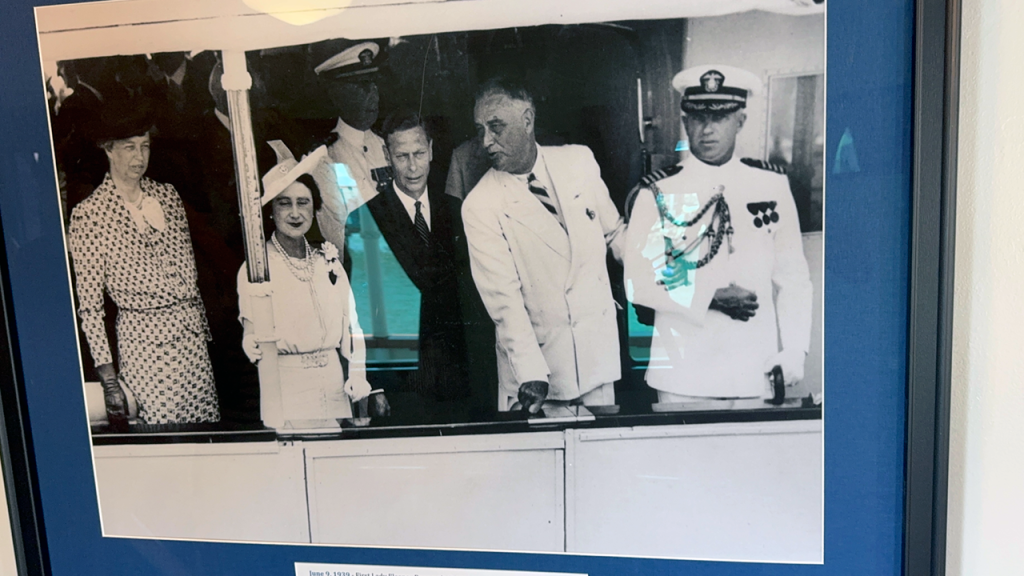
Ford isn’t only an excellent host: he walked us through the restored USS Potomac, sharing his grandparents’ routines and the names of many of the key hosts welcomed aboard by the President, including King George VI and Queen Elizabeth, as well as Churchill himself.
As a foreigner born in Spain, a place where the Axis forces tested their modern weapons during our Civil War before World War II, it’s difficult to put into words how special it is for me to visit such irreplaceable pieces of history, and do so with people very prepared to bring them back to life. And unlike the War Cabinet Rooms in London, where a museum spokesperson walked us through the complex, the person accompanying us aboard the USS Potomac is himself part of the story.
A frontier cowboy type of person
If this wasn’t enough, we had time to talk casually about events and references Kirsten and I have read here and there, but Ford could almost always point to a personal connection to many of those events. For example, I very much appreciated when Kirsten asked Ford about his dad, one of FDR’s sons, and hence a kid running around the White House—and aboard the “floating White House” we visited—so we could hear his account of his dad’s impressions.
We got to know that, unlike his siblings, Ford Roosevelt’s father, Elliott Roosevelt, was a less formal figure and more of a bigger-than-life character in search of the American soul and landscape, a frontier cowboy type of person. When I heard such a depiction, I couldn’t help but make the connection with a read that I really enjoyed a few years back: the first book of Edmund Morris’ biography of Teddy Roosevelt (a relative of Eleanor and, hence, Ford himself: Ford Roosevelt is Teddy Roosevelt’s great-grandnephew).
We got to know that Elliott, Franklin D. Roosevelt, and First Lady Eleanor Roosevelt’s second of four boys (plus the oldest sibling, Anna) who survived into adulthood, shared the very untamed, restless, adventurous soul that many Americans think their country is meant for, driving them away from conventional elite life. Instead of salons and a rather hedonistic, perpetual European Grand Tour or nepo tendencies, Teddy and Elliott drove away from Old World elite pleasures and searched for what a big continent had to offer them.
Idealistically: danger, the wilderness, perpetual exploration of the outdoors and of one’s inside, like the adventurers and transcendentalists who wanted to give the United States its own set of references, detached from the aesthetic and spiritual tutelage of European capitals.
The railroad and the ice
Morris’s account of Teddy Roosevelt’s youth in The Rise of Theodore Roosevelt (published in 1979, Pulitzer Prize in 1980) is fascinating, for we get to know about an initially very weak kid who showed special grit to collect animal and nature specimens and “toughen up” to overcome a propensity brought to him by nature (a reminder of the importance of the “nurture” part in all of us: according to this perspective, there’s little one can’t overcome, if effort and determination are put to work).
Morris explains how the first Roosevelt president was very adventurous in the early years and tried to raise cattle in the Badlands halfway between the Dakotas and Eastern Montana, a world inhabited by a special kind of descendants of Native Americans expelled from other lands and rough pioneer families, as well as new entrepreneurs who, like Teddy himself, wanted to take advantage of two of the revolutionary advances of their time (a railroad connection linking the U.S. heartland to the rest of the country through Chicago as both a boat and rail hub; and the industrial production of ice that made possible shipping packaged meat from cattle raised hundreds of miles from Chicago).
I also mentioned to Ford that the character I found fascinating in that first book of Teddy Roosevelt’s biography is an entrepreneur and neighbor in the Badlands who was also trying to make it big raising and sending packaged meat to Chicago, the Marquis de Morès: originally a nobleman from Southern France with a name as long as his legend in the Frontier, Antoine Amédée Marie Vincent Amat Manca de Vallombrosa.
A President’s folly over water
Then our interview moved back to reality, and since we were visiting the USS Potomac, we discussed how the vessel’s very own restoration was part of the legend. After the President’s death, the yacht fell into disrepair and eventually was in a state that risked permanent loss.
Once the beloved yacht was decommissioned, it served first as a passenger ferry between Puerto Rico, a U.S. Commonwealth territory, and the Virgin Islands. But from the sixties onwards, a new generation of historical American characters stepped up to save it: first, it was Elvis, a type of “king” trying to restore a President’s folly over water in 1964, but the task was too complex, and the singer quickly tried to get rid of it.
Another incredible turn of events turned the former presidential “floating White House” into a drug smuggling boat used by traffickers at Pier 70 in San Francisco during the 80s. It was then that a mature Ronald Reagan, the California governor turned President (so, not Joan Didion material anymore), helped save the USS Potomac from total demise by issuing a federal grant in 1983: the symbol of Republicanism rescuing a symbol of the New Deal, symbol of Democrats. Back when office was bigger than party, as Ford Roosevelt hinted (never being political about it, which we appreciate in a non-partisan project like ours).
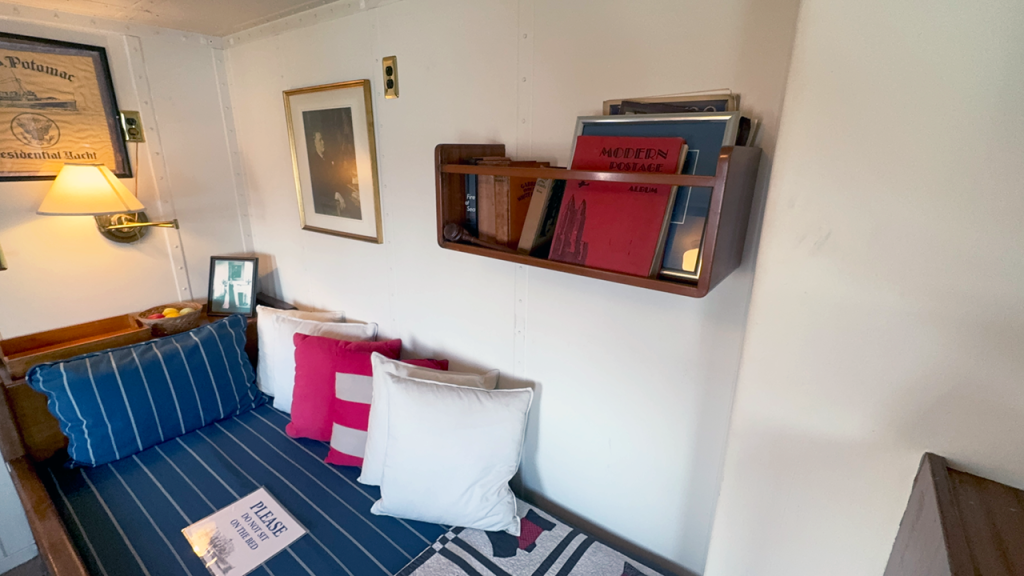
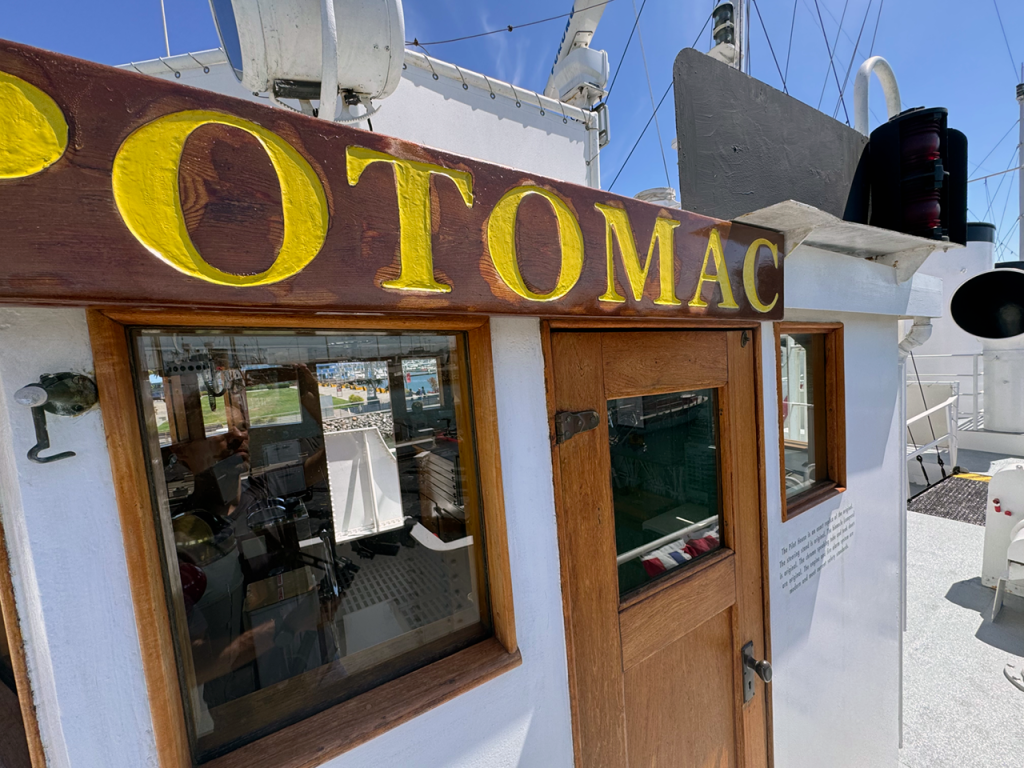
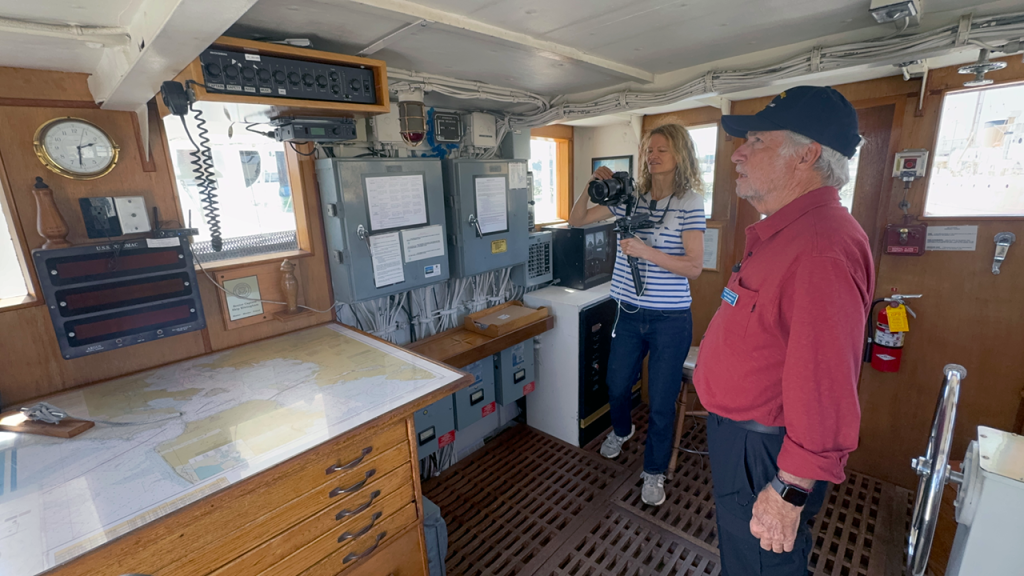
The story was interesting enough, even wild enough at times, and then there was the charm of seeing the places where FDR and family hosted distinguished visitors, where they slept, where the captain and crew had their quarters, and even the areas normally forbidden to passengers, such as the machine room, the kitchen (where a crew of mostly Filipino sailors and cookers prepped what was needed) or the wheelhouse.
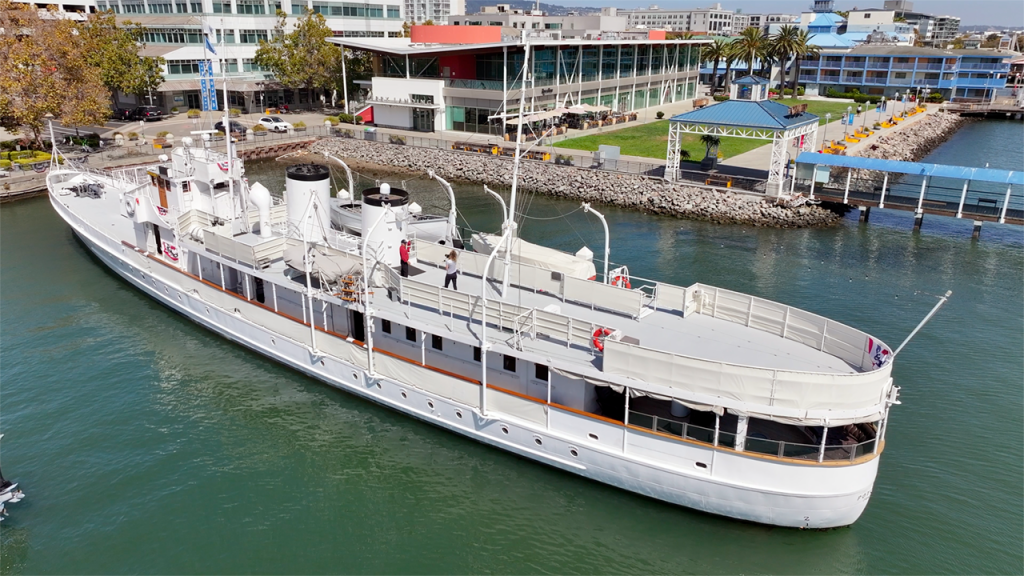
When it was time to fly the drone, I enjoyed the vessel from above as a group of California seagulls played dangerously with the robotic intruder, almost knocking it down (I could see one of them crossing the camera frame a few times). After it landed, I approached Ford and Kirsten again, and we continued casually chatting about different things, related and unrelated to the story.
Lost in Cuba
He asked me whether I was from Spain. I nodded, explaining I was raised in Barcelona, and perhaps the only connection I could find to the part of American history his relatives belong to was Spain’s recent connection to Cuba (a part of Spain, along with Puerto Rico and the Philippines, until 1898), and Spain’s traumatic perception of the defeat in the Spanish-American War, where many young Spaniards from the metropolis, often forcibly conscripted, died or were humiliated by young Teddy Roosevelt’s move with the Rough Riders, perhaps the beginning of his legend, and the event that propelled his reinvention in life at a pivotal moment.
Of course, I read the first biographical book by Morris from a very different perspective than any casual American reader, let alone Ford Roosevelt: like many Spaniards, I have distant relatives who either had a connection to Cuba or fought in at least one of the many military operations on the island, which sought more autonomy and even total emancipation during the whole second half of the nineteenth century.
Also, my great-grandmother on my mother’s side was born in 1898, a year that gave birth to idioms in Castilian Spanish like “más se perdió en Cuba” (literally, “more was lost in Cuba”), used to put a bad situation into perspective. I heard this many times growing up, when I would complain as a kid about something not going my way. Spanish atavistic fatalism among the popular classes can be legendary, a very Iberian blend of old-school stoicism and cynicism about fate from a place that extracted metals from the Americas to trade with China in the context of the Acapulco galleon, and also to pay wars in Europe.
Visiting Cuba (before everyone else)
Ford Roosevelt didn’t disappoint when I mentioned the Rough Riders and the “Cuba disaster” (for the Spaniards of that era, that is). He recommended Cuba: An American History by Ada Ferrer (2022 Pulitzer Prize in American History), explaining how, in the thirties, the Roosevelts had been once in Havana; he had heard from his dad Elliott how he’d been present at the Hotel Nacional when Americans tried to mend a political crisis there in 1933. Among the people in the picture: Fulgencio Batista.
From there, our conversation turned to FDR himself, and Ford recommended another book, Traitor to His Class by H.W. Brands (2008, Pulitzer Prize finalist in 2009). The FDR-Cuban connection led to a suggestion from Ford: “You have to visit Cuba!” I asked how difficult it is these days, and he talked about the situation on the island, which is hurting the population as a whole more than punishing the regime. He told us that people fly from Mexico, where there are affordable direct flights to Havana.
There’s one good part of smartphones: many use them as a digital reference library of all the knowledge online, and as a storage device for our digital files. So I was glad to see many of the great pictures Ford Roosevelt, a photographer, took on the island, a bit in the style of the likes of Walker Evans.
Our conversation regarding books, FDR, Teddy Roosevelt, Cuba, the Cuban exile in Florida, and even Hemingway, brought us to another reference that Ford Roosevelt thought we’d like to take a look at: The Mexican Suitcase (2011, Trisha Ziff) is the story of 4500 negatives in 126 rolls of pictures taken by photographers David Seymour, Gerda Taro, and Robert Capa in the Spanish Civil War.
“This here is my dad”
The suitcase vanished at the beginning of World War II, resurfacing in 2007. The documentary asks: who owns our stories? In the stories about traumatic events we tell each other, there’s always an editorial line, and also the temptation of silencing the memories that become uncomfortable. This reference was probably his response to my hinting at the need for Cuba to transform itself gradually but convincingly toward a real democracy that could accommodate all, even with the tradeoffs that such an approach implies (see: the Spanish Transition to democracy).
A little later, back at the Oakland office and little museum of the USS Potomac, Ford directed our attention to a picture depicting many men, among them one in a decorated uniform. “This here is my dad,” he said.
I asked whether he was a veteran. Then another fractal in history seemed to open: “well, yes,” he was a war pilot in World War II, flying over the Axis positions in Africa. All of a sudden, I revived the books and stories regarding the RAF pilots’ training and covering the French Résistance (among them, French writer Romain Gary, whom I heard about and read when living in France). I asked Ford whether he knew his dad’s division was in contact with Allied forces in North Africa, like the ones I knew by reference. Yes.
Somewhere in Spain, lost in a country house
I figured that not only all the pictures and media, but all these stories ought to be documented and digitized so they could be stored with a little redundancy to avoid technological failure, obsolescence, or mere entropy. Like many of you, I used to keep a few burned CDs and a couple of hard drives with many pictures and other documents on them. And before that, a few cartridges and floppy disks, which could barely hold a few text files. Now many are misplaced after many moves across Europe, many lost, whereas others were accidentally damaged by humidity during a country house renovation in Spain.
I still keep a couple of ring binders somewhere in Spain with film negatives of pictures I took before, during, and after college. There are also pictures in Ilford B&W paper somewhere. These are vestiges of a world that was barely digitizing back when digital SLR cameras and camcorders had CCDs that couldn’t compete with analog quality and texture, especially definition-wise.
After the arrival of the smartphone, I took many pictures, and I lost many of the home videos and pictures I took when playing and strolling with my kids around Barcelona’s Old City when they were toddlers. I could keep some with backups, and finally broadband internet and cloud services made it easier to store digital copies of multimedia files—at a hefty cost.
The same wafers
What’s more, two phenomena are taking place lately, almost in parallel: first, digital still image and video definition keeps improving thanks to cheaper medium format and full format cameras, but more quality comes at a cost: cameras and smartphones need more processing memory to keep up with files that hold higher resolution; and, due to the AI buildup, memory has gotten so expensive that it’s becoming quite a challenge for creators like us to simply store all the material we record, so we can retrieve it if needed. SSD drives and SD cards for cameras have over-the-roof prices, and the situation likely won’t change much in the coming years, since production can’t meet demand.
After more than twenty years of taking pictures and filming stories, we’ve lived through the transition from analog systems of video and photo production and storage to digital formats. And yes, digital photography promised the illusion of “free” image-making, because one didn’t need to store the negatives and prints. Then came the risks that go with digital files: local digital storage (say, hard drives) can fail, and the fastest and most stable options are getting too expensive, while things can also go dark in the cloud.
We haven’t found a perfect system to ensure that our work and digital memory have redundancies that prevent us from living through any black swan event that erases parts of it. Storing things in the cloud can be reliable and handy for pictures, but it quickly gets very expensive for people who use big files and have amassed big archives. But high-resolution video files are too big to upload and download often, and small producers can’t afford more expensive local alternatives.
Relying on a series of best-case scenarios
The solution for many of us is a hybrid: some things in the cloud, some on a local network for big files that need to be retrieved constantly, and many external hard drives. Whichever the blend, it all feels in need of improvement, a bit of a pick-your-poison situation, as the cost of escalating hardware has been hugely impacted by the AI buildup. SD cards are crazy expensive now as well, and it only takes a couple of searches to realize that SD cards and consumer SSD drives come from the same NAND wafers that enterprises are trying to hoard into AI data centers.
The promise of digital was freedom and flexibility, and the realization that economies of scale would make digital storage cost negligible, as compared to previous formats. But digital storage is getting more expensive and less reliable, forcing people to create imperfect workarounds that are prone to failure. When we lack film or tape, we depend on fully digital storage systems that can fail or be destroyed, fortuitously or on purpose.
The documentary about the Mexican Suitcase is a reminder that we used to work in ways that kept a physical master copy that could be stored and also lost, but left a trace (and the possibility of rediscovery) regardless of the events surrounding it: for analog documents to survive, there’s no need for cloud storage companies to remain sound so they don’t fail, remote servers to avoid damage or getting hacked, and digital files themselves to avoid corruption, especially when it’s too expensive to keep everything backed up as hundreds of gigabytes quickly become tens of terabytes, then hundreds of them.
Memory redundancy
Our visit to the USS Potomac and conversation with Ford Roosevelt got me thinking about all the things worth preserving, both analog and digital. And the possibility of meaning and rediscovery when things get preserved.
The Mexican Suitcase survived even though it never found custodians to keep it safe, but I’m not sure we’ll be so lucky with other negatives — the ones I keep, neglected, somewhere in our country house in Spain, in two or three ring binders. I think. And then there are countless digital files prone to being lost to a drive failure, a company bankruptcy, or a subscription nobody remembered to renew.
The Potomac survived because some seventy-five people kept showing up. Perhaps that’s what I have to do to ensure those binders don’t get lost, or the hard drives with videos of our toddlers don’t get wiped.