A hundred years after Antoni Gaudí died on his way to confession, the Sagrada Familia finishes its skyline — the longest argument with the cult of efficiency we still have standing.
In 2001, barely out of college, I worked for a PR firm headquartered in a nice office inside an ornate building on the rational-yet-soulful Eixample grid in Barcelona, at the confluence of the big boulevard Gran Via de les Corts Catalanes and Rambla Catalunya (on the north side of the Ramblas).
People from work, or those who had the time and money, kept a seat warm in the busy café Condal downstairs, a classic breakfast-and-tapas place that back then still hosted more local professionals doing their eternal brunch while in office hours than tourists.
I liked to have a coffee there before noon when I could, seeing more or less the same faces from one day to another. The cafés in the area must have appealed to a certain type of customer for over 100 years, after the city demolished the old medieval walls and expanded to the hills in the north and towards the two rivers that enclose the city east and west.
I remember those mornings in early June 2001, a quarter of a century later, as I just realized we’re heading to a milestone that tragically includes the same boulevard I mentioned, Gran Via, this time at another busy intersection to the east, Carrer Bailèn. Time travel: I imagine myself sitting at a café when an old man, thin and frail, walks down the sidewalk, lost in his thoughts. Something’s about to happen.
A walk to confession
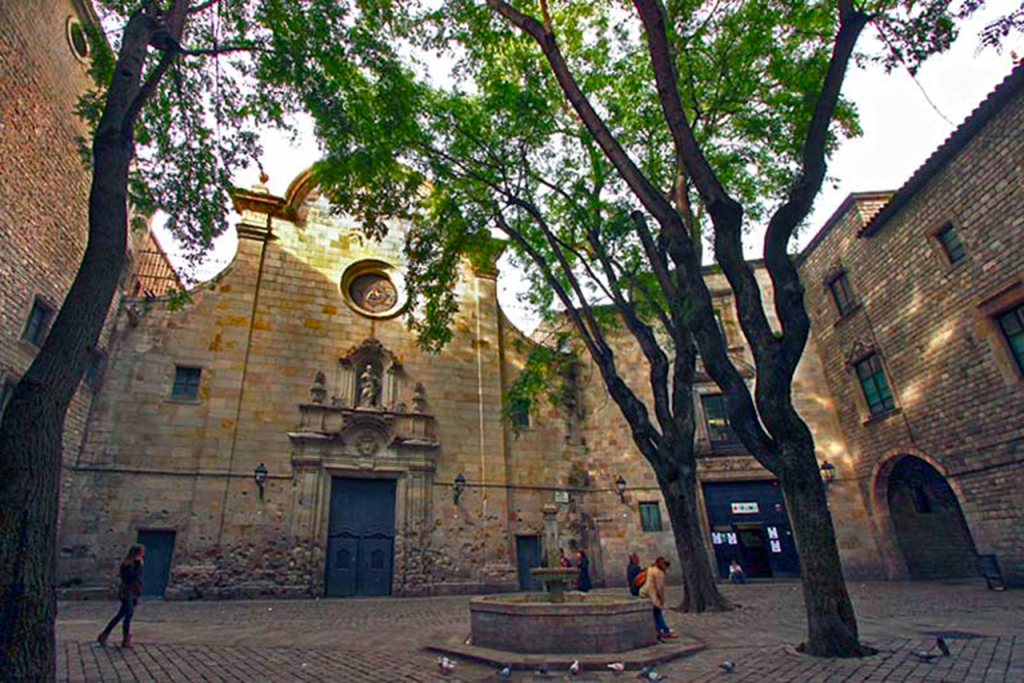
After leaving his office inside the temple he was designing and building using nature-inspired parametric design (without computers, mind you) a little before 6:00 PM on June 7, 1926, a white-bearded old man walked in a hurry down Bailèn in the direction of the Gothic Quarter, Barcelona’s old core, to attend his daily confession at the Baroque church of Sant Felip Neri, located in a medieval square with a little fountain in the middle sheltered by a centenarian linden tree.
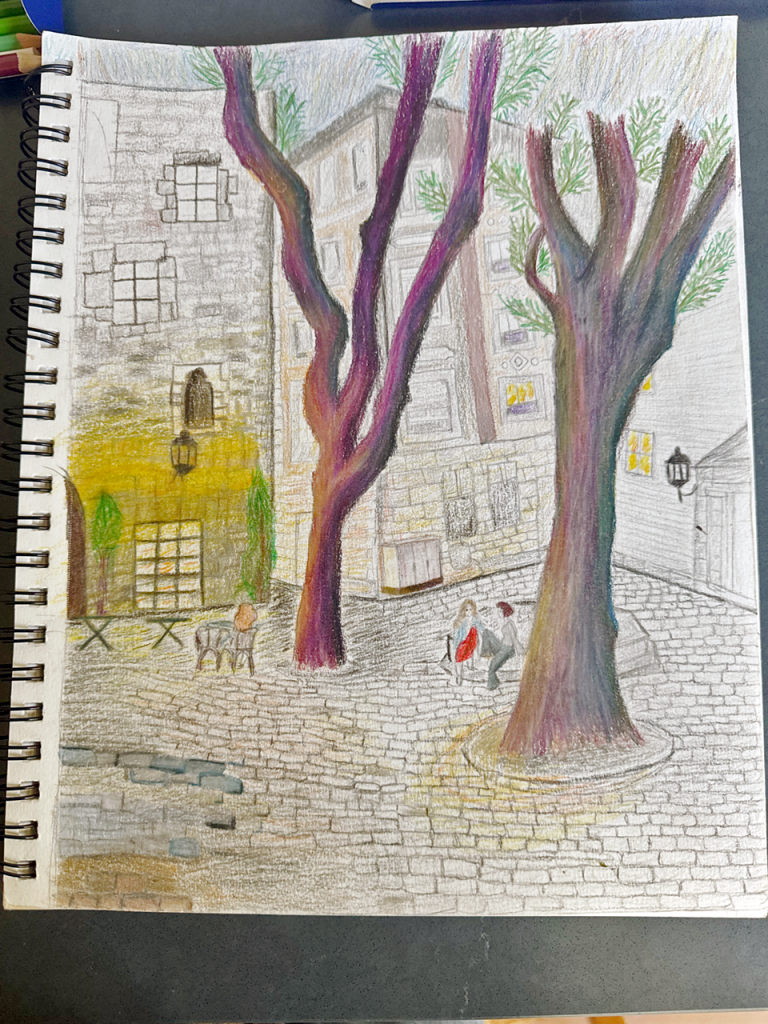
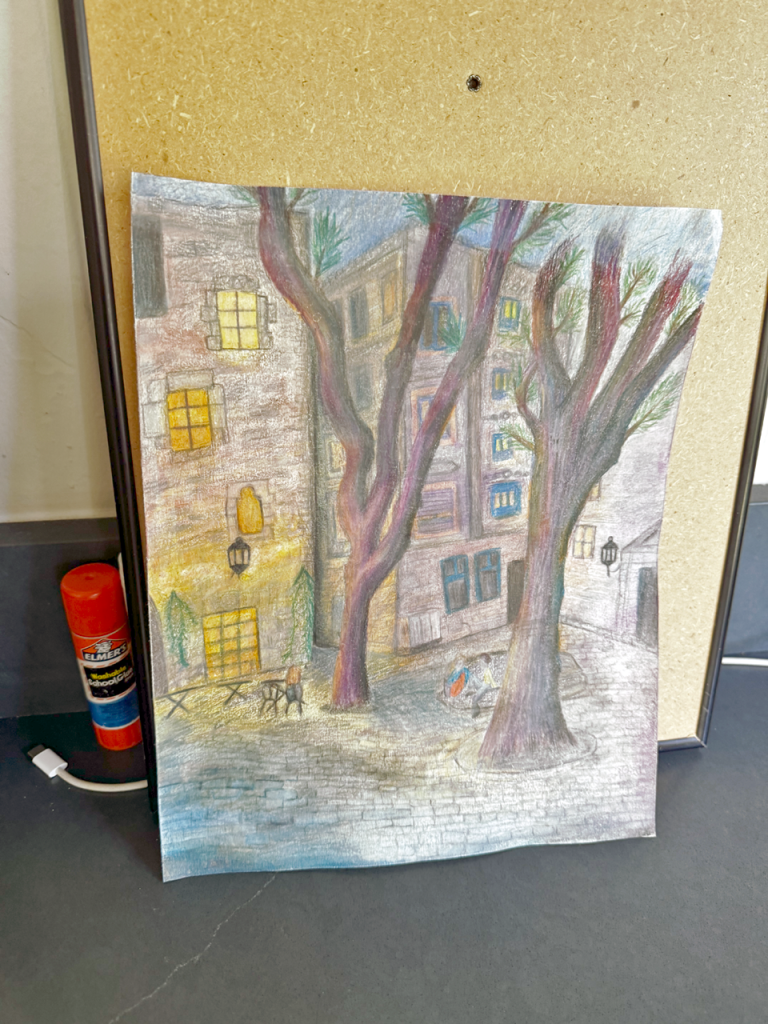
Coincidentally, our kids went to Elementary School in that same old little square at Escola Sant Felip Neri, and the experience must have left some imprint: our middle daughter submitted a drawing of that same square for her art project as a high school junior in California: in the drawing, one can see the tree, the central fountain, and the surrounding buildings. Most interestingly, one also infers the quiet and convivial ambiance from the soft, yellow lights in the old apartment windows, and the casual encounters portrayed: a few occupied café tables to the left, two girls chatting while sitting on the fountain’s rim.
The old man’s routine of walking daily from the Sagrada Familia work-in-progress to the Oratory of Sant Felip Neri had solidified around 1915, when he experienced a deep spiritual crisis that prompted him to stop taking on any commercial or private architecture commissions.
On one such walk, he resolved to dedicate the remainder of his life to building a temple that would rival grand cathedrals in ambition and scope: in size, in the resources required, in societal participation, and in the time needed to complete the works. He wouldn’t see it finished, but that fact didn’t bother him the least.
An old man and two trams
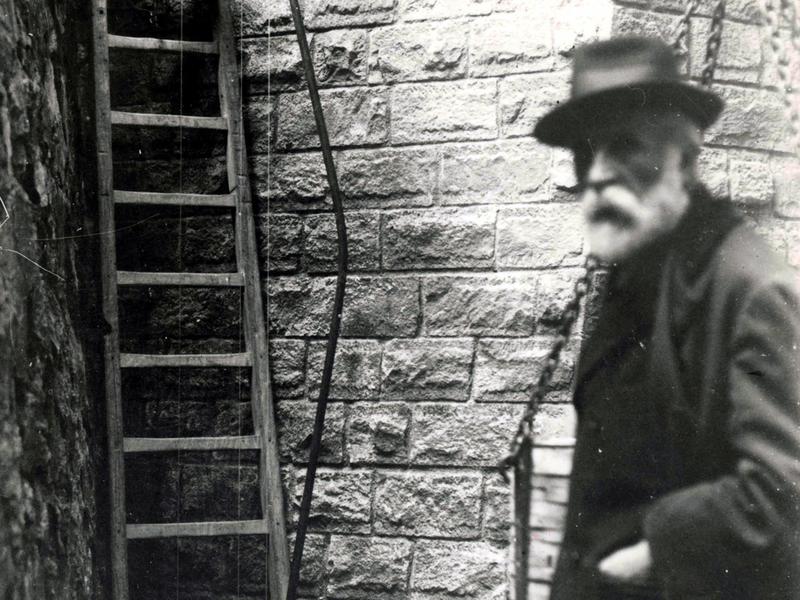
On that day of June, 1926, the old white-bearded man didn’t make it to confession at the church next door to meet Father Lluís Maria de Valls. According to police and historical records, the man, hard of hearing, jumped into the busy Gran Via intersection, lost in thought.
He saw a packed tram, the 30, approaching in one direction and stepped backward to avoid it. But his hearing problem didn’t warn him about another tram coming from the other end of the Gran Via, which struck him.
People surrounded the old man and tried to help. He looked like a beggar more than one of the first starchitects: his attire was old, dirty, and worn-out; his pockets were fastened with safety pins, and his shoes were as old and torn as the beggar character Charlie Chaplin played in movies since 1914.
The old man’s unkempt appearance — a frail physique and long, untrimmed white beard — was much in the style of old John Muir. A lack of documentation other than a little book of gospels didn’t play in his favor, and many of the first responders believed he was a homeless beggar, to the point that multiple taxi drivers refused to transport him to a clinic.
Who is Antonio Sandi?
After several minutes lying unconscious on the street, a police officer finally managed to take him to the Hospital de la Santa Creu in Barcelona’s Raval, an institution housed inside an ancient building that had been left to treat the poor.
On that same night of June 7, the night watchman at the Sagrada Familia noticed that the old, taciturn man had not returned from his evening walk, so he alerted Father Gil Parés. Realizing the old, forgetful master was missing, the priest Parés contacted one of the man’s disciples, Domènec Sugrañes. Together, they spent the night and early morning asking the police and looking for any clues at local clinics.
When they finally traced an event involving an old bearded tramp run over by a tram, they hurried down to the Gothic hospital in the most crowded and poorest part of the old city. They saw that the admittance slip had mistakenly recorded “Antonio Sandi.” Then, Sugrañes assured the hospital: “Gentlemen, the tramp you’re talking about is Illustrisimo Antoni Gaudí.”
“My place is here”
Soon, prominent figures of the civil society and city officials rushed to the hospital and offered to move him to a private clinic, but Gaudí, who had recovered consciousness, refused: “My place is here, among the poor.” He passed away at the dark, medieval hospital, a marvel of Catalan Gothic style, simple and timeless, which contrasted with his equally timeless way of seeing nature as a godly part of nature; the ensemble’s cloister has some significance to our family, for we used to bring our kids to the public library inside.
I can’t help but remember an article I read about the equally tragic death of one of America’s first universal authors, the author of The Raven, Edgar Allan Poe, found hurt in a Baltimore street in September 1849, and also initially treated as a beggar, then sent to the local charity hospital in Maryland, Washington College Hospital.
For nearly 20 years, from 1905 to 1925, Gaudí’s official home was a generous pink chalet inside Park Güell, designed by him as one of the models for a future development around the park that never happened. He lived there with his father and niece. Rejected by the love of his life, a liberal schoolteacher from nearby Mataró, he’d never married or had children. Once his father (1906, age 93) and niece (1912, age 36) passed away, many things shifted. Gaudí’s beliefs, architectural style, and very life transformed into a bolder proposition: he developed a mission and set out to accomplish it with determination.
Once his health began to decay, Gaudí doubled down and left the Park Güell home, which felt now like an empty carcass. His legs were weak, and the one-hour commute from the park to the construction site of the temple he had envisioned wasn’t feasible anymore, so he arranged a small bed in his studio workshop inside the Sagrada Familia itself.
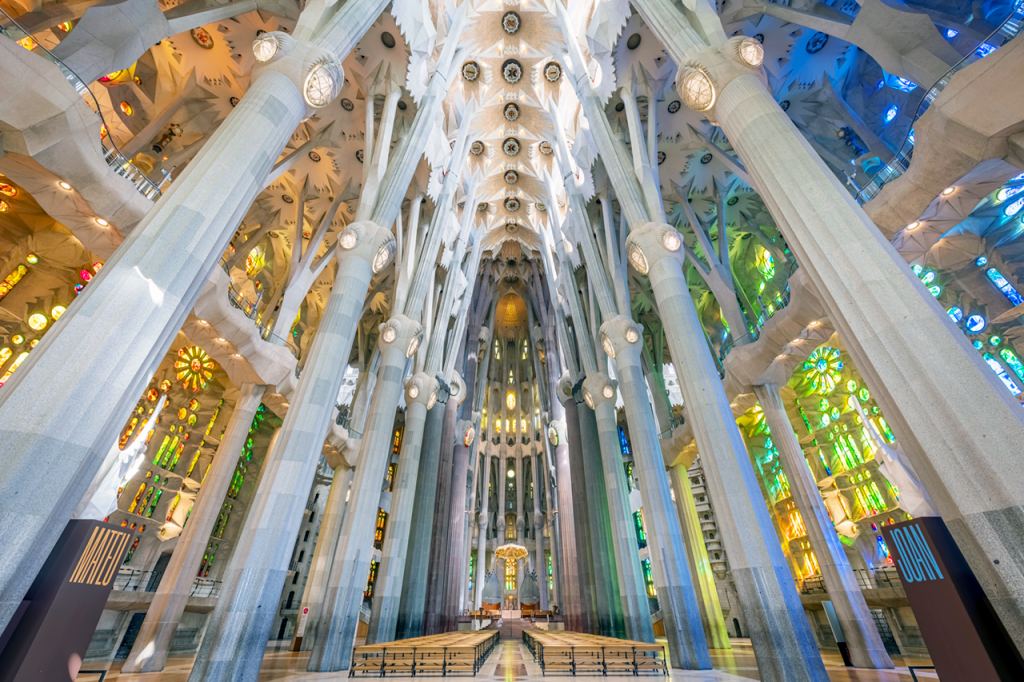
There, surrounded by masterful models of the cathedral made with weights to accomplish the parametric marvels of the natural realm, Gaudí lived the last six months of his life, in a feverish battle against the clock, half monk and half genius architect, with the aspect of John Muir and the determination of Thomas Edison.
When the models burned
Many things happened after his death in early June 1926, almost a century ago. His pioneering parametric “hanging chain” (polyfunicular) models, which used strings, chains, and small sacks of lead pellets or sand to calculate optimal architectural arches using physical gravity, didn’t make it to the Spanish Civil War, and so a group of anarchists, mistaking freedom of thought with anticlerical vandalism, entered the workshop and smashed his large-scale plaster models, burned the archive of architectural plans, sketches, calculations, and photographic records. The work of a genius for the world to preserve and study for generations to come, lost forever.
The incident happened just ten years after the architect passed, and things were going to turn much, much darker in Europe back then, with the Spanish Civil War as a test field for guerrilla warfare on the Republican side and state-of-the-art weaponry on the Francoist side provided by Adolf Hitler and Benito Mussolini.
Also, Gaudí’s work and Modernisme in general, a distinctive movement centered in Barcelona that merged European Art Nouveau’s organic aesthetics with traditional craftsmanship akin to the Arts and Crafts movement, became out of fashion, and so the city’s intelligentsia, especially as industrial power first and then democracy, the Olympics, its biggest sports club, etc., associated the works with the wrong side of history.
The moderns come back
But sooner than later, the same young architects and intellectuals who had initially championed rigid international rationalism, from Oriol Bohigas to Josep Lluís Sert or Ricardo Bofill, finally recognized the work as structurally revolutionary and inherently vernacular, so they began restoring interiors and lobbying to protect many of the works that risked decay or even demolition.
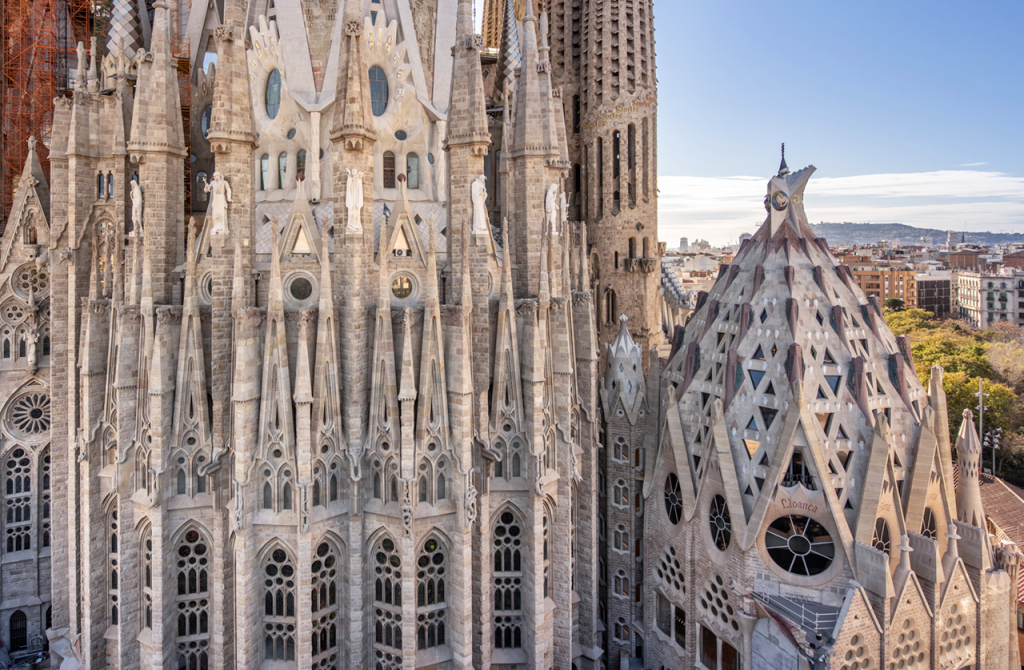
And so, from the late sixties and early seventies onwards, those same youngsters decrying the old master not only embraced him but protected his work and set out to help accomplish a gigantic, civilization-scale collective work: the Sagrada Familia, a building built by a foundation backed by the regional civil society, as collective and voluntarist as the construction of early Gothic cathedrals.
A few years back, when Kirsten and I visited architect Ricardo Bofill’s La Fábrica, an old cement factory transformed into his iconic home-studio, I couldn’t help but marvel when we entered what Bofill called precisely “the cathedral,” a massive room built inside the old factory’s kiln that opened to a garden and had seen many gatherings over the years. Among the many pieces of furniture, there was an array of them designed by Gaudí, most notably his ergonomic wooden chairs. The moderns had come to love the master.
One hundred years on
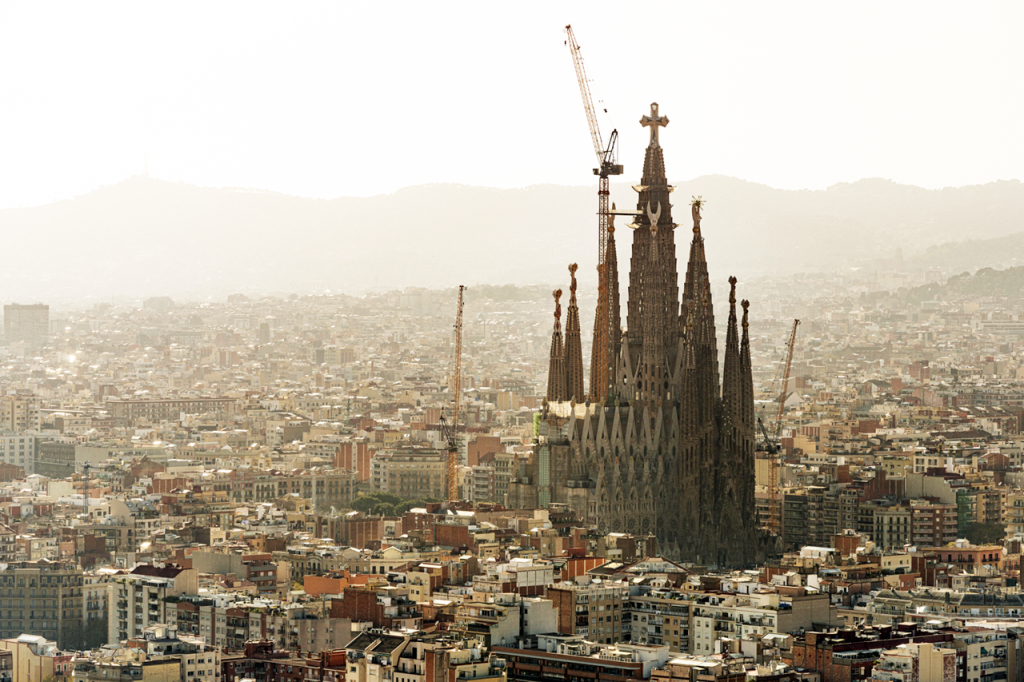
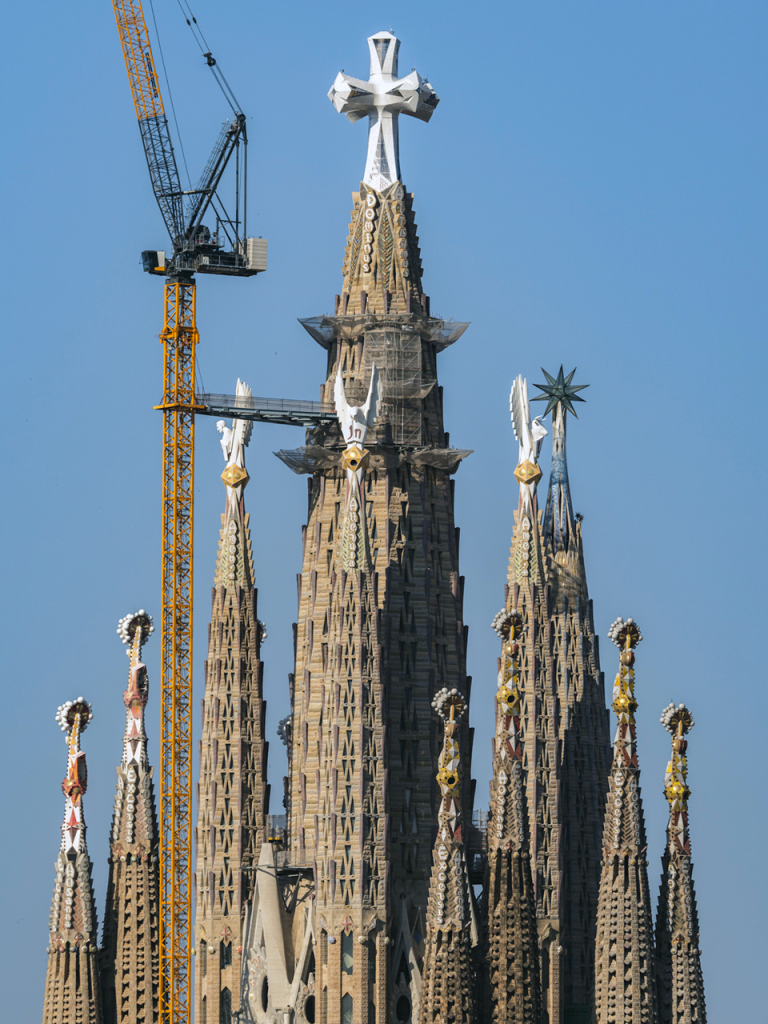
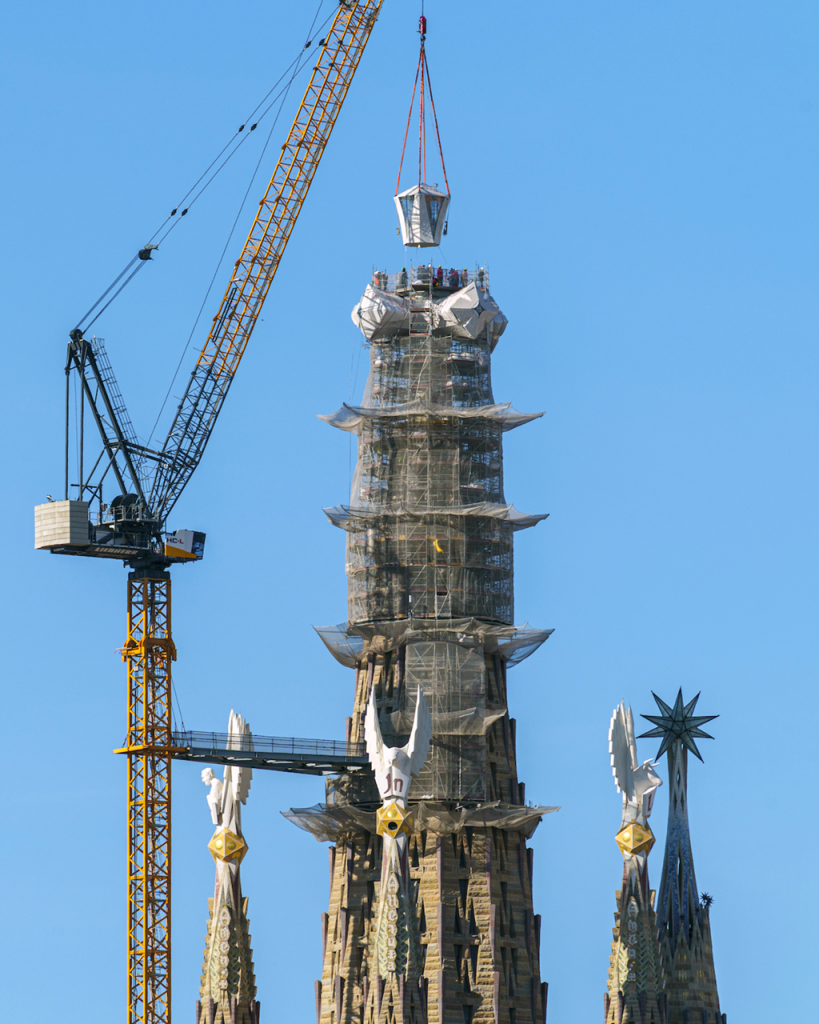
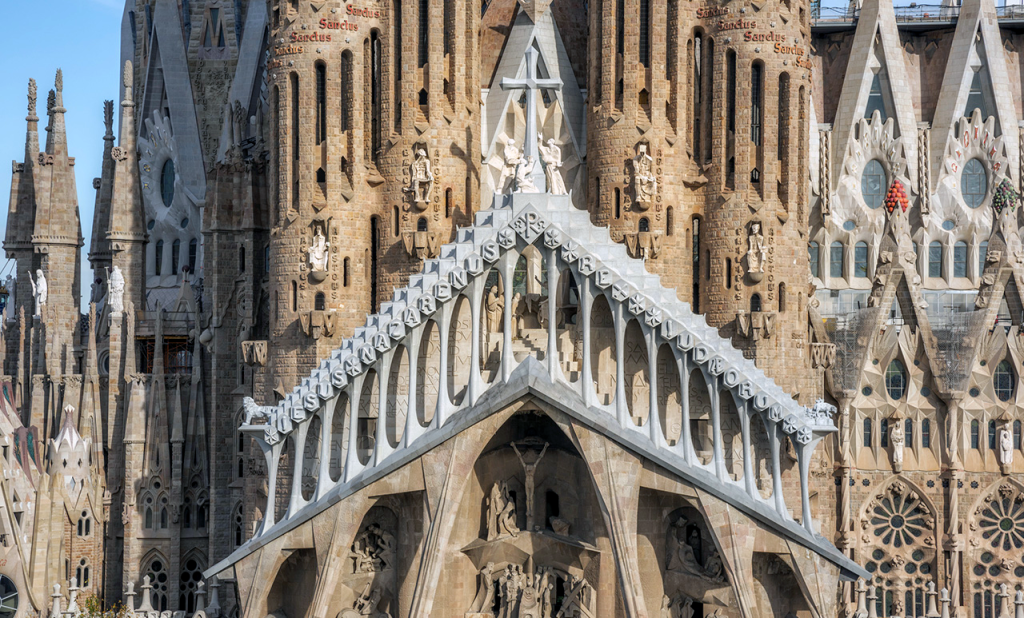
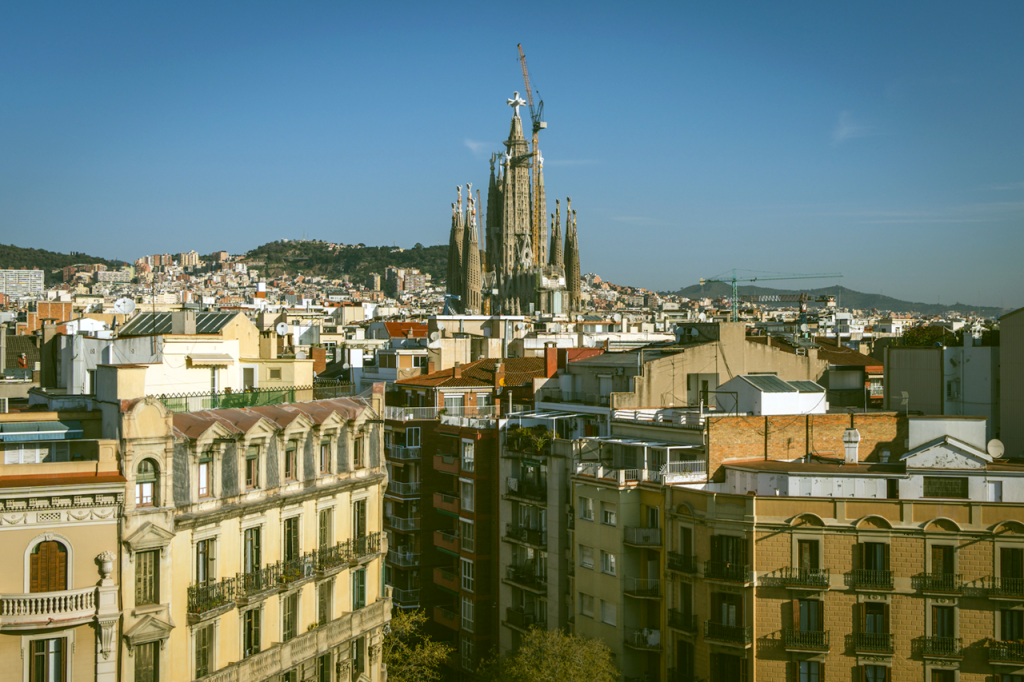
One hundred years after the tram incident with the old tramp that turned out to be the city’s most universal figure, things are looking different at the Sagrada Familia. On February 20, 2026, the tallest part of the basilica was finally crowned with a gigantic cross of metal and concrete perched over the city at 172.5 meters, making the old tramp in shabby clothes’ temple the tallest church in the world and completing the otherworldly external profile of the temple’s central spire.
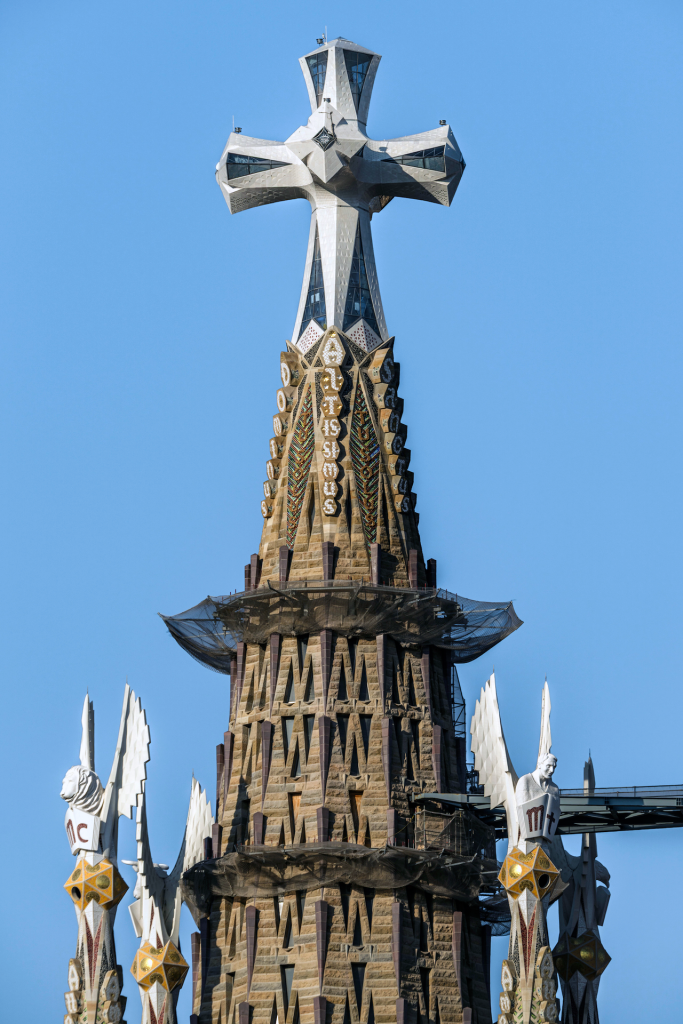
On June 10, 2026, the church will look almost completed, and the Pope is expected in Barcelona to consecrate the central tower, a technical feat that Gaudí dreamt of using inverse models hanging with weights upside down, knowing that, in the best-case scenario (which didn’t materialize), he would only live to fund, help build, and see a tiny portion of the work. That was perhaps what moved the whole enterprise, kick-started in 1916 after his spiritual crisis in 1915: cathedral-scale works got built by many generations of entire civil societies; he was more than fulfilled in lighting the flame and keeping it on as long as he could keep going.
It’s a story about Gaudí, but also about a city; four weeks out from a ceremony as I write, and we imagine the old man walking from school to the church located in the same tucked-away medieval square where our kids played after school until a little over a decade back.
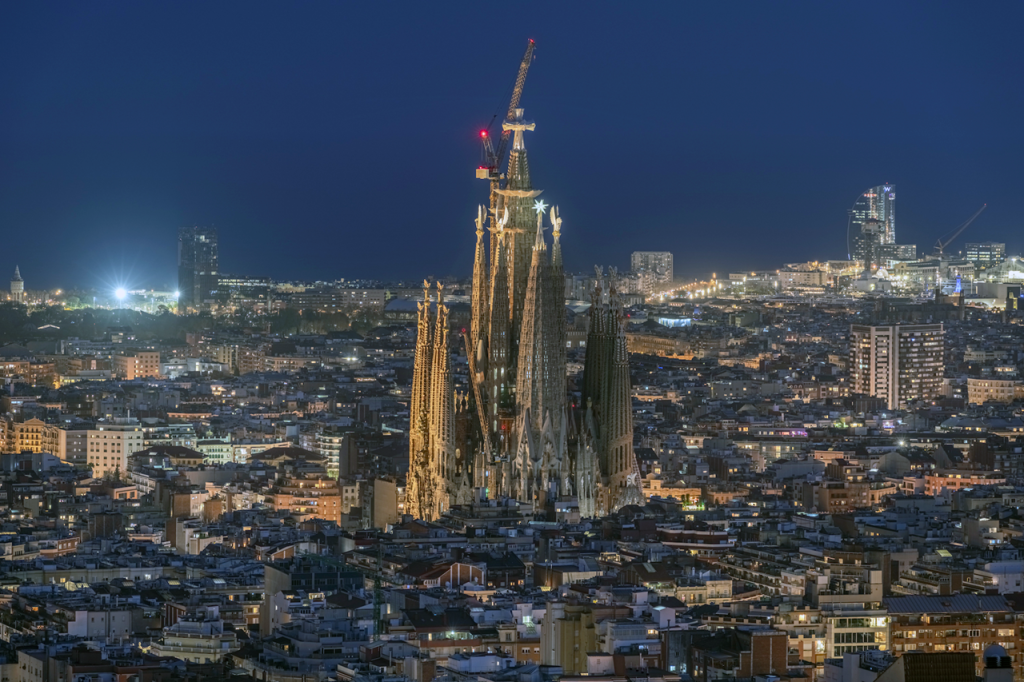
If Gaudí were to walk back from Sant Felip Neri to the basilica of the Sagrada Familia now, he’d see a different skyline, and his organic temple towering over it, but not squashing it: Gaudí deliberately designed the tower to be 5.2 meters lower than the mountain of Montjuïc, the epicenter of the 92 Olympics, a symbolic hill behind the city that has both protected and sieged the city from the vantage point of its military fortress.
Five meters below Montjuïc
Gaudí didn’t think of Montjuïc as the hill from where the city heard the cannons in the past, but as a landmark created by God, a humble 177.7 meters tall hill. So, the temple’s tallest point was about 172.5 meters; Gaudí, an architect with advanced civil engineering skills, could have dreamed of a taller feat. He chose not to.
Not long ago, I read a comment somewhere about somebody visiting Barcelona who, upon seeing the Sagrada Familia, experienced the same feelings he had for the Strasbourg Cathedral; to him, both temples, very different aesthetically and from diametrically opposed eras (medieval and modern), represent a similar approach toward human endeavor.
The construction of Strasbourg Cathedral began in 1015 and went on and off for decades, then relaunched in 1190, and after many events that stalled the works several times (among them, the Black Death), it was finally finished in 1439, even though it’s still missing one spire, which reminds us that, many times over, cathedrals were built in a similar fashion to the collective endeavor of the Sagrada Familia, often left “unfinished” many generations after the first masons, carpenters, and sculptors had begun their initial works.
Standing at the center of the Place de la Cathédrale, the Cathedral of Strasbourg is still among the tallest churches in the world at 142 meters (466 feet), and was the world’s tallest building from 1647 to 1874. Barcelona’s Sagrada Familia is a contemporary, folly-looking version of such a breathtaking type of building, one of those few collective works that reach civilization-scale.
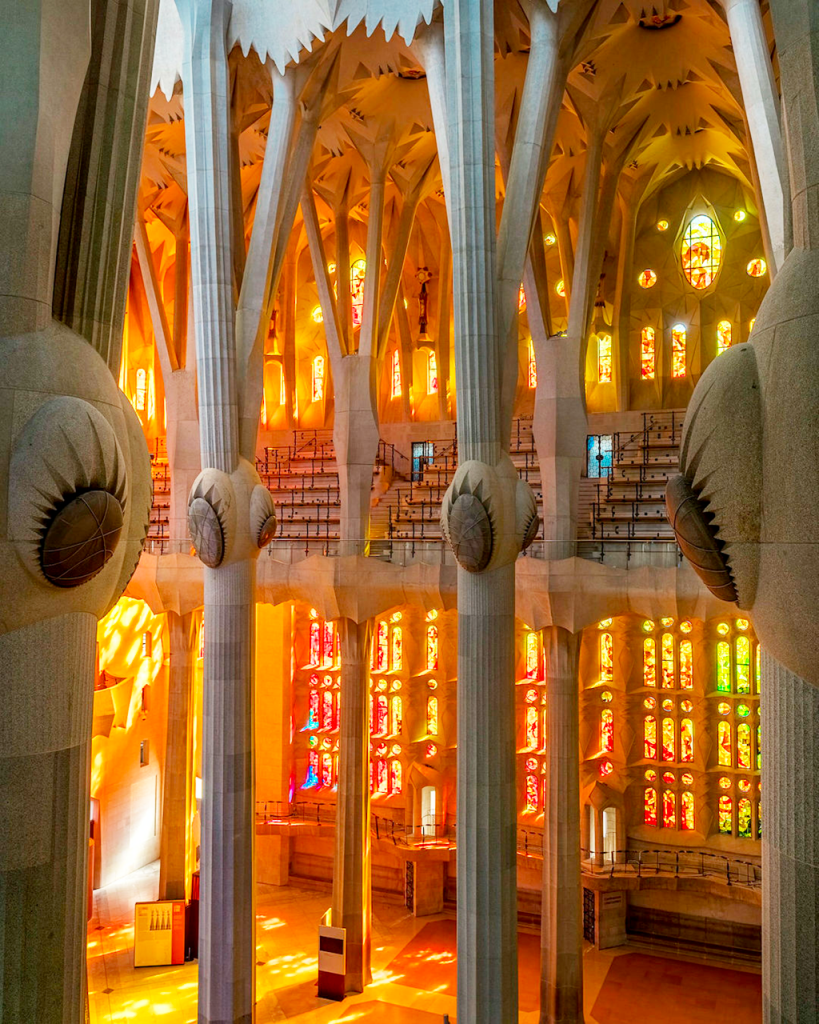
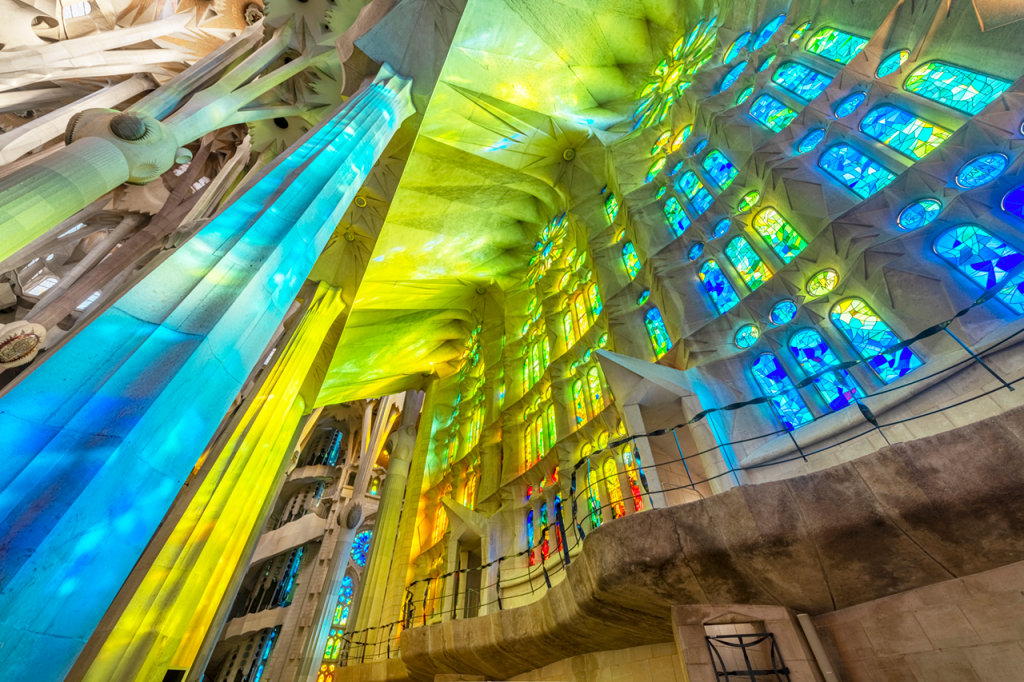
Those who, on June 10, 2026, will step inside the Sagrada Familia once again, or for the first time, will see the effect of sunlight streaming through the windows and hitting the vegetal towering columns and ornaments like the cones of light as they filter through the leaves and branches of a forest canopy, one of the most astonishing visions I’ve experienced inside any building. If, like many ancient philosophers and then Christian theologians, one thinks that experiencing beauty can bring one closer to god, then it’s more than recommended to visit such a place.
Seventy-three years before the tram
If Gaudí was 73 years old when he died, numbers play their infinite game of coincidence again: 73 years before Gaudí stepped backward into the wrong side of an intersection, leading critic and polymath of the Victorian era John Ruskin talked vehemently about the need to capture real truth and beauty by observing nature and bringing back medieval craftsmanship. His 1853 chapter The Nature of Gothic (from The Stones of Venice, Volume II) celebrated Gothic revival, a style that required workmen to put all their senses into the work, flourishing in the process.
“You must either make a tool of the creature, or a man of him. (…) Let him but begin to imagine, to think, to try to do anything worth doing; and the engine-turned precision is lost at once. Out come all his roughness, all his dulness, all his incapability; shame upon shame, failure upon failure, pause after pause: but out comes the whole majesty of him also; and we know the height of it only when we see the clouds settling upon him.”
John Ruskin, The Stones of Venice, Vol. II, Ch. 6, The Nature of Gothic, 1853
And so, years later, when artist and textile designer William Morris sought to promote British craftsmanship to survive automation, he reprinted a chapter of Ruskin’s book as a standalone tract that traveled through the Arts and Crafts movement in the Anglo-Saxon world into Modernisme in Catalonia. Ruskin believed that the imperfection and inefficiency of Gothic ornament wasn’t something to suppress but a statement of the mason’s freedom. Like Gaudí later, Ruskin and Morris took sides and embraced a way to integrate technology that preserved the man instead of erasing him.
Collective works such as Gothic cathedrals can represent much more than the assembly of their stones, carpentry, and ornaments, as many people realized when on April 15, 2019, a structural fire broke out in the roof space of Notre-Dame de Paris; contributions from all over the world, big and small, helped restore a place that had made generations dream and think about the enchantment of the world through works such as Victor Hugo’s The Hunchback of Notre-Dame and later pop culture adaptations.
A drawing made in California
And so, when I saw my daughter’s day-in-the-life portrait of Sant Felip Neri, I couldn’t help but make the connection of the many layers of reality connecting us to the tragedy, and also the beauty, of the world: Sant Felip Neri’s church, the same little Baroque temple squeezed in the small medieval square that preserves the etched wounds of the 1938 Fascist Italian bombardment of Barcelona during the Spanish Civil War, and the place where a decade before Gaudí was trying to reach after work on a tragic day of early June, 1926, next to the school that my daughters attended as little kids in the early 2010s.
In the middle of the square, a little fountain preserving the ambient freshness in late spring and early summer, as school is about to end for the year and the yellow flowers of the big linden tree fall, covering the ground in yellow and filling the air with a fresh scent. The summer solstice approaches, and everything is yet to be done, and everything is possible.