I went for a run with a friend affected by the fire rules, and this is what I learned while climbing a trail amid eucalyptus trees.
A couple of weekends ago, I met a friend I’ve since gone for a few runs with in the San Francisco East Bay hills. The way I met him is interesting: a watcher of Kirsten’s videos, he spotted Kirsten at a local high school one day when parents were visiting.
College Av. encounter, Berkeley-Oakland
Kirsten exchanged our emails with him, and he was one of many who made us feel at home from the get-go when we left Midtown Palo Alto to settle in the East Bay. He suggested a few very useful things, and we ended up going for a run a few times so he could show me a few interesting routes through the hills, with views of the Oakland and Berkeley flats down below (the Campanile, tall buildings, and avenues as landmarks), and San Francisco, the Golden Gate, and Mount Tamalpais in front of us.
So, when I saw him getting out of his car on the gently vibrant and commercial College Avenue, around the two-block shopping and cafés section of the Elmwood District (upscale, highly walkable, a bit like a shopping hub with the leafy academic allure of an old college town), I paused my run, and we chatted a bit.
That morning, I had headed to the Temescal Regional Recreational Area at the bottom of the Oakland Hills, not far from the tunnels that connect the East Bay with the interior valley of residential, upscale towns of the Diablo Valley and Ygnacio Valley, known as Lamorinda: Lafayette, Moraga, and Orinda, with Danville and the San Ramon Valley beyond.
If you want to picture the area, imagine a set of American West pleasantvilles sitting on leafy, perfect-weather suburban spots not far from San Francisco, and hence prohibitively expensive to almost everyone at this point.
A summer in Europe, and what it felt like
I told our friend (let’s keep his name off the post, since we’ll talk about his home and how local regulations affect his family’s property and upkeep) that we’d been in Europe, where I’m from. Our oldest daughter, currently about to start her second year in college, had spent most of the summer doing an internship in Paris, one of the three places where we lived as a family before moving to the US in the summer of 2022 (previously, we had lived in Fontainebleau, one hour south of Paris, and Barcelona, where our three kids were born and lived as toddlers).
I told him it had been hot, but not hot and humid as it is expected in July in the Mediterranean; this time it felt sticky and unrelenting, especially at night, when temperatures around the coast didn’t drop enough to sleep comfortably without AC on most days. By then, many areas of Europe will feel comfortable only for a few weeks in July and August with air conditioning. Heat-pump producers, dealers, and installers are making a killing in places such as northern Spain, most of France and northern Italy, the United Kingdom, Germany and beyond.
This summer, it’s been so consistently warm and dry in places around Western Europe that most of us have seen on social media pictures of English and Central European landmarks as brown and dry as the US West during the warmer half-year season, and that’s affected many things, from crops to people’s own health, to water management, to wildfire risk. The new normal doesn’t feel normal at all; call it whatever you want. Pick your bias, but the lived reality is stubborn.
I told him that I like to be in our habitual places in Europe in off-season periods, when the weather is nice and there are fewer people, so one doesn’t have the feeling of being engaged in some sort of hyper-competitive activity devoid of any of the natural strengths of Mediterranean culture, but our current school calendar makes it hard to achieve.
Unlike when we lived in France, where kids have two weeks off in the middle of each trimester (which we used to drive to Spain and across Europe in odd weeks year-round, an experience we would recommend to any family with young children at home), we’re now tied to a school district and calendar from the Bay Area, which means our days off and travel windows are more conventional and much more expensive: travel when it’s either too hot or too cold, and pay top money for it.
Back to the ridiculous California summer
So, it’s no surprise that during our ten-minute conversation in College Avenue, my friend and I talked about how nice it felt to be back in the Bay Area: to those not familiar with the weather of most of Coastal California in summer, when it’s too hot almost anywhere in North America and Europe, the weather is so ridiculously pleasant that it invites you to spend as much time outside and active as you can handle: you can eat out, be comfortable on long-sleeves, and do exercise at noon if you want, because it won’t be too hot. It’s unreal compared to the stickiness of the Mediterranean summer (I’ll concede that Barcelona feels nice for most of the year, but certainly NOT in July and August).
But this weather divergence for a few weeks a year in two of the places with the most pleasant Mediterranean weather, one in North America and one in the Mediterranean Basin proper, doesn’t translate into radically different patterns when it comes to fire risk: in summer, it’s dry, and it can get windy, and any spark can evolve into a dangerous wildfire.
Regarding fire risk and how to tackle the challenges mega-fires represent, things are changing rapidly, though many attempts can get controversial when they hit the ground and affect communities. So, by the time my friend and I met last Sunday to go for a run from his house in the Grizzly Peak Boulevard area of the Berkeley Hills, California had tried to tackle the risk of fires engulfing homes with the so-called Zone-Zero rules.
What’s around your house’s five-foot perimeter?
Basically, California homeowners living in areas that have been designated high-risk regarding fire, have to prepare their properties to reduce flammable material as much as possible: evidence shows that homes adapted to reduce combustion in their surroundings survive fire at a higher rate than those who have not followed any advice, piling vegetation and other flammable material within feet of the house perimeter and keeping open vents and crawl space where embers could jump and burn in the event of a general evacuation.
The rules aim to advise homeowners in creating more extensive landscaping and structural changes over an adaptive time window set at five years before full enforcement, but many owners are already warning that, strictly followed, the rules will cause a heavy loss of beloved trees and ornamental vegetation, with little potential gain in exchange for the loss.
Anyone thinking that losing bushes and trees is something negligible hasn’t carefully studied how much surrounding vegetation can affect the immediate microclimate, air quality, beauty, and even long-term health, when we consider studies linking exposure to the experience and essential oils of forests (the Japanese Forestry Agency coined a term for it in 1982: shinrin-yoku, “forest bathing”) to our health outcomes and long-term general wellbeing.
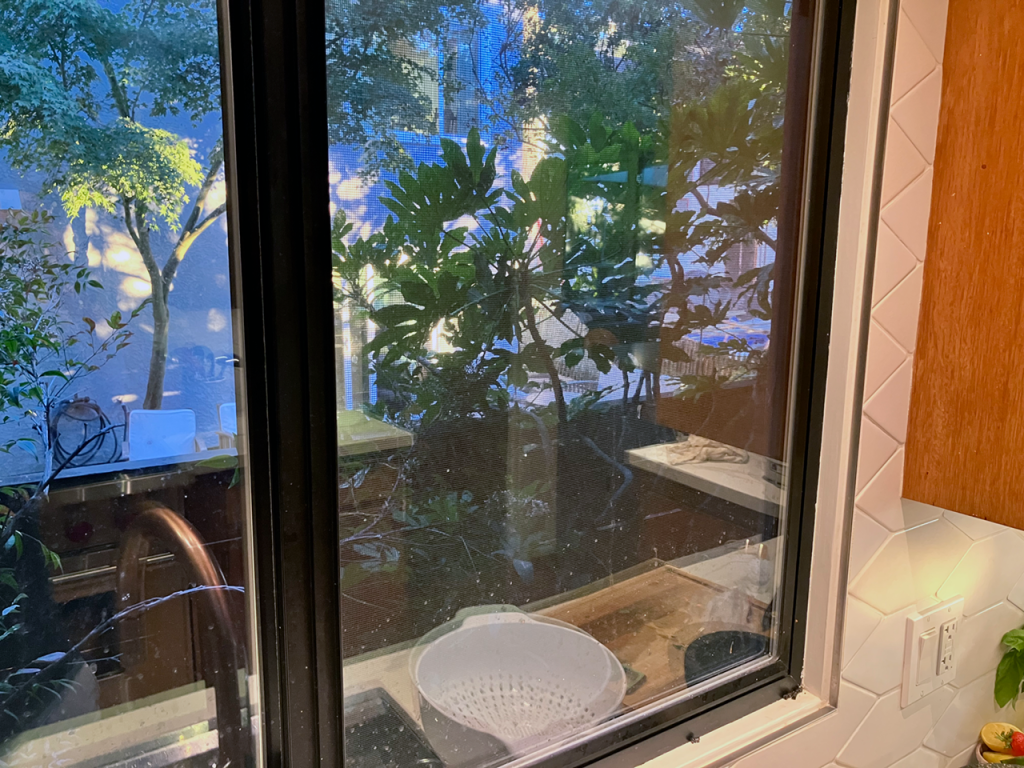
Plants really influence our mood and can be good for us, and backyard gardeners from the natural outskirts of the San Francisco Bay Area have enjoyed a privileged window into a blissful indoor-outdoor lifestyle where plants, animals, and people benefit from each other. It just works most of the time, though there’s a big BUT lurking around, and insurance companies have noticed: fire risk.
What happens when the perimeter reaches the garden
The new Zone-Zero regulations have been approved unanimously, although the process wasn’t consensual (it hardly is in a state known for the historic belligerence of single-family homeowners). But what happens when the perimeter affects our beloved surroundings? I had not thought much about this since we live closer to the flats, an area of the East Bay that’s still fairly lush and includes many green backyards and front-yard gardens and old street trees, though the area feels (at least on paper and to insurance companies) far away from the natural areas of the hills nearby.
That said, it has taken me a few interchanges to realize some of the families living in suburban areas designated as high-risk of sudden fire events, like the catastrophic Oakland Hills Firestorm of October 19–20, 1991, which was initially contained but strong winds reignited it overnight due to high temperatures and low humidity, jumping highways and consuming homes within minutes.
Southern Californians will find this black swan event from the early nineties in Northern California sadly relatable: it’s when the Santa Ana Winds roar downhill from the interior toward the canyons leading to the coast, where risk is highest, affecting people’s mood and electrifying the air, as Joan Didion famously captured.
Sunday, 9 a.m., 1,500 feet of climbing
But our mood was very different when I reached my friend’s home in the hills last Sunday. The morning was still cool, even though it was already 9:00 AM. When he came out, we chatted a bit about a few things, including a health scare in my family back home in Spain, and then headed toward the path leading to Tilden Park. An experienced trail runner, my friend showed me one of his favorite runs: almost 1,500 feet of elevation gain, technical trails through forests and rural-looking areas, and views of both the west side of the hills and the San Francisco Bay. I can’t complain.
What’s better, to get to the top of the Berkeley Hills at 9:00, I just needed to drive a few minutes with no traffic. Then, a morning of climbing trails. First, you climb a few hundred feet before it reaches Tilden. If you’re standing on top of Grizzly Peak Boulevard looking down, you see the outer rim of a massive, hidden world with a big reservoir and, below, a few meadows and many patches of forest.

It feels a bit like having the vantage point of a naturalist painter, a peek into a dense valley with many brown and green tonalities this time of the year, a place that feels so isolated from the urban Bay on the other side of the divide that you’ll forget for the entire morning that you didn’t even leave the gentle suburban continuum with epicenter in San Francisco.
Smells like the Galicia of my childhood summers
For most of the climb, we ran through narrow paths shadowed under towering eucalyptus, an imported, oily, highly flammable tree native to another part of the world with a similar Mediterranean climate and even more remote to Europeans: southeastern Australia and Tasmania.
By late August, those trails have the color and consistency of paper, and it goes on for long stretches where one could be either somewhere in Tasmania’s Austral summer or perhaps in Galicia (minus the stone walls one can see everywhere in rural Northwest Spain).
Yet the scent they emanate, full of volatile organic compounds, is pleasant and contagious. The smell of its oil and leaves scattered on the ground is so particular and strong that it reminded me of rural areas of northwest Spain and Portugal, where small landowners planted for decades under the promise of capitalizing on the demand for fast-growing wood to feed the local paper industry.
And in areas where this introduction became a monocrop instead of an addition, the tree’s presence increased the risk of difficult-to-control fires that only lately are being addressed by bottom-up measures and policies that at least protect small villages scattered along the western end of Atlantic Iberia. As it happens there, the trees near Tilden have bark that comes off in long strips and lies where it falls, so oily and dry that it rots much more slowly than local species, which are prone to feed the soil humus right away thanks to faster decomposition.
For example, many locals have been clearing the towns’ outskirts and planting more resistant local trees such as cork oak, which also generate a highly profitable and renewable local industry: cork production, which doesn’t kill the harvested tree but its mature bark, which grows again over the years. In construction, cork is considered one of the lightest, most versatile, and fireproof natural materials, ideal for insulation and even exterior siding.
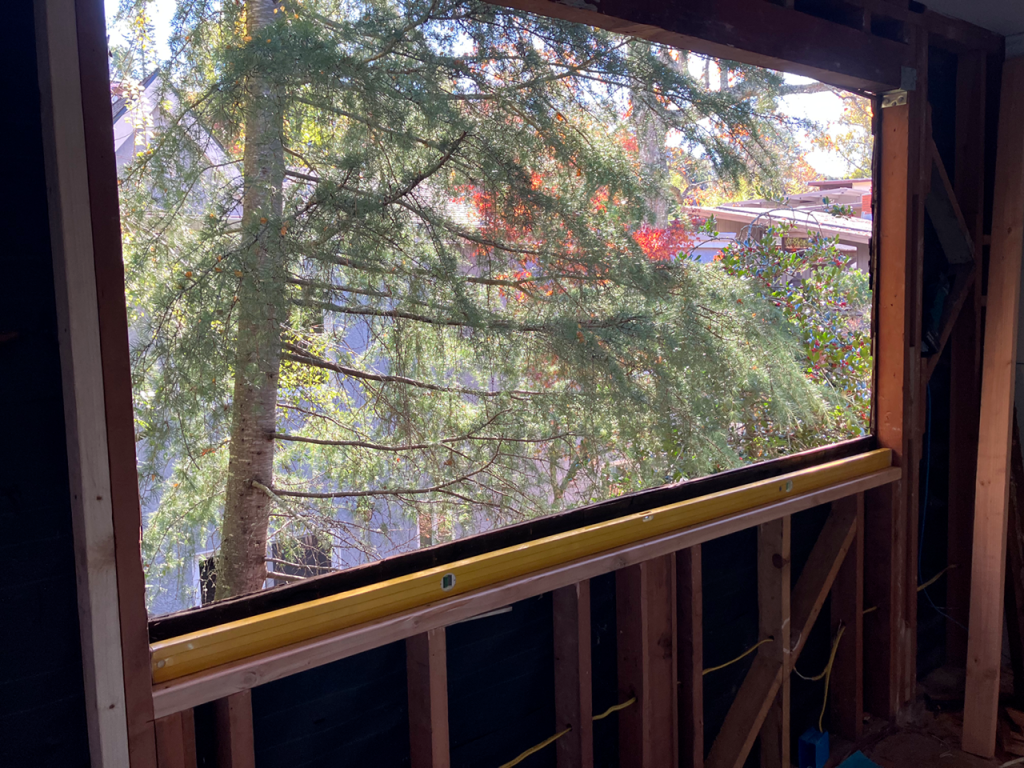
We visited one of these villages at the beginning of this decade, the small “Xisto” village of Ferraria de São João in central Portugal, talking to Pedro Pedrosa and his family, who moved from their city to the area to help regenerate an area affected by the effects of secular depopulation, the eucalyptus monocrop, and fire.
Reno was already burning
I thought about all this as we climbed, then descended. Then we left the eucalyptus trees behind, and I thought about how you don’t want to have eucalyptus trees anywhere near homes on one side and open vegetation on the other. At least, I thought, fire roads are visibly used and well maintained, and the whole area is highly monitored by rangers and locals themselves who love to walk and run all over (we stumbled upon many people).
Before getting there, I had read in the Sunday paper about fires spreading around Reno that had just started and weren’t yet controlled. That’s why I was thinking about the other recent news: zone-zero rules arriving, which I guessed were affecting him. I guessed right.
There’s no one single fire season in the American West, but wildfires can grow out of proportion when it’s windy, soil has been dry for months, and temperatures stay high.
Fire prevention is improving fast in many areas, thanks to citizen participation through tools like Watch Duty (don’t miss Kirsten’s interview with the fire prevention app’s founder, John Mills), though sometimes there’s little one can do to tackle big blazes.
Yet many communities built with backyards running into the surrounding wilderness are on the first line of defense, which can bring nature inside the house; on the downside, as states deal with fire crews and insurance companies wary of protecting fire-prone property, many homeowners are learning about ordinances designed to create so-called “defensible spaces.”
Flammable autumns in the West
In recent years, wildfire experts have pointed to the dangers fast-moving fires pose to communities, as wind increases the risk of flying embers.
The rules come after years of delay and infighting among experts and representatives who deemed them necessary, especially given the impact they could have on families and California’s continuum of street and yard landscaping. That’s why it’s taking so long, and it isn’t law yet: the proposal passed by the Board of Forestry and Fire Protection still requires state review, which could come as soon as September 2 and September 7.
Now it’s the moment for the review of public comment, which could trigger more delay, but if all goes as expected, the regulations could become effective by the end of September. When I asked my friend about them, I pictured what I had read: in the first 3 years, many things have to be removed from risk-prone properties, like leaves, mulch, and dead plants, within 5 feet of homes. In 5 years, however, areas next to homes would need to be cleared of all vegetation, and inspectors would review exceptions.
Moreover, wooden fences won’t be able to touch or run too close to the structure, whereas nearby mature trees will be reviewed to ensure they’re trimmed and limbed. So, the question many people are beginning to ask is whether the defensible spaces measure outweighs the cost it will have on private landscaping if it’s strictly enforced.
A floor, not a ceiling
Little did I know that, besides the statewide zone-zero measure, many towns, including Berkeley, have created their own ordinances around fire risk, the stricter the closer to the parks up in the hills.
Can the two measures coexist? In short, the state rule is a floor, not a ceiling, and it lets any local agency dealing with fire protection set its own defensible space requirements. The statewide law will consider local practices, provided those alternatives are set to produce similar practical effects: making property more fire-resilient.
Reading the small print in the Berkeley ordinance, however, the city will only adopt code amendments stricter than the state’s if there’s an “express finding” that the local rules are necessary due to local circumstances (read: climatic, geological, topographical). Hopefully, this could mean: only if it makes sense. But, according to my friend, who knows?
The wrong rule
As it turned out, I had been reading about the wrong rule when asking him in particular:
“What you have read about the state level of zone 0 does not actually apply to Berkeley,” he wrote to me a few days after our run. “Berkeley has made up their own interpretations for rules in zone 0, 1, and 2.”
So, while the state spent 6 years arguing, Berkeley passed its own rules and put them into effect on January 1st, 2026. Compare this to the rule that most Californians will face, which won’t reach most of them until roughly 2029.
Now the Berkeley rules. In the first 5 feet around a house (measured from the eaves down to the ground), there is to be no combustible material, period. None. No vegetation, wood mulch, wooden fence, gate touching the structure, no trellis, no pergola, no firewood, no combustible planters. Only things many people consider unpleasant to their view of landscaping, like gravel, pavers, and concrete. I can see their point.
“I am technically in violation anytime a leaf falls within 5 feet of my home,” my friend wrote as we followed up over email on this topic so I could write the article. “That is an everyday reality.”
What’s more:
“Wildfire prevention is currently the only program where city officials have enacted a law where they can enter your property, photograph it, and cite you for violations,” he wrote, “all in the name of protecting the larger city.”
The department’s own report says the program is limited by laws requiring resident permission to enter, hence the pre-authorization program. But he is describing what many see as the direction of travel of such ordinances.

Everything the ordinance doesn’t address
I was intrigued by something else he told me:
“California has spent 20 years promoting renewable energy, but should lithium-ion batteries exist in a high-risk fire zone? Was that a mistake? Not addressed. What types and materiality of windows should be allowed? Not addressed. How about materials for doors — should they all be stainless steel sheet metal, or is wood okay? Not addressed. Gas lines? Not addressed. Mandating roof retrofits? Not addressed. Wood fences? Not addressed.”
And then the line that stayed with me:
“These regulations claim science as a backing, yet have a focus to kill trees, and tulips.”
My friend has a point here. The January 2025 fires in Los Angeles left behind more than a million pounds of damaged lithium-ion batteries (around 5,000 locations mapped across the Palisades, Malibu and Altadena, sixteen times what was recovered after Lahaina in 2023). Heat-damaged cells are unpredictable and can reignite days or weeks later. The EPA spent months sifting debris by hand, soaking batteries in brine and grinding them down before they could be trucked out. None of it is addressed by an ordinance about the first 5 feet.
He also wanted to know why fire, of all the things that can happen to a house in Berkeley, is the one that arrived with an inspection regime.
“The Hayward fault has a 33% chance of a 6.7 magnitude event,” he wrote — the USGS figure is over thirty years, not twenty — “and if you live in Berkeley, it’s your neighbor. Liquefaction zones abound throughout the flats. Landslides are ever present in the hills. Flooding is a reality for 70% of residents. Persistent droughts have 100% likelihood within any 15 year period in Northern California.”
His comparison is with Loma Prieta, October 17, 1989.
“City of Berkeley response after Loma Prieta is muted and took 10-plus years when compared to what is happening with current wildfire piggybacking on LA’s unfortunate event.”
I’m also curious whether the creation of rule-enforced defensible spaces around homes and communities will help homeowners keep their home insurance with private companies at reasonable rates. My friend happens to be, too:
“We are a family that lost home insurance years ago and we are on the FAIR plan,” he wrote — California’s insurer of last resort. No remediation was offered that might have kept them out of it. When a council member argued that the ember ordinance would improve insurability, he was unimpressed. “That must have been a joke. California’s insurance market is broken beyond these efforts.”
The maple and the west window
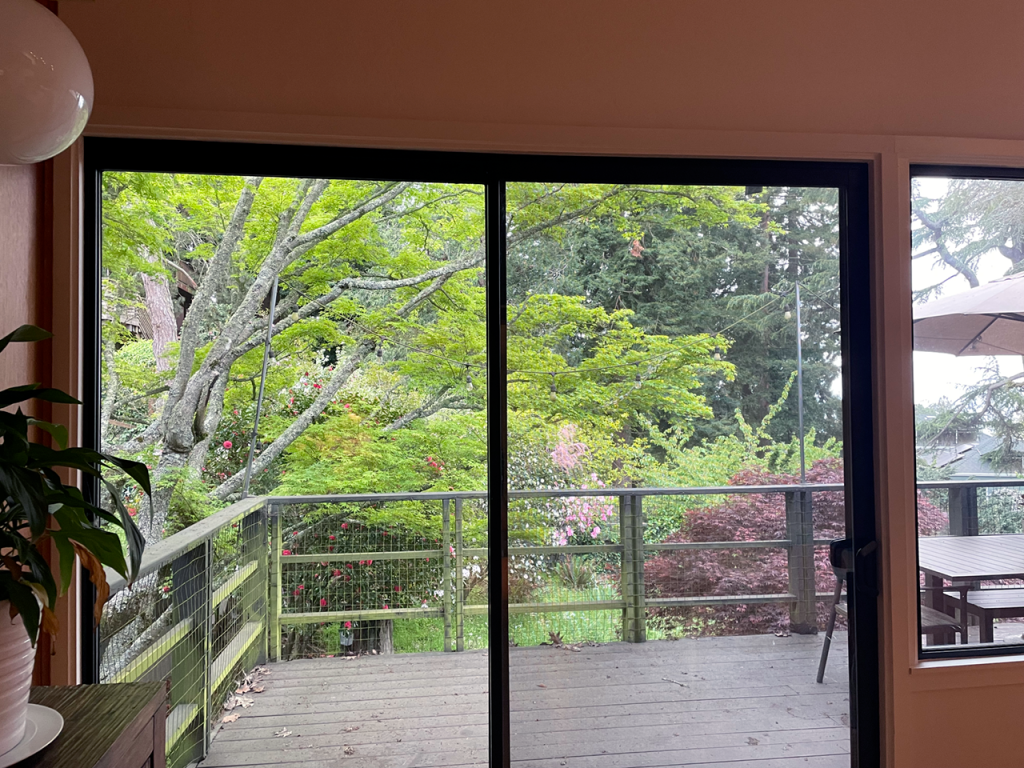
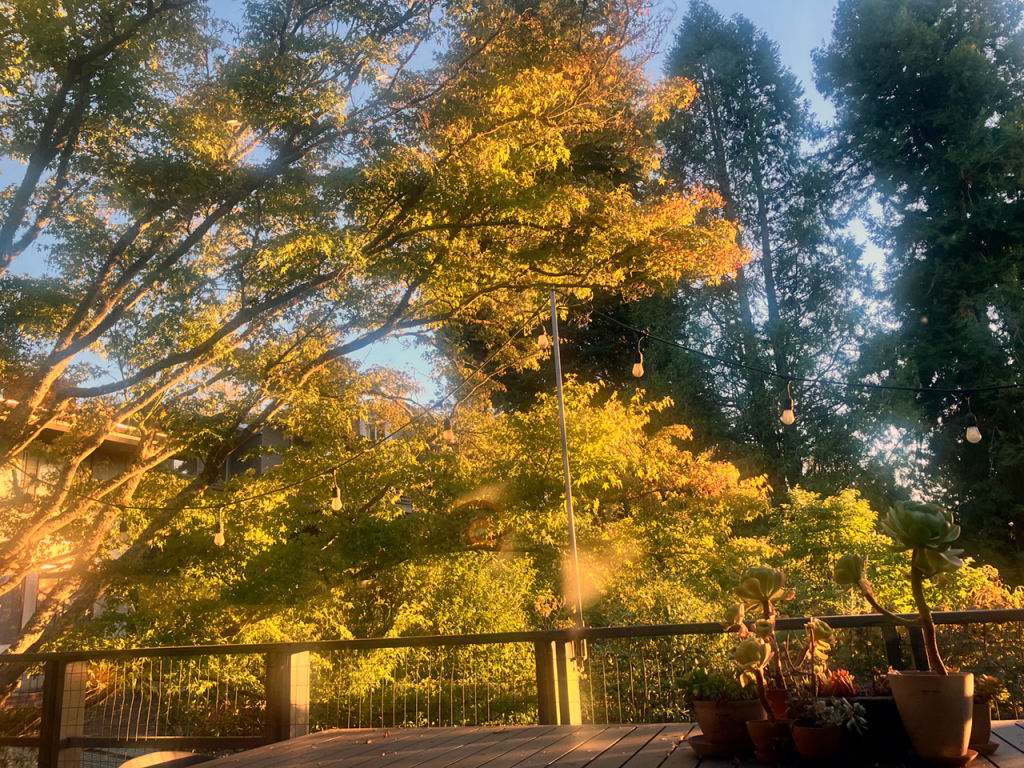
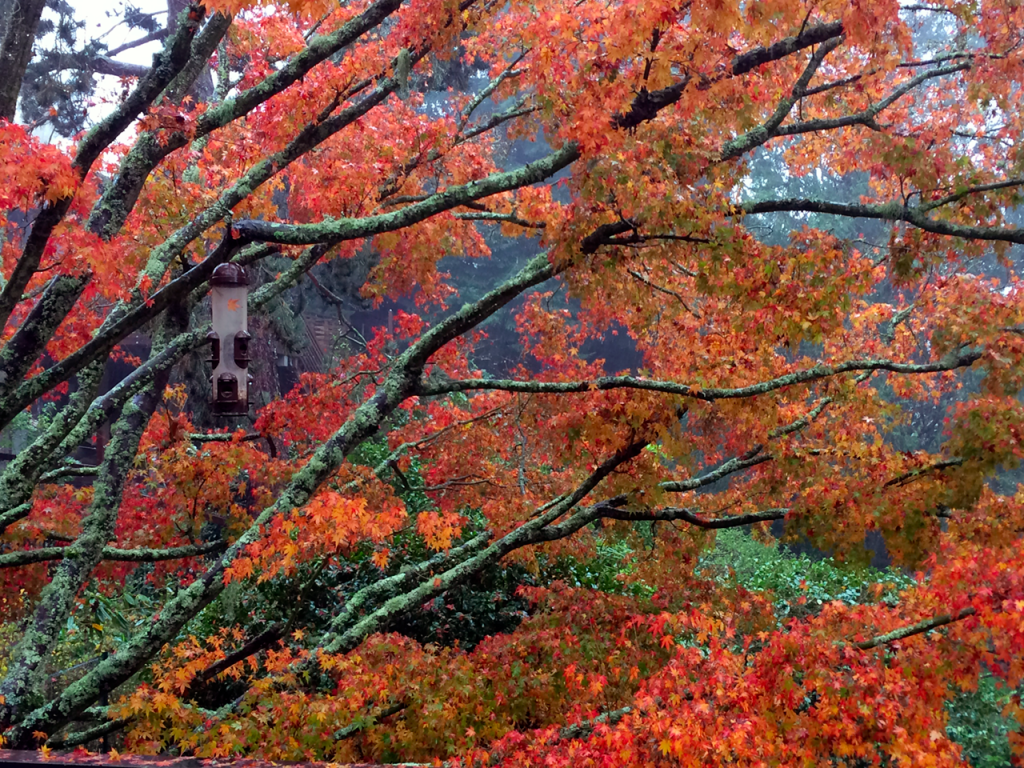
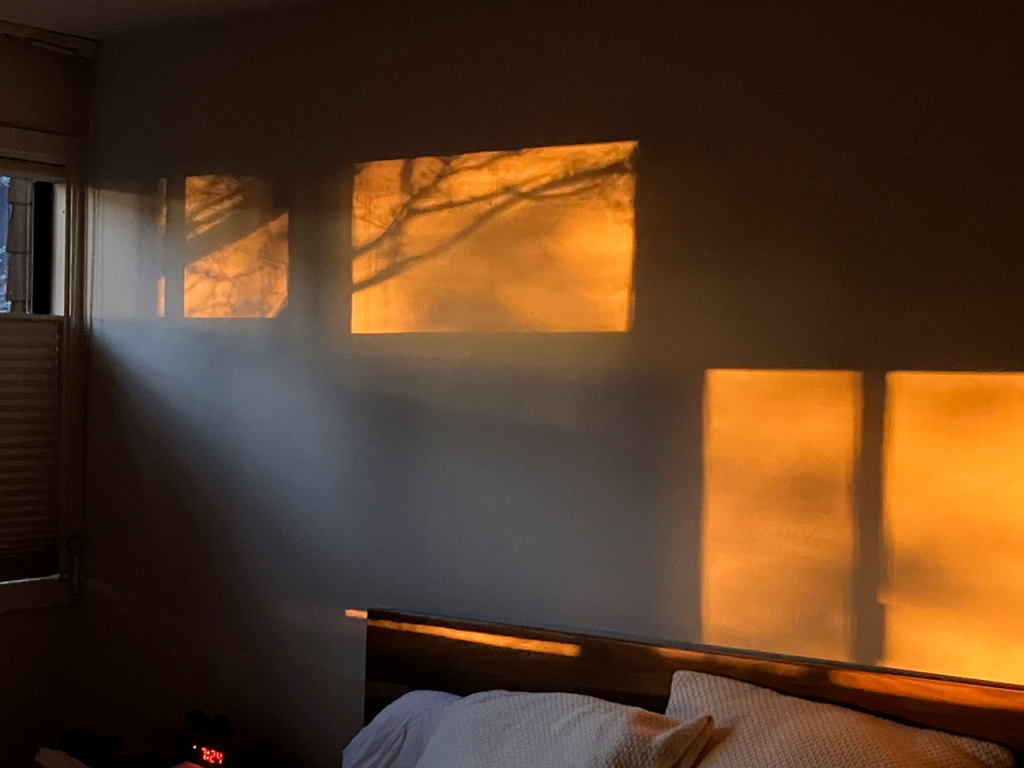
I knew the story about how he and his wife came to love the house they own, which they visited and bought on the spot in 2012, partly on a view. The place feels quite special to them. A mature Japanese maple (fortunately, very familiar to NorCal suburban homeowners) catches the sunset glow through a west window, and every window in the house (which sits on a downslope like the rest of the street) looks at something growing.
What’s more, my friend explained to me one of those small facts that make one think about fate. Twice a year at noon, the sun clears the ridge at exactly the right angle to fill the windows over the downslope backyard. The two dates fall on either side of the solstice, and each of them lands within days of a birthday in the family.
“We live in a space in time along with our garden and have invested in its care,” he wrote. “The change in seasons, light, is a rhythm we pay attention to and appreciate. Every window has a view of something nice in our garden.”
On two sides of the property, the five-foot local rule, which precedes the new statewide ordinance, lands on his neighbor’s property, so since he doesn’t own and cannot clear, if both houses try to comply, they’ll need to remove the only screening between the two families there is.
He also attached photographs of six trees. Every one of them has an action required, and some are marked for removal.
“I did not buy a concrete bunker in the hills,” he wrote. “A concrete bunker in the hills was not for sale by the city. Turning back the clock to retrofit my home as a concrete bunker is not an option for my finances.”
“Wildfire resilience is important,” he wrote, “but the risk should be distributed, coordinated and in an effective way. Wildfire does not care about my tulips when tons of eucalyptus leaf litter exist all over Tilden.”
He asks the same question about everyone else’s ground:
“What is the actual benefit of these efforts in relation to East Bay Parks, UC Berkeley land management, Oakland, El Cerrito, Orinda, etcetera, managing wildfire risks as they see fit?”
Out of pragmatism, but also something else, cities and towns might want to regulate tulips and bushes around houses, as well as the immediate rings around neighborhoods, but it seems that serious thinning beyond the immediate boundary to control, for example, the potential destruction that eucalyptus trees may pose, isn’t something they’re interested in doing.
A house meant to disappear into its hillside
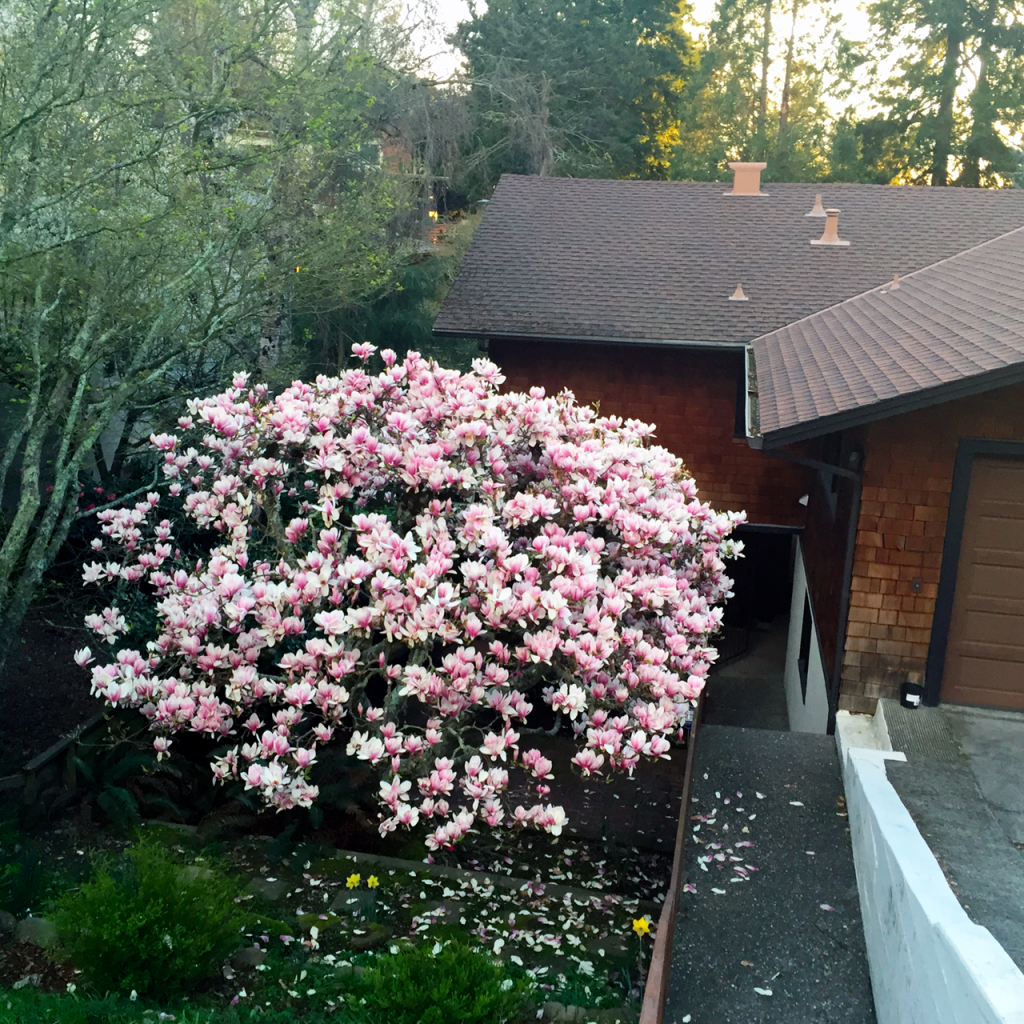
But there’s a deeper irony in the changes that fighting fire with serious preemptive tools might bring in a place that brought its own California vernacular. Kirsten and I live in a 1906 cedar-shingle craftsman bungalow with redwood bones; it’s a “small” (not by European standards, bear with me) 2-bedroom, 1.5-bathroom house that feels in part charming for its style, and also for the vegetation that grew in its front yard and backyard.
And, like ours (which is not located in the hills), those houses belong to a named architectural tradition: shingled, unpainted, wood-heavy houses form the First Bay Tradition. They were designed and built in Berkeley and promoted by the Hillside Club as a deliberate rejection of the ornate Victorian and Beaux-Arts buildings going up across the bay.
Their main idea (which I appreciate and might have inspired local architects like Julia Morgan, as well as visitors like Frank Lloyd Wright) was that a house should disappear into its hillside, among trees, built of the materials of the place.
The laudable concept of defensible spaces should account for the value of remarkable vegetation and landscaping, just like European gardens are sometimes protected, and vernacular building styles could be respected while accommodating commonsensical practices.
What a village did
My memories go back to our visit to Portugal’s poor and half-abandoned aldeias do xisto (“schist villages”).
In Ferraria de São João they pulled the eucalyptus out and put cork oak back in. It took a village deciding to do it, and years, and it worked, and the bark grows back without killing the tree. Nobody is going to do that in Tilden. Tilden is not Berkeley’s to touch, the science on thinning beyond the immediate ring is unsettled enough to stall the question, and there is no single body that could make the decision even if it weren’t.
And the hills haven’t come to their month yet. Most California fires start between June and October, but the ones that take houses arrive between September and December, when the Diablo winds turn and meet a summer’s accumulated dryness before the first rain. Reno and Spokane and Palo Pinto are all burning ahead of the Bay Area’s own window. Berkeley’s last major fire was in 1991.
Near the top of the ridge there are now families that watch the wind forecast to know which day to carry their pots indoors.