The search box was built to send you away. The chatbox is built to keep you. A dispatch on what the next generation stands to trade.
The young GenX (people born from the late seventies to the late eighties) and old millennial cohorts became adults during a transition period of innocence on the Internet.
We are old enough to have extensively used rich media applications when the only way to do so was to resort to external drives, CD-Roms, and DVD-Roms. And, sometime between the release of Doom II and Quake, we realized the personal computing and the online world were about to converge really fast.
In that moment, right before Mac OS transitioned to the Unix-based NeXT architecture — when any Windows system, even the fairly decent iterations (NT, patched 98, etc.), painfully crashed if we were too ambitious opening browser windows (before tabs were a thing, mind you) or concurrent applications —, things could have gone either way usability-wise.
Before tabs were a thing
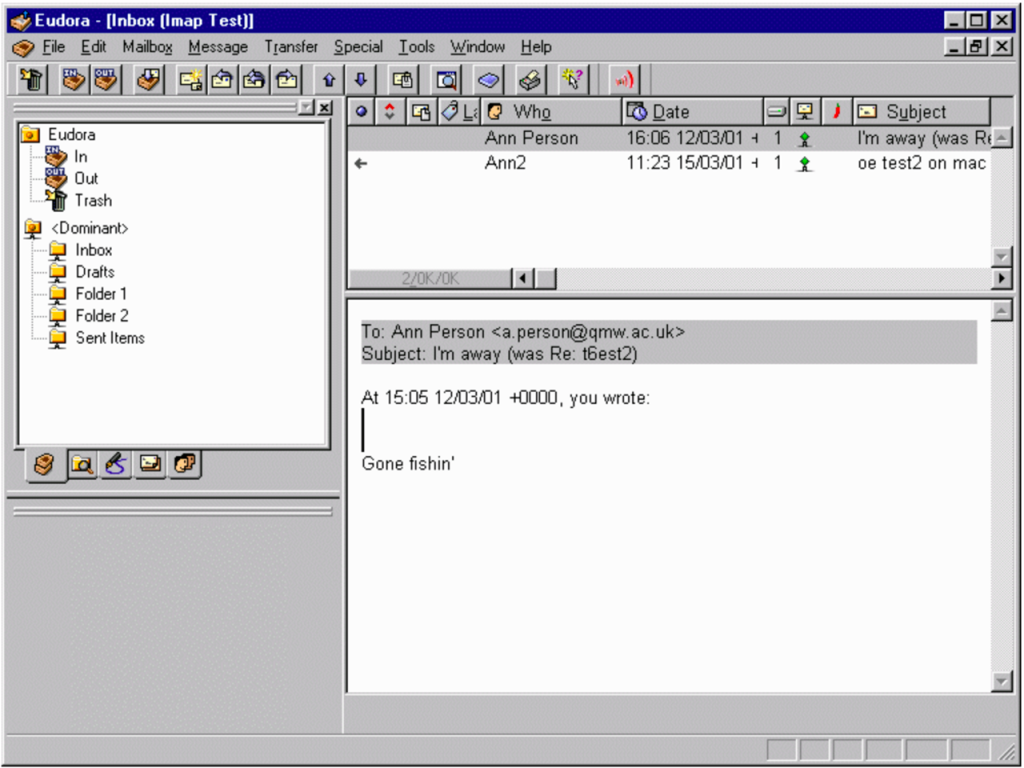
Everything was possible, but things were so painfully primitive that some people’s job at the office was to babysit their email inbox (I’m old enough to have used Eudora), a few spreadsheets, a word processor, and any of the quirky, very-primitive corporate interfaces back then, real proto-CRM monstrosities.
One of my first paid jobs, still at college, was at a Poble Nou (Barcelona) call center where we helped people connect to the Internet via modem; it wasn’t pretty, and I learned a lot about human behavior just by handling people over the phone.
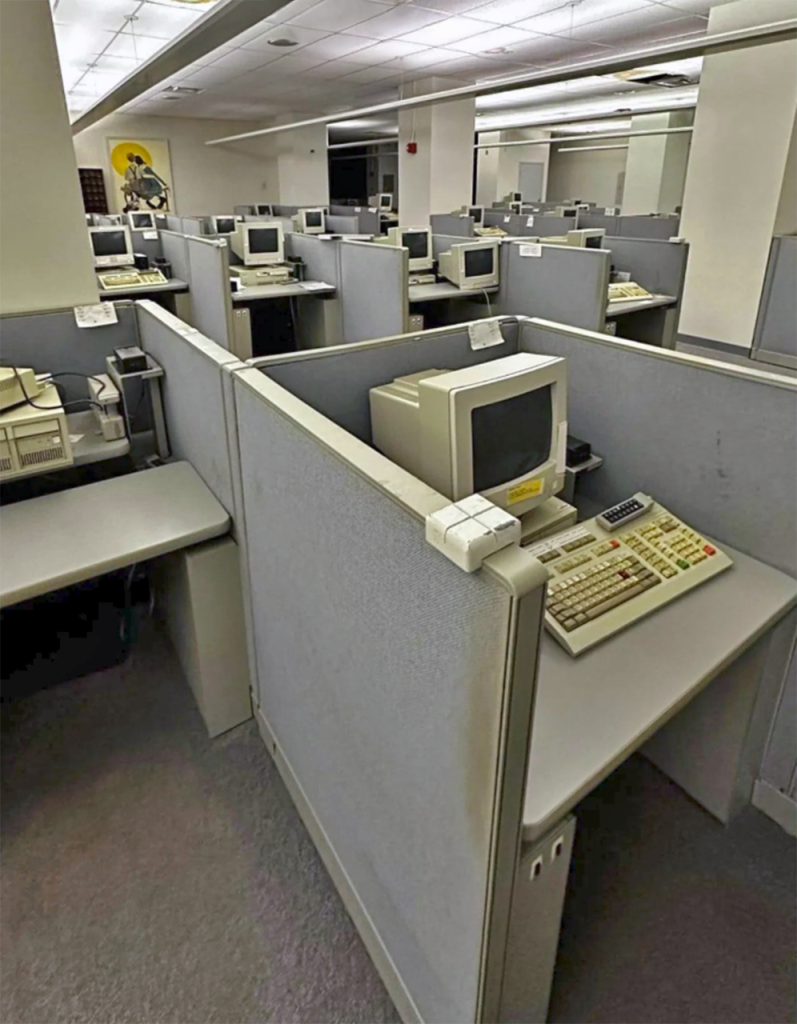
It was a temporary and miserably paid job, and many of my managers and co-workers looked and behaved like characters in a Kevin Smith movie arranged in a cubicle maze: the overly cynical, alienated Philip-Seymour-Hoffman type next to me, the silent girl ever so close to crying in silence when a call hit too hard, the goth boss with The Cure’s Robert Smith-inspired hair and looks, the bachelor who hasn’t noticed yet that he’s hit 45.
The cubicle maze
I couldn’t say we were friends, but we silently felt like brothers and sisters in arms, a bit like ancient privates rowing in unison in a vessel if they wanted to make it another day. We “knew” what it took to handle nasty calls for hours at a time. But it was also because of how hard and soul-crushing the work was sometimes — even when your immediate superior wasn’t listening when things got really rough with a customer — that some interactions that one of us turned around felt like victories silently cheered by the little clusters of co-workers who had been aware of the interaction in between calls, or during them.
One of those late 90s little victories (perhaps the summer of 1999) arrived when some hard-working bootstrapped boss from somewhere in the middle of Spain; I believe he’d been paying for a service he hadn’t been able to get to work, probably one of the first DSL packages offered, in several locations. At the beginning of the call, I was so sure he was leaving the Internet provider we were taking calls for, and I was trying to figure out how to strategize, getting as many hints as I could about his level of outrage over the situation.
Surprisingly, I felt the person on the other side of the line was quite a rational and decent person, probably middle-aged as I am now. He just wasn’t going to take it anymore and wanted either the service he was paying for, or a refund. So I talked him into a compromise, after scaling the conversation to our technical and logistics departments and getting back to him with a clear path to realistically solve the case.
There was only one big problem, however: we all were among the canaries in the coal mine, among the first helpdesk clerks trying to appease people (“customers”) who were getting used to a new reality that demanded instant, unequivocal answers; a culture appealing to instant gratification circuitry was in the making.
Nevertheless, I finally tasted the waters in the conversation and told him his connection would not get back right away, nor in a few hours, because there was a missing preinstallation between his telephone connection and the most immediate communications node, which required some servicing.
“You know you can sell me whatever you want”
So I improvised and told him that I would personally follow up on the case and call him, breaking one of the golden rules: I told him my name, the odd hours I was there, and how to reach me. He finally hung up, but before doing so, he said: “Come on, Nicolas, you know you can sell me whatever you want.” It could have been a critique, but it wasn’t.
That was my interaction with someone who happened to be a big shot in his area — I would find out a little later —, and knowing I had turned the thing around just by basic decency and instinct told me a thing or two, in retrospect.
I obviously made the call to fix this customer’s issue because I could afford to lose that job, which I only had because it was compatible with my last year at college and because it started late, going sometimes until midnight or one in the morning, and the area the office was located meant I sometimes finished the day (after a day of class in Bellaterra, outside Barcelona) and some of my buddies were partying nearby. Sometimes it was hard to say no, and I stayed if it was a Friday or Saturday night.
Two browser windows
One of the things you could do in that job, as long as you and your colleagues were taking calls as they were coming in, so we avoided managers hovering over our necks, was to open a couple of browser windows (you didn’t want to crash the computer, already fuming with the customer support application) and: “surf” the Internet at random on one window, for pages were fairly miserable (let’s not romanticize too much); and look other opportunities on the other browser window by seeing which jobs got posted on Infojobs.net, the local online recruiting site.
That’s how I got to know about a small publishing company opening a magazine about technology and lifestyle, much in the style of Wired, which was looking for an editor-in-chief. I was young and underprepared, but I got that job a few weeks later.
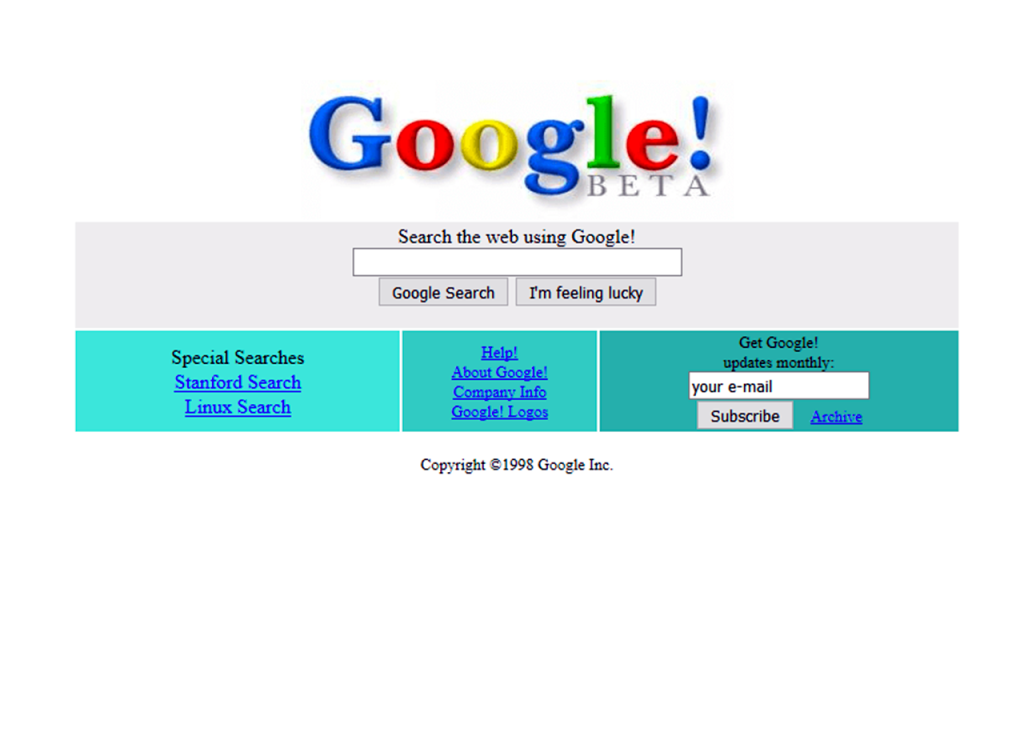
Like many, one of the first times I realized the potential of online resources was when one of those customer center colleagues recommended that we switch from Altavista to Google to perform web searches, abandoning any taxonomic page like Yahoo! and the myriad of knockoffs altogether. It felt refreshing and game-changing in many ways, because it sort of “worked,” and many of us were glad when they were soon integrated within Yahoo! as their “search engine.”
Many of us were still crashing our computers when we were trying to do anything unconventional, or when some page’s entering a loop would mean you needed three or four minutes to get things back to work again. If you’ve seen co-workers or college mates so angry at their computer terminal as to stand up and think about ripping it apart from the desk when a useless Macromedia Flash animation crippled their computer’s RAM memory due to the limitations of pre-Chromium browsers, you know what I mean.
A social experiment
In those early days, when people still checked into newsgroups protocols outside the World Wide Web, not even blogs seemed inevitable, let alone pervasive broadband, always-on smartphones, or 99.9% uptime webapps, let alone heavily subsidized AI.
That’s why things were more innocent, and many of us had the feeling that, by choosing which amateurish page we were visiting, we were contributing to some sort of positive social experiment run by nerds, half cooperativist, half Wild West, with an optimistic allure, a bit like the early attempts of turning hypertext into a learning utopia capable of exponentially augmenting knowledge, as if it were the second coming of Vannevar Bush’s Memex and Ted Nelson’s Xanadu, this time for real.
Among the things that seemed to start working was that search engine that seemed to be designed to load fast in your shaky browser without crashing it, serve you a decent response, ranked by actual measurable relevance, and facilitate the click to send you packing as soon as possible.
Designed to send you packing
It was probably the first time I realized the actual potential of the web, just as it was still very difficult to create anything at all that carried complex graphics, let alone JavaScript tasks, embedded high-definition video, etc.
It didn’t take much time for that apparently innocent company to serve ads in the most efficient, global, and decentralized way ever seen, and just as I was finishing college with a degree in “communication sciences,” classified ads were beginning their meteoric transition from print, local media, into the Internet.
And so, much as AI coding tools are beginning to affect the prospects of computer science graduates, we entered adulthood knowing that the world was about to change big time.
The world didn’t end a few months later in 2000, and soon enough, I wrote many stories about how many dotcom companies were going belly up. Just as a prairie fire spreading in a flash gives way to better grass right away, we were soon enough writing about the incipient advances that would lead to the mobile internet and the so-called Web 2.0 wave. Overall, the Internet was maturing into a commercial, more corporate juggernaut, and sites failed less, while expectations were higher.
Still complementary to analog life
Until the arrival of smartphones and pervasive broadband, however, the internet felt complementary to analog life, unable to replicate books, magazines, and high-definition multimedia. The whole web felt a bit like the early Google, you could do a query and get to visit a few places and do some things, but much of the meaty stuff was still offline. But to many people, it was already clear that things were about to change. And they did; in fact, things changed so fast that, if I explain this text to my kids, they are going to believe it, but they’ll also look at me funny, not capable of picturing how things were.
Perhaps the change they are experiencing now, as our older daughter is roughly the age of that call center me I was picturing, feels to them a bit the same way I sensed things were about to accelerate when I found myself returning over and over to that quirky site with the nerdy math-graduate name from a peripheral country. Only that company now has a valuation of over four trillion dollars and is once again among the ones rewriting the way most of us will get to do things, both casual and extraordinary.
Still, one thing among many of the ones that have changed in the paradigm, caught my attention. That first search engine blank box that seemed to finally work for the benefit of many wanted to send you places.
Now, AI chatboxes are causing the opposite, intentionally or not: as they entice you to ask things in the blank space, it’s fairly easy to get used to their effective summarization and skewed knowledge “allocation.” And so, there’s a risk of staying there and not visit other resources. What this behavior will culturally create, we’re about to find out.
Many kids are alright so far
Personally, I try to fight the temptation by reminding myself that I can do better by double-checking and thinking about other possibilities on my own. What worries me is that, for a generation that hasn’t seen an analog way of setting up, say, a hypothesis or an arc for something one wants to write, there’s a temptation not to develop a sense of critical thinking that takes some time and effort to develop, and that I’m afraid can atrophy.
Then, I start talking to our kids, and after a couple of conversations and an incredible show of their witty, skeptical selves, I conclude that I might be portraying a worst-case scenario and not what I see happening. But is everyone as well-equipped? Or am I taking the optimistic perspective my kids see about the future?

A part of it comes with age, that’s sure; it might also have a cultural part, now that they live in California and their everyday friends are from here. Perhaps not everything is rosy in the Bay Area, especially housing and cost of living, but once you’re in, it’s overall a dynamic, fairly positive society to be in, which I’m not sure I fully share, coming from a place where you’re supposed to cultivate a sense of cynicism about existence, which also helps people grow more resilient and developing a certain sense to also see life from a more existential, less materialistic point of view.
The verb that outlived its act
It’s interesting to see how things have evolved. In 2002, which in internet time is just prehistory, the American Dialect Society (ADS) called “to google” — a verb already then, not just a company — “the most useful word of the year.” It was added to the Merriam-Webster Collegiate Dictionary in July 2006. That said, people were already using the gerund, “googling,” right after the company was founded in 1998. That’s four years before the TV series Buffy the Vampire Slayer let the neologism slip in one of its episodes, when Willow asked Buffy, “Have you googled her yet?”
It’s interesting that, as of today, Google keeps in its /philosophy section, their founding creed, which now holds less and less as people spend more time asking Gemini and less clicking on results:
“We know your time is valuable, so when you’re seeking an answer on the web, you want it right away–and we aim to please. We may be the only people in the world who can say our goal is to have people leave our website as quickly as possible. By shaving excess bits and bytes from our pages and increasing the efficiency of our serving environment, we’ve broken our own speed records many times over, so that the average response time on a search result is a fraction of a second.”
The turnstile becomes the destination
Older millenials and young GenXers were the last cohort that grew up in a world in which online search was to leave as quickly as possible, because search was built and meant to work as a turnstile, a threshold you crossed and exited: it didn’t answer your question, nor fabricated it à la carte for you, and the verb encoded promised that, to google was a round trip that became more bloated with ads and dysfunction over time, although it stayed so much more relevant than any other possible alternative.
Now, as the success signal isn’t leaving anymore, younger generations are getting so used to enter an AI chat and stay to get answers, that the mere framework of thinking that knowledge self-reinforces by contrasting different sources is beginning to feel like a byproduct of another era. The turnstile becomes the destination, and so the verb “to google,” which was one of passage, may outlive the act it names, the same way “to dial” survived the rotary phone (a device that our children would struggle to ace intuitively).
So, if the first Google and imitators bypassed local print by sending readers onto the open web, the company’s second incarnation aims at keeping them engaged in the chat, enriched by its own ecosystem of tools and user-generated entertainment. Competitors may follow suit.
It’s clear we have entered a transformative moment, and we’ve been in a similar spot many times before, even though this time might be a bit different, for it’s not only mere acceleration, but a change that could turn human cognition into a commodity for most tasks, leaving only a small group of people capable of differentiating their added value through craft that might be either difficult or silly to replicate, or associated to its creator.
What Maine and Texas had to say after all
Perhaps, among the first to see the very beginning of this trend was Henry David Thoreau, no less. Thoreau wrote Walden in the era when Samuel Morse’s telegraph went commercial. It was a device to deliver information not only faster but also reliably. Though, he thought, no investor seemed to be interested in the content of those messages and the ultimate purpose of speeding things up:
“We are in great haste to construct a magnetic telegraph from Maine to Texas; but Maine and Texas, it may be, have nothing important to communicate.”
The risk, Thoreau mused, was making technological progress; things ought to be ever faster and more efficient across a country that expanded coast to coast, and from North America to the rest of the world through submarine cables. But prioritizing speed of communication over what to communicate was conceding the victory of efficiency over substance and quality.
Almost two centuries later, we know that speed doesn’t necessarily make a message worse, but it certainly looks like it at times.
I’m sure Thoreau’s friends and relations ended up benefitting, directly or indirectly, from using the telegraph. Certainly, his persona grew and he became a popular intellectual of his time, just as his neighbor Ralph Waldo Emerson did.
Which drummer, at what pace
What AI is going to suppose to the new generations is also about us deciding what our role will be in it. By looking at what happened with the telegraph and later with mass electrification, with the telephone and mass media, and finally with the more recent combo of broadband internet and interconnected devices, we can guess what could happen: with great technological change there’s always a backlash and, at the same time, mass adoption of the advances.
Thoreau was, in part, wrong. Maine and Texas did indeed have things to say to each other, and the wire he suspected of carrying nothing turned out to be capable of tilting markets and wars, as well as spreading knowledge. If the new invention could announce in an instant an armistice or tell a family that their son was alive, or the price of raw materials to produce goods, the realization that the world had become interconnected, suddenly smaller and quantifiable, didn’t escape some people.
That said, Thoreau’s warning was also a realization: things were about to accelerate quite a bit, and it was up to people to decide the sound of which drummer to follow and at what path. What’s plausibly different this time is where the change lands, because the telegraph, mass media, or the pervasive internet dictated how fast, how far, how many. Now it’s also about the very message that those advances carry, the part that used to be human cognition itself: the forming of the question, the building of an arc.
The machine offers to do the choosing
That’s not acceleration, I’d argue to my unpreoccupied kids. It’s an offer to do the thinking for us. The imaginary deal of many was to get AI to cover all the menial tasks so we could do the thinking, and so far it’s going the opposite way: AI offers to do the thinking, leaving nothing other than the menial tasks on the table.
That reversal scrambles the bargain we expected from every prior technological advance. With the telegraph, electrification, the telephone, pervasive internet, we got an improvement over a similar type of bargain: the machine does the carrying, we do the choosing. The agentic web does something entirely different. It offers to do the choosing itself, while it leaves us the carrying.
Many are already handing it over with little hesitation — not the errands but the thinking, even the strategy, which is the one part of the day worth protecting.
What I want to make sure my kids hear is that the easy version of this bargain is the one to be most suspicious of.