A World Cup in the backyard, a heat wave back home, and the transatlantic quarrel over who gets to be comfortable.
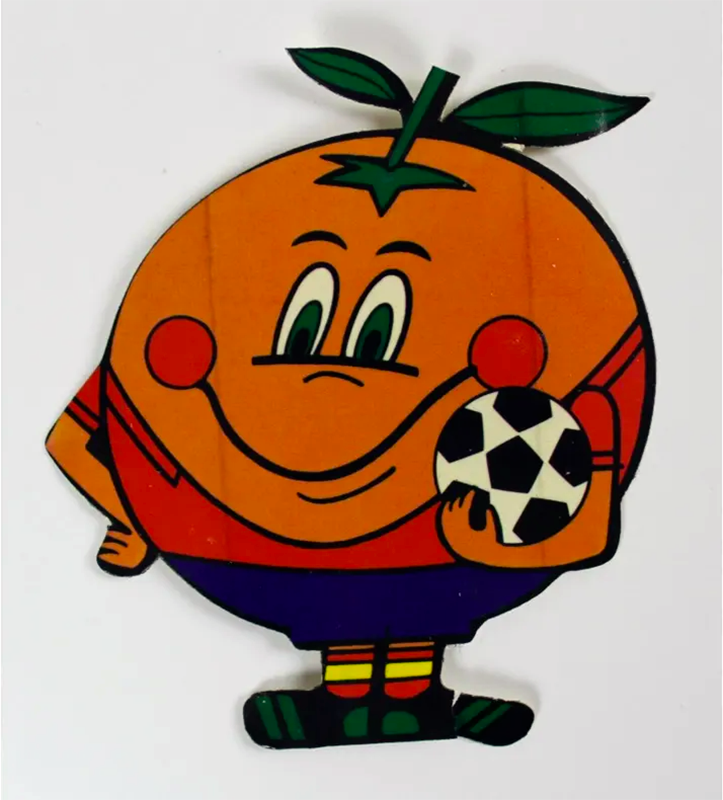
The first memories I barely keep of the World Cup go back to 1982, when Spain hosted the biggest sports event there is. I was five. The tournament’s mascot was an anthropomorphic orange, Naranjito, and I was fairly proud of my t-shirt featuring the playful orange.
I remember going to the beach nearby on a hot early summer day, the five of us in our yellow Renault 12: no AC, all windows down, gasping for some air when the traffic stopped as we tried to reach Castelldefels, the town down the coast just outside Barcelona, later chosen by players like Messi to set their roots.
People knew how to hydrate, and perhaps temperatures, if high and humid in summer, were less likely to reach the dangerous levels of today’s occasional heatwaves.
Arconada, Sócrates, and a room thick with Ducados
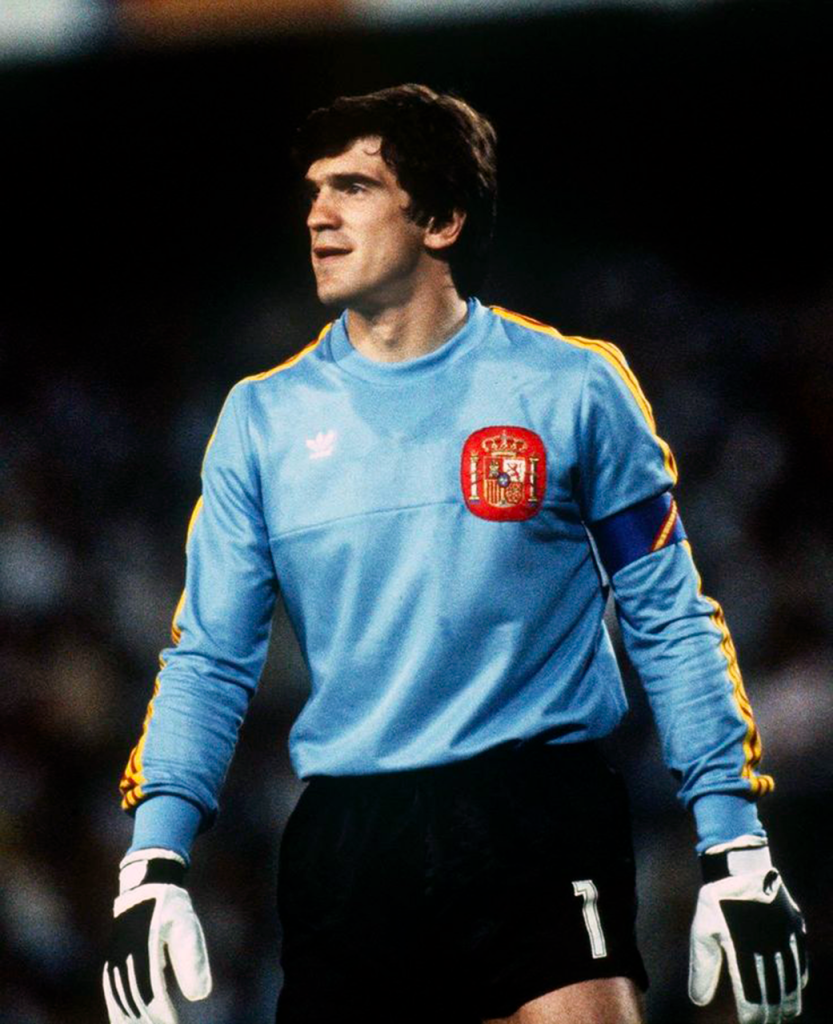
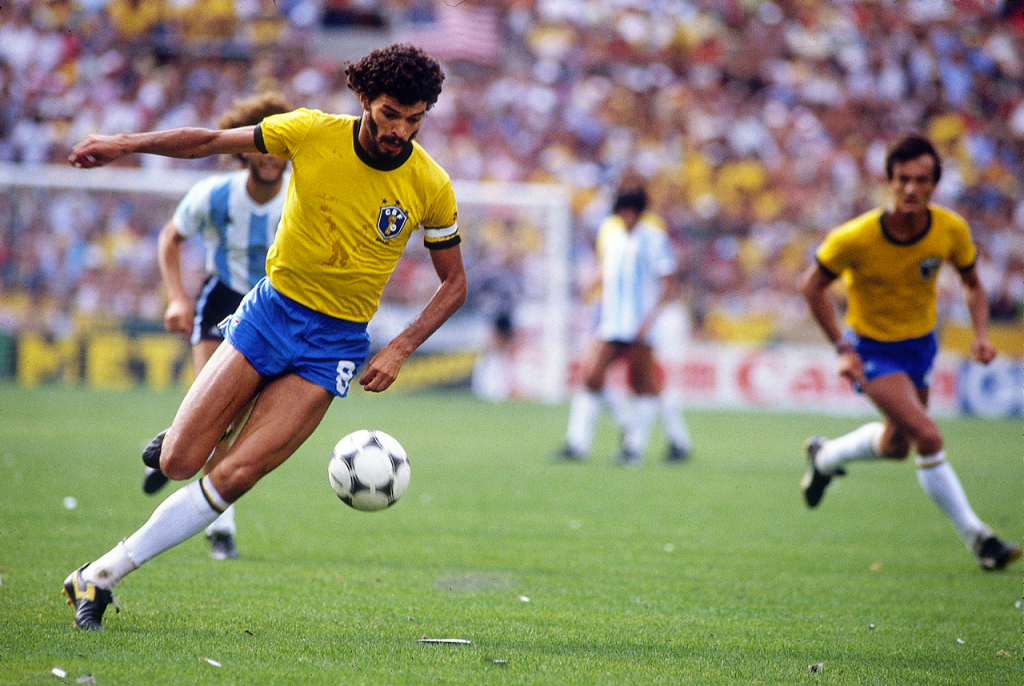
That early summer, all I remember people talking about was the blunder by Arconada, the usually spotless Basque goalkeeper, which complicated Spain’s chances. Real Sociedad dominated Spanish soccer back then, believe it or not, and I wanted their jersey. Those were the days when Brazil played like the angels, and Sócrates’ Brazil was probably — along with Johan Cruyff’s Mechanical Orange — the best team to ever play a World Cup and not win it.
Sócrates, what a player. Perhaps we didn’t deserve it. A dancer on the field with a medical degree, as towering as exquisite, playing the “jogo bonito” like no other, before or after.
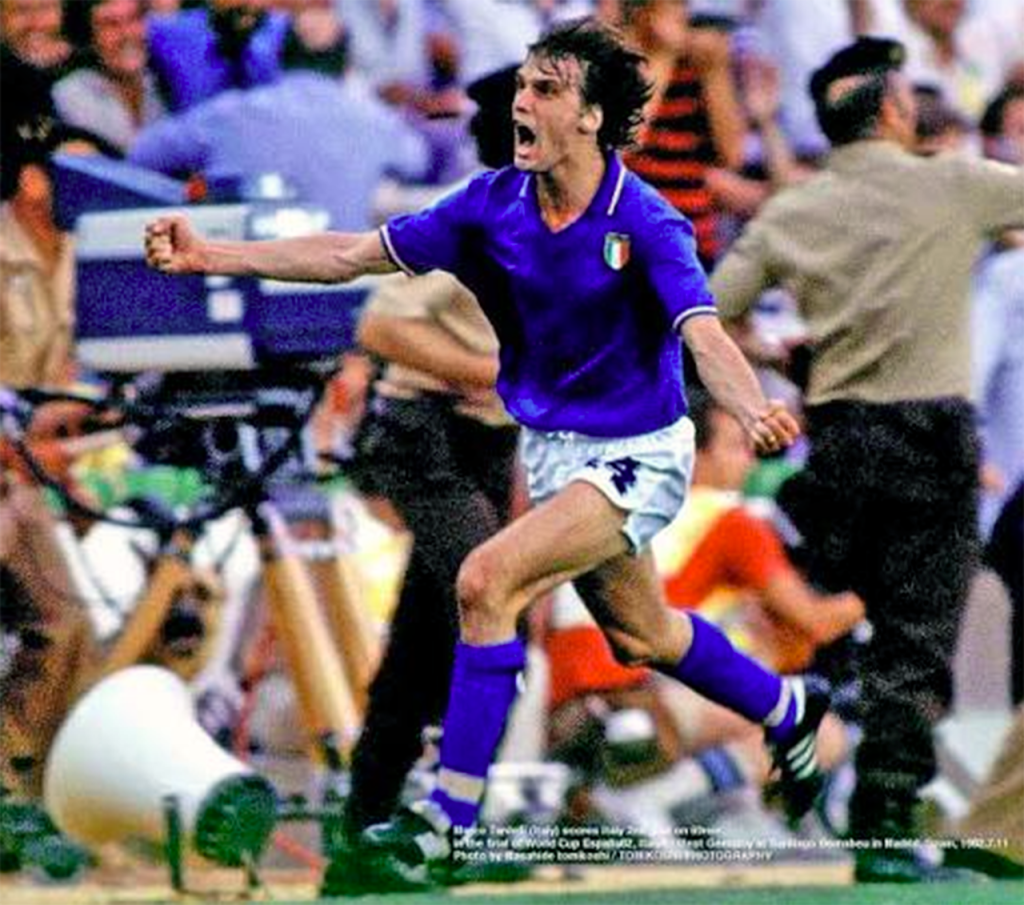
Of all the matches played, all I remember is adults smoking and drinking cold beer and “clara,” Cinzano, Kas and Schweppes soda, and my siblings and I trying to get as much cold Fanta as we could. And an Italian player, Marco Tardelli, running as he shook his fists after scoring the 2-0 against West Germany in the final, perhaps the most endearing goal celebration I’ve ever seen. Things become more intense when experienced for the first time.
And so, the memories end here: a t-shirt with a happy-looking anthropomorphic orange, an unfortunate blunder turning off adults in a room thick with Ducados — the local dark tobacco — smoke, the long trips to the beach nearby, and a dramatic goal celebration by one Italian player.
Another World Cup, this time in our backyard
As I write this, there’s another World Cup playing in our backyard, this time in North America, where I live. And Team U.S. is playing near us today at San Jose’s Levi’s Stadium to try to beat Bosnia and Herzegovina and advance to the Round of 16. The other two organizers, Canada and Mexico, have already secured their advance, and you can feel the excitement in their press and throughout social media.
These memories emerged as I recently saw people commenting on no-AC Europe, and this was somehow related to many Western European fans coming to the US for the World Cup, plus my son getting excited about the game, like I had not seen him do before.
That’s what the World Cup does: once the ball is rolling, most people forget about debates over the sport’s relative position in the United States, the price of tickets, the animosity towards political leaders, or any other contingencies.
FIFA adapted the format to make the show even more palatable to the global audience that cares about the sport all season, especially to engage with the American public, which is only fully interested every two years (for those following the successful Women’s team) or every four.
A tournament played by the rules of the Americas
The changes were brought in for the show, and it seems to be working so far, as we are all talking about what’s happening on the pitch, not off it. Underdogs are already attracting skeptics to the World Cup, with emotion and drama, as the knockout matches often end in close scores and penalty kicks, allowing Paraguay to beat Germany and Morocco to prevail against the Netherlands.
So far, European teams are struggling to adapt their technical, strategic, and speculative game to a World Cup that seems to be played by the philosophy and rules of the Americas: intensity, physicality, counter-attack, and some room for improvisation.
There were more and arguably weaker teams at the group stage to increase the opportunity for stars to shine early on; there is a hydration pause dividing a sport that evolved from having two halves — with the strategic path laws that it requires — into effective quarters (taken advantage of by TV to show ads) that break any focus and momentum; and a focus on individual stars rather than overall team performance.
The time is ripe to get the pulse of this early summer with World Cup competition, hosted in North America, no less, as well as the United States’ semiquincentennial on Saturday, the 4th of July. We’ll be celebrating also Kirsten’s birthday on the 3rd, but don’t tell anybody. I hope you feel invited and accept our telekinetic invitation. So far, the tournament’s accommodations in North America are holding up fairly well, with stadiums full and fans having a good time overall, as the meme machine shows online.
One can see South American fans trashing each other when talking about their respective national teams, then joining in to cheer together the victory of Paraguay against Germany; also, Uruguayan fans and commentators were surprised to see so many supporters wearing shirts of Spain in Guadalajara during their match against Spain, to realize most of them were local fans used to following Real Madrid and FC Barcelona. The tensions between a supposed Latin American allegiance over the perceived historical ties between Mexico and Spain were being debated on X, Reddit, and other platforms.
World Cups also play with long memory and generational curses. The Moroccan team, through their coach, (who said, speaking flawless Spanish to the local press, that Morocco, one of the organizers of the next World Cup, will give the support back to Mexico when it’s due) and also some of the players, thanked the local public for their warm hospitality, which shouldn’t surprise anyone, as many remember when The Netherlands kicked Mexico out the 2014 World Cup.
No news is good news, and Cape Verde ties three
First thing I’m glad to highlight, much in the vein of old school reporting, is the motto “no news is good news,” which reminds us all that a lack of big updates regarding the World Cup celebration (with its many geopolitical and logistics-wise challenges), which seems to go on with no important hiccups for most teams and supporters, even when they had to travel from one country to another to attend any given match.
Many people liked that Cape Verde, a small island nation off the coast of Africa, managed to tie its three group matches — those with Spain and Uruguay included — and advanced to the knockouts for the first time. It was just the beginning of many surprises and debates, among them the animosity towards the supposed self-importance of European teams and fans who have claimed the sport’s Eurocentrism, and the realization that taking down any team from the Americas (especially from CONMEBOL, the physically ruthless South American teams) is no easy task.
No question these Cinderella stories, which happen in real time and sometimes cause real upsets, are a part of the magic of a competition that is less about actual football and more about emotion and sporting rivalries, sometimes — along with the most iconic competitions in the Olympics — as big as they can get without having to settle things in a war.
Besides some upsets happening even before the competition (I hear you, Italian and Italian-American fans who still remember or were told about the passion that followed Roberto Baggio and the rest of the squadra azzurra in 1994) and on the pitch, there were other news items worth mentioning, though not deal-breakers.
Where the welcome runs thin
The competition hasn’t been as welcoming for all, however. The Iranian team, and especially its technical staff, didn’t have it as easy as they envisioned, and they at least had the chance to express what had happened, which reminds us how important it is to appreciate when we feel welcome somewhere; often, when one doesn’t feel welcome somewhere, there’s a reason for it, sometimes subtle, sometimes blatantly in the open.
Iran was ultimately eliminated when Austria scored a last-minute equalizer against Algeria, perhaps relieving some fears among the central delegation organizing this event. Nothing beyond what was expected. As with the Olympics, the World Cup can always be read as a show of cultural and political alliances and animosities, or as a display of outright belligerence.
Among the “not good news at all” popping up these days, amid the sports event and the special 4th of July celebration: the last group matches observed a minute of silence before the game for the other big event happening in the Americas in the latest few days, which brought everyone back to reality (but perhaps not for the time it should deserve, as some people might still be alive, unrescued, under the rubble after the earthquakes in Venezuela.
When the gesture wasn’t observed by a section of the public before Uruguay’s World Cup clash against Spain in Guadalajara, Mexico, it prompted widespread criticism online; at least some people will leave the jokes (often shockingly harsh and funny).
The magnitude, measured in World Cup terms
That said, the World Cup has really taken over the most vociferous side of social media, as the death toll rises over 1,700, and over 50,000 people might be missing. Just to understand the magnitude in World Cup terms: Curaçao, the least populous contender, has a population of 158,000 people, and the tiny island nation (already eliminated) happens to be also the closest geographically, located in the southern Caribbean Sea, just about 40 miles off the coast.
Worth noting as the party goes on, and two other Venezuelan close neighbors, Colombia and Ecuador, are still in competition — both very capable of delivering a shocker that won’t probably rival Paraguay’s victory in penalty kicks against Germany, at least right away, but they’ve shown they could outcompete any team in the world. After eliminating Germany, Paraguay’s coach talked poetically about the true meaning of it all:
“I was telling you: the opponent we had in front, with all my respect, were formed in first-rate European academies. We come from the red dirt [soccer fields]; the shirt we wear shows that red dirt on a stripe. [We come from] playing barefoot in that dirt, thanks to the sacrifice of many parents struggling to bring the kids to practice, and thanks often to those parents who make a huge effort despite lacking enough money to make it to the end of the month, so their kids can have a chance to realize their dreams.”
Meanwhile, the tweet of a young German fan just landing in the US, passport in hand, hours before the match, was used by many, including the famously passive-aggressive X account of the Irish low-fares airline Ryanair, to pick at the symbolic wound of a historic defeat. It won’t be the last one among the big names.
And so, this brings the “no news is good news” (that is, “no news” outside the pitch) to a comfortable, but far from ideal, terrain: the organizers delivered, and the public in the United States, Mexico, and Canada is showing their genuine enthusiasm and welcoming character, staying out of any political tensions that preceded and will outlast the event.
Showing a bit of magnanimity and goodwill can go a long way, and so, most teams and foreign supporters have expressed online that they’ve felt welcomed and cared for in every single venue, no matter which of the three countries. Or, as said by Mike Bloomberg: “The World Cup is more than a tournament. It’s a reminder of how sports can bring people, cultures, and communities together.” The funny thing is, it’s mostly true, even if it sounds a bit like some statement pre-cooked at some fancy consulting firm’s HR department.
The stereotypes each side keeps of the other
Events like the World Cup also bring high-caliber trolling and social media confrontations among random people who usually avoid engaged participation online for obvious reasons. As a European living in California, married to an American, and father of bi-national kids who speak more than one Romance language who feel, at least in part, Catalan and Spanish, what I’m most enjoying is the commentary that the competition is bringing regarding stereotypes and realities (often distorted) faced on one side and another of the Atlantic.
The tournament’s kickoff coincided with a heat wave in Western Europe, and many European fans arriving at the last minute in the US to support their respective national teams commented on the relief of arriving in a culture that has relied on the convenience of Air Conditioning for decades.
These “perceptions of suburban affluence” from international supporters were met with both irony and pride. I read about “Europoors” and our stubbornness to endure the pummeling heat, even during increasingly dangerous heat waves.
What the “Europoors” joke leaves out
There’s a point of truth in the erratic approach of Europeans towards the use of modern HVAC systems, even if most of the commentary was infantile and biased, missing crucial parts of the context that explains this particular situation: most European environments are more dense, more people live in old apartments and brick-and-mortar constructions with codes that protect their facades from having AC appliances hanging from the walls or windows.
There are also other considerations. If possible in the past, dangerous heat waves remained rare in most of Western Europe until recently, and, in Mediterranean Europe, many vernacular styles developed complex and effective strategies to combat heat, especially in non-humid areas where evaporative cooling techniques (for example, by watering interior gardens twice a day) are efficient and palliative.
That said, today’s summers require more radical approaches, and being late to AC could also be one advantage, as it is the more regulatory environment of the European Union when it comes to adopting radical, top-down approaches to emergencies: today’s heat-pump HVAC systems aren’t only cost-efficient and have less impact, they are also less noisy and don’t get people sick as they don’t turn indoor areas into freezers.
One of the first cultural shocks I experienced during my first visit to New York City in the middle of a sticky heat wave was the noise from the leaky AC systems in the building we were staying in. It wasn’t as hot inside, but I couldn’t sleep anyway, unaccustomed to the noise of always-on appliances next to the bed. It felt a bit like trying to sleep on an airplane. I certainly didn’t perceive it as paradise, and I would have gladly swapped it for my bed in Barcelona (no AC, window open, a cold shower before bed).
Also, coming from any city in Western Europe, it’s hard for me to believe that most visitors coming from places like Paris, Milan, London, or Amsterdam are going to gasp in disbelief as they see American suburban homes, with their lawns and multiple cars, or any Costco or Wal-Mart, or any fast-food joint.
The old supermarket propaganda, updated
Americans should be wary of social media accounts that oversell the many good things about American culture and the American experiment overall: some of those “people” might be paid to sugarcoat their way into your feed, while at the same time dunking on their apparent countries of origin. Who would do that among people who pay thousands of dollars (or tens of thousands) to support their own country?
Stadiums, supermarkets, and convenience at reasonable prices? Most people have those things over there, and many, many of our friends in Western Europe prefer to walk to buy a few groceries at nearby stores rather than drive to a huge Carrefour (or any other big distribution center overseas). Besides, one of the fastest-growing grocery chains in the United States, with high customer satisfaction rates, is Aldi, the German distribution company that also owns Trader Joe’s, another brand that cultivates customer engagement.
To me, these quarrels are at best funny and contribute to the big party of the World Cup, but at worst, it can feel a bit like the public campaigns contrasting Western affluence vs. privation in the Communist Bloc of yesteryear, picturing Western well-stocked supermarkets versus the material poverty of the population of the Soviet Union and the rest of Communist Europe, depicting people waiting in line to get any of the few generic products they had the right to before they were out. Older Europeans remember them because many of them experienced those privations themselves (including millions of Germans, as depicted in the 2003 comedy Good Bye, Lenin!).
It’s all a bit artificial, like two kids comparing their parents’ houses or cars due to some deep insecurity. Europeans can certainly see the affluence of many places across the United States, and many might even marvel at the beauty of some stadiums (including those in Mexico, like the impressive Estadio BBVA in Monterrey, Mexico); many of them are informed enough to understand that, comparatively, the European Union has stagnated in the last two decades, at least from a macroeconomic perspective, if we compare the trajectory of the respective GDPs. But comparing the feelings of German, English, or Dutch fans in the US with the equivalent of North Korean peasants being dropped in some ideal Pleasantville feels a bit off-point and prefabricated.
I’m sure most Americans following the World Cup are aware that many of the problems experienced by European countries also apply to their own, from the concerning increase in the cost of living relative to stagnant median salaries, to more abstract trends that end up affecting their lives: public debt ratio with respect to actual economic activity, low fertility rates, etc. There’s also shared overall dissatisfaction regarding household economies or a negative perception of political institutions or elites.
What the kids will remember
Seeing how the World Cup brings people together to celebrate, curse, argue, and meme-ify, we’re reminded that the game is much more than a sports celebration. As it happens also with some moments at the Olympics, the World Cup blends organic, bottom-up emotion and high diplomacy, and it can be cruel, unfair at times (seen that second German goal, disallowed by VAR?), and surprisingly majestic.
Everything that comes with it, even if it’s about the “AC wars,” is part of the show. In context, all the current World Cup shows is how prepared every team is, which means any team can leave unexpectedly early. Many Europeans will see the rest of the competition from home, perhaps with no AC. But saying that people coming from Europe feel how poor they are as they set foot in the US smells a bit like paid AgitProp.
To me, it feels like magnifying US travelers flying into Paris for the first time and seeing a street “brocante,” and an improvised flea market full of animation and precious old things under the shadow of Haussmannian buildings and tree-covered little squares, and gasping at the day-in-the-life beauty of it, as they compare it to a bland, utilitarian yard sale somewhere in the suburban area of the US where they come from. You can’t compare apples to oranges; both continents are complex and prosperous, and to many, prosperity can mean different things.
We’d better focus on the celebrations and hope for the best. When we feel that the “no news is good news” applies, we have one more thing to celebrate.
Let’s remember, these things leave memories, moments to share with others. Also opportunities to be kind and magnanimous, and others when epic, relentless competition applies. Adults should also be aware that some kids will remember those moments well into their middle age. Perhaps forever. Let’s enjoy and let others enjoy.
Update: when I started this article’s draft, Ecuador was still in the competition, but by the time it was published, Ecuador had already been eliminated by Mexico. Colombia and Brazil are the only close neighbors of Venezuela (epicenter of the recent earthquake) still in the competition.