How tribal loyalties and fractured dialogue erode the commons. Why thinkers warned us of ethical collapse, and how conviviality might still offer pathways from disconnection to belonging.
This article isn’t about Freud’s young disciple-turned-rival and at times-perceived archenemy, Carl Jung, who coined the concept of the collective unconscious, for which he has my respect.
I say this because, among the many dreams I’ve been having lately, the ones in which I feel I’m talking to the void, or unable to make others understand innocuous and straightforward concepts.
It makes me think that, at night, my subconscious remains somehow connected to the present-moment raptured collective unconscious, and I might feel unable to pierce through the tribal noise and the messages of lack of dialogue, confrontation, and even violence in the public sphere.
It’s like seeing a train collision from miles ahead of time, but being unable to stop the inertia, making the two trains steam ahead in opposite directions to understand that mutual destruction isn’t the only possible outcome, and there are other outcomes.
Who knows how many people feel the same way: lucid enough to understand that their impact is too small to try to help bring about a solution to personal and political dissent the way it’s meant to be in mature societies: by convincing people within the boundaries of democracy and rule of law.
Ethical erosion
Unfortunately, liberal democracies aren’t in their best moment, and they have become sclerotic and dysfunctional, contributing to the frustration that is then used as an excuse to further the divide. Returning to the Jungian metaphors, it feels somewhat like being a decent chess player stuck in a draw due to insufficient material for a checkmate. The situation is then caricatured and presented as an example of why people should take matters into their own hands, suggesting that the end justifies the means.
Many thinkers (I’m familiar with what Albert Camus and Hannah Arendt said about this) warned that, when actions are judged solely by their outcomes and nothing is respected (not even taking another person’s life), societies end up looking the other way when there’s an erosion of ethical boundaries: many individuals acting on their own, militias and terrorist organizations, or even entire modern-state political apparatuses have embraced this form of reasoning and therefore left the door opened to targeted assassinations… or collective atrocities.
The broader implications of reasoning in which the end justifies any means have historically been disastrous, as institutionalizing ethical relativism erodes norms against cruelty and moral values (many of which stem from the intersection between Christianity and classical philosophy, by the way).
Go to Cambodia and ask around about how people felt for Pol Pot, and you’ll think it can’t happen in the place you are from, but if we are learning anything in this new century, it is that having better and more instantaneous information tools doesn’t always make us better informed and more rational.
Internet captured
I was naïve about the Internet’s ability to bring people together while maintaining their own agency and autonomy, a sort of utopian formula that would finally harmonize the tensions between individuals and society elegantly.
But the decentralized experiment was captured by a number of companies, which, interestingly, are now among the most valuable companies in history, and we became the product they offer to advertisers and third parties. This is a big, controversial generalization, but it’s fair to say that the Internet has departed from its “bona fide,” idealistic origins a long time ago, and our political discourse (as well as the abstract constructions of civility like the concept “public opinion,” etc.) hasn’t improved—quite the contrary.
What can a humble, frayed article (or a thousand, a million of them) do in such a climate? I presume very little. Let’s remember the idea of the rise of systems that have “emerging properties” in which the whole has more meaning than the sum of its parts. In such complex systems (such as the inner workings of a massive mound built by termites to host their colony, or the temperature of a room, or public opinion), one cannot simply assume that knowing the parts that compose the whole will provide a clue to what’s actually going on.
Chivalric defeat
For example, we can’t take the temperature of a room by measuring the temperature of its components at a molecular level, as we would get conflicting measurements. It’s the same with the temperature of a fractured public opinion. And hence, knowing this, and also my dilettante tendencies, I declare defeat, but it’s a cavalier defeat, a Quixotic one, for many people (like I do) believe that manners are essential to declare oneself impotent to fix a complex problem gracefully. And, in this case, the meaning of “graceful defeat” is that I hope this article will fall into good hands, and those few people will also “fail gracefully” in their own circles.
And if we continue to fail gracefully, perhaps we can make a positive impact in the future, and the chimera will transubstantiate into reality. This is the type of transubstantiation I believe in, which is similar to what people like Giordano Bruno, Spinoza, or, more recently, Albert Camus and others believed in: by comprehending our limitations, we may still persevere to try to understand and bring light to things based on better knowledge and understanding, never departing from the light of humanism.
I even tried to express these ideas many times before, knowing that many people feel so alone and disconnected that they may benefit from hearing someone else say that there are ways to cope with frustration that can be constructive and nurturing. Political tension isn’t happening in the United States in isolation; I was self-conscious about it, for we had left Barcelona for Paris when local politics were taking up too much time and had become the sole topic of conversation.
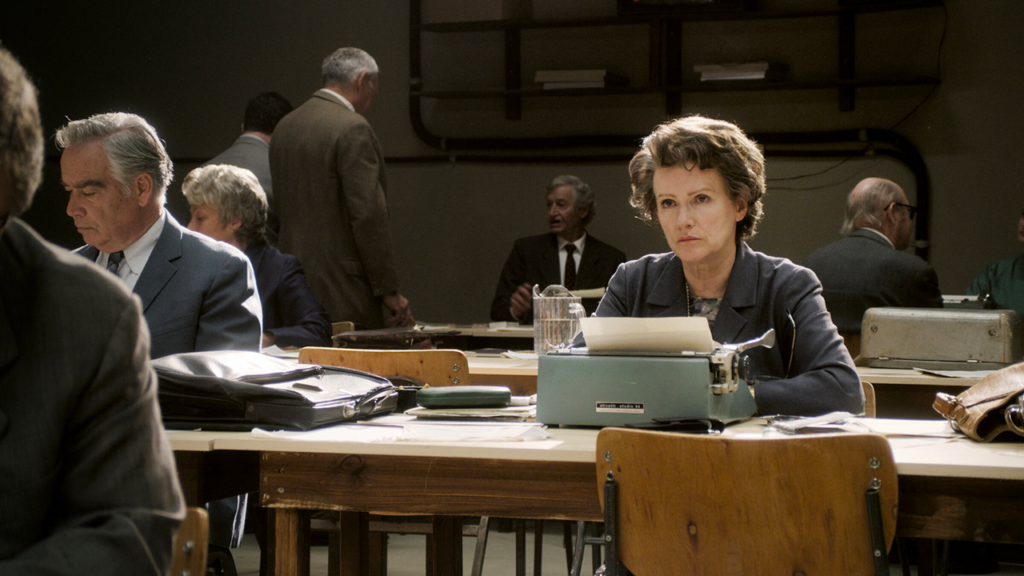
When living in Paris a few years ago, I listened to a radio interview with Italian-Swiss political scientist and writer Giuliano da Empoli regarding his then-recently published book The Engineers of Chaos, in which the author describes how the decentralized tools of today can be easily weaponized to manipulate public opinion, and how Italy (the country of Silvio Berlusconi and Beppe Grillo) shows a few lessons about this; I did my part of social responsibility when, after reading it, I contacted somebody I knew at a publishing company in Spain and offered to translate the book from the French edition at Lattès into the Spanish market if he was willing to buy the rights; he did, and I translated the book, which is now at libraries across the Hispanic speaking world, and I’m glad it happened. It’s not a lot, but it’s much more than becoming a cynic. I wouldn’t mind doing so again for the American market.
Not encouraging to see it unfolding
This is the reason why, like many others, I welcomed the early, difficult tone of rationality and conciliation that Utah’s governor brought about after the assassination of Charlie Kirk, which he later changed for whatever reason. But I stay with his tone in those early moments, valuable and conciliatory.
Let’s remember that the only truly valuable gestures are those that are very hard to bring about, as they depart from the easiest and most visceral reactions that celebrate escalation. I’ve learned to be wary of people who always position themselves on the gain side, the easy side, the winning part of the tide. These people tend to disappoint profoundly in the long term.
Following my Jungian, Nietzschean tendencies of trying to resort to parables and metaphors to condensate complex phenomena, the business-school-friendly intellectuals that declared the end of history had to retort their claims and state that, in fact, there was an end to the end of history.
And the good ol’ tribal chants of blood and soil can be very effective to bring people together in times of confrontation and upheaval: as 101 on human psychology, there’s nothing safer than instilling a collective “siege mentality” (feeling attacked) to make people comfortable with expeditive ideas. When people feel threatened and are concerned about their status, they will often end up buying into outlandish ideas.
It would be very complex to try to summarize why our post-postmodern world started craving the lost traditional ways, but I presume it has to do with the lack of meaning and connection, the alienation that people feel in contemporary societies, where concepts like freedom have been reduced to being a consumer and surrounding oneself with a false comfort and convenience that lacks meaning. Hence, people sometimes fall prey to a sense of belonging that can be exclusionary, predatory, destructive, cultish, etc.
Old proverbs
It sometimes feels like in post-apocalyptic movies (fictional environments where our self-destructive tendencies have led to a regression into tribalism), where people seem to behave according to the rules of the old Middle Eastern proverb, depicting a tribal culture in which loyalties shift depending on the scale of conflict. The saying goes like this:
“Me against my brother; me and my brother against my cousin; me, my brother, and my cousin against the stranger.”
When societies descend into sectarianism (say, Lebanon during the last decades), they mirror this pattern, so the inner-circle rivalries (progressives vs. moderates, MAGA vs. establishment Republicans…) are blown away when it comes to close ranks against the other side (“me and my brother against my cousin”).
And, finally, when tribalism festers, there’s also a moment for the scapegoat, the “ultimate stranger”: beyond domestic fights, there’s a sense of “good Americanness” against “enemies of the American people,” or “illegal immigrants,” etc. That’s “me, my brother, and my cousin against the stranger.” It seems to have worked every time for millennia in times of trouble.
Today’s political polarization is a global phenomenon, but it seems especially adrift in the United States: first due to the United States’s preeminent place in the world by the size of its economy and influence, both culturally and as a geopolitical deterrent; but also because the country’s individualism and legal access to firearms, which usually brings perpetrators (usually male, unstable, solitary) to action.
Charlie Kirk’s is only the latest and most graphic (meme-ified right away) event of many cases of political violence in the United States; this isn’t only one faction. In June, Minnesota Democratic state lawmaker Melissa Hortman and her husband, Mark, were killed at home. Pennsylvania Governor Josh Shapiro dealt with an arson fire at his home in April. Last December, UnitedHealthcare CEO Brian Thompson was gunned down on a New York sidewalk. Not long ago, another perturbed lone wolf attacked Nancy Pelosi’s husband, Paul, at their home in San Francisco, and one can imagine what would have happened if the person answering the door had been the politician. On top of that, Donald Trump has suffered two attempted assassinations.
Why confrontational politics are here to stay
Kirk’s killing occurred on a college campus, a type of institution that emerged to foster inquiry and critical thinking like Socratic dialogues had in Ancient Athens: respecting perceived adversaries by listening to what they had to say, then challenging their points of view and assumptions.
These discussion mechanisms, universities thought, would encourage people in their formative years to examine their beliefs and rationally update their knowledge, deepening the students’ understanding and realization that critical thinking might be the best weapon in their toolbox.
This isn’t what happened in the last two decades or so, coinciding with the rise of life gamification, social media, and the smartphone: Instead, many corners of pop culture promised quick workarounds that feel like a French roulette: first-person-shooter games are popular among certain young males, and many of us know and see this (sure that correlation isn’t causation and we aren’t raising sociopath freaks, until it happens), whereas instant gratification and dopamine reinforcing gamification permeates our lives and our children lives.
If politics sometimes feels like an extension of the worst tendencies of the digital engagement economy, perhaps it’s because sometimes things don’t only correlate but have a causal relationship.
Back to the current moment, which will feel like a remote past very soon, replaced by ever crazier events and conspiracies; remember when, just a few days ago, it all seemed to revolve around Epstein acquaintances? It seems that a part of the zeitgeist is already shifting towards a point at which the current plague of political polarization and violence could be exploited as a pretext for a top-down crackdown on dissent, which doesn’t seem to have Socratic (or democratic) vibes either.
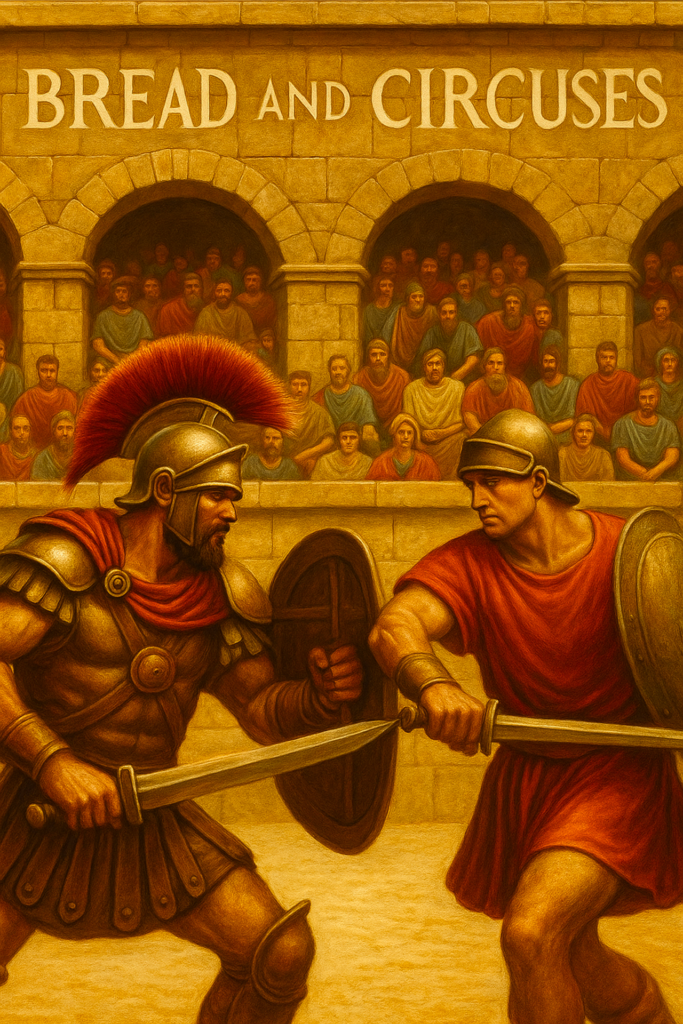
Many of us are witnesses to this “panem et circenses,” unable to contribute, because (as Ray Bradbury and others have warned us) if there’s too much ambient environmental combustion, no meaningful message will get through but the vociferous ones calling for alignment and confrontation. One has to ask: what is not being talked about, and why the push to generate distraction?
The current moment isn’t promising when it comes to public messaging, and we’d be naïve if we were to wait for an unconditional message to anyone wishing to engage in good faith and pursue top-down de-escalation. The main reason this might be the case is that tribal tension and identity politics favor political messages that are, in essence, confrontational and don’t attempt to engage in debate with their opponents, but rather aim to disarm any opposition.
Philosophical responses
However, we’d be even more naïve to assume that the current situation emerged from the void recently; political polarization is just one manifestation of a deeper problem that has been years, if not decades, in the making. Many authors have discussed the profound consequences of a society in which old institutions lose their status, and people feel a significant burden in forging their own path to find meaning and purpose in their existence.
In a way, authors like Nietzsche and Erich Fromm (author of the chilling book Escape From Freedom, whom I have often mentioned in previous articles) were already worrying about a society in which the majority of the population feel atomized and alienated, lonely in their dark corner and unable to establish meaningful and healthy relationships with others that aren’t based on power dynamics or mere utility. And, in many ways, we’re using the digital world we built the wrong way, shoving off what we don’t want to hear (but probably should) and engaging with people who amplify and distort what we want to hear.
Like Erich Fromm before him, contemporary German-Korean philosopher Byung-Chul Han seems convinced that the erosion of neighborly trust is very dangerous. The traditional rituals that truly brought people together lose their place in society are disappearing, and without shared rituals (not prefabricated or sectarian rituals imposed by one faction to another), society disintegrates into an amalgam of anxious individuals: instead of creating an emergent society in which the whole is richer and stronger than the sum of its parts, society is deconstructing itself like a broken LEGO in which the pieces lose their relationality and reciprocity.
I used to hear being a kid that sometimes it’s necessary to stand one’s ground, especially when one’s dealing with people crossing personal boundaries with us, but in the new century it pays off to be bully (as a company amid weak regulation, as a politician amid weak institutions, as an individual in a society that forgot to hear and respect what others have to say as their legitimate right). There’s also a saying in Spanish (or at least in Spain) that I always interpreted like the saying of an imaginary Stoic philosopher: “dos no se pelean si uno no quiere.” Two people don’t fight if one of them doesn’t want to.
Marching to the beat of a different drum
There are ways to disarm public toxicity over the long term. When we view divergence of opinions as a richness and not a weakness, for example. Many of us enjoy places where people are interesting and have diverse backgrounds and stories to share, and such cosmopolitan environments foster the cross-pollination of ideas and high-quality cooperative initiatives. They tend to be also the best places to live and raise children.
I quite like the concept explored by Hannah Arendt of “natality,” or the human capacity to begin anew and thrive. Societies can do so as well when the public sphere allows dialogue instead of preventing it. We don’t need, and it’s not even desirable, to be forced into some sort of consensus on how to think or live.
If he were alive and observing what’s happening today, the United States and beyond, Ivan Illich would remind us that the path isn’t to create a society of like-minded people with the same ideology, beliefs, background, and goals.
Instead, he’d explain how the best places to live in the world cultivate convivial disagreement, or learning to live together with difference.
Like leaves in compost, our conflicts can generate the fertile ground for something new.