Hidden within trees and soil lies a world we barely perceive. Trillions of microorganisms may hold the keys to medicine, longevity, and innovation.
We like to think of ourselves as rulers of the Earth—Homo sapiens, stewards of creation, inheritors of fire stolen from the gods. Yet the truth is humbling: our dominion is mostly an illusion. For every species we know, millions more remain invisible, tucked inside soil, trees, and oceans, orchestrating life in ways we barely comprehend.
The microorganisms living in a single tree alone outnumber our species, and in them may lie cures, materials, even secrets to longevity—gone forever if we ignore them.
From the Genesis creation story to the Greek myth of the Titan Prometheus stealing fire from Olympus and giving it to humans, ancient parables are founded in our exceptionalism on Earth as being brought to the world to “have dominion” over all living things. Us, homo “sapiens.”
Culturally, our role has always swung from stewardship of nature as God’s creation to finding the utility of the world around us, as it was set there for humans to toil with it and prosper. How sapiens are we sometimes, that’s another matter: the Age of Reason often portrayed animals as soulless automata and humans as the only rational, god-like subjects on Earth.
We shape our gardens and fields to our idea of nature
Some thinkers rebelled against reducing nature to a mere garden put there for humans to use and abuse. Spinoza, for example, rejected human exceptionalism, for man wasn’t to him “an empire within an empire” but a part of nature. Overall, the ideas of Spinoza, American transcendentalists, and others regarding man and nature didn’t prevail, and our self-perception as commanders of the Earth, shaping landscapes and life at a planetary scale, didn’t come with a sense of self-responsibility.
When untouched by man, the land was something yet to tame and exploit, to civilize with staples that could be use as a transaction. Few credible people have understood and attempted to harmonize our need to utilize nature to our benefit as a civilization with the need to preserve and learn about ecosystems as much as possible, especially those in danger of vanishing before we’ve had the chance to catalog them correctly. Perhaps the latest naturalist to do so systematically was the entomologist and master vulgarizer Edward O. Wilson.
If you were to grab a couple of books about what we may lose forever as a civilization if we don’t study the species we don’t know, consider E. O. Wilson’s 1992 book The Diversity of Life, and especially his 2002 update on the topic, The Future of Life.
It isn’t a righteous, feel-good type of book but an essay that explores the biggest threats to biodiversity and how to save most of the things we care about realistically, and especially those we didn’t even bother to know deeply or care about YET, but could help us in the future for the development of food, medicines, technology, etc.
The little we know about most microorganisms
The assumption of many people nowadays is that we have a pretty accurate idea of life on Earth, and that we have catalogued most, if not all, of the life on our planet. This isn’t even near reality. As Wilson tried to warn us during his final years, much of Earth’s biodiversity—particularly microorganisms—remains undiscovered, and these species, hidden in plain sight, hold the keys to future cures, high-tech materials, and innovations.
As nature is understood in pure economic terms, Wilson argues, the best way to convince our culture to get to know better life on Earth is highlighting the opportunity cost of extinction when it comes to undiscovered organisms and microbes, many of whom could hide medical uses and boosters of our immune systems, and even hold the secrets of longevity, another of our obsessions.
Because, ya know, the old myths try to explain that we were given nature to be good stewards, but screwed a few things here and there, and we got to be mortals as an eternal punishment. This brought the ancient Greeks to state somewhat ironically that the only way to become immortal is to make an impact so big (as a poet, as a philosopher, an Olympian, a leader, etc.) as to be remembered by posterity and thus never die. But never dying to the future generations isn’t enough for us at our moment in history. Many people want the real thing, even if their impact isn’t worth mentioning, if not to highlight its perniciousness in the great scheme of things.
I’m no naturalist, but I got equally concerned about our lack of deep knowledge of life on Earth and its complex interaction within ecosystems when reading The Future of Life, and since there’s E. O. Wilson no more to remind us of our ignorance regarding entire domains of organisms, like most archaeans.
An interesting scifi speculation
I thought again about this book as I recently went through (more than “read” in a literary sense) Andy Weir’s last sci-fi bestseller, Project Hail Mary (which we’ll see with fresher eyes if the observations regarding potential traces of life on Mars are confirmed).
Weir is no literary experimentalist but a lover of human experimentation and our reliance on testing conjectures to get to solutions and workarounds. Like with The Martian, Weir turns Project Hail Mary into a McGyver-esque petri dish to test hard science conjectures.
The thesis is crazy enough: a survival story that involves mass extinction in the universe (assuming, yes, that we aren’t alone) and alien life in two plausible forms: microorganisms adapted to life in space, and intelligent aliens evolved in different conditions and therefore distinct from us but relatable.
I won’t explain the whole story, but, in the book, Earth is facing extinction because of a mysterious microorganism, Astrophages, tiny cell-like creatures (hence hinting at a common unicellular ancestor for all plausible life in the universe) which feed on stellar energy, and thus dimming the stars they feed on, including our Sun. That’s why the book’s protagonist will need to save us from obliteration in a mere couple of generations.
I didn’t need the emergence of LLMs to stumble upon random, valuable connections of partial knowledge, so when reading Project Hail Mary, I could vaguely recall passages of E. O. Wilson’s Future of Life, thinking about the wonders we’re missing inside the corporeal boundaries of extremophiles and other microorganisms on this planet.
A whole new world inside trees
To those thinking this topic might be relevant or somewhat important in the grand scheme of things, yet boring, they are plainly wrong. I might fail in making this article interesting enough, but that’s another matter.
Let’s consider, for example, the article I read a couple of days ago, which brought me to put this together in a hurry. It stated: “Study finds trees’ insides full of microbial diversity.”
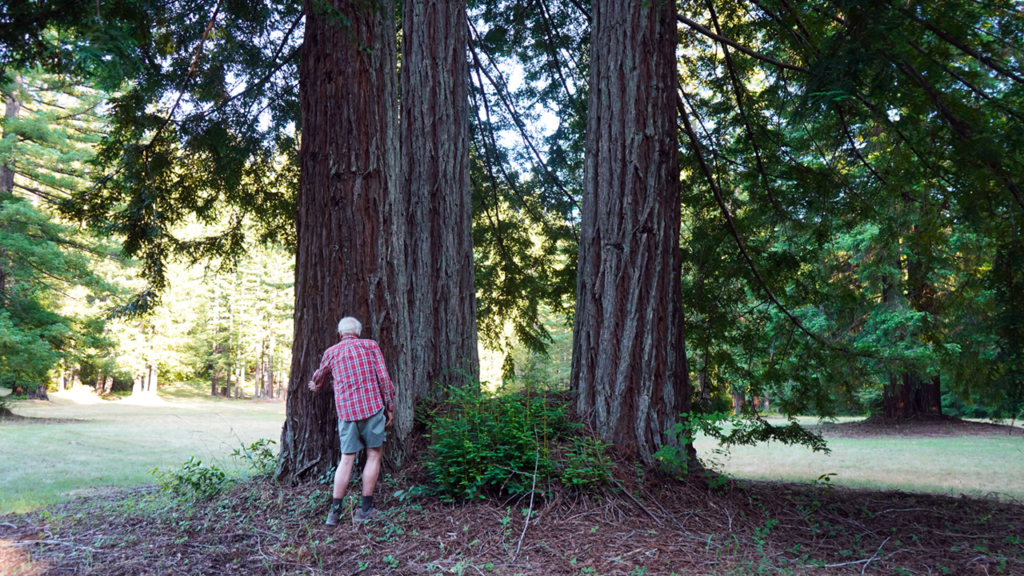
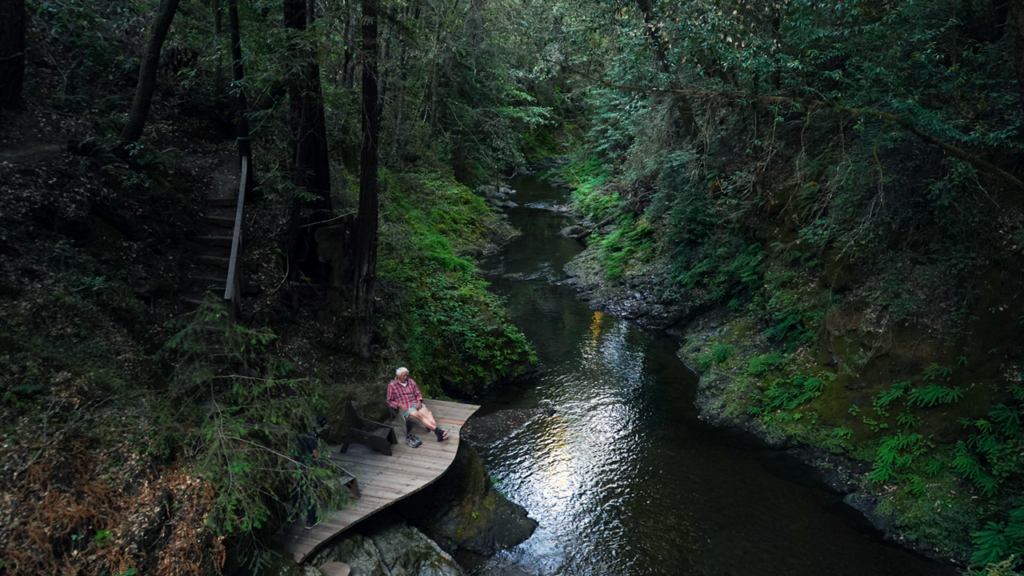
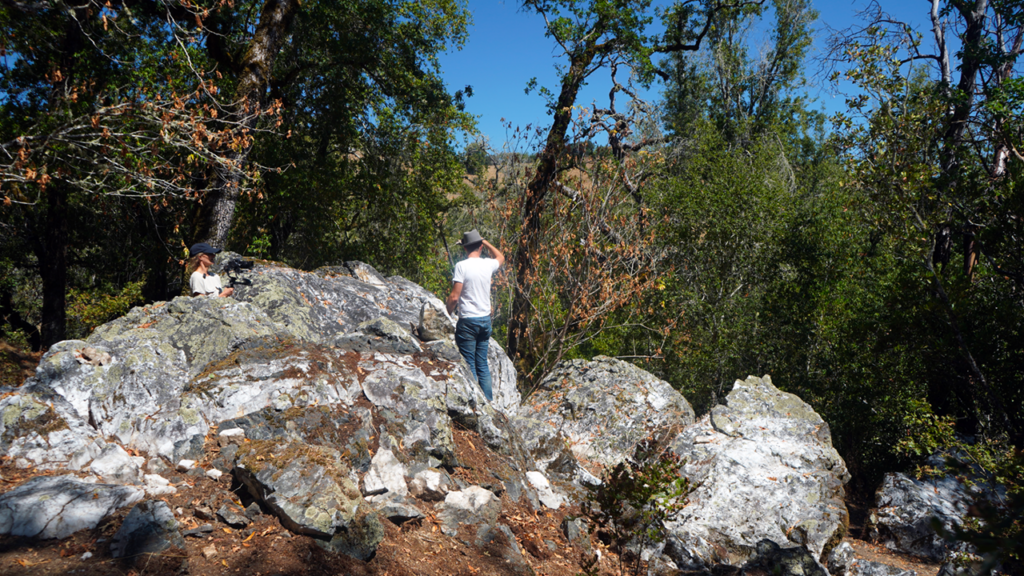
I’ve been fortunate enough to visit a few properties lately, some close to our home in the Bay Area, and others still out West but further away in other states. I might be biased in my interest regarding trees. Perhaps it all increased even more when Kirsten and I drove an hour north of San Francisco to visit John Clarke Mills’ property in a wild canyon crossed by a creek amid quartz and stone boulders; Mills got the place a few years ago, realizing he was deep in fire country, so, instead of leaving things to chance or obsessing irrationally about the odds of his place being suddenly transformed by events, he created the best app out there for fire prevention and preparedness, now used by millions across 22 states West of the Mississippi River: Watch Duty.
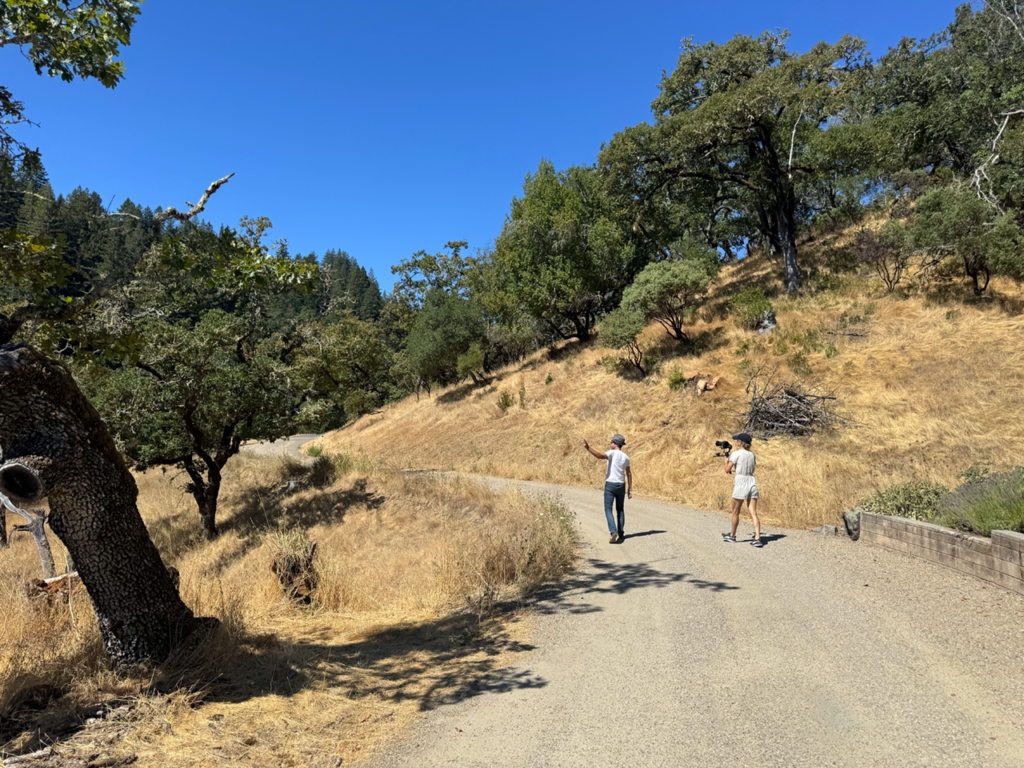
Mills knows a thing or two about his place and about fires, as well as their role in the area over millennia (to the point of influencing the evolution of landmark species like the giant redwoods, which germinate and reproduce after the more beneficial “surface” fires). But we talked especially about trees—and his acknowledgement that some of them are too precious to him to be cut: “This one isn’t going anywhere,” he told us several times.
We saw many oak trees (California black oak, Coast live oak, Canyon live oak), second-growth redwood trees, old manzanita and madrone trees (some of them several hundred years old, which is rare outside national parks), Douglas fir, California Sycamore trees, and many more bushes and trees I don’t know the name of. After twenty years of traveling to California every summer and three years of living here full-time, I’ve grown familiar with the scents of Mediterranean forests near our house and how these change over the seasons, depending on the temperature and humidity, as well as recent rainfall. Our surroundings are alive marvels, and we forget too often about this fact.
The big and small we barely pay attention to
If you think about it, it can be mid-expanding. Even if we perceive a forest on the surface, the feast to the senses is quite astonishing, no mind-altering substances needed. We smell the humus of the rich soil, get volatile oils and compounds that emanate from the trees surface on radiant days on the back of our tongue, and the myriad of plants, bushes and even animals, fungi, and insects we spot with the bare eye, making a bigger effort (having, as put by Michael Pollan on The Omnivore’s Dilemma when he quotes Spanish philosopher Orgega y Gasset regarding the expanded sensoriality and attention of the hunter, and comparing it to looking for mushrooms in a forest) are just there, waiting for us to blend in.
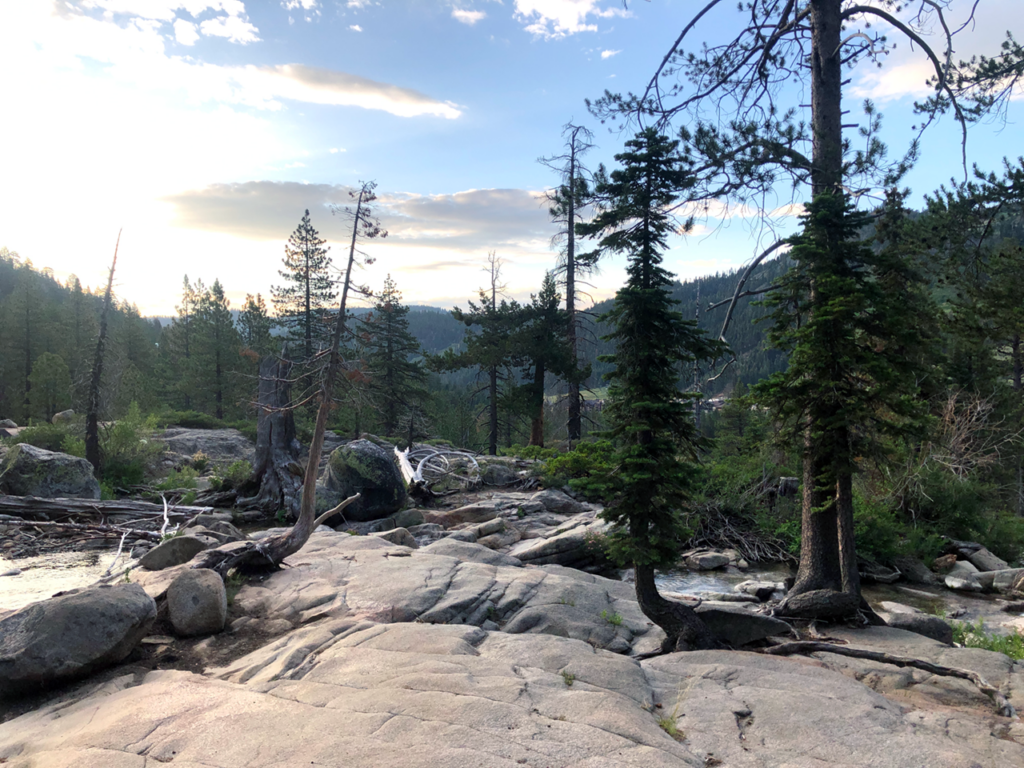
I’m quite used to roaming the forests of the urban edge both in Europe and North America, and I’m many times too focused on getting back home or tired, or too absorbed by something I’m listening to, to notice the grandeur of some trees and the flora and fauna they shelter. When the other day I spotted a bobcat atop a forested hill near home, at first I thought it was a domestic cat, but then I noticed its bigger size, its distict walk, and the small tufts on the bobcat’s ears; it didn’t bother to leave the trail for a few seconds despite noticing me, so I decided to get the phone and take a video of it. It’d be more difficult for me to spot an Iberian Lynx in the wild in Spain, but still.
If a forest is quite amazing already on the surface and from our limited point of view given our mediocre evolutionary capabilities regarding smells, hearing, or motion, we’d be overwhelmed by layers upon layers of life, organic matter in decomposition, the nerves of mycelia expanding below ground, and microorganisms: in the soil, on the surface of plants and animals, and—it seems—also inside trees.
Enter the mentioned article by Alexa Robles-Gil: it’s not only that we overlook trees, but the fact that, in every tree, one can count quite literally “a trillion tiny lives,” and we know so little about it that we should be concerned:
“Scientists have found that a single tree can be home to a trillion microbial cells — an invisible ecosystem that is only beginning to be understood.”
“Earlier this month, a team of scientists published the most comprehensive study of the microbiomes living inside tree trunks. Their findings suggest that the woody tissues of trees contain a trillion microbial cells above and beyond actual tree cells: communities of bacteria and single-celled organisms called archaea that have specialized to different parts of the tree and even to individual tree species.
“The study’s results, published in the journal nature, reveal a vast and largely unexplored reservoir of microbial diversity. ‘A tree individual is sort of a complex ecosystem in and of itself,’ said Jonathan Gewirtzman, an ecosystem ecologist at Yale University and an author of the study.”
Entire new fields for young scientists to explore
Even if we know little about these microorganisms and how they interact with trees and forests, to the scientists involved, it simply would be “sort of impossible” that some of these microbes don’t affect trees in fundamental ways, from growth to immunological resilience, to their incredible lifespan.
Why do we know so little about microbes living in small trees? Apparently, we never bothered to really look into it. Microbes live in the outer wood (sapwood) and the inner wood too (heartwood), and each part has its own constellation of microorganisms, with particular species that have adapted to the areas they live in.
Also, tree microbiomes differ from tree to tree and between species, with closely related tree species sharing similar communities of microorganisms:
“Sugar maples, known for producing maple syrup, had more sugar-eating bacteria, whereas others, like the oak trees used for wine barrels, harbored a microbial group known to aid fermentation. Such examples demonstrate how tree microbes affect ‘our everyday lives in sort of unexpected ways,’ said Wyatt Arnold, a microbial ecologist and an author on the study.”
Some mysteries remain, however:
“How do microbes get inside the tree’s woody tissues? Some might be inherited through seeds and retained into a tree’s adulthood, while others might enter through wounds or natural openings. Still others might arrive through routes that scientists haven’t yet discovered.”
Given the current anti-science official climate, backed both by the current Administration and by—it seems—a significant part of American society, there are few non-fiction books as prescient as E. O. Wilson’s Letters to a Young Scientist (listen to Wilson’s own thoughts regarding the book back in 2013).
Wilson’s book is both a manifesto for curiosity-driven science and a defense of science as a deeply human behavior that improves society, fighting politicization by fostering experimentation against fear of failure and prosecution. If young scientists have to start their careers caring about their own safety and livelihoods, they might not grow the mentality that helped the US become a magnet for discovery and experimentation: the cultural encouragement to take risks, make mistakes, and embrace uncertainty.
Expanding our understanding
E. O. Wilson reminded us of the awe of nature and how little we know about it; we are just beginning to grasp some of life’s and ecosystems’ wonders. For science to work, he warned, it has to cross national, ideological, and cultural lines, for the push for scientific knowledge is both humanist and vital: the more we collaborate and push for interdisciplinary thinking, the bigger the chances to protect nature but also to find utility out of what we don’t know yet about nature’s wonders.
Hence, Wilson’s preoccupation before his passing was to collect as much data as possible from ecosystems and microorganisms. And studies like the recently published one about microorganisms living inside trees, of which we know little to nothing, are the perfect reminder of our task, both individual and collective. Within nature’s wonders, trillion-dollar ideas and companies are waiting to be born.
Wilson begins his book The Future of Life by visiting Walden Pond and taking an imaginary walk along with Thoreau in the nearby woods. It really resonated with me: if you’ve ever walked through Concord, MA, and ventured into Walden Pond, you’ll understand what I’m trying to express.
Invoking Thoreau in a landscape he successfully described so vividly embodies the intersection of natural wonder, ethics, and humility before nature: if we look at nature not from a superiority point of view but from a poetic a scientific one, we’ll be in the perfect mindset to protect and learn from, and perhaps to better our place by discovering new medicines, materials, and much more (like, possibly, hints at the ways we could age much more slowly and in better mental and physical shape).
E. O. Wilson relies on Thoreau’s hyperlocal example, reminding us that, when we walk through our proximity forest, there’s much more than dangerous little ticks:
“I am a member of the other tribe—a lover of little things, a hunter also, but more the snuffling opossum than the questing panther. I think in millimeters and minutes, and am nowhere near patient as I prowl, having been spoiled forever by the richness of invertebrates and quick reward for little effort. Let me enter a tract of rich forest and I seldom walk more than a few hundred feet. I halt before the first promising rotten log I encounter.”
(…)
“Untrammeled nature exists in the dirt and rotting vegetation beneath our shoes. The wilderness of ordinary vision may have vanished—wolf, puma, and wolverine no longer exist in the tamed forests of Massachusetts. But another, even more ancient wilderness lives on. The microscope can take you there. We need only narrow the scale of vision to see a part of these woods as they were a thousand years ago. This is what, as a small-organism naturalist, I can tell you.”
E. O. Wilson, addressing posthumously to Thoreau in the prologue of “The Future of Life”
We know little about most species on this planet
The Earth’s wealth of microbes and archaeans is the domain where science lacks most knowledge, and we could learn many things not only from the microorganisms we overlooked when studying trees and wood, but from extremophiles, for example:
“The ultimate extremophiles are certain specialized microbes, including bacteria and their superficially similar but genetically very different relatives the archaeans. (To take a necessary digression: biologists now recognize three domains of life on the basis of DNA sequences and cell structure. They are the Bacteria, which are the conventionally recognized microbes; the Archaea, the other microbes; and the Eukarya, which include the single-celled protists or ‘protozoans,’ the fungi, and all of the animals, including us. Bacteria and archaeans are more primitive than other organisms in cell structure: they lack membranes around their nuclei as well as organelles such as chloroplasts and mitochondria.) Some specialized species of bacteria and archaeans live in the walls of volcanic hydrothermal vents on the ocean floor, where they multiply in water close to or above the boiling point.”
“The Future of Life,” E. O. Wilson (chapter “To the Ends of Earth,” p. 5)
How big is the task of cataloguing ecosystems and life on Earth before we even venture into deep space and its possibilities? E. O. Wilson begins his book by formulating this question:
“How many species are there in the world? Somewhere between 1.5 million and 1.8 million have been discovered and given a formal scientific name. No one has yet made an exact count from the taxonomic literature published iver the past 250 years. We know this much, however: the roster, whatever its length, is but a mere beginning. Estimates of the true number of species range, according to the method used, from 3.6 million to 100 million or more. The median of the estimates is a little over 10 million, but few experts would risk their reputations by insisting on this figure or any other, even to the nearest million.”
“The Future of Life,” E. O. Wilson (chapter “To the Ends of Earth,” p. 14)
Splashing mud puddles
So, we don’t know, not even roughly, how much is missing, especially when it comes to bacteria and archaeans. And this doesn’t only mean that scientific taxonomy is underdeveloped, but also greatly undervalued: the utility of the things we can discover that could be used by humans to better life on Earth and beyond is open to guesswork—at least as of now.
When we evoke tales about the Frontier, we imagine self-made people traveling West and trying to homestead or to hit a vein of gold. The Frontier today isn’t only synthetic, but also biological.
But our dismissive care for scientific knowledge around nature goes beyond tiny organisms:
“Ever deeper rounds of zoological exploration, driven by a sense of urgency over vanishing environments, have revealed surprising numbers of new vertebrates, many of which are placed on the endangered list as soon as they are discovered. The global number of amphibian species, including frogs, toads, salamanders, and the less familiar tropical caecilians, grew between 1985 and 2001 by one third, from 4,003 to 5,282. There can be little doubt that in time it will pass 6,000.”
“The Future of Life,” E. O. Wilson (chapter “To the Ends of Earth,” p. 17)
So the question is: what’s not to know, celebrate, and respectfully make use of! Anyone can celebrate their backyard, or even their little pot of herbs, attracting worms, insects, bacteria, archaeans, tiny fungi, and many more organisms.
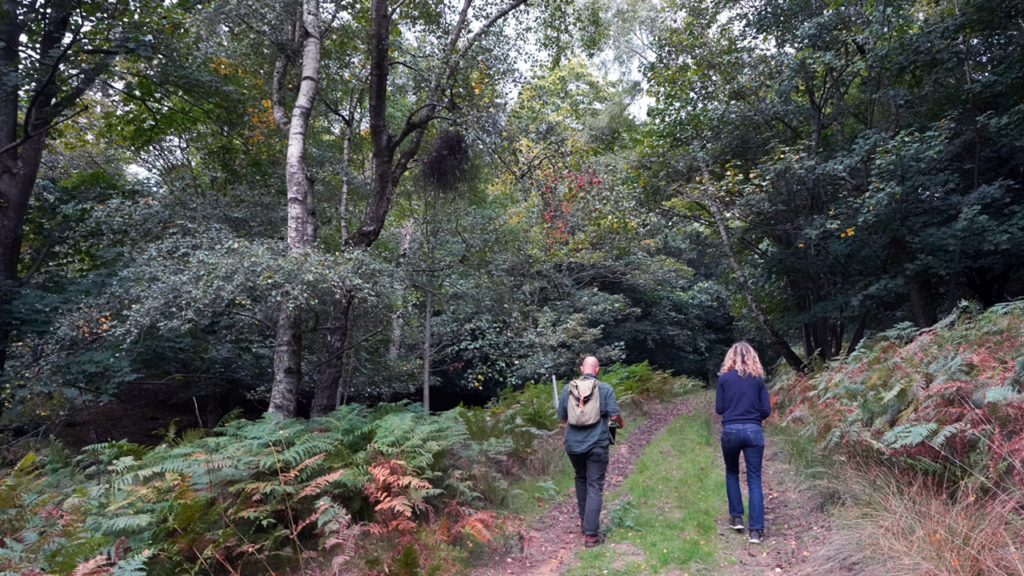
“You do not have to visit distant places, or even rise from your seat, to experience the luxuriance of biodiversity. You yourself are a rainforest of a kind.
(…)
“But rest easy: the bulk of protoplasm you carry around is still human, because microbial cells are so small. Every time you scuff Earth or splash mud puddles with your shoes, bacteria, and who knows what else, that are still unknown to science settle on them.
“Such is the biospheric membrane that covers Earth, and you and me. It is the miracle we have been given. And our tragedy, because a large part of it is being lost forever before we learn what it is and the best means by which it can be savored and used.”
“The Future of Life,” E. O. Wilson (chapter “To the Ends of Earth,” pp. 20-21)
The cures and innovations we’re missing
To understand what we’re missing, we have to consider only the power of diverse ecosystems to produce more and restore damaged environments:
“In conserving nature, whether for practical or aesthetic reasons, diversity matters. The following rule is now widely accepted by ecologists: the more species that inhabit an ecosystem, such as a forest or lake, the more productive and stable is the ecosystem. By ‘production,’ the scientists mean the amount of plant and animal tissue created each hour or year or any other given unit of time. By ‘stability,’ they mean one or the other or both of two things: first, how narrowly the summed abundances of all species vary through time; and second, how quickly the ecosystem recovers from fire, drought, and other stresses that perturb it. Human beings understandably wish to live in the midst of diverse, productive, and stable ecosystems.”
(…)
“In the dynamism of a healthy ecosystem there are minor players and major players. Among the major players are the ecosystems engineers, which add new parts to the habitat and open the door to guilds of organisms specialized to use them. Biodiversity grows more biodiversity, and the overall abundance of plants, animals, and microorganisms increases to a corresponding degree.”
“The Future of Life,” E. O. Wilson (chapter “How Much Is the Biosphere Worth?,” pp. 108-110)
Those skeptical about the power of nature should take a careful look at how many incredible medical breakthroughs come from formulas created by organisms and not in a lab.
“Revolutionary new drugs have rarely been developed by the pure insights of molecular and cellular biology, even though these sciences have grown very sophisticated and address the causes of disease at the most fundamental level. Rather, the pathway of discovery has usually been the reverse: the presence of the drug is first detected in whole organisms, and the nature of its activity is subsequently tracked down to the molecular and cellular levels. Then the basic research begins.”
“The Future of Life,” E. O. Wilson (chapter “How Much Is the Biosphere Worth?,” p. 120)
Our blind eye to ancestral wealth of information
Or, as said by naturalist and conservationist John Muir, who stayed in awe when walking through the forests and valleys of California:
“The clearest way into the Universe is through a forest wilderness.”
When the task is so vast, where to begin? Perhaps we could learn a bit more about our own gardens and backyards.
To the adventurers, there are many cultures and traditions to document, near us and far away. Our own ancestors used techniques of construction, clothing, food, and more that we have lost track of.
There are also many ancient cultures still alive that didn’t have the benefit of systematic documentation. Many of them are at risk and vanishing, affected by modernity and standardization. Proof of it:
“The richness of biodiversity’s bounty is reflected in the products already extracted by native peoples of the tropical forests, using local knowledge and low technology of a kind transmitted solely by demonstration and oral teaching. Here, for example, is a small selection of the most common medicinal plants used by tribes of the upper Amazon. Their knowledge has evolved from their combined experience with the more than fifty thousand species of flowering plants native to the region: motelo sanango, Abuta grandifolia (snakebite, fever); die plant, Arrabidaea chica (anemia, conjunctivitis); monkey ladder, Bauhinia guianensis (amoebic dysentery); Spanish needles, Bidens alba (mouth sores, toothache); firewood tree, or capirona, species of Calycophyllum and Capirona (diabetes, fungal infection); wormseed, Chenopodium ambrosioides (worm infection); caimito, Chrysophyllum cainito (mouth sores, fungal infections); toad vine, Cissus sicyoides (tumors); renaquilla, Clusia rosea (rheumatism, bone fractures); calabash, Crescentia cujete (toothache); milk tree, Couma macrocarpa (amoebic dysentery, skin inflammation); dragon’s blood, Croton lechleri (hemorrhaging); fer-de-lance plant, Dracontium loretense (snakebite); swamp immortelle, Erythrina fusca (infections, malaria); wild mango, Grias neuberthii (tumors, dysentery); wild senna, Senna reticulata (bacterial infection).
“Only a few of the thousands of such traditional medicinals used in tropical forests around the world have been tested by Western clinical methods. Even so, the most widely used already have commercial value that rivals farming and ranching.”
“The Future of Life,” E. O. Wilson (chapter “How Much Is the Biosphere Worth?,” pp. 125-126)
Of course, nature is much more than its human utility. But knowing more about nature proves that its economic value has an unleashed potential that exceeds our wildest dreams. And it’s there, right in front of us.
If I were a disenchanted young student trying to make an impact in the world, this field’s potential is unparalleled. Here’s a hill worth fighting for, as an alternative to, say, joining investment banking or trying to build yet another AI-powered vertical.