Between spectacle and solitude, a different kind of California comes into focus. Come visit landscapes, memories, and a special place built amid the NorCal redwoods from the ground up.
On April 5, 2026, we woke up at Earl Warren RV Park in Old Santa Barbara near Highway 101. We had arrived at the unassuming place with full hookups available for last-minute bookings a mere few hours before. It was a pleasant morning.
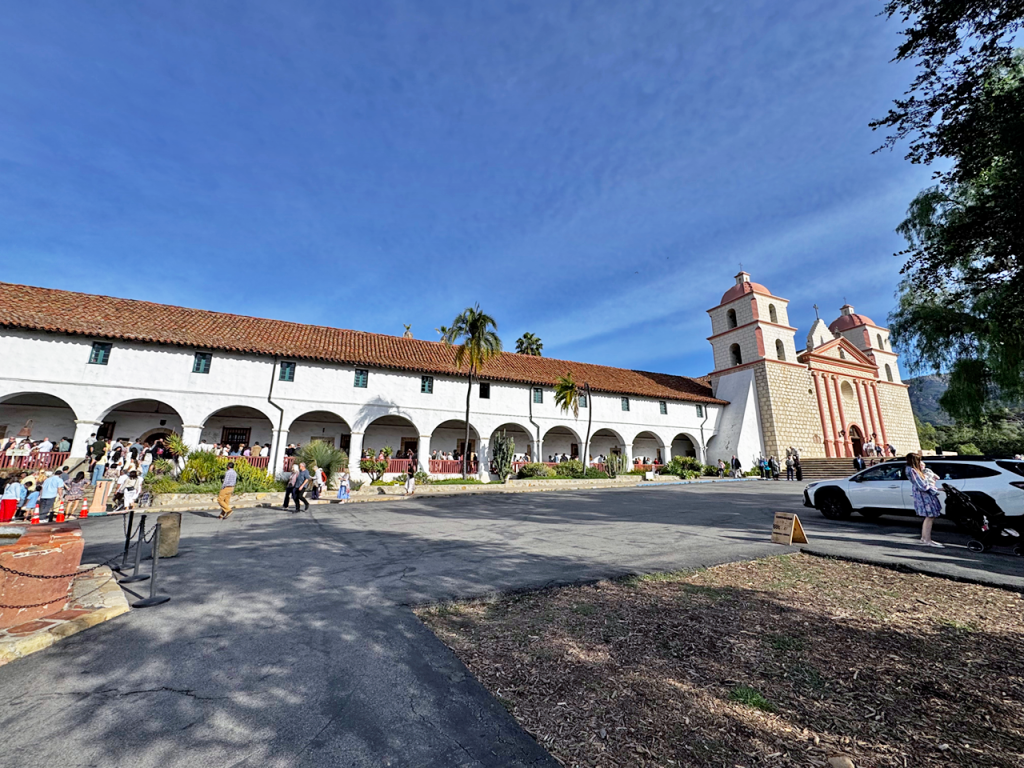
In the morning, the 34-acre multi-purpose venue, also used as the local fair and rodeo grounds, looked equally quiet, with only a few big rigs in good shape occupying the strategic spots. We had parked just in front of the only bathroom working on the premises. No shower.
For the first time after days of travel alternating vacation and video production in the Southwest, there was no hard wake-up time for us (our kids had had a much more relaxed schedule than Kirsten and I). Despite the comfortable beds in the converted Ford Transit rental, we woke up early out of habit and decided to let the kids sleep while we each went for a run separately.
I decided to head to the Mission premises once I realized it wasn’t far, and followed the streets built along Mission Creek—upstream, just like salmon did by the time the Padres established the mission and presidio. I found the esplanade facing the church, where the old lavandería sits, packed with people of all ages, nicely dressed.
On the west side, near Los Olivos Street, a street music ensemble was getting ready. I realized it was Easter. It all felt familiar; I must have seen similar things in Spain growing up.
Heading west amid ocotillos and pink mountains
We had arrived at the place late on Saturday after making the previous night—from April 3 to April 4—in Yuma, the last town in Arizona before hitting California as one drive southwest on Interstate 8, sometimes so close to the border that you can see patches of the much-trumpeted, 30-foot-tall, steel-bollard border wall. Stones, dust, a water canal taking water from the depleted Colorado River, crumbling mountains, small reservations with cheaper gas and gambling as attractions: everything went fast.
We crossed the green hay and alfalfa fields of Imperial Valley in a whiff, or so it seemed, probably because we played music and talked about everything and nothing, knowing that, after climbing the mountains of Eastern San Diego County, the Pacific Ocean wasn’t far on the other side.
Somewhere in the transition between Imperial and San Diego Counties, the overlapping silhouettes of the In-Ko-Pah mountains showed different gradations of dusty terracotta (with a pinkish aura) in the distance, like the paintings of faraway desert ranges by Georgia O’Keeffe that my older daughter has come to cherish (perhaps because she’s seen quite a few of those ranges from the back seat of our cars and vans growing up).
Driving through San Diego on Saturday, April 4, went smoothly, with no traffic to speak of (at least, that was the case heading north; we saw more southbound traffic in both San Diego and LA). The van cruised along, we felt rested and had everything we needed to keep going for days if we needed to, and our two kids traveling with us (their older sister is in college) felt at ease with so much space that our goal was keeping them seated and with the belt on, because they knew they could go get cold snacks from any of the two solar-powered small fridges the van was equipped with. There was also the tired feeling that comes with any trip reaching its end, and the words “arriving home” and “homework” were already on the horizon.
That’s perhaps why we decided to stop to cook lunch at the beach in Cardiff-by-the-Sea, past San Diego. We had garlic, onion, tomatoes, olive oil, pasta, a bit of protein, etc., so we made a sofrito sauce with pasta and a few other leftovers on the side.
Camper-made breakfast in Santa Barbara, Easter Day
The light seemed different and inviting in coastal California, crisp and photogenic, and flowers were everywhere. It felt nice to feel the breeze from the Pacific Ocean after days in the dusty, dry Sonoran Desert, and I relaxed a bit from all the driving, improvising a warm meal. The van was (legally) parked in a nice spot, so we took a walk on the beach before getting back on the road.
When we got to the last mountain before hitting the Los Angeles megalopolis from the South, we stopped for a second to see the whole urban valley at our feet. I counted several downtowns of high-rises amid a sea of low buildings, diminutive in the distance. There’s no way I can cross this in a couple of hours, I thought to myself. From there, the city below looked coherent, contained between a giant valley surrounded by mountains, like a massive amphitheater, and the ocean. Once inside, though, the cohesion and any idea of entity vanished amid elevated roads and patches of random activity: just like Tolstoy explains wars, which look meaningful and photogenic when they are explained after the fact, but are a mess when one is inside the battle.
I was wrong, and crossing Los Angeles can feel pleasant with little traffic: when we found the first hints of the legendary bad LA congestion, the hill of the Getty Center showed up on our left in Brentwood, at the edge of the Santa Monica Mountains north of the city, not far from the epicenter of the January 2025 fires. We talked about the other times that had taken so much time to accomplish only a small part of what we had in a little over an hour.
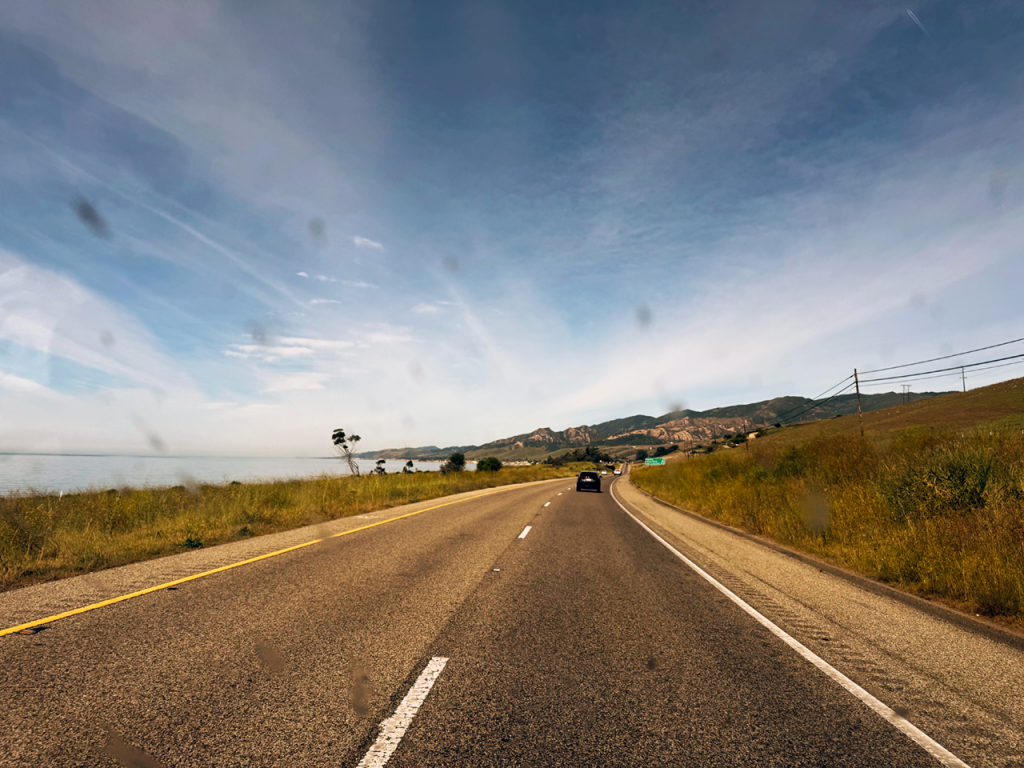
Malibu, Ventura, Carpinteria… The evening was clear, and we could see the Channel Islands in the distance, as well as the oil rigs. I was tempted to stop by the road near the water, just like a few of the surfers waiting for an outing early in the morning, but the RV park in Santa Barbara promised an electric hookup and it was probably smart to recharge the main battery so we didn’t spoil the remaining refrigerated food after relying for a few days only on solar and driving for recharging.
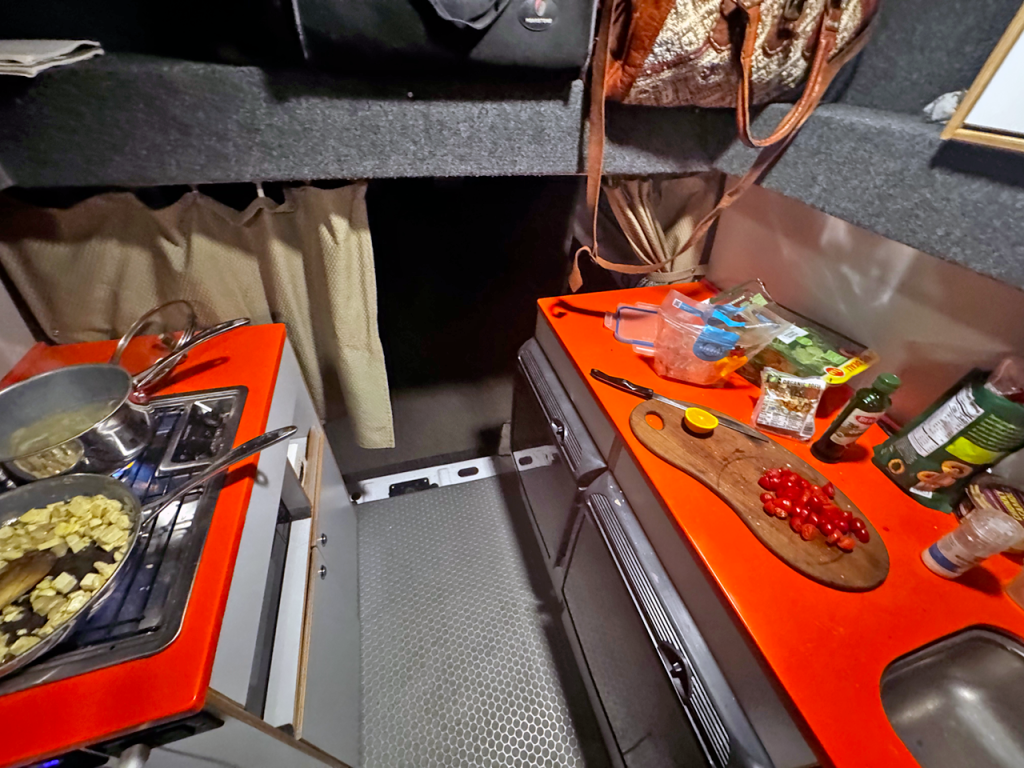
It took us a while to finish and put away the breakfast paraphernalia, and it was already 10 AM or so when we began heading to Big Sur; I was driving while Kirsten tried to wrap up the weekly video, which we intended to post at home a few hours later.
Hearst Castle and the California mind
Driving north along the coast reminded me of a Joan Didion article on her personal account of Hearst Castle in San Simeon, included in one of the two books I traveled with, “Let Me Tell You What I Mean” (published in 2021, with texts going from 1968 to 2000).
That same day, not far from where we were driving, another version of California was coming to an end. Only, we didn’t know yet.
“It has been for almost half a century a peculiar and affecting image in the California mind: San Simeon, “La Cuesta Encantada,” the phantasmagoric barony that William Randolph Hearst made for himself on the sunburned hills above the San Luis Obispo County coast. California children used to hear about San Simeon when they were very small (I know because I was one of them), used to be told to watch for it from Highway 1, quite far in the distance, crested on the hill, the great Moorish towers and battlements shimmering in the sun or floating fantastically just above the coastal fog; San Simeon was a place which, once seen from the highway, was ever in the mind, a material fact which existed in proof of certain abstract principles. San Simeon seemed to confirm the boundless promise of the place we lived.”
Joan Didion, “A Trip to Xanadu” (written in 1968), from “Let Me Tell You What I Mean” (2021)
One expression from that beginning had stayed with me: “the California mind.” As we drove back home in the Bay Area in our rented campervan on a sunny day with not yet much traffic in places still far from the two big urban centers of the State, South and North of its coast, I tried to reflect on the “California mind” that Didion tried to describe. Perhaps, I thought, that “mind” has a memory.
Didion goes on to describe Hearst’s folly in San Simeon as a place designed for eternity, where time wouldn’t make its unfathomable imprint and entropy wouldn’t follow its course, associated with the arrow of time, which (physics tells us) goes only in one direction for all objects and events in the universe. We’re in it, and the clock is ticking.
Richard Neutra’s seedlings
So, despite Hearst’s intentions, building La Cuesta Encantada didn’t spare him from the ailments of old age, and so he had to abandon La Cuesta Encantada (“San Simeon was to be the kingdom where nobody dies,” Didion writes) to seek medical care in Los Angeles, dying in Beverly Hills on August 14, 1951 at the age of 88.
But I was sure there was much more to say about the California experiment, and about what Didion refers to as “the California mind.”
Little did we know that another California legend, architect and self-builder Charles Bello, the same Charles Bello from Kirsten’s legendary video-reportage 50 years off-grid: architect-maker paradise amid NorCal redwoods, died on April 5th, 2026, perhaps in that very moment, at the age of 93 (he was born on July 12, 1932).
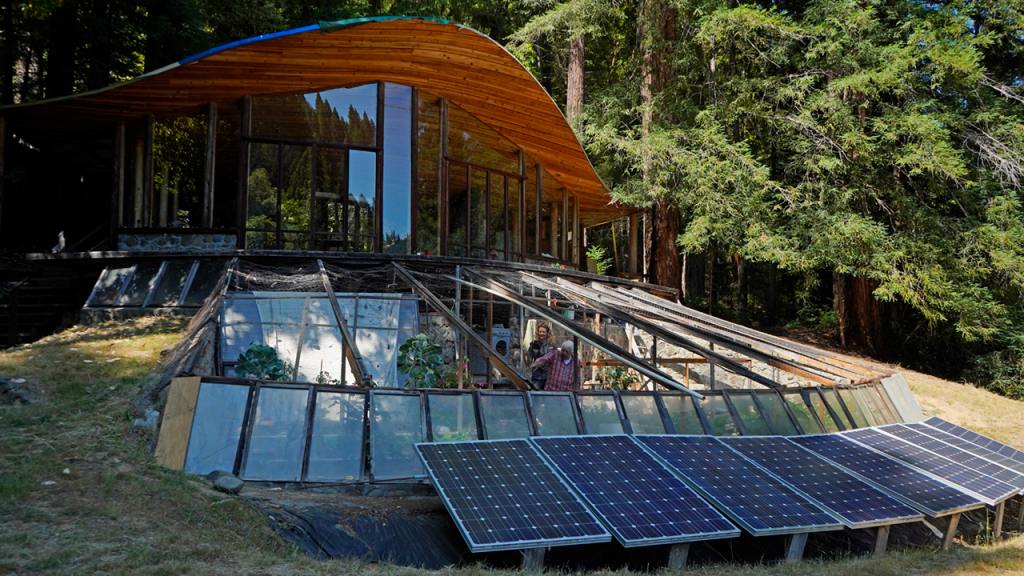
We didn’t know that very Sunday yet, but my thoughts on the experiments regarding the California mind that Didion refers to, had in Charles Bello an ideal opposite of the grandiosity and reality detachment represented by La Cuesta Encantada. An apprentice of Southern California legend Richard Neutra, the Austrian-American architect who gave a soul to Southern California’s modern architecture, Bello had developed his own interpretation of building, blending the organicity of nature with a careful study of the place where a building sits.
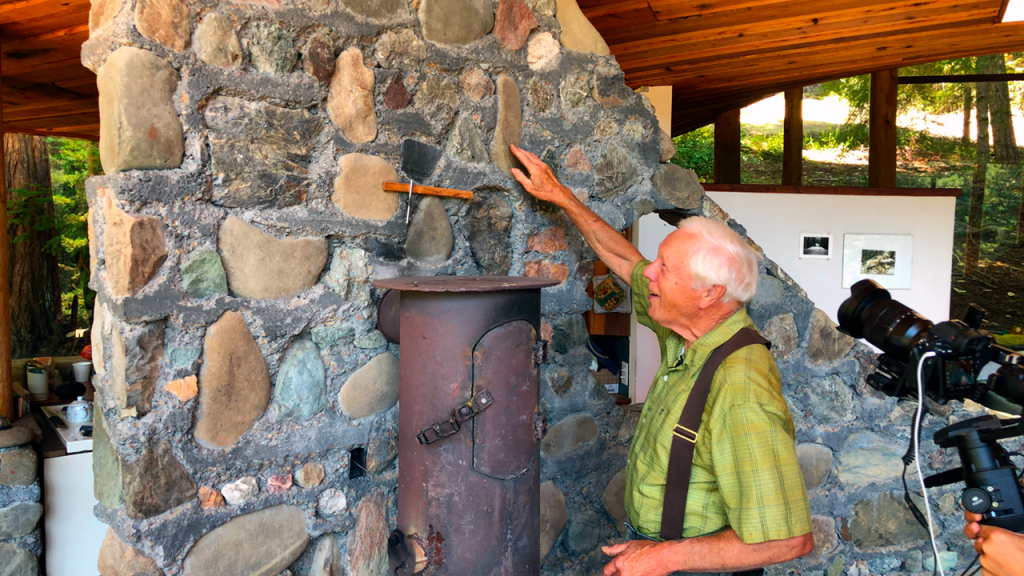
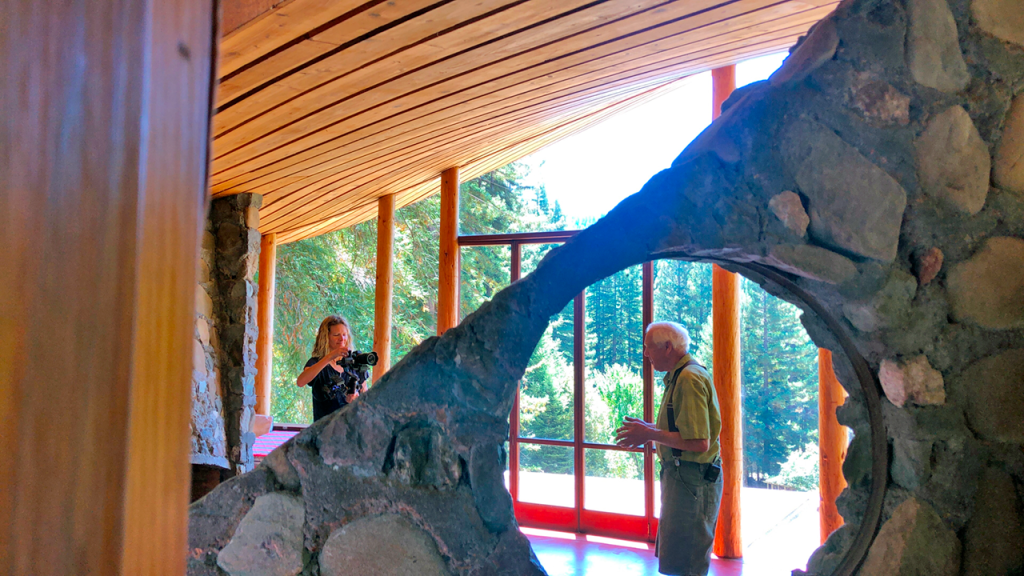
During our first visit to Charles Bello on August 3, 2019, Charles Bello kept us in awe for hours, as we tried to follow him through his property, a tree farm with second-growth redwoods he was trying to regenerate and protect. We learned that the stones on a wall can be placed in such a way that they play a melodic part of the music of nature (their shapes, colors, and placement being the synesthetic equivalent of musical notes), fallen trees and branches can be celebrated in art pieces made of redwood, and parametric architecture can be born out of intuition with no need of complex computing.
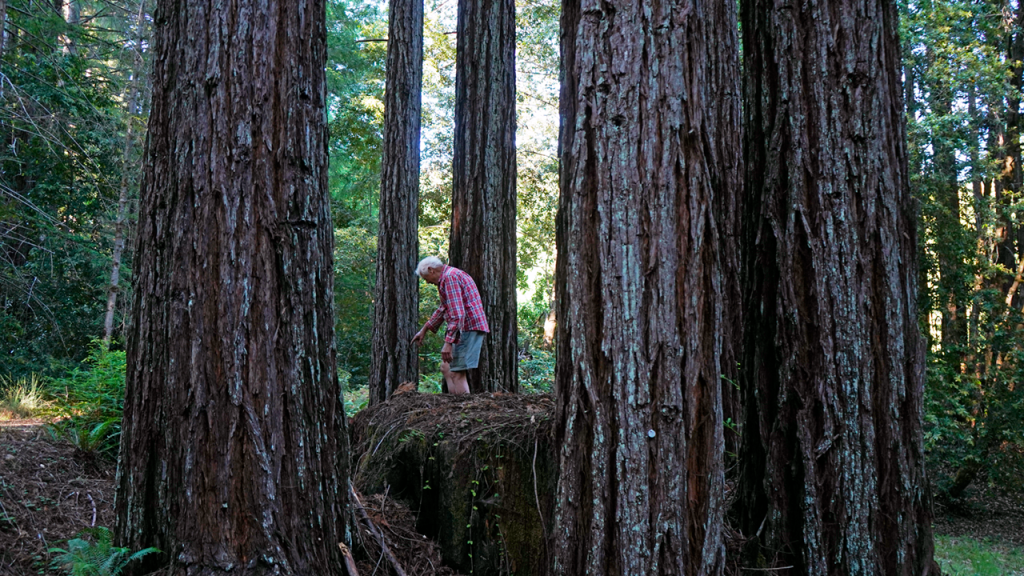
A visit to another type of enchanted place
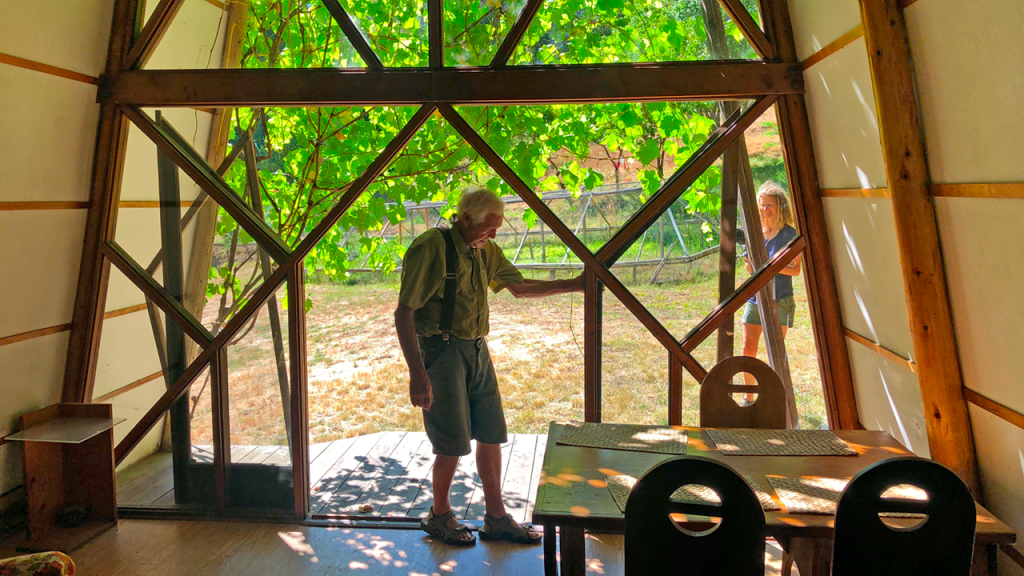
One of his memorable teachings, as we tried to capture his words and actions throughout his rich property amid nature in Northern California, while he was explaining the structure of a door he had built out of scraps decades before:
“I don’t design, I follow nature.”
Charles was referring to the fact that the door, made of wood and glass, used a structural pattern shown in the fractal veins of a tree leaf. He indeed was following nature, and he saw the world with the clarity and connection to the living that our civilization is losing.
Watch the video of our first visit with Charles Bello: 50 years off-grid: architect-maker paradise amid NorCal redwoods.
As it happens, Charles told us already on our first visit that the reason he had insisted in us coming to the property (we had canceled two previous visits the two previous years due to wildfires) was not only his age, but his legacy: he was concerned about the fate of his redwood corner of California, as well as the buildings in the property, most of which should be declared architectural landmarks and protected as such.
We published the video, and COVID came in early 2020. For one reason or another, Charles’ video soon became one of Kirsten’s most unanimously celebrated (and celebratory) ones, with people commenting that Charles deserved another life to keep going (a reference to gaming, but also a telling shared state of mind), so we all made sure that his corner of the universe kept the same energy.
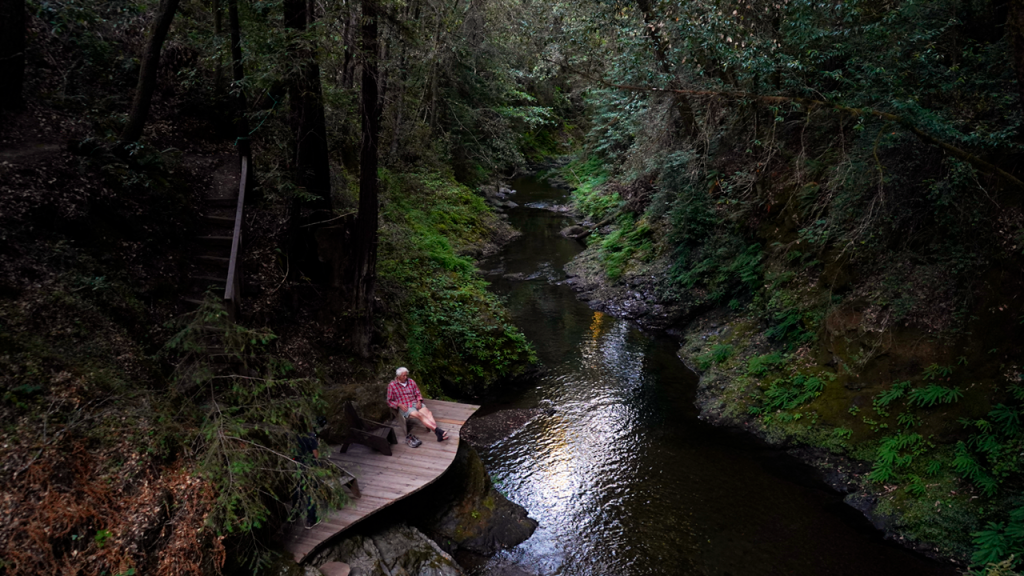
I was personally fascinated by the fact that, over the months, rewatching the video, it became so apparent to me that Charles physically resembled Frank Lloyd Wright and represented a version of him. Only Charles had decided to focus on his rooted reality, never venturing beyond it and never seeking the fame and cultural immortality others pursue, consciously or not.
Charles’ story
Kirsten’s first video on Charles Bello was so influential that one local University offered to take on his property, declaring it a foundation and dedicating it to educational purposes. Though the relationship between Charles, his sons, and the University soon soured, we decided to stay out of the difficult conversation, even though Charles always kept us on the line. For some reason, he trusted us.
It troubled us that Charles was having so much trouble securing continuity to his property and his memory there.
That’s why our second visit to Charles at home, on June 28, 2023, was above all an excuse to check on him. That fresh day of the summer of 2023 felt a bit different than the first for many reasons. During the first visit, we didn’t know what we would find, even though Charles’ phone interactions let us guess that he was, if clearly of old age, playful, and very energetic. So energetic that we soon found he outpaced us for hours.
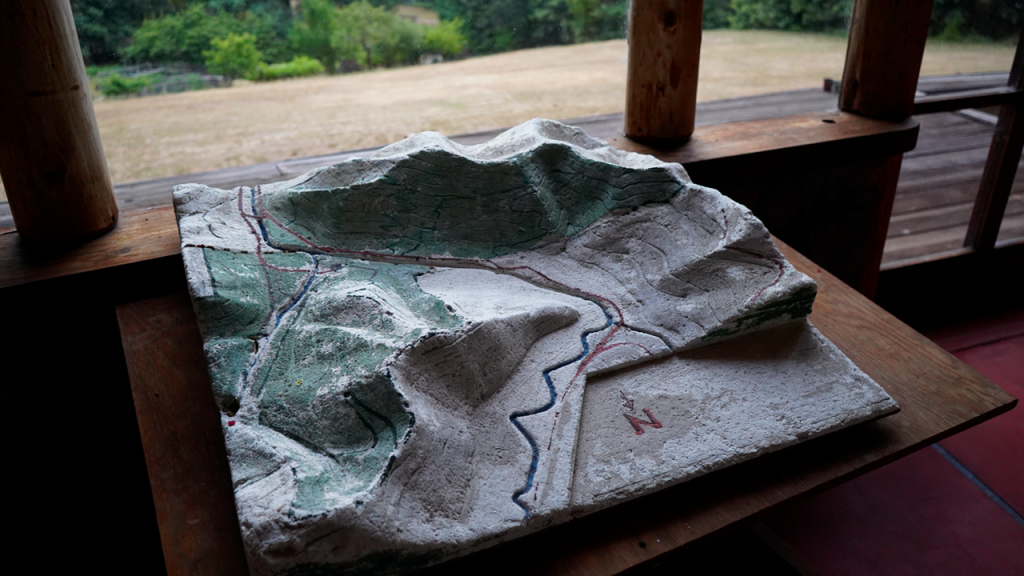
During that second visit, Charles was already 90, but he stayed as energetic as we had found him the first time. He nonetheless confessed to us that he sometimes struggled with short-term memory, and we could tell he was carefully monitoring himself. I got the feeling, and I wasn’t wrong, that Charles wanted to keep going for as long as he could provide himself full autonomy, and that means not only psychomotricity, but also his mind. We found him as sharp, or sharper, than many people we know who are much younger.
Our dinner that night with Charles, at the end of our visit, felt special. You can see it in the video of our second visit with him.
Watch the video of our second visit with Charles Bello, Guide to the Good Life from architect-farmer amid redwoods: 55 years off-grid.
We weren’t wrong, and the first visit left us in such awe that, on the trip back to Kirsten’s parents’ home in Cloverdale, north of Sonoma County, we barely talked. I compare the feeling to the one we get right after leaving the theatre after watching a very good, especially moving movie, which is very rare and becoming rarer for some reason. Or, especially, I compare the feeling we shared without words to the one I felt as my eyes flew through the last pages of books such as Les Misérables or War and Peace: one wants to finish, but at the same time wants it to never end.
Artist, steward
One wants to keep it lingering, savoring it, because that piece of art reveals a deeper rhythm in things, one that goes back to nature, universality, and the best part of us. It’s the end of something memorable, and as we’re reminded of its end, we may subconsciously reflect on the end of all things, on mortality, on how, because things decay, some things don’t.
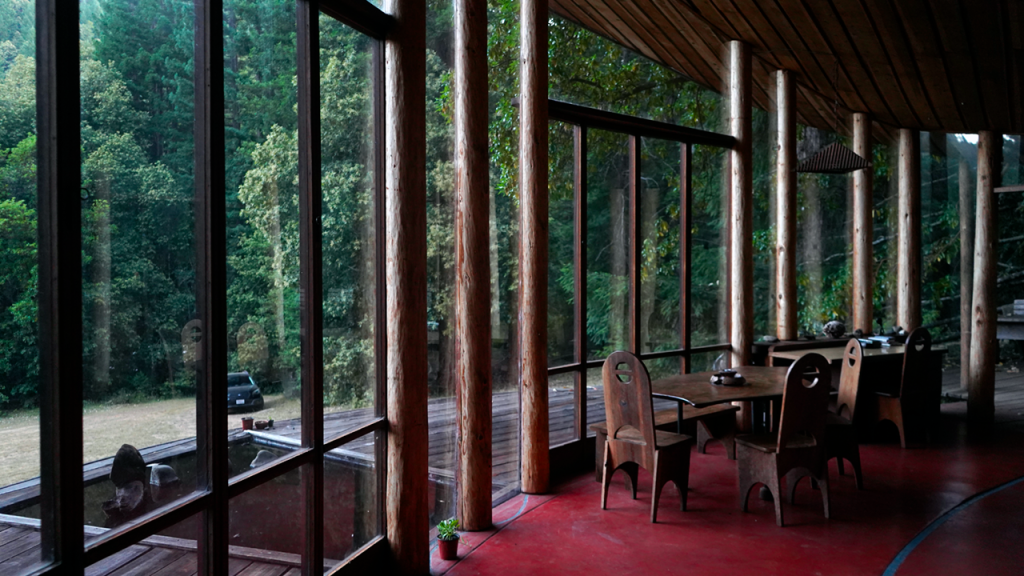
Like meeting somebody remarkable who gives you a retrospective walk through his architecture, his work as steward of his land, and opens his life to you. We’re all so lucky that we happened to have cameras on both visits, and that Kirsten found the tranquility in our then-home (an apartment in Paris) to edit the piece as it deserved. There’s a reason Charles’ first video is the one that has more time watched per user and more accumulated time watched (total time watched) of all videos in her channel, even when other videos have more visits.
We are also grateful that, thanks to our visits to Charles’ place in the Mendocino unincorporated redwoods, an old logging area depleted by decades of mismanagement and short-term gain, many good-hearted people stepped up humbly, never complaining, never raising their voices, never claiming anything. Just trying to help Charles and his legacy.
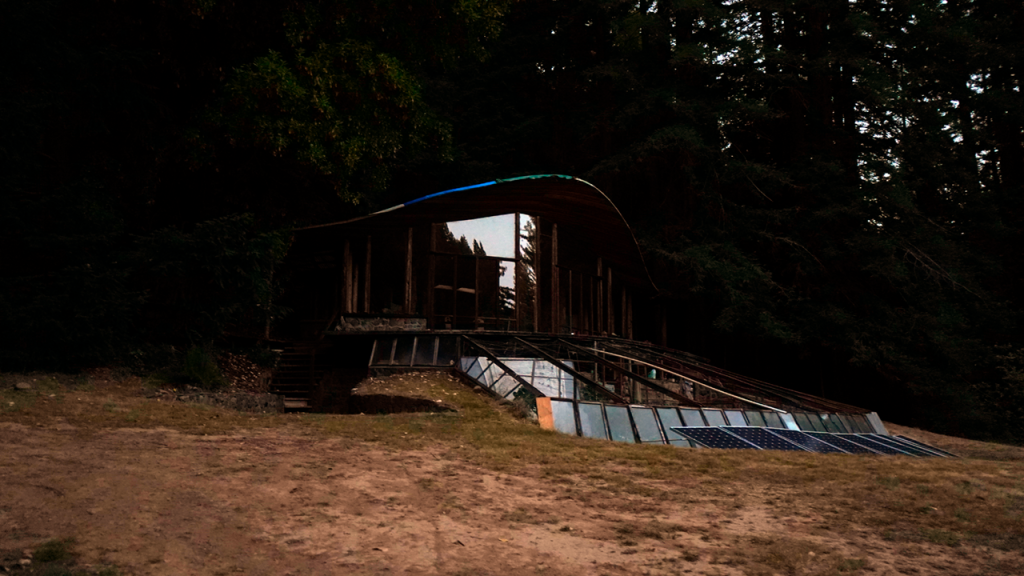
We are talking about patient people like architect Greg Godsey from Heritage Architecture. Once Greg contacted Charles and realized that Charles was having a difficult time trying to navigate the tricky legalities of his succession, he offered him more than counsel: he openly told Charles (as Charles told us on several occasions) that he was invited to come live with him and his family at his home in Texas.
Initially, Charles was reluctant to leave behind decades of his life, but eventually, he moved to Texas for some time and was taken care of by Greg and his family, no strings attached. Some time passed, and Charles decided to move back home to his NorCal property. That’s where we found him during our second video, and it’s on his property where he faded out on April 5th.
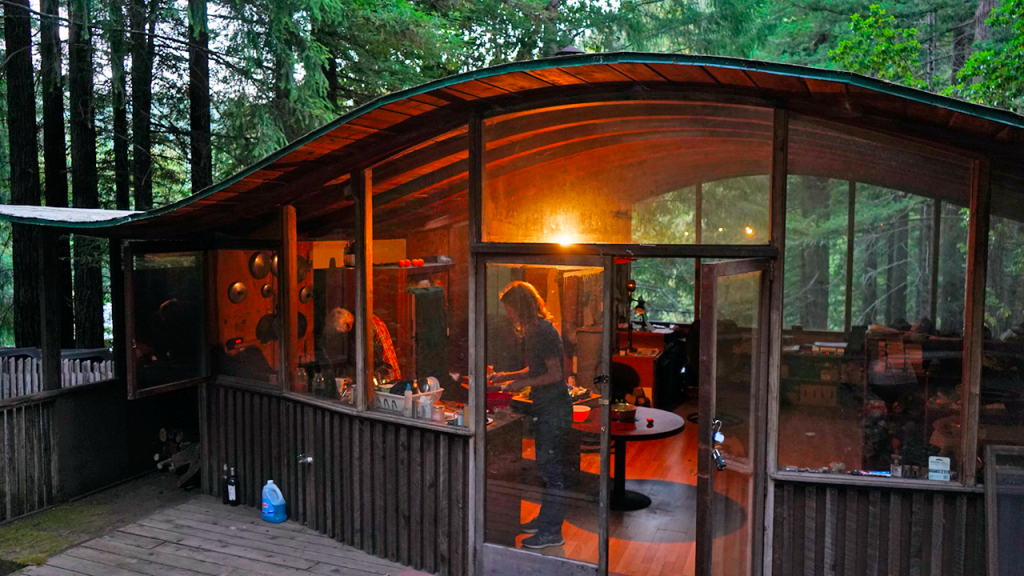
We know that Charles left a will indicating where he wanted his ashes spread, and we truly hope his wishes are not only respected but also made a reality.
Deus sive Natura
How did we find out Charles died, since we’ve been traveling and working so hard that we barely keep up with emails? Greg Godsey, whom we visited in Texas, messaged me on Substack, where he keeps a newsletter. He sent me a private message:
“I am sorry to report Charles Bello died on April 5th 2026. I wrote a tribute to him on my Substack. I thought you would want to know.”
I have to confess, I didn’t like the feeling.
I quickly told Kirsten, and also read Greg’s article about his family’s relationship with Charles.
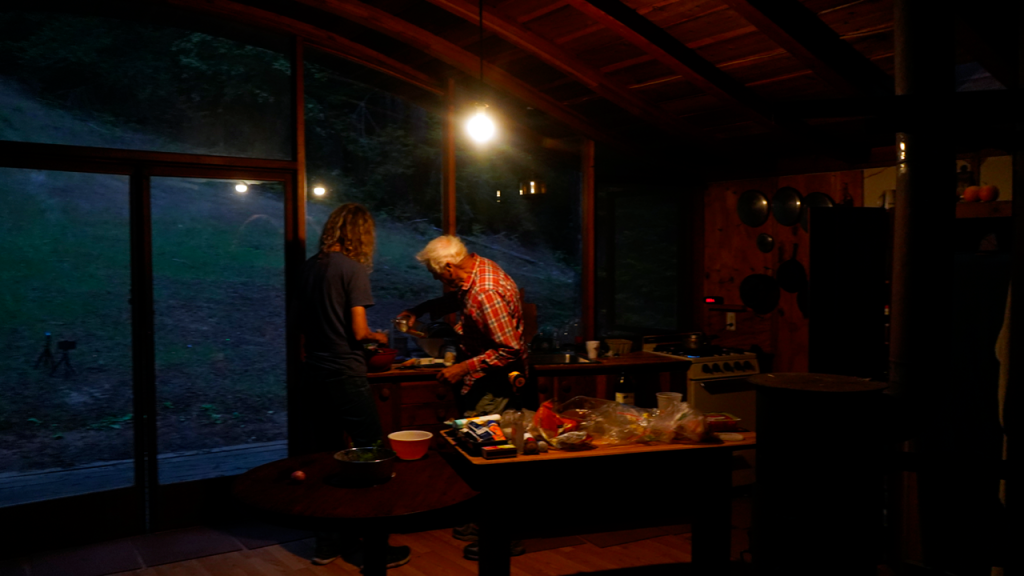
I also asked Greg for advice on writing this piece. We conversed back and forth, and we talked a bit about Spinoza’s pantheistic theology, Deus sive Natura (“God, or Nature”), God and nature as the same substance, a single, self-caused reality. Charles struck me as a force of nature, a pantheistic creator, though I’m not sure he would have liked to be labeled. Perhaps all he wanted was to blend as one with the surroundings he cherished. You can call it whatever you like.
I began this article explaining where I, Kirsten, and our children were when Charles left us on April 5th. I decided to mention it because, as we drove past Hearst’s Castle, I sure felt something. A feeling of wanting to go up the road and walk around, see the folly with my own eyes. I imagine a visit by us, a video.
A giant hollow tree
Then I thought, I don’t know. Hearst’s excess and fear of lacking immortality contrasted almost antithetically with the souls of many of the California characters we’ve come to cherish as legends on the channel, like Lloyd Kahn or, in this case, Charles Bello. And, so, I thought about Bello that day, too, as the music blasted and we headed back to the Bay Area in our rented campervan.
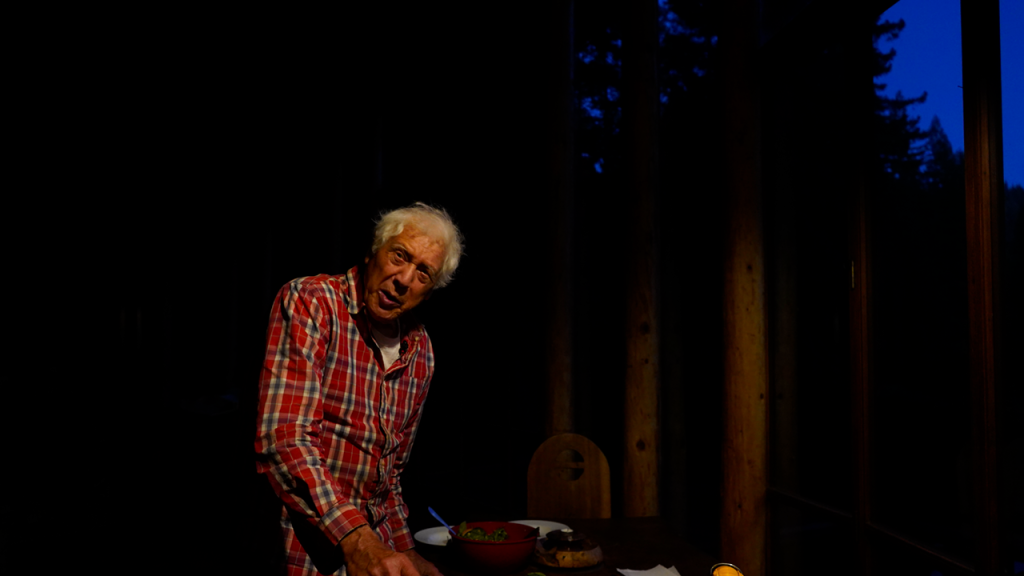
By building an over-the-top castle in San Simeon near San Luis Obispo, Hearst tried to be one man trying to defeat time. By contrast, Charles Bello was a person flowing with time. If Hearst tried to build something that would outlast time, Charles chose to belong to it.
There was a giant hollow tree up the hill near his home that had burned down a long time ago. Charles cherished the place, which he called Big Tree, and liked to get inside, looking up, encircled by its charred inner core.
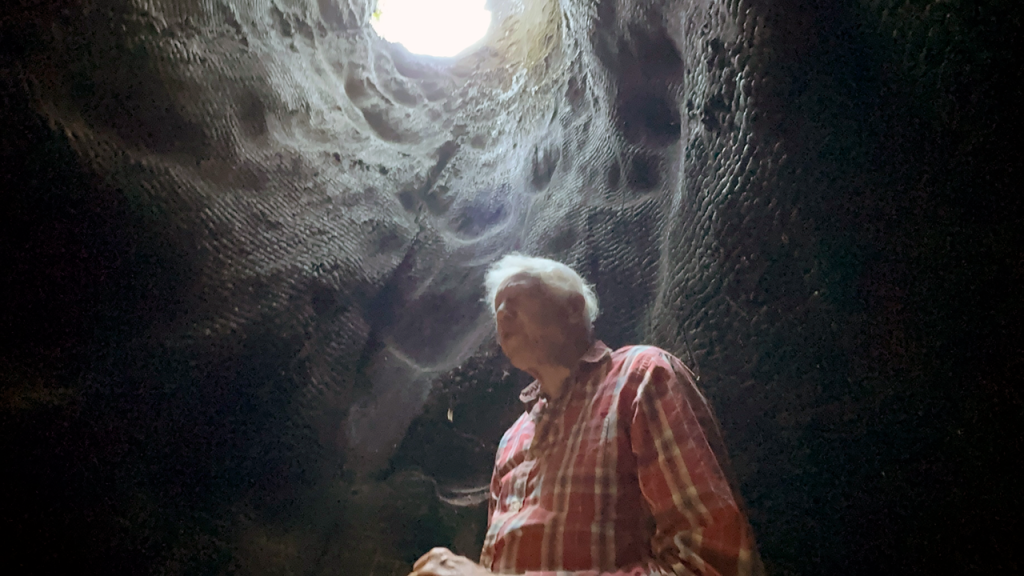
To Charles Bello, in memoriam.
“From God’s supreme power, or infinite nature, an infinite number of things – that is, all things have necessarily flowed forth in an infinite number of ways, or always flow from the same necessity; in the same way as from the nature of a triangle it follows from eternity and for eternity, that its three interior angles are equal to two right angles.”
Spinoza, Baruch; Ethics, Part 1, XVII