Homecoming epics and schoolyard standoffs: raising decent boys in a culture that sells insecurity as manhood.
Imagine growing up as a kid and seeing that the people ruling the world and popular influencers are cockier, sugar-seeking, and more reckless than you are.
While the feed is rewiring them for attention, stories are one of the few ways we help them find real meaning.
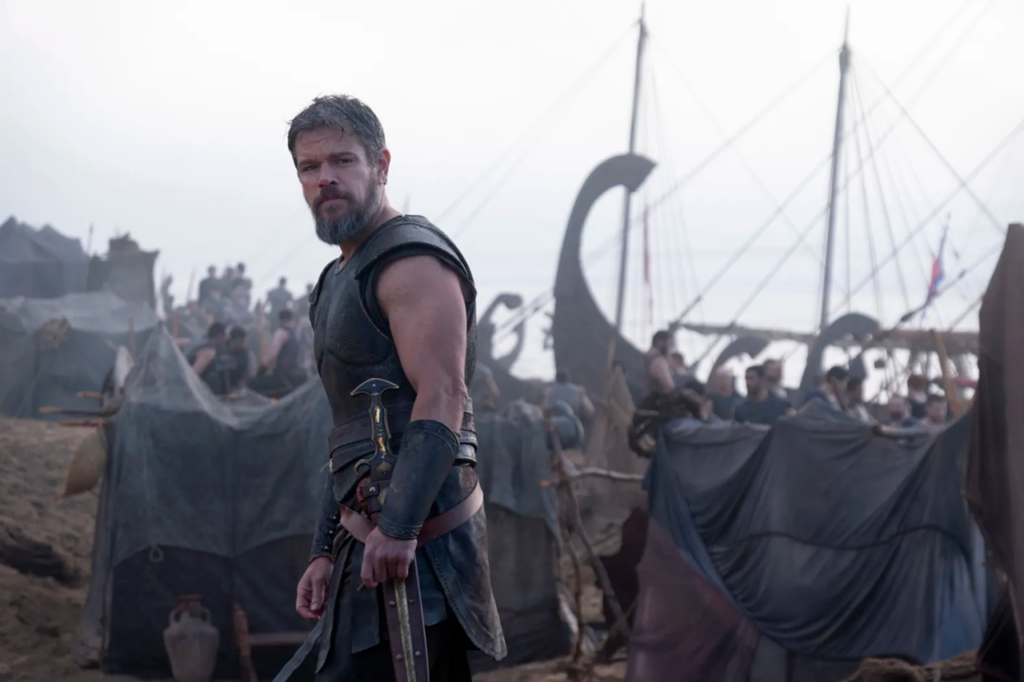
Call me old-fashioned, but I think going to the movies with your kids to watch something worth it is both an opportunity for bonding and for deep, symbolic learning. We are meant to get a bang for the buck through stories.
Some stories are apparently new, and others are based on stories proven effective since time immemorial, but the good ones, like Shakespeare, Molière, or Lope de Vega and Calderón de la Barca plays, always turn around universal topics already present in Greek theatre at the time of Aeschylus (5th century BCE).
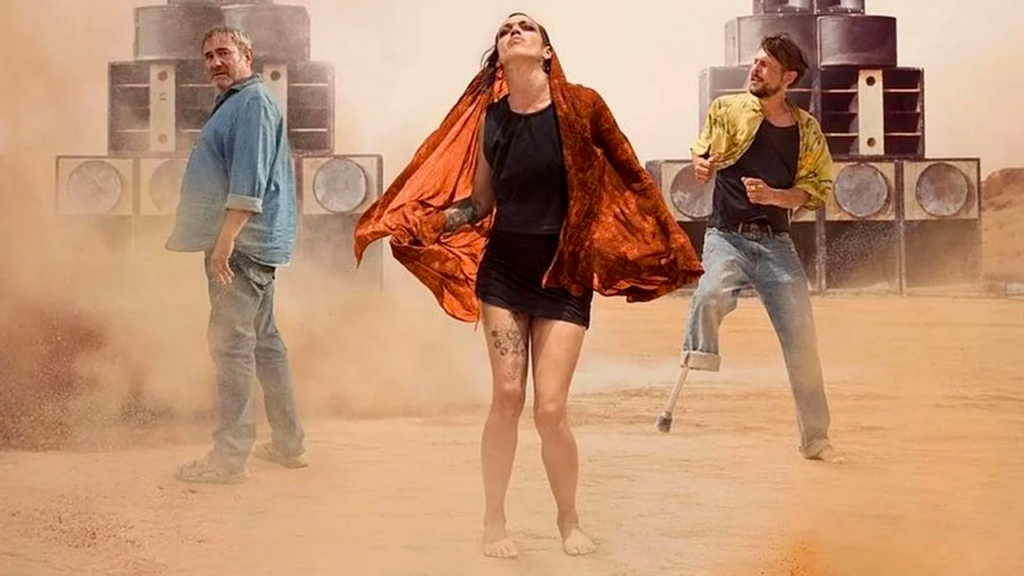
I’m planning to go see, with my daughters, Sirât (directed by young Galician director Oliver Laxe and starred by acclaimed Catalan actor Sergi López), a 2025 Spanish indie movie about to be released in the US with great reviews and an arc that I hope will interest them and me: it’s about a father looking for his rave-loving (think unplanned European Burning Man) daughter, who has disappeared in the Sahara areas young Europeans explore by campervan in search of an altered consciousness.
Family and “home” then and now, here and there
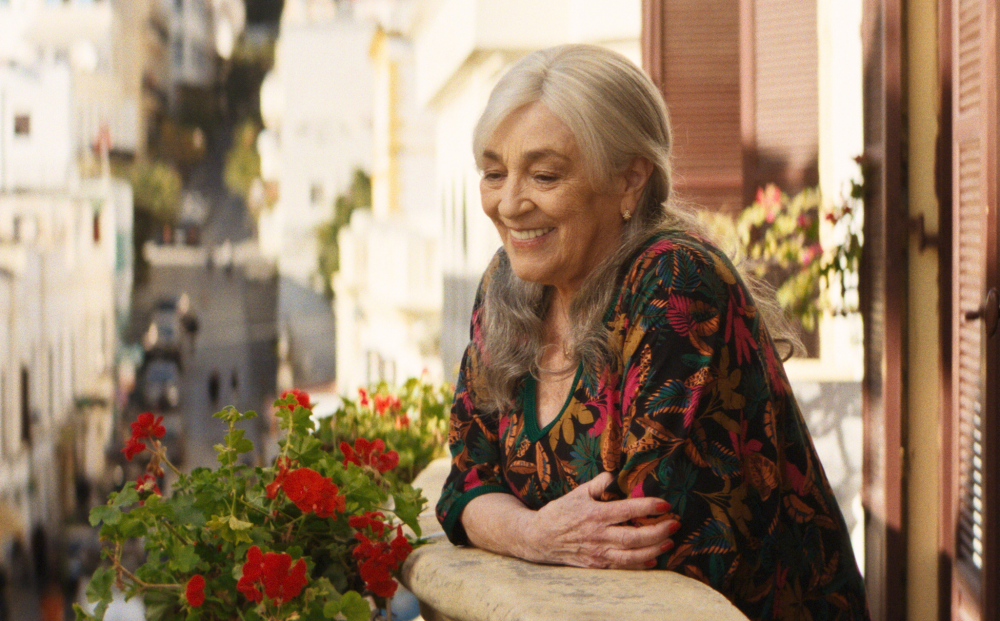
I can also pitch to them Calle Málaga (a recent tragicomedy starring the towering Carmen Maura (old-school Pedro Almodóvar diva, also with a long career in French cinema) that will remind them of their grandma, aka “iaia,” in Spain. It’s a tender, calm, soothing portrait of a widow’s attachment to an old Spanish enclave in Northern Africa, which she refuses to abandon since it’s home for them.
I’m telling my son I’d love to go watch the upcoming movie about the Greek hero Odysseus (The Odyssey, 2026) because I’d like to see what the script does with the story’s real core: the forcibly remote but sound relationship between the hero and his son Telemachus.
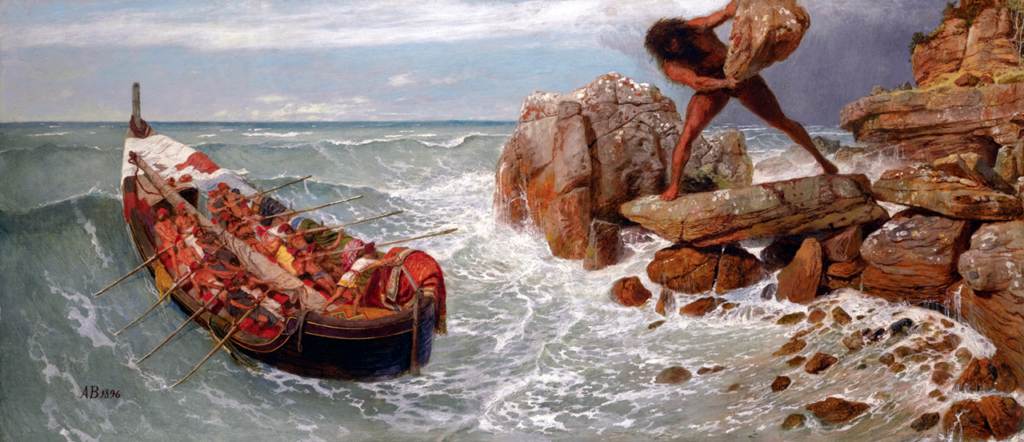
I know I’m not Odysseus, nor my son Telemachus, but that doesn’t mean he couldn’t benefit from such a story. And, hey, I’d take me more than convincing for him to read the unabridged version of Homer’s Odyssey.
The movie is coming out in the summer, so we’ll need to wait on this one, which is a big Hollywood production. Online, the usual casting arguments are already raging: the cast is mainly Anglo-American, and Helen of Troy is black. But it’s a Christopher Nolan movie starring Matt Damon as a mature, witty Odysseus, Tom Holland as his 19-year-old son, Telemachus, and Anne Hathaway as Penelope. Let’s give Nolan (and composer Ludwig Göransson) the benefit of the doubt. But, as a commenter puts it in the official trailer’s thread:
“This summer, a bunch of guys in a boat scream ROW! For an hour forty-five mins! I’m in.”
The way I see it: the three stories talk about the same thing. There’s the longing for home and family bonding. Also predictably, they tell stories millennia apart, though they are transient epics, big and small, around the Mediterranean, which is one of our family’s homes, the other being America’s West.
An old proverb
Regarding the mentioned film’s intrinsic quality, I will also try not to have too high expectations, or try to do the work or digest such stories for them. I point at something, they do the rest, that’s the deal.
I explain this as I see our youngest child (a boy, 13 years-old, both bright and funny) navigate a clash with another boy, who apparently likes to provoke others and drag friends around, who help circle the other kid and trigger him while recording, so if the trapped kid says or does anything inappropriate, it will soon be on social media (obviously edited and out of context).
My brother was a lanky, baby-faced kid with the small, narrow, and long hands of an artist, and he was. He was also the oldest of 3 siblings and pretty much fit the stereotype of the oldest son.
I was rather quick-witted, shorter, and more physically powerful, so when my brother (brown hair, olive-skinned) and I mentioned we were siblings, some people believed we were pulling their leg. Also, since our dad is as tall as me, my perspective regarding my height has always been a bit biased, being 6 feet 2 inches, and never saw myself as “tall.”
As the second male kid, I was all over the place, testing my young male mammal territory. I fought quite a bit, sometimes defending either the mocked kids or my brother himself (mind you, we are three and a half years away, an abyssal difference before we reached adulthood).
When my brother started growing, eventually reaching 6 feet 4 inches in high school, he kept his baby face and elegant lankiness. He also had good grades, and I’ve been told that, to this day, one of his technical drawings remains hung on the local high school’s wall.
But he was also easy prey to the tough guys, and despite the fact that we fought constantly at home (he wanted to be quiet, I wanted to jump around like a blonde macaque on speed), when I still attended the equivalent of Middle School, we looked out for each other in the street. Even though the tension among boys could be real, it wasn’t a matter of concern; we aren’t talking about actual risk or violence. But we were sort of understanding the Bedouin proverb:
“I against my brother, my brother and I against my cousin, and my cousin and I against the stranger (or the world).”
What some boys today are missing about masculinity
Back to my son’s small standoff. Interestingly enough, the fear to be caught doing or saying something inappropriate that will linger on social media, and of being called a rat if his dad (me) makes the school intervene, felt some days ago like such a threat that he didn’t want to tell me about it, for he (correctly) feared that I would talk to the school, which is by the way a nice environment, no complaints on that side.
After all, every teen in the world sometimes feels like a nomad, paying more attention to peers than to family figures. And it really saddens me that some fake machos playing tough guy are so popular as influencers.
I’m glad he figured it out on his own, and I’m also glad that his perception regarding his antagonist was overblown: we adult males grew up in eras where physicality and bullying, especially among boys, were more prevalent, and, like most bullies, it seems this particular bully won’t double down if he sees that his opponent isn’t easily provoked, won’t say something dumb after being triggered, and doesn’t seem to show unrestrained fear.
My realization that my kid had to navigate this for the first time brings mixed emotions. One, it seems our species has evolved far from other smart vertebrates, but not THAT far, and boys of our species play the way boys of other mammal species do, training for the aggressiveness that our ancestors needed for survival.
This behavioral trait should be recessive or completely absent, especially given that our boys are overwhelmed by a bunch of public machos cosplaying Conan the Barbarian. And it gets into the culture. My son likes sports where winners are grateful and gracious to opponents most of the time, even when he can see it isn’t easy. In many ways, he’s showing how much more mature he is about the important things than many of today’s adult role models.
Or, put by French philosopher Simone de Beauvoir:
“No one is more arrogant toward women, more aggressive or scornful, than the man who is anxious about his virility.”
There’s that.
When public people are cautionary tales, not role models
I wonder if today’s children, especially boys, have the most twisted, immoral public role models in modern history, and as a society, we’re about to find out in the coming years what the empty bravado and the fake manliness expressed by politicians and media personalities will do to our kids’ own way of looking at the world.
My personal take is simple and perhaps lacks nuances, but not far back, when we, previous generations, were growing up, there was a golden rule: people in positions of power were not supposed to embellish themselves just because they could, and decency could make or break top artists, athletes, media personalities, or politicians.
It wasn’t a perfect world; bad behavior, corruption, and covert bad faith might have been as pervasive as they are today, but we weren’t being offered a never-ending supply of toxic male personalities whose main role was to sell us potentially harmful stuff, available in 1 click. Can’t pay? No matter, use this “Buy Now, Pay Later” option and you’ll find out what it means soon enough.
Is our boys’ male brain in development under jeopardy, and what can we do about it? If getting constantly exposed to impulse-buy products (finely tailored to appeal to the potential digital customer’s psychological insecurities) wasn’t enough, the little-regulated online gambling is leaving the niche of sports, games, and crypto to prediction market platforms, which are exploding and encourage gambling associated with any sort of event, no matter how tendentious or plain dumb.
Not surprisingly, some of the bets have a strange stench of insider information. It looks awful for adults, but it is criminal for children. If we’re so concerned, and rightly so, about children’s welfare, the concern should be across the board, and not only when it’s related to the depravity of some elites or the abuse of social media platforms.
Many of us were cocky and resorted to physically making a point here and there, but in retrospect, I think we understood the difference between hormonal bravado and plain, ugly bullying. Adults weren’t as vigilant, and kids were more autonomous, though things didn’t go ugly often. Perhaps an environment less supervised by adults made us develop a thicker skin, building a sixth sense to tell whether a brawl was a benign fight between young steers or something darker.
Cage-fight glorification
Today, boys are reminded constantly of their hormonal impulses by getting served cage-fight content pushed by the so-called manosphere, and we can do little about it without regulatory supervision, for boys will find the way to get to that content. You can’t advertise tobacco, alcohol, gambling (most times), or sex. Cage fights and products and services minimizing and even glorifying physical violence? That seems fine in the new world we’ve built on top of the former one: more present and less anxious about productivity and convenience.
Of course, there are many experiences and cultural references that our children will find in the future, and it concerns me a bit how much kids like to hear uninformed peers and influencers talking in their screen that exploring more complex artifacts with a real story behind, or even long form in general (movies, documentaries, articles, books, etc.). Perhaps it’s a biased perception, and I don’t want to over-research it.
To be clear, our kids are American (they are also Spanish), and I’ve never told them that individualism is a no-go. In the future, they’ll find out about themselves, about characters who see beauty and try to do good in the world, and about opportunists and worse types. Hopefully, they’ll find their people, archetypes, movie and book characters that inspire them and become some sort of mentor to them. It doesn’t need to be Jean Valjean from Les Misérables; there’s no entry point. And, besides, no father should think that their children can’t forge their own way and seek their autonomy, emotional and intellectual. And yes, also financial.
Watching the trailer of The Odyssey, I had some powerful flashback ideas about the time I watched Ridley Scott’s Gladiator, and how much the underlying messages (of honor, public decency, loyalty, relentless pursuit of the good in the world) resonated in my friends and me, even though we were already in our early twenties. If, as a father of a teen boy, you think about that movie, you can probably picture what I’m trying to convey here.
Not many of our kids will read Les Misérables or The Odyssey “to learn” if they aren’t forced at school, and were past the moment when that guaranteed at least their skimming of some poor-quality abridged version. They use AI summaries for that, and water always finds its way.
Coming of age and contemporary culture
Maybe, in the future, our kids will seek to find out about the ancient philosophers —among them, those who didn’t succumb to fear even as they were dying. Our teen selves found archetypes that helped us (30 or 35 years ago) navigate the first clashes in life, and now it’s possible for them too.
I’m also not trying to preach something when I was also a teen boy who wanted to keep his name in front of peers and had to face some bullies, just like anyone else. So here’s another little biography passage:
As a boy, I was cocky, which served me well at the beginning: I didn’t like to abuse weaker people, but fend off for myself and, if anything, protect those who were targeted (let’s remember: back then, schools didn’t have anything in place to prevent kids from teasing others, sometimes very harshly). And, to this day, I have the feeling that some of the people cosplaying as tough guys might have belonged to that group of kids being picked on.
One day, I failed my promise: during a pick-up futsal match at school, I got into an argument due to a fault, and punched a schoolmate in the nose. I was “lucky” enough to be caught by a teacher, who calmly made me sit with her and, very seriously, told me she thought I was insecure and very pitiful if I needed to do that when I lost it. She also said that sports were not about hitting people to prevail, that sports had been invented to prevent people from hitting each other. I think I understood the message. I had just turned 13 (my son’s age). It was 1990. I remember well because I promised myself to cross that line as few times as possible. And because that was my last openly brawl.
In the years following, I sort of became a believer in having a personal code of honor with oneself. It went like this: violence and dumb masculinity are born of insecurity, and not the opposite, because it’s harder to stay calm and be respected for your restraint than being seen as an insecure bully. Maybe that’s why I looked for movies about kids navigating coming-of-age, Scorsese-type mafia movies, etc.
What would Odysseus say
This is to say that, after watching The Odyssey‘s trailer, the algorithm served me a short by Willem Dafoe that I liked (and I thought: perhaps our kids also get served inspirational, non-toxic stuff, if only sometimes). It was a small portion of a 2016 interview by Larry King. Dafoe:
“I don’t want to be a coward; I express myself through my work. There are better people to talk about the political situation. But personally, you know, our leader should be a moral leader and, uh, I don’t think we’re going in the right direction. And, uh, we’re a powerful country, and we have a responsibility to the rest of the world.”
This is not to fall into cheesy truisms and deliver big, flat words to the wind. Doing things and making easy claims when everyone is looking feels as false as the suits those people drag around, for a lack of spine doesn’t look great. People like Willem Dafoe and many others, famous or not, understand that doing honorable things has value when no one is looking. THAT’s the hard thing.
Now, I’ve met many people with that heart of truth, among them my father-in-law, and in his own, more convoluted way, my own father; also my grandfather. I feel lucky to have seen simple but rightful men growing up, and as a married adult, I hope this is more pervasive than what I see on social media role models to our kids.
Like many others, I also learned to look at the upside of reality and, as we say in Spanish, “no pedir peras al olmo” (literally, “don’t ask pears from the elm tree.” Or, more in the English tradition, “You can’t get blood from a stone.”) We’re humans because we’re fallible. A world with people behaving the way self-righteous people dream of would turn reality into a bigger dystopia than it already is.
I agree that the only thing that has to be demanded from the top is a good heart and good ol’ decency, which is very scarce nowadays. Thanks to those who’ve demonstrated having a spine, though. Especially when no one is looking. Especially when there’s nothing to win. Perhaps, there’s a kid somewhere in the distance seeing it and thinking, “I might try that one day.” Nough said.
What boys need
Which brings me to the only “male stuff” I’m willing to preach: boys will mess up, but the grown men they watch shouldn’t be proud of being rotten.
People can make mistakes, especially the young and those who never saw adult figures doing right around them. But those who should be role models shouldn’t be the biggest bad actors, either, and many of them seem to have grown up in a world of moral entitlement.
Those are the ones who, when we grow up around the same age, we take care of, letting them know as an equal that, even if they’re used to getting away with their smarty-pants lack of morality, it’s not cool. And we (or posterity) will take care of it.
It’s not about helping the young to grow a self-righteous, cynical way of looking at the world, but helping them see how powerful light and a personal compass can be.
You can still make mistakes (that’s why we want to watch out for the social media cesspool machine building insecurities amongst our children to either sell them stuff or get them hooked so they can sell them stuff). But don’t show the worst side of you around kids waiting for something they don’t quite know what it is yet. That lack of clarity doesn’t make them any less in need of small-time role models, because they are the real ones. They aren’t doing it for clout, but because they can’t help it.
Even some of the special ones do it because growing up, they lacked that benefit, and that’s the way they most cherish when they think about giving back.
Who’s rooting against bad parenting, that issued from some of the worst public characters the world has ever known, once decent people got rid of the actual louts that destroyed Europe? We shouldn’t forget that we can make an impact and change the vibe around us.