Blame interest rates. Blame investors. Easier than admitting America stopped building enough homes, never modernized construction, and quietly relies on exploited labor. People are trying to adapt.
There are many ways to describe how society relates to the future, but much of the anxiety can be reduced to whether people own a home and have stocks (or not), and whether their disposable income is more exposed to a higher cost of living in recent years.
Younger people are disproportionately exposed to growing living costs and now hold a shrinking share of the country’s wealth, increasingly viewing owning a home as an unrealizable dream. I wonder whether this is news: I come from a place (a big European city, Barcelona) where this (unattainable housing for young people) was a fatalistic reality when I was in college.
I managed to buy a “micro-piso”—a 38-square-meter burrow in the old city, which I liked very much, by the way—by signing a loan and paying the equivalent of 5 years’ my income back then.
Things look even worse now to most young people without generational wealth to spare on both sides of the Atlantic, and it’s especially dire in places like New York or the San Francisco Bay Area.
For one, the United States has been chronically underbuilt, leaving too few homes for young families. And, as older Americans have seen their wealth swell (largely through capital gains in stocks and decades of rising property values), younger cohorts face a far harsher perceived reality: inflation and everyday living costs absorb a much larger share of their income than they did for previous generations at the same stage of life.
Too much money chasing too few homes
In the case of housing affordability, recent debate has tended to fixate on two visible forces that are better understood as symptoms than causes. First, higher interest rates have made mortgages more expensive for new buyers, while also discouraging homeowners who locked in lower rates from selling (hence the pressure felt by the Federal Reserve, which has to juggle between interest rates and inflation); also, a new federal executive action aims at deterring large institutional investors from buying single-family homes, with bills introduced in Congress on the way.
Yet neither phenomenon — interest rates, institutional investors hoarding homes as assets — explains why housing is so scarce and expensive for first-time buyers. They merely exacerbate a shortage that has been years (if not decades) in the making: underneath this rush to “do something” (at least cosmetically) to reverse trends before the midterm elections, the country is building fewer homes than before 2008.
Ezra Klein exposes this reality in a recent op-ed, noting that new housing construction per capita in the United States is lower today than in 2005, 1995, 1985, or even 1975. The problem, he argues, is not only that America has failed to build enough homes—estimates of the shortage range from 2 to 5 million units, but also that productivity in residential construction has barely improved since the mid-twentieth century. Unlike manufacturing, logistics, or information technology, homebuilding has seen remarkably little transformative innovation.
“The core of the problem is simple: Too much money chasing too few homes. How many more homes does America need? I’ve seen estimates ranging from two million to five million. It’s a shortage that’s been decades in the making — and one we’re nowhere near on track to solving.”
Rigidity 101
America is no longer the best place to benefit from social mobility. The American Dream, if we define it as the ability to guarantee intergenerational mobility, is often seen as a myth, yet many developed countries fare better on measurable indicators, including all the Nordics and Canada. Housing (or a lack thereof) is one of the factors undermining the odds for young Americans.
While there is growing bipartisan agreement (currently an oxymoron?) that the country needs to build more housing, faster, consensus quickly fractures over how to do so. Proposed solutions fall into two categories: subsidizing demand through rent controls, vouchers, or tax credits; and incentivizing new construction. Neither approach has lived up to its promises (surprise, surprise). Subsidies tend to inflate prices when supply is stalling, while supply-side efforts are tied to zoning restrictions, permitting, NIMBYism efforts, and a construction sector ill-equipped to scale.
The result is a housing system that quietly but powerfully shapes how Americans imagine their futures: who feels secure enough to plan, invest, or stay put; and who experiences the economy as a narrowing corridor rather than an expanding horizon.
I haven’t read any well-researched piece on a bad-faith-level phenomenon affecting housing prices. While treating affordability as a problem that can be fixed through surface-level interventions, administrations at every level are ignoring another constraint that quietly shapes the housing market: labor. Real labor, that is, not labor “desired” or whitewashed by many, including companies that contribute to the problem.
As in other essential, low-productivity, and often dangerous sectors (read: seasonal agricultural labor or meat packaging), a significant share of the U.S. construction workforce—particularly in physically demanding trades such as roofing, framing, and drywall—is undocumented or has precarious legal status. This reality has long enabled the industry to work at lower cost while staying largely absent from public debate. The hypocrisy is structural, and the cynicism widely shared.
Immigration enforcement is tightening, while few people are entering the trades. Given the trends, labor shortages will be more structural, making the sector more dysfunctional, and the US ultimately more like Europe: sclerotic, less dynamic, slower, crony. Thinking that contractors build more as they face workforce constraints is wishful thinking. Projects will be more expensive and likely take longer to finish. Far from making homes cheaper, a shrinking, increasingly regulated labor supply could slow new construction and raise costs. This compromises the very affordability goals policymakers rush to pursue right before the midterms.
Not surprisingly, people who own at least the home they live in and have been amassing stocks for years have benefited from the appreciation of both types of assets. Older Americans control more than half of all US household wealth, or 1.6 million on average per household; overall, 2022-2025 data shows that older people benefited from post-pandemic appreciation. By comparison, households formed by people under 35 average $180,000 in total assets, whereas older millennials and middle-aged Gen X cohorts average $550,000 to $1 million in total assets, many of them struggling to secure a home and achieve a solidly middle-class lifestyle.
Owners and renters
The big picture explains a tale of two countries, of homeowners (and stock owners, usually the same families) and renters (disproportionately young): the highest earners and older generations control a massive share of the wealth, with the 65-74 age group having over 10 times the median wealth of those under 35. As of 2025, the homeownership rate was 38.3% for Gen Z (age 28) and 57.2% for Millennials (age 36), notably behind the 33.4% and 63.7% rates for Gen X and Boomers at those same ages. The squeeze is real, now and in retrospect.
Inflation isn’t eating into income the same way by cohort (wealthy Americans and older people vs. the young, or those owning appreciating assets vs. the salary-driven). Older and wealthier households are protected by the appreciation of what they own, whereas younger households (more unstable and atomized) are income-exposed and paying a higher toll due to sticky inflation since the pandemic.
And so, for older homeowners who locked in low mortgage rates before 2022, inflation has served as a wealth transfer in their favor (the type of wealth transfer explained by Thomas Piketty with the equation r > g, in which the rate of return on capital, “r,” exceeds the rate of economic growth, “g,” hence salaries): their housing costs have stayed flat while their assets have appreciated. For younger renters, inflation has been a cash-flow squeeze, raising monthly expenses without increasing ownership or equity.
So, what to do to give a fair share of luck to everyone without falling for the temptation of excessive interventionism?
If Ezra Klein is right—and the data strongly suggests he is—the answer begins not with reallocating demand, but with expanding supply, and doing so in ways that fundamentally change how housing is produced. Residential construction is among the least productive sectors of the economy and has not experienced the gains that transformed manufacturing, logistics, or energy over the past century.
The US still relies on an aspiration shared by many in the aspiring middle class: a detached home with one’s own backyard. But this dream of providing single-family homes to households reaching middle age (and hence having children, building equity, settling in life, etc.) has diminished in quality, growing further from work and opportunities for adults and children to thrive.
One San Francisco East Bay street in 1907 vs. 2026
If we were to teleport in time the builders who finished the 1907 cedar-shingled, two-bedroom craftsman bungalow home we live in to the same Bay Area street as of today, they’d be surprised by many things: for one, the street hasn’t changed much since, with many stick-frame, wood-clad, craftsman-style looking small dwellings of the Bay Area back then, right before the big earthquake that destroyed many of the brick buildings in San Francisco and burned down the wooden ones. They would also be blown away by the average price of such dwellings, though unable to associate such hefty sums with their known experience.
The street would also feel familiar to a local, Jack London, who published Martin Eden in 1909, set largely in the nearby Oakland hills. His protagonist moves in a world of shared houses and boarding rooms (stick-frame shacks perched above the city, where meals were collective, rooms rented by the week, and privacy was scarce. These were not romantic spaces, but pure entry-level utility: housing improvised to absorb uncertainty and help stretch scarce income, allowing young working people to remain to follow opportunity with little friction. The density was social as much as physical, and the house itself functioned less as a private asset than as an infrastructure for becoming.
Seen from that perspective, today’s experiments in co-living and shared housing look less like radical departures than like returns—adaptations of an older urban logic to new economic constraints.

I would help our teleported worker by offering him a comparison he could picture more easily: how many years a middle-class worker had to work in the Bay Area to buy an entry-level single-family home in his time (1907) vs. today. Between 1900 and 1909, the price of a typical home in the East Bay ranged from $2,000 to $4,000 for a modest single-family dwelling, already well above the national average due to the area’s relatively high wages, desirability, and proximity to the state’s oldest public university. A typical skilled worker earned $1,200–$1,600/year, so their homes represented 1.7-3 years of income. Today, the same skilled worker would need 10 years of gross income to get the same home. This, he would understand.
To further complicate things, our teleported friend would be amazed at how similar (though shinier, tackier, and cheaper-looking) the trade was in his time vs. over a century in the future. For sure, cars (with a great deal of EVs and hybrids) have replaced carriages in the manure-infested streets of his time, and the new white-collar jobs are being hit by AI, yet most homes, bottom to top, are going up the same way, with little to no productivity gain. For over a century, a whole society has disincentivized housing, so this has allowed it to happen.
Building like it is 1945
Why are homes still largely built one at a time, on-site, exposed to weather, labor volatility, permitting delays, and cronyism? Building more efficiently (including improved techniques and productivity rising in line with other sectors) could speed construction and reduce building costs, yet the picture is much more complicated.
Only a few things have changed since the end of World War II: materials are often of poorer quality, and homes are much bigger and further away from services now, making walkability and mixed-use (two of the factors associated, along with physical activity and community building, with a better quality of life and higher life expectancy) more difficult for those who can’t afford living closer to vibrant, safe cities where services abound and the best school districts cluster.
According to data by the NAHB, the building itself eats 64.4% of a median house’s cost in the US, the “finished” lot (land and lot improvements) represented 13.7%, then goes the builder’s profit (11%), overhead was the fourth expense (5.7%), then sales commissions (2.8%), financing costs (1.5%), and marketing (0.8%).
In the San Francisco Bay Area, where average home prices are now over $1 million, permitting fees (planning, impact, processing, connections) can range from the national average of roughly 10% to 18% of the total cost in Fremont. Bay Area permitting and impact fees don’t sit on top of construction costs — they’re buried inside them, mainly inflating land and construction, and together they account for roughly 10–20% of the final price of a new single-family home. As a consequence, entry-level homes become more expensive, while construction materials and building quality stall at best.
According to people like Klein, one of the ways to get over this reality isn’t only by streamlining the permitting process so builders can focus on building quality and building more, but building houses differently so they can go up faster and more affordably at scale, increasing the building’s overall quality, which could be achieved by trying once again a promise never accomplished in the sector: prefabricated and modular homes.
Yet, for more than a century, from postwar kit homes to 1960s modular experiments, it hasn’t lived up to the hype when it came to building at scale homes which combine and where people want to live, at competitive prices.
Why is prefab not shooting up?
So far, prefabricated homes have not delivered the transformation they promised. Costs aren’t as low as advertised, and adoption is still marginal. Plus, the concept of “prefab” has too often been relegated to niche markets. Among the different categories of homes built in factories, only manufactured homes represent a sizeable share of the market, accounting for around 9.3% of all single-family home starts in 2024. By comparison, modular and panelized or pre-cut homes accounted for about 3% of all homes. They are still perceived similarly, representing only one in ten new houses and associated with lower-end construction.
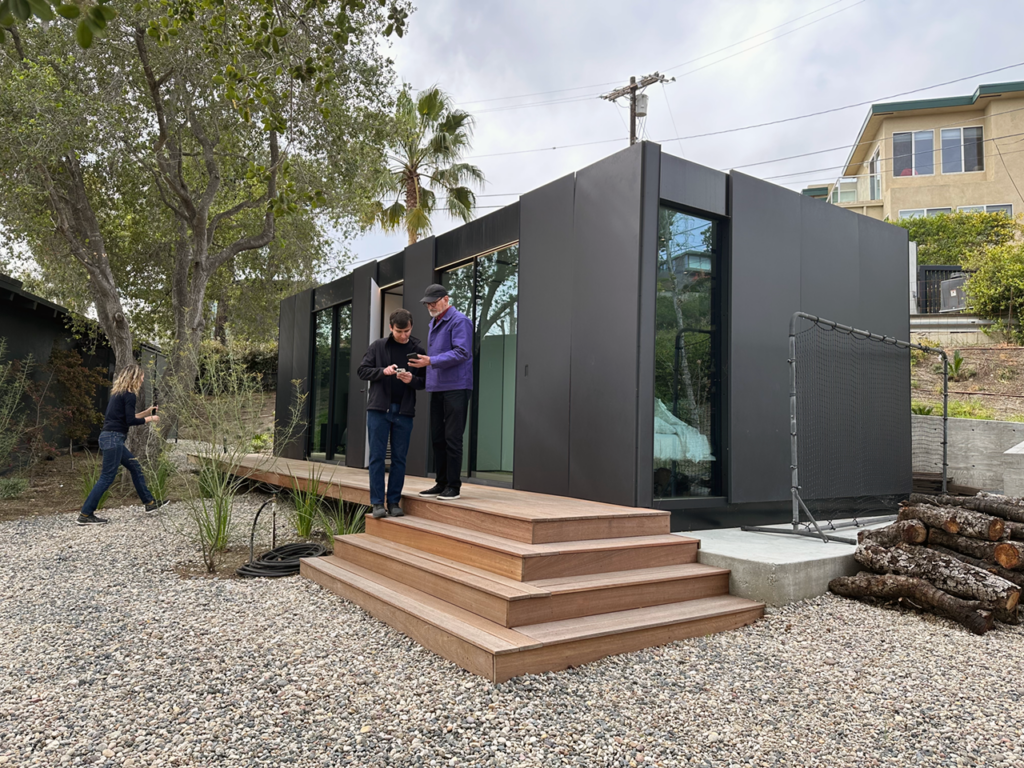
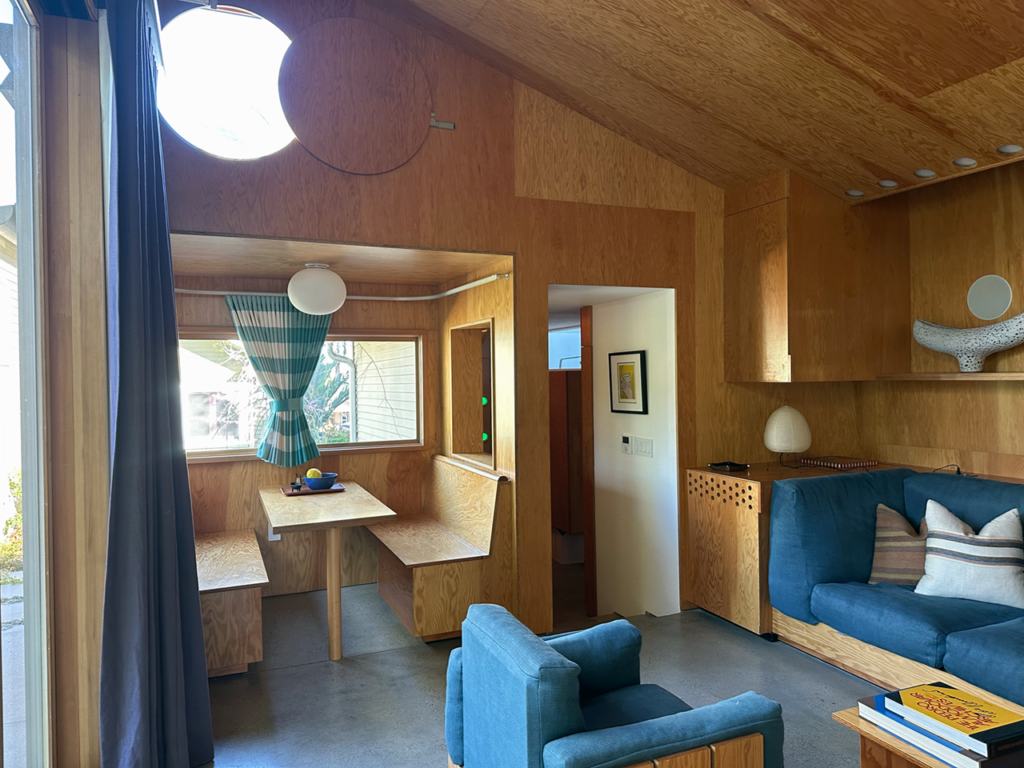
This is beginning to change thanks to the impact of Accessory Dwelling Unit (ADU) laws in the West Coast, the US Northeast, Montana, Utah, and Colorado. Many other states also allow ADUs, even when they haven’t approved explicit legislation. Unlike with the overall market, ADUs have warmed up to prefab and modular builds, which make up 30-38% of newly constructed backyard cottages. If you want to dig deeper into the concept, you can visit our extensive playlist on innovative, often prefab ADUs.
ADUs are forecasted to grow due to housing supply shortfalls and owners’ interest in additional space on their property that they can rent or dedicate to multigenerational living. Prefab structures are suited for this new reality, as structures built off-site avoid disruption and speed construction, which now takes a few months, sometimes weeks (instead of the 7-15 months of a site-built stick-frame house, and this is when everything goes according to plan).
According to the experts and builders we’ve talked to about prefab ADUs in the last few years, dismissing prefab (and modular) because it failed under previous conditions risks missing what has changed. Earlier attempts at industrialized housing collided with fragmented zoning codes, hostile local politics, cheap informal labor, and a construction world that is still mostly unchanged, almost always relying on on-site work.
Today, those same constraints—labor scarcity, demographic aging, rising wages, extreme event pressures (like the Los Angeles megafires), and the sheer scale of unmet demand—could flip from obstacles into drivers.
In California, the fires in Los Angeles have accelerated the transition to more resilient, automated ways of building at scale while preserving vernacular character when needed. Prefabricated structures reduce on-site labor, shorten timelines, and standardize production. And in many cases, prefab companies are successfully fighting the stigma associated with the segment, often surpassing the quality and sturdiness of conventional stick-frame builds.
Building a home isn’t patching software
At scale, prefab could take off in places like Pacific Palisades, Altadena, and the millions of California backyards that could install backyard cottages. Those interested in rebuilding a home they’ve lost or building a backyard cottage with minimum disruption, on a reasonable timescale and at competitive prices, are considering the pros and cons of conventional versus prefabricated construction.
So far, everything isn’t going according to plan, and the prefab ADU companies that promised to spare customers unpredictable and expensive job sites by fabricating in controlled factory environments are facing permitting issues and delays, as well as a credit market with unbearable interest rates, both for attracting investors and asking for credit lines.
The barriers are formidable, and no company has created the Apple iPhone or Ford T of housing, a precise, prefabricated system that could be scaled and people would like to live in. In our conversations over the years, we’ve heard similar complaints all over California and as far as Washington State and Utah: there’s a lack of access to patient capital; coding regimes and zoning are still making things more expensive and complicated than they should be; and creating early models is prohibitively expensive without reaching scale. Many of these companies want to operate like technology startups but must play by current building rules.

If state policies eased the 2017-2022 ADU boom, thanks to housing incentives and cheaper credit, the rate-hike hangover of 2022-2025 slowed homeowners’ interest in building backyard ADUs, and many promising prefab ADU companies found that financing had dried up. On top of that, many fixed-price contracts got crushed by real costs.
Now, we are beginning to see the consequences. Many companies have closed, restructured, or faced allegations of fraud, as some allegedly used new deposits to plug old holes.
Big promises, upfront money, unfinished work
Some news isn’t encouraging for a possible prefab revival. In the Bay Area, the collapse of Anchored Tiny Homes in 2024 left customers with unfinished ADUs (and without their deposits). It filed for bankruptcy to avoid obligations.
In Southern California, Chula-Vista-based ADU contractor Multitaskr shut down following an investigation into alleged fraud: rapid growth, big marketing, and then allegations that money was taken while homes weren’t delivered. Local investigative reporting says California’s contractor board ultimately revoked the company’s license, and that the state has weighed potential criminal referral pathways.
ZenniHome, with its factory in Page, Arizona, and an office in San Francisco, also closed in 2025. DC-based Tomu Inc. shut down in June 2025 and filed for Chapter 7 bankruptcy, closing its production facility in Frederick, Maryland.
In early 2026, Nonna Homes had stopped building, and the state suspended its license, after a period in which complaints included allegations such as taking more money up front than permitted and subcontractor-payment issues.
Other companies didn’t always “collapse” in a single headline—but still triggered consumer warnings. NBC/Telemundo investigations in 2024 spotlighted homeowners who alleged that Next Generation Builders took large payments and left work incomplete.
Abodu, a promising NorCal company that we’ve covered with two videos, one of them in its now-closed original headquarters and another one at a customer’s installed Los Altos backyard home, is also undergoing difficulties. Officially, the company is continuing under new ownership (after opting for bankruptcy protection). On paper, it could be an attempt to move away from venture-style growth, but some customers claim that their projects weren’t finished.
Building (meaningfully) at scale: bad actors writing the news
State attention is rising. California lawmakers have pointed to hundreds of complaints about contractors failing to complete ADUs and have proposed stronger guardrails to address fraud and upfront-payment abuse.
But for many homeowners already stuck mid-project, reforms arrive too late. Their reality is logistical triage: finding a new contractor willing to touch another company’s half-built job, negotiating with unpaid subs, and re-permitting what’s already in the yard.
There are many ways to describe how American society relates to the future, and housing still drives a big chunk of the conversation, though mostly not in a favorably. For much of its history, even in periods of crisis or upheaval, the country has managed to sustain a broadly forward-looking narrative that most people subscribed to, rooted in a can-do ethos and an assumption that the next generation would live better than the last. That belief has survived wars, depressions, and social conflict, often growing stronger in moments of uncertainty. Not anymore.
For the first time in generations, a growing share of Americans no longer experiences the future as an open field of possibility, but as a narrowing set of options constrained by housing costs, asset ownership, and exposure to risk. The anxiety is not merely cultural or psychological; it is structural. And when the material foundations of optimism erode, so too does the story a society tells itself about progress.
Solving the housing conundrum could be a foundational part for the country to dig itself out of a crisis that has translated into the current politics of scapegoating, bitterness, and desperate lashouts. There aren’t silver bullets for the sector, and the early failures in scaling prefab construction are a clue: perhaps housing is messy by nature, an often considered one of people’s most important decisions. Perhaps too important, too capital-intensive, and too socially embedded to behave like a software startup.
Could self-building and prefab/modular ever go together?
So far, there’s an obvious mismatch between venture-style expectations and the slow, regulated, risk-heavy reality of construction. Housing does not scale like an app; it scales like infrastructure.
Prefab could be seen not as a universal solution but as a set of tools (panelization, better, cheaper modules, factory-built components) that local builders and homeowners can leverage to build faster, better, and more affordably. Perhaps homeowners could become their own contractors, taking on part of the construction. By helping with the build, they would ensure resources are used effectively.
Those priced out of the market are trying to adapt, too. Many of the people we interview are finding ways to regain footing: buying imperfect or unconventional properties and building passive income through rentals; adding backyard cottages for family, tenants, or future flexibility; joining co-living and co-housing arrangements that trade square footage for stability and community; or choosing smaller, denser forms of living closer to opportunity rather than chasing space at the edge of the map.
These are not merely coping strategies. They are signals. They suggest that the housing system Americans actually need may look different from the one they were promised. More incremental. More shared. More adaptable over time. Less dependent on speculative appreciation, and more oriented toward use, access, and resilience.
If the past few decades inflated housing into a financial asset first and a place to live second, the coming years may force a partial correction—not through collapse, but through reinvention. Prefab, modular construction, and unconventional housing models will not solve the crisis on their own. But together, and grounded in realism rather than hype, they can expand the menu of possibilities at a moment when scarcity has narrowed it too far.
The future, as it turns out, may not belong to those who waited for the perfect house at the perfect time—but to those willing to build differently, live differently, and accept that stability does not have to look exactly like it once did.