A 30-second drawing at Back-to-School Night, a ceramics studio, and the broken roof tiles that followed us from Barcelona to the San Francisco East Bay.
Our brain taps into memories in a very particular way. Now that it’s officially fall, impermanence is in the air, and leaves change their color, turning the forests of New England and the East Coast into a celebration of the transience of all things that always resembles last season’s leaf feast, but is never quite the same.
With one freshman and one senior at the same San Francisco East Bay high school, as well as a junior in college, yesterday we attended the highly anticipated Back-to-School Night, which happens every year in late September, a few weeks into a school year that starts in mid-August.
Our kids’ high school is big and has the allure of a college, with several big buildings, a theatre, and many sports facilities. It’s less suburban than the one Kirsten and her siblings attended in the South Peninsula, back when technology had not yet forever transformed the South Bay, pushing the children of many middle-class residents to other areas of the Bay Area, California, and other US West states.
Back-to-School Night adventures
Having two kids at the school meant we had to go to separate class presentations so we could meet as many of the teachers and subjects as possible. Even though I felt jet-lagged, I did my best to attend the presentations for our freshman.
Back-to-School can be a bit stressful at times, since the presentation of every subject taken by your kid may happen at one corner of the school, and the next at the opposite end of the “campus.”
Since each of the periods lasted 10 minutes and one needed to go to the next one within five minutes, it felt a bit like a competition among parents, who clogged the stairs of every building at the end of each period’s presentation like the arteries of an old person. Many took it philosophically, but if you paid attention, you could see some tired parents, who perhaps were feeling a bit like they were at work, watching the clock and not quite able to enjoy the moment.
Draw a car, 30 seconds
The situation was routine enough for everyone involved, but then came the presentation for 5th period: Creative Arts. The teacher had dark, long hair and metal-framed glasses. He was young, much younger than the parents present, and his style and way of looking at the world were probably closer to our kids’ than to ours.
We took our time to look around the classroom, well stocked (as in any California class environment I’ve seen) with all sorts of materials, as well as an eclectic blend of posters and learning reminders all over the walls. But after a brief introduction, he brought us down to earth: draw a car, 30 seconds.
The exercise woke me up. As the teacher was probably expecting, at first I struggled a bit to try to be as structured and strategic as possible, rejecting a three-dimensional volume and instead going with a flat side view; had I been a Greek sculptor, I thought, I would have belonged to the primitive era of the korai, the sculptures of the Archaic period (rough, stiff, with frontal-only postures) as opposed to the Classical ones, which felt dynamic, natural, realistic, emotional.
I began drawing my “kore car” (singular of “korai”) from the bottom of the car and the two wheels; then I proceeded, as I remember doing as a teenager, drawing a generic pointed nose of a sports car, then going up and leaving some room to fill the car cabin with its main features from the exterior. As I was finishing the only door, the teacher told us time was over.
He used the exercise to remind us that nothing in the creative arts comes without practice. So when asked to draw something quickly, we face reality: our car is nowhere near the Platonic ideal of a car. The teacher’s call to make us face the doubt and intensity of the creative endeavor, which to many of us seemed an almost foreign task, felt refreshing, and I’m sure that played the biggest role in capturing our attention.
A true ceramics studio
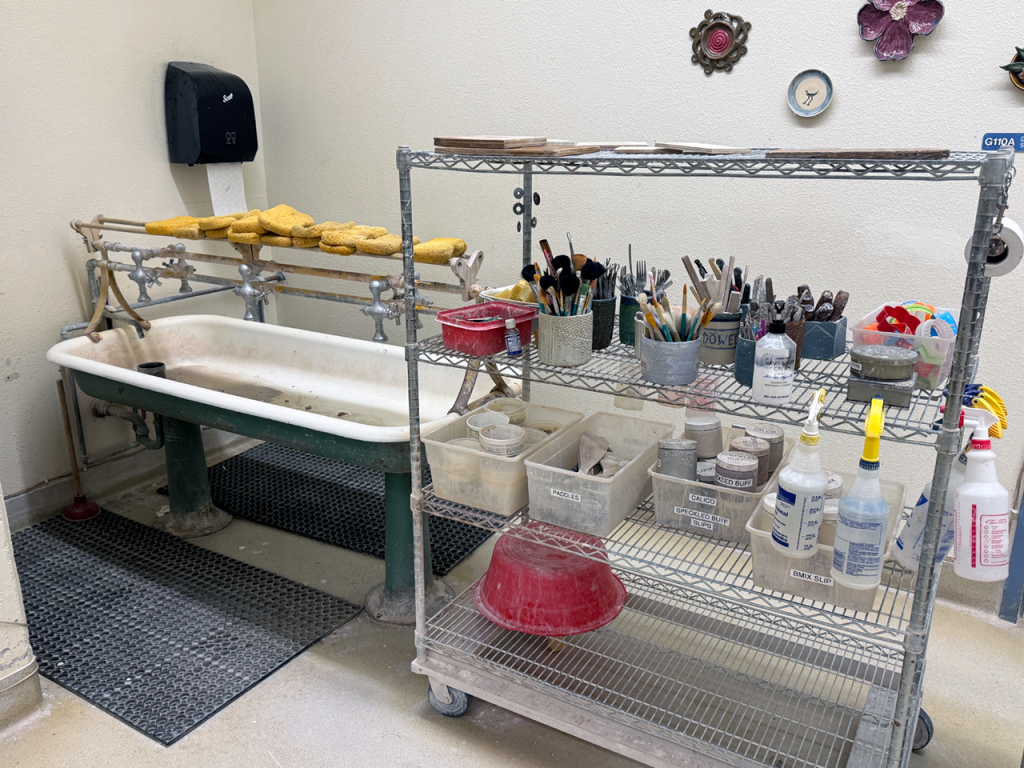
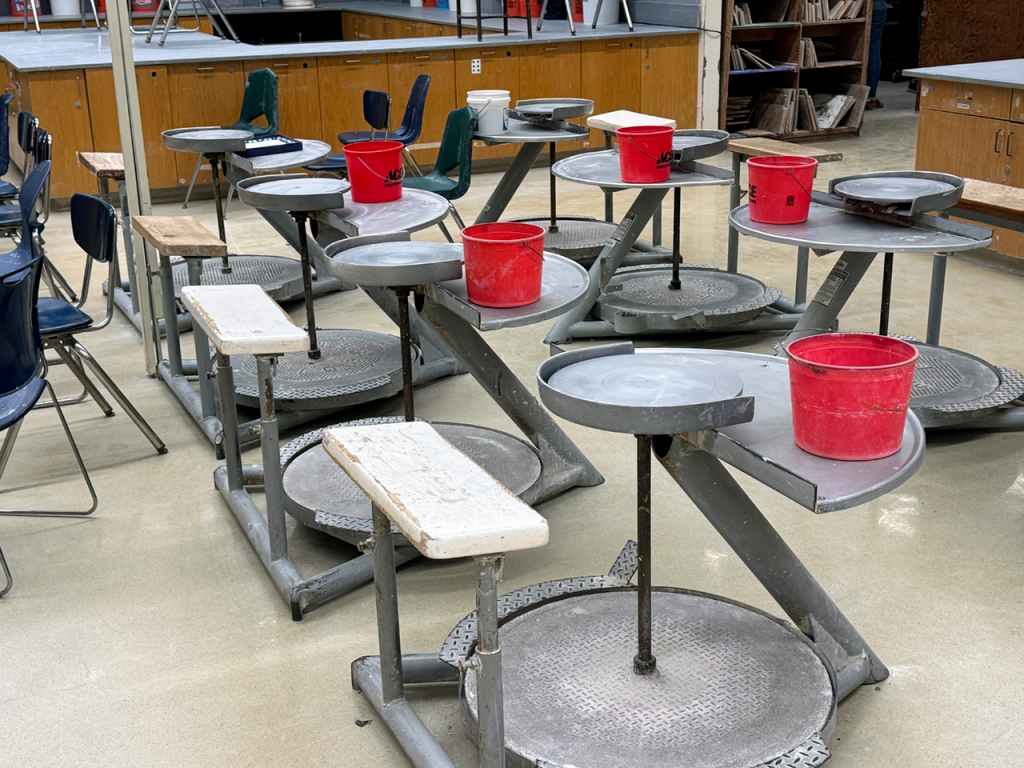
It was already 8:00 PM when the school bell rang again, even though many of us would have stayed a bit more despite the tired faces. There was one more presentation, for period 7. This time, as our daughter had suggested, we switched places, and I attended the Ceramics class presentation for our senior student. The walk was shorter, and it made sense: the art rooms sit close together, since creative classes need specialized materials, natural light, and even higher ceilings. What I saw was a true ceramics studio.
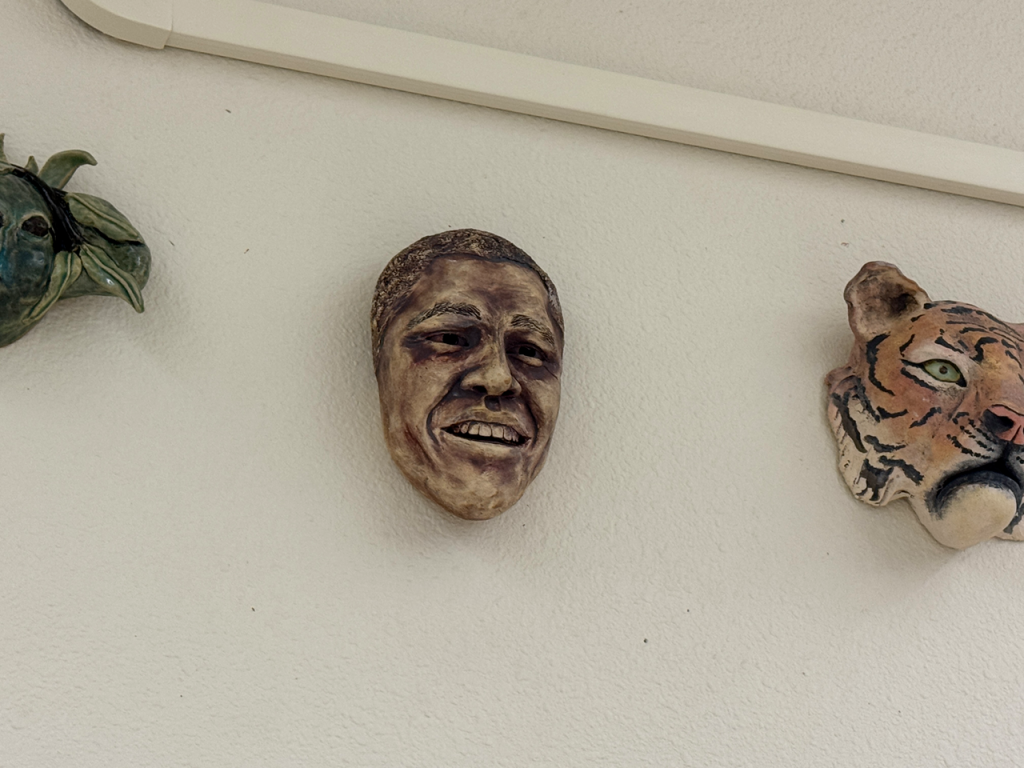
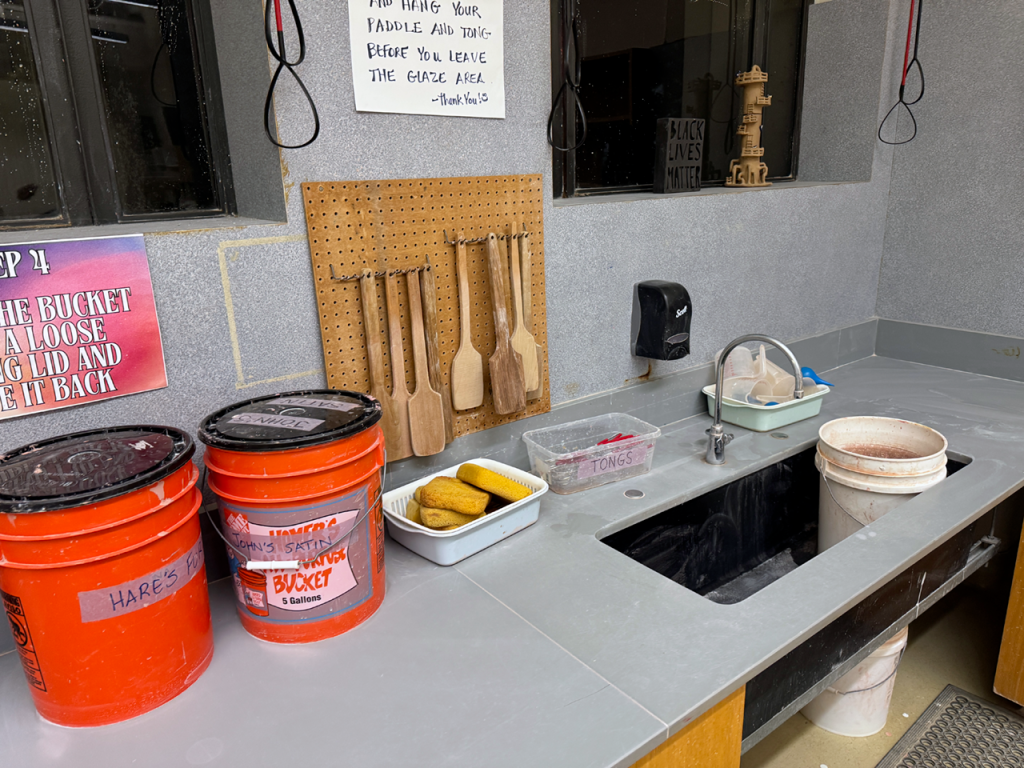
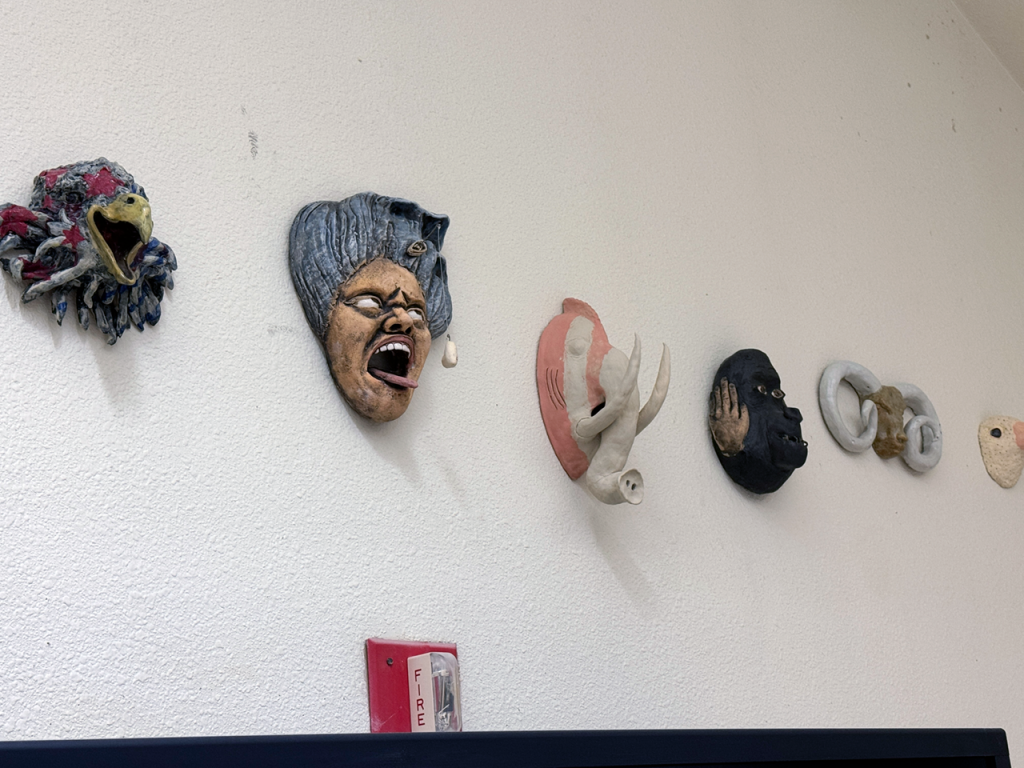
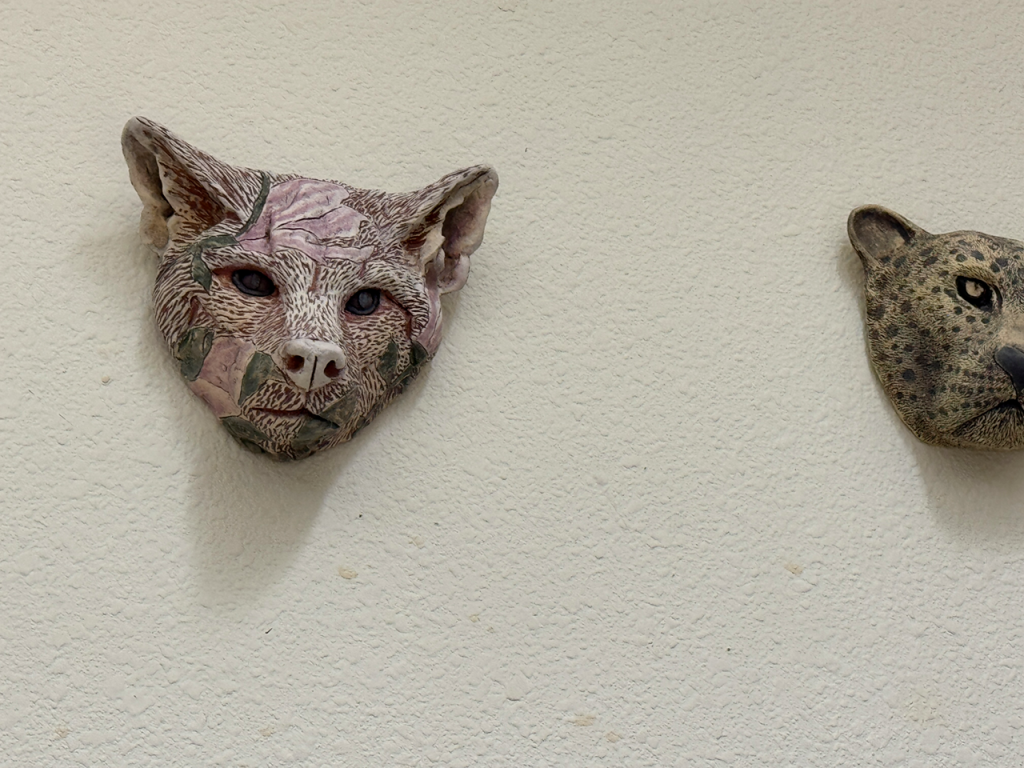
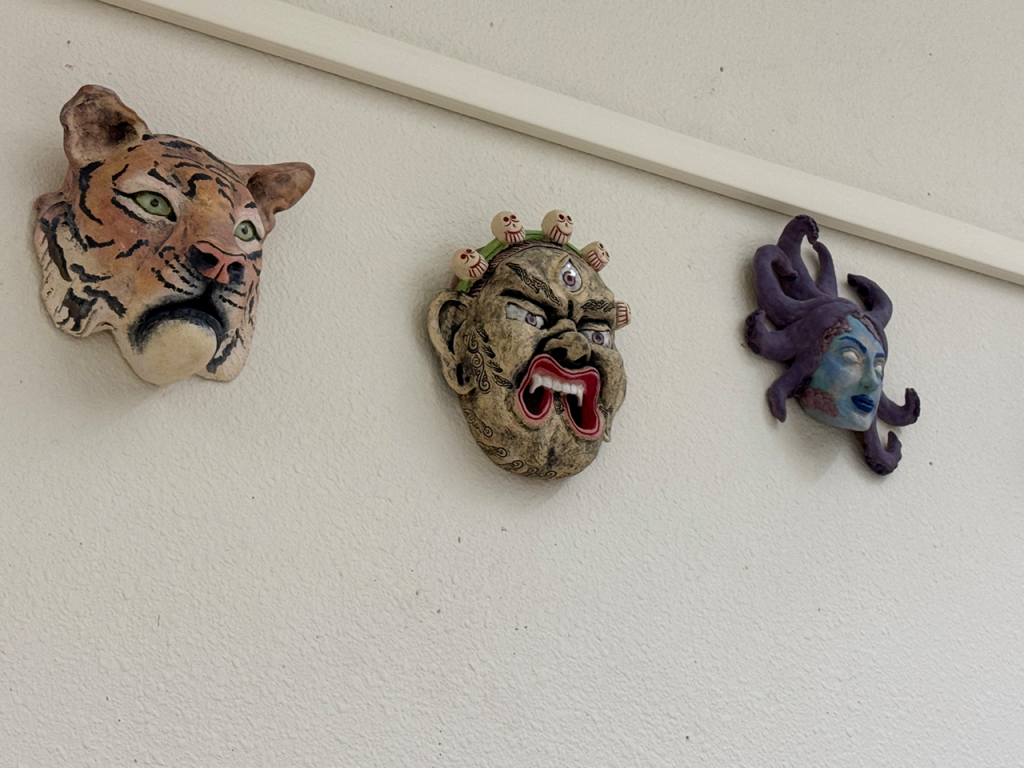
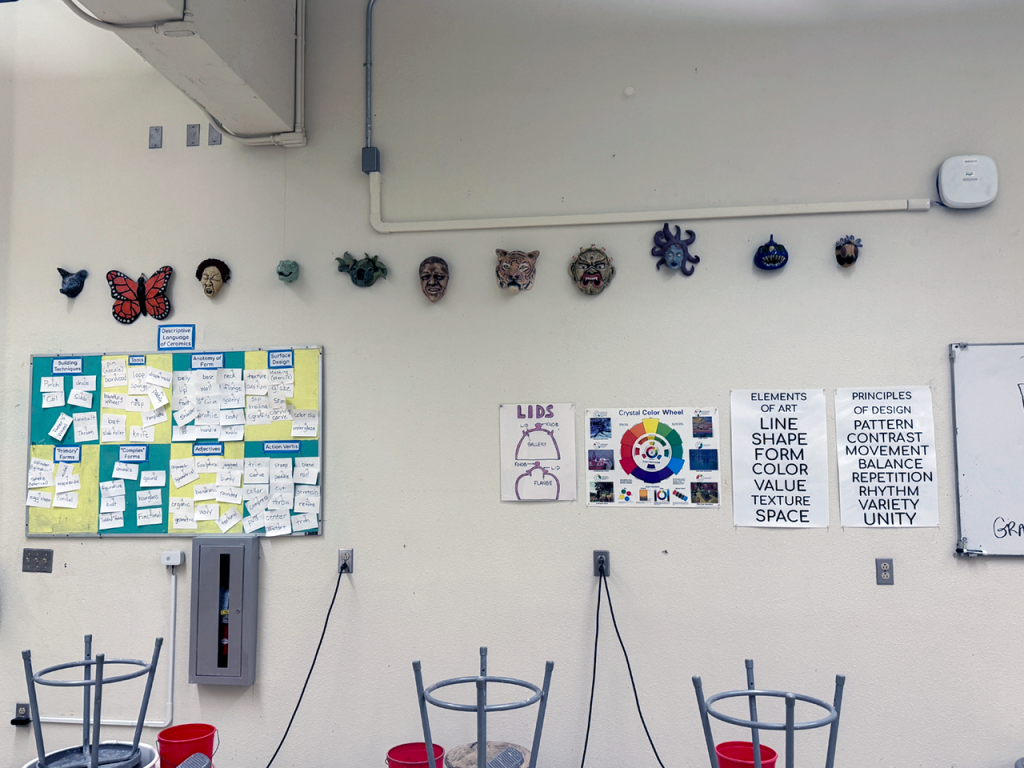
Blown away by the interior of the studio, I looked at the many serious and sturdy pottery kick wheels, which sat at the center. There were many more spaces inside the classroom: one of them had books, a whiteboard, and many inspiring glossy ceramic masks hanging midway up the walls, fantastic designs in different colors that looked a bit like the outcome of a conceptual contest to find the most interesting gargoyle faces to use at a newly built cathedral.
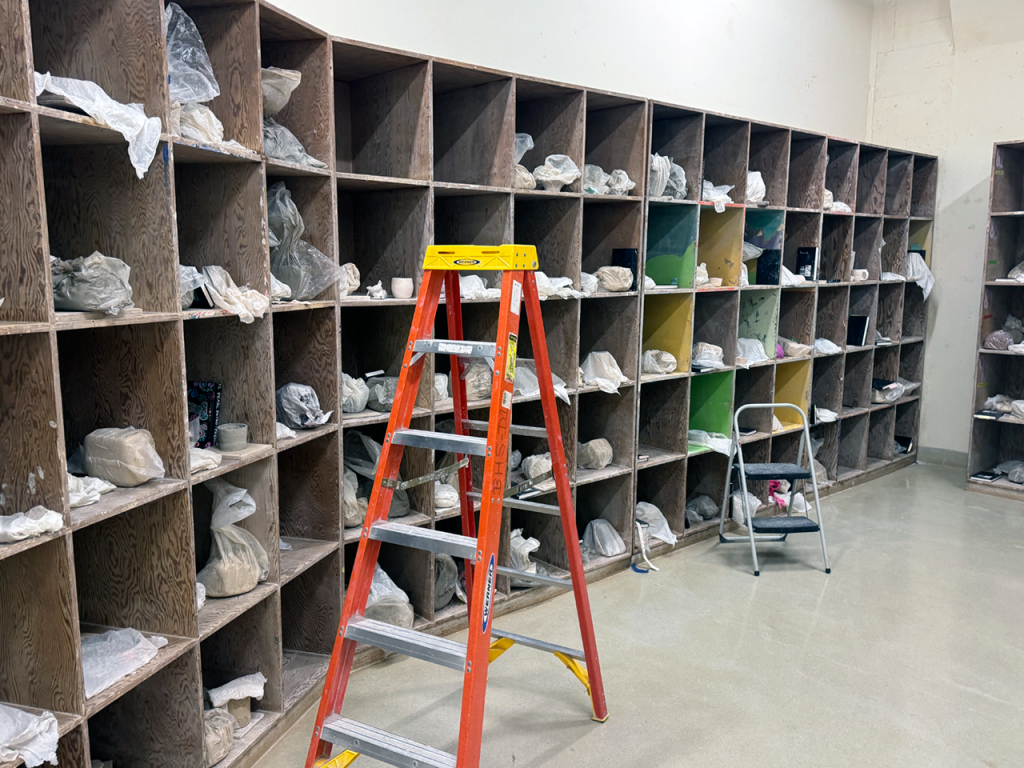
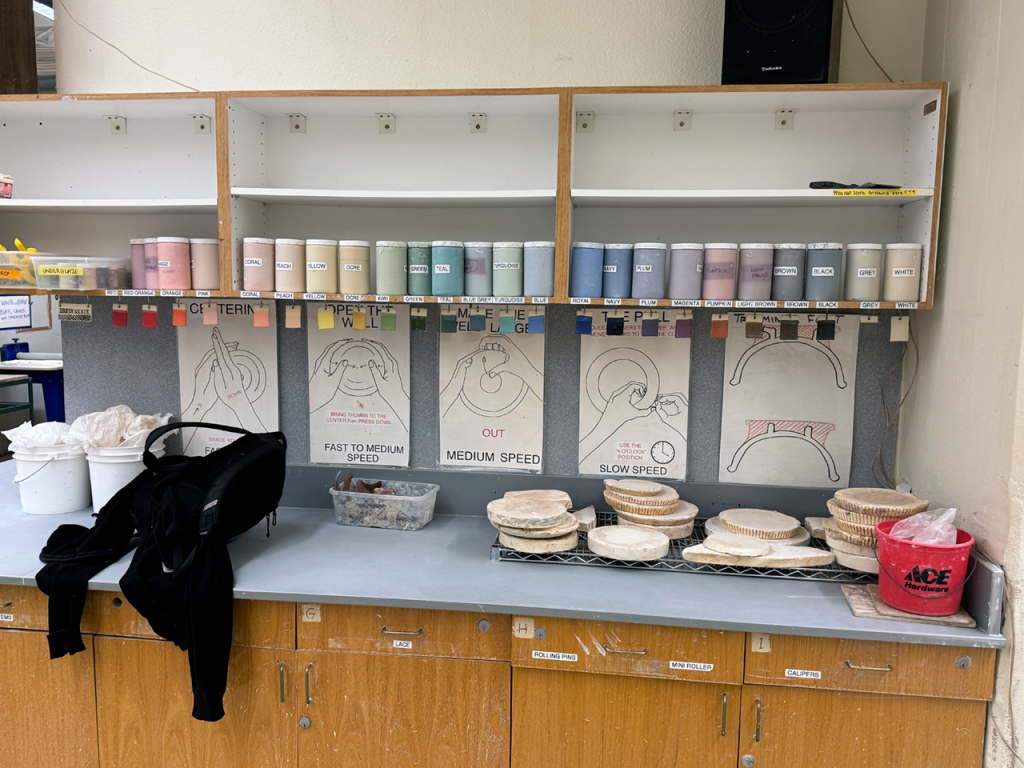
On the sides, there were cabinets and shelves with labeled transparent containers holding substances of different colors, as well as all sorts of metallic and wooden utensils. On the west side of the classroom, there was a room with floor-to-ceiling, library-style shelves where half-finished clay pieces were drying.
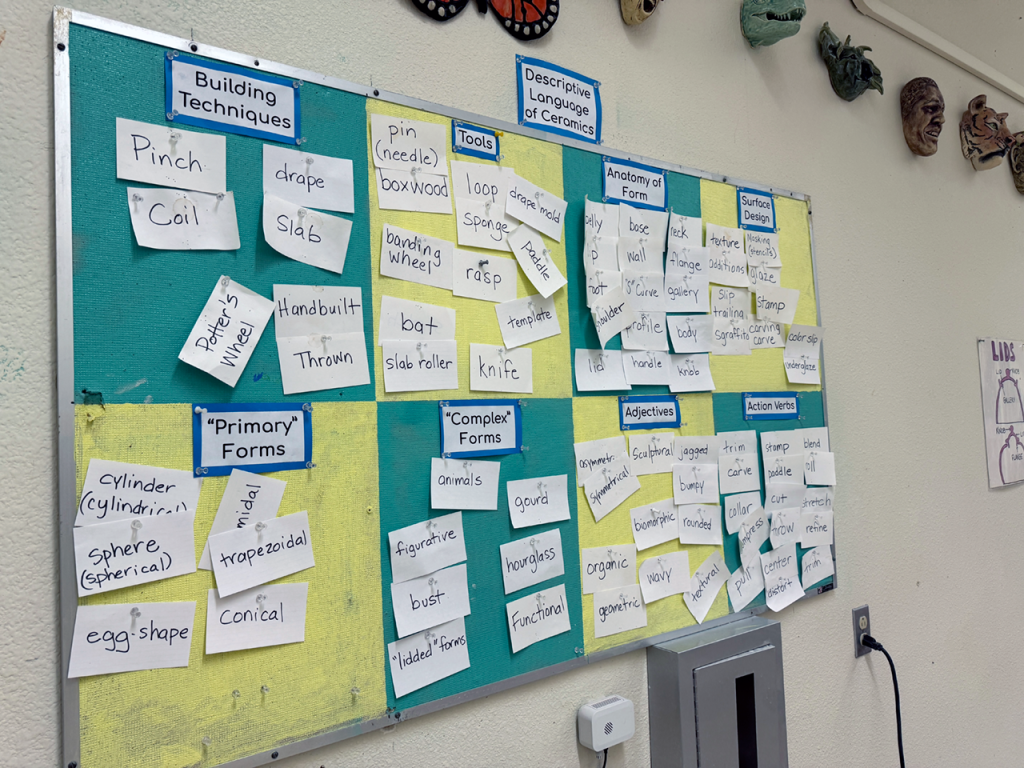
The parents who came seemed as interested in the space as I was. It felt a bit like being at a workshop where things could happen, for students were already working on ceramic objects, from utilitarian, custom-made mugs to sophisticated fantasy masks.
Our daughter had told me: “You should go to my Ceramics class; you’ll like the teacher. You can say hi to her.” She wasn’t wrong. Not only did she know her craft, but she seemed genuinely interested in having her students explore their expression and artistic potential.
Broken tiles, new jobs
Spaces shape how we see the world and inspire us. When I see an artist’s studio (or a ceramics class at a high school, for that matter), I can feel the energy of a very elusive endeavor: making something memorable out of a combination of raw materials, using techniques we’ve perfected over millennia. In other words, it feels like a portal to our quest to make things that express our taste and energy, and can last.
Many of us keep objects we have built meaning around, some of which are as utilitarian as a porcelain mug, or a plate, or a symbolic figurine, or a piece of terracotta belonging to an old pot or roof tile that we rescued long ago or inherited from someone.
As an example, our family has found ways to seek continuity at “home” despite moving places and even countries over the years. When we lived in Barcelona, and the children were toddlers, we used to visit my parents by commuter train on the weekend, and liked to take a walk after lunch through the rural fields surrounding their community. During a couple of those walks, we found and picked from the dirt a few irregular, concave roof-tile leftovers, and I rescued them to use as soap dishes in the kitchen and bathroom at our apartment.
When we moved to France, we did it again, found similar broken terracotta pieces, and gave them the same job. Beyond their utility (terracotta, being porous, lets the soap and sponge dry out between uses), those concave, irregular vessels felt like a bit of the organic world and art at home: we felt like coming to the rescue of imperfect but beautiful objects (to the Japanese, wabi-sabi objects), and the newfound life of these bits of rusticity was our attempt to stop the ongoing process of universal entropy, if only at one infinitesimal, unimportant scale in the great scheme of things. An endeavor as quixotic as faircompanies itself.
Old appreciations, new meanings
This game of symbolic continuity of pieces of broken pottery as holders of our soap and sponges at home didn’t stop in Barcelona, our house in Penedès, Fontainebleau, or Paris. So, when we moved to the San Francisco Bay Area, the same happened again, and we now use two concave broken tiles in the kitchen and main bathroom as well.
Our pottery rescue didn’t end there, and all the tea mugs we own come from the street or some garage-sale type of situation.
Impermanence and beauty go hand in hand, and there’s nothing more soothing and enriching to some people than stumbling upon one of those places where people sell or give away their old and unwanted belongings, so their things can find another life. Many of the brocantes we went to while in Paris felt special on many levels, even if most of the time we didn’t want to buy anything.
We choose to make some objects memorable, attaching them forever to the circumstances in which we first crossed paths, or the unplanned use that they ended up having, or their ability to prompt us to stand up for their intrinsic beauty, and therefore the sentimental value they hold in our life. Sometimes, it’s the objects that came out of nowhere, or that someone gave to us, or the ones we attach to some event, those that make it to our world of meaning. Others that have more objective value may never make it to our big leagues of weathered beauty.
I can see why our middle daughter chose this class. For one, the ceramics teacher was as interesting as anyone introducing such an old art could be. She didn’t seem rushed, or routine like a clerk, but looked and talked a bit like Susan Sontag, intense and to-the-point, a type of Americanness I’ve come to appreciate, coming as I do from the Romance-language Mediterranean, where people tend to talk conceptually and beat around the bush.
Split the air
Many years ago around this season, when we lived in Paris and our three kids were much younger (to the point of coming with us willingly to errands and walkabouts), we had the opportunity to attend the opening of an exhibition at the Musée du quai Branly – Jacques Chirac, an important venue inside an interesting building not far from the Eiffel Tower that is dedicated to the arts and cultures of Africa, Asia, Oceania and the Americas.
It’s a place that people like Picasso would have appreciated visiting, having an eclectic collection that celebrates things as unexpected as types of symbolic money (objects like seashells, necklaces, etc.) in traditional Oceanian societies, and well-stocked temporary exhibitions like the one we attended that day.
Its name was (I just checked and confirmed) “Fendre l’air: Art du bambou au Japon” (Split the Air: The Art of Bamboo in Japan), and it consisted of a series of precious everyday objects and pure sculptures made of bamboo. We went to see this showcase of the virtuosity and evolution of Japanese bamboo basketry. The opening was in late November, 2018. It feels like another world.
Those Japanese weavers spent decades splitting bamboo into strips before their baskets could split the air, and my kore car sat at the very start of that road; perhaps that was the young teacher’s point, that the road only begins when we pick up the pencil again, and that making clumsy things is how we earn the right to keep the beautiful ones.
Vessels of regeneration
I remember thinking about the expression: split the air. It felt like trying to make light vessels or dishes that could contain what can’t be contained: reality, time, our thoughts, our hopes and desires, our good wishes for our loved ones.
That day, our kids played around, and sometimes stared at some of the objects. They might not recall the visit. At least consciously. The visit must be in them somehow, nonetheless (they are the vessels now, holding old events that resurface, poetically, in their way of being in the world).
If there’s a perennial human need, it’s our quest for meaning and beauty in a world that is impermanent, where the leaves fall every autumn and our elders begin to hint to us: somebody has to be the custodian of all these pieces of reality, if only to find a new use, and place, for all those beautiful surviving bits.
To wrap this up, here’s something from Ryōkan (1758-1831), often cited as his death poem:
ura o mise
omote o mise te
chiru momijiShowing its back,
then showing its front,
the maple leaf falls.