I walked the Camino at 19 with friends, no money, and even less spirituality. But somewhere between the fog and a conversation with a young theologian carrying almonds, my cynicism began to loosen.
Spirituality arrives and develops in different ways—even when we think we aren’t seeking an inner connection with what Aristotle called “metaphysics” (literally, things we can’t fully explain rationally by way of empirical observation, or things “beyond”—meta—the physical world).
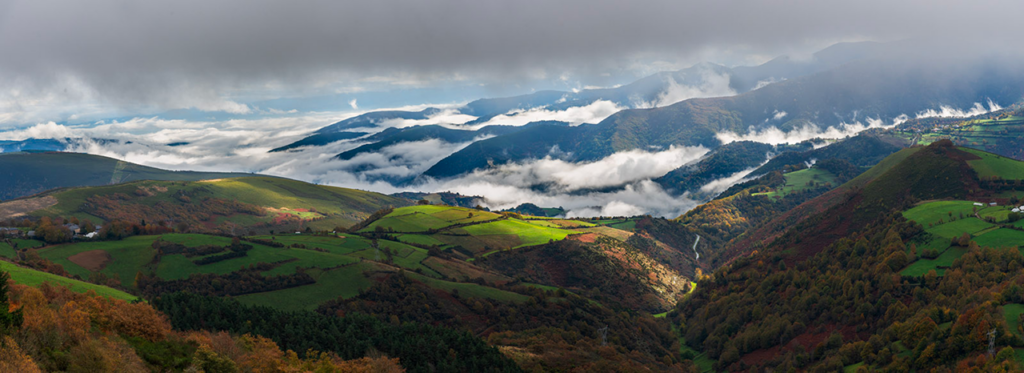
Spirituality goes hand in hand with self-discovery and the inner glow of life’s simple truths, and people have done pilgrimages and withdrawn to hermitages before Christianity. People as different as saints (among them Francis of Assisi, who came from a similarly privileged background), 12th-century Queen Eleanor of Aquitaine, young John Adams (1779-80) before becoming US President, and more recently Paolo Coelho, Angela Merkel, Stephen Hawking, and Martin Sheen, have walked at least a part of the Camino de Santiago trail.
Like them, many people have walked it from France to Santiago in Galicia, Spain’s northwesternmost region. I walked it three times and completed it only once. I went with friends the first time before I was twenty; with another person the second time, not long after; and with a dog as my only companion on the third and last occasion at around 25. When I went with my dog, a photographer for Condé Nast Traveler (probably the local edition) snapped a picture of the two of us walking along a cobblestoned Roman path outside Haro, La Rioja. I must have a copy of that magazine somewhere in our country house in Spain.
Perhaps I’ll walk it again with Kirsten and our kids as they become young adults.
The first cut is the deepest
The time that impacted me the most was the first, which took place in the last nine stages of the so-called French Way (main branch of peregrination through the interior valleys of northern Spain, avoiding the coast), a little over 200 kilometers (124 miles); seeing our oldest daughter in college has perhaps refreshed many of such memories, how things felt the first time.
I was most likely in my first year of college near Barcelona during the 1995-96 school year. And even in Europe, where most people still live at home when they join a university, post-secondary education acts like a life accelerator: suddenly, relationships transcend the locale and family ties of one’s upbringing, and one meets interesting people from more places and backgrounds. Life gets richer and more layered fast. So, it’s settled: I think it took place during the summer of 1996, and I haven’t seen the few (physical) pictures that commemorate it and could confirm this to me in over two decades.
Like many others, I struggled to bridge the gap between my early friends and the others I was getting to know, and it bothered me. That’s why I agreed with three other friends from my teen years to embark on an adventure that could pay off AND we could pay, for three out of four (me included) lacked a formal job and depended on workarounds to get by (I was working on Friday, Saturday, and Sunday nights on a trattoria in my hometown, missing the partying, at least until I was out at around 1 AM).
The plan was as follows: once we were out of obligations, that summer we’d walk a stretch of the Camino de Santiago, the medieval Way of Saint James connecting Christian pilgrims from all over Europe to the place where, the legend (and Christendom) said, the apostle Saint James the Greater had his shrine. Initially, this fact didn’t interest me a bit, given Spain’s almost unanimous secularity after Franco’s death. To most Spaniards, a lack of commitment to the Church was perhaps a symbolic gesture to avoid the staleness of National Catholicism, the country’s inescapable ideology from 1939 to 1975.
Leaving home: mapmakers of our early world
What propelled me to commit to the plan was my intention to bond with the old friends that I was, willing or not, replacing with new ones in college; if I committed to that adventure with them (an official penitence, in fact), perhaps I could keep my footing in the two worlds, the one that was opening, and the one left behind.
But the lack of Christian zeal of our party didn’t prevent us from going to the local church and ask for a pilgrim credential passport, a small-format, fold-out booklet that pilgrims show at albergues and Christian landmarks along the Camino to get stamped.
Not unlike many people in the Middle Ages who studied or “pilgrimed” just to get simple food and board for a charitable and voluntary price, developing the picaresque genre and the legend of the “sopa boba,” the Spanish equivalent for students and beggars of the monastic alms soup, we got the booklet so we could sleep at albergues for nothing more than a voluntary charitable.
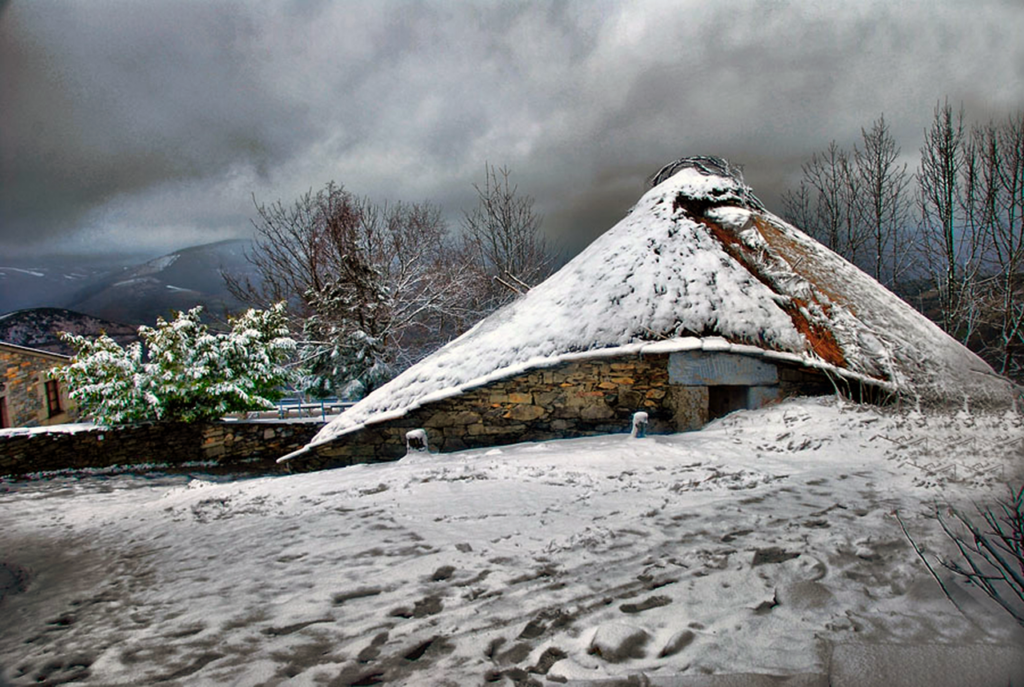
The day arrived, and we met like people used to before smartphones: with much patience and understanding of contingencies. But we all showed up with much more energy than money. We hopped on the train and traveled from Barcelona to Ponferrada, in the province of León. It took us a few days, crossing the foggy, mysterious mountains leading from Villafranca del Bierzo into Galicia, through a village with Celtic echoes (including thatched-roof round houses), O Cebreiro, to realize that we were doing something very different from taking a walk.
Our cynicism towards the whole enterprise of the Camino de Santiago soon vanished. We needed to wake up very early, along with the rest of the pilgrims staying at albergues with us, and start the day’s itinerary, rain or shine. Soon, we met people very different from our mostly superficial, frivolous endeavor: I realized that many people had a reason to walk along the dirt paths marked with the distinctive scallop shell, the yellow arrow (a sign created by Father Elías Valiña in the 1980s to revive the Camino), and the sword-shaped Santiago cross.
First encounter with the righteous and pious
One day, I met a family of polite, very formal middle-aged parents with three or four teenage kids, I don’t remember exactly, all present in the endeavor. To me, it was otherworldly, almost Martian, to see two parents smiling alongside their non-complaining offspring as they walked daily for stretches of 20 to 30 kilometers (up to 20 miles) each, carrying their own changing clothes and supplies, often for hundreds of kilometers and for weeks.
I remember joking with the father about how nice they all looked; I must have explained that we had found them unnervingly clean and formal, even in their outdoor clothing and carrying backpacks. I realized they were religious, and such outdoor activities were a way for them to bond and meet other people. I asked whether he really believed in the whole endeavor of the Camino. What do you mean? —he asked. And I parroted then what I had read: the Way of Saint James was an obvious geopolitical strategy by the early Catholic Church to help secure the Christian status of northern Iberia as tiny kingdoms and local knights from the marginal, unconquered deep valleys of the north had secured the Reconquista and decisively tilted it over in 1212 in the Battle of Las Navas de Tolosa (southern Spain, then Al-Andalus).
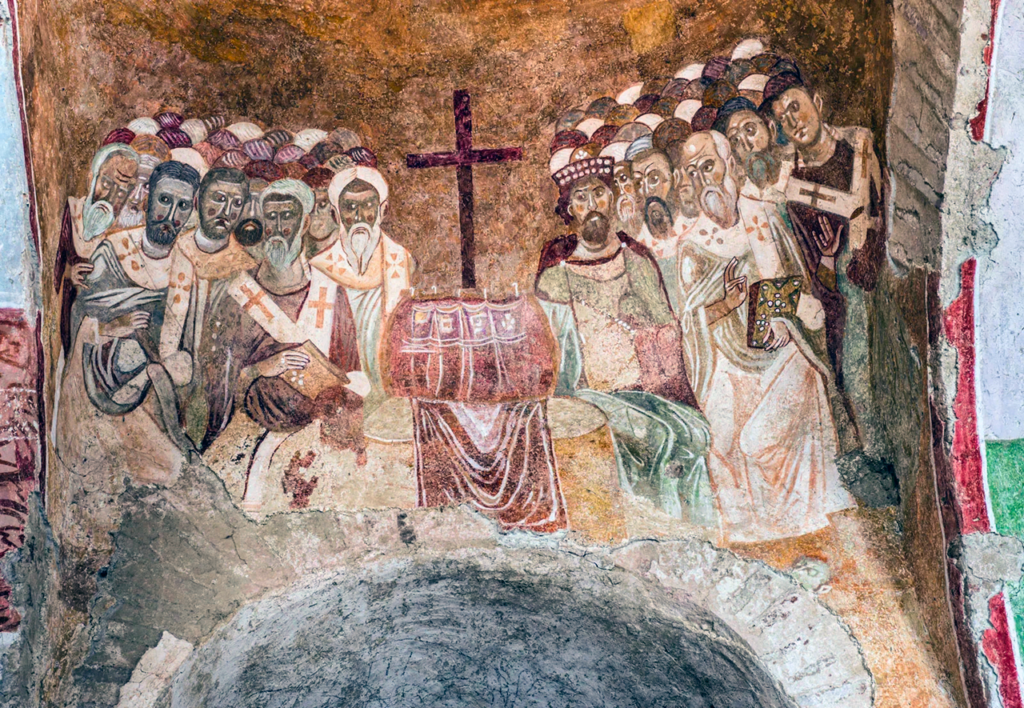
This maneuver by the Catholic Church and the Christian kingdoms of northern Iberia, I explained, strengthened identity and attracted European support, especially from nearby Narbonne, Occitania, and the French Royal Domain (which expanded soon after, during the Capetian monarchy, engulfing much of the core territory of modern France).
We were walking somewhere in the mountains of the Lugo province in Galicia, perhaps right before reaching Triacastela, on a steep descent that made us all hopeful for a deserved rest and a copious, very affordable meal. But he made clear that the actual origin of the Way of Saint James and the political intricacies that may have given it sense were off point.
Meeting a young, mysterious scholar
I noticed that another person, a somehow ragged man, older than me but younger than the Opus Dei type I was conversing with, had tagged along at a short distance. I had spotted him here and there, and the many miles one walked each day were an opportunity to say hello and lift the spirits of many people: solitary ones, couples, young and old, families, clusters of friends, and, sporadically, even men and women in comfortable though unequivocally religious attire.
His clothes seemed worn but of good quality, and his backpack didn’t seem too bulky. I could recall him because he was the only one carrying a bag of nuts (I believe almonds) that swayed below his backpack as he walked.
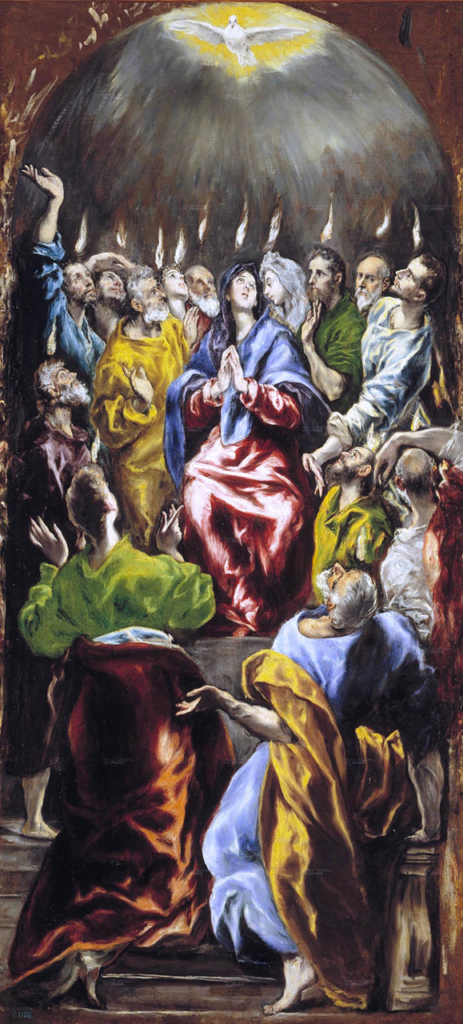
One day, I was walking alone, not feeling that well; I had eaten something that didn’t sit well and had struggled to stay hydrated the previous day, but decided to walk at the pace I could anyway, so the party of four could maintain the schedule to reach Santiago, then keep going all the way to the sea, and then disband. After reaching a wall of discomfort, I felt much better, and I can assure you that, from that moment (perhaps after a hormonal surge from my body’s defenses to keep my perception going), old trees seemed more majestic, and the landscape more soothing and promising.
And here came the stylishly threadbare man of the hanging bag of almonds, reaching me and saying good morning (I must have begun the walk really early that morning, feeling sick and feverish in my bunk nonetheless). For a while, we talked little, knowing what we were doing and where we headed. It took me a while to understand that it was the ‘why’ that made you learn. He was walking due to a close death, though he preferred not to elaborate.
He was struggling to make sense of things, he added. I felt almost embarrassed by not having a story to tell to justify my trip, which didn’t feel, and probably wasn’t, a pilgrimage. I barely lived or suffered, for that matter, to have a reason to walk in search of introspection. I wasn’t trying to make sense of the world; I wasn’t struggling. I had a more or less functional family, I had healthy siblings, I had a girlfriend, and also the indolence of those who don’t know their purpose, nor bother to change inertia. Things were coming my way, more or less.
Rethinking dogma and inquiry
So, our sparse conversation didn’t evolve into a mutual confession and the recognition of a mystical call—even if small Romanesque churches, big trees, and small bridges could bring you back to a different time. Perhaps impatient with my lack of genuine inquiry, my new acquaintance told me that he was studying theology. But what he said later didn’t seem to come from a dogmatic zealot.
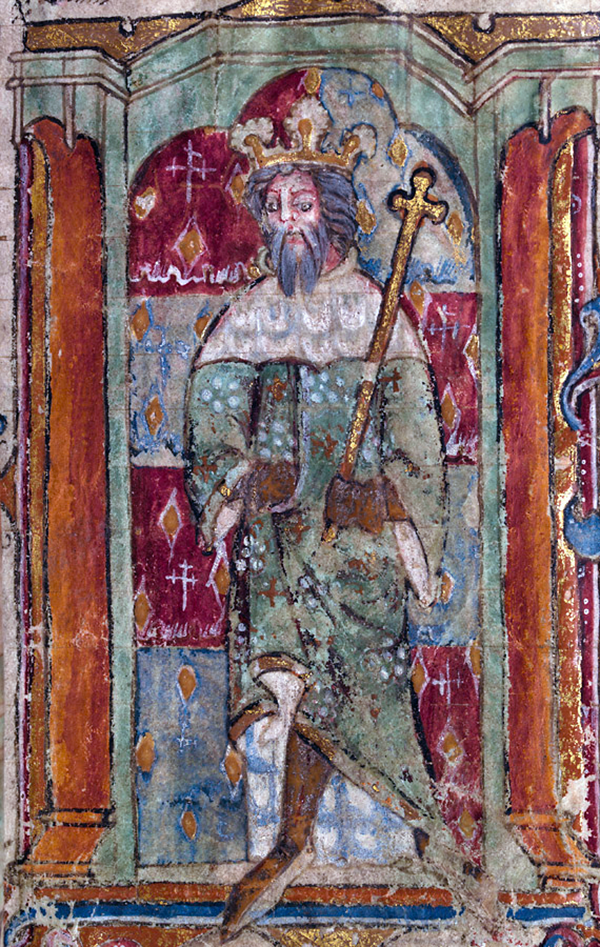
“I happened to hear your conversation about the origins of the Camino the other day,” he must have said. “What do you think about the people who question whether the initial shrine that gave way to the early church, and then the Cathedral, is keeping the remains of another person?” I asked whether he meant the apostle Saint James the Great. I didn’t want to be disrespectful, but I wasn’t that interested in the topic. Yet.
“What about?” I said. He explained that many scholars, and convincingly so, thought that the body discovered in the 9th century, later declared to be that of the apostle, might actually be the remains of Priscillian, an ascetic bishop from Gallaecia (a Roman province in the northwest Iberian peninsula that gave way to today’s culturally distinctive Galicia, as well as the origin of Portugal) who died in the 4th century.
My conversation was getting interesting. My acquaintance explained that Priscillian had begun his adult life in a manner not dissimilar to that of Francis of Assisi centuries later: wealthy and educated, he had renounced earthly possessions and hedonic pleasures to pursue a more ascetic conception of Christian thought. But he pushed a bit too hard for reform and ended up decapitated by the Roman Emperor in the West at the time, Magnus Maximus (also born in Gallaecia), becoming the first heretic to receive capital punishment in the name of orthodoxy. I did like the conversation more and more.
That conversation changed my beliefs about theology and those who study it. I thought it was not only anachronistic but at odds with the modern world and with inquiry itself. To prove my opinionated younger self wrong, here was a slightly older (and probably more mature) person not only bringing my thesis about the dubious enterprise of the early Way of Saint James—a make-believe construction to secure Christian Iberia against the Saracens to the south than a provable historical fact—, but also giving me the name of the person who might be buried instead. An ascetic, an “avant la lettre” Francis of Assisi gone rogue, the first official heretic of Christendom? I could get why he might be studying theology.
Imprint of an early heretic
I don’t recall how we parted ways that day, but that intriguing conversation with the theology doctoral student carrying nuts in a cloth bag has stuck with me. Why such a founded speculation had never made it to a novel worth reading was beyond me, especially after reading The Name of the Rose that year.
In the pre-smartphone days of the mid-nineties, I surely didn’t check right away who Priscillian might have been, but the story stuck with me enough to resurface when I took an elective course the following year on Galician history and culture at an affiliated faculty. And so, to my delight, the topic of Priscillian returned, exposed by a young Galician woman assistant professor who seemed to have sympathy for the early heretic. For example, I got to read about his predilection for casual mass ceremonies in forests, a proto-pantheism that made me think of Celtiberian folklore and whatever remnants of the pre-Roman substratum remained in the 4th Century CE.
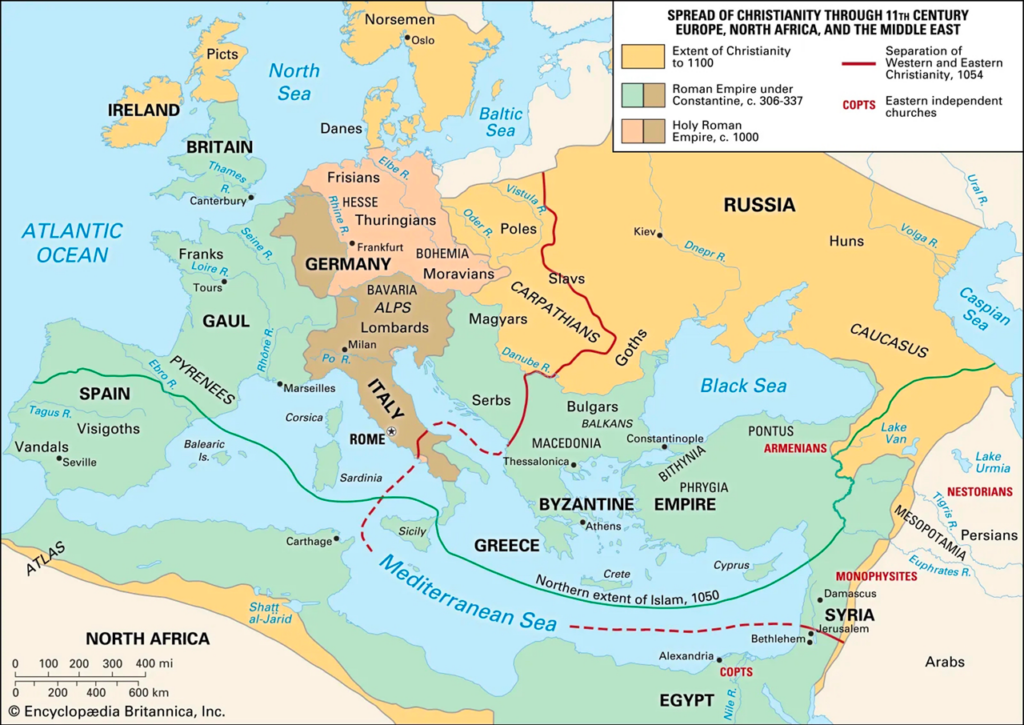
Amid the things the 4th-century heretic born in Gallaecia had pushed, the most controversial ones were his advocacy of extreme asceticism applied to everyone in the church, even laypeople; his defense of women as teachers and spiritual leaders; the promotion of private, independent house-church gatherings and mass amid nature; his interest in apocryphal books; and emphasizing personal illumination over a growing authority of bishops as representatives of Rome.
Interestingly, Priscillian, described by contemporaries as an educated nobleman, became a bishop in Ávila in 380, about a decade after initiating a movement that promoted an ascetic doctrine that his opponents, the bishops of Corduba and Emerita Augusta, denounced as a deviation from Christianity and into beliefs widespread in other parts of the late Roman Empire, like Gnosticism and Manichaeanism.
Sparse conversations along the way
On that first time walking along in solitary mountain trails with sporadic strangers, I realized that everyone seemed to be walking for a reason. Perhaps I was doing so too, after all: I was reaching adulthood, and soon I’d finish my degree; I was sure that I didn’t want to go for a doctorate or follow an academic path, but what I lacked most was an actual drive, a clear purpose to create meaning around it.
As days went by, I felt more and more detached from the everyday things and more connected to what I was doing at every moment: I needed to wake up and get my stuff ready at sunrise, and by the time it was 10 AM or so we were already in some village stopping by a fountain to improvise a breakfast. Then we’d keep walking, sometimes in pairs, sometimes all four, sometimes each on their own, or connecting with and talking to other people walking by.
Sometimes, a landmark (a bridge to cross, a steep mountain, a Romanesque church amid the trees in the middle of nowhere, out of our time) would change the course of an afternoon or an evening. After my conversations with the student of theology, making me doubt about the veracity of Saint James’ burial claims, I realized that religion didn’t equate to dogma, nor were all scholars into the topic archetypal intransigent zealots like Jorge of Burgos, the main antagonist of William of Baskerville in Umberto Eco’s The Name of the Rose.
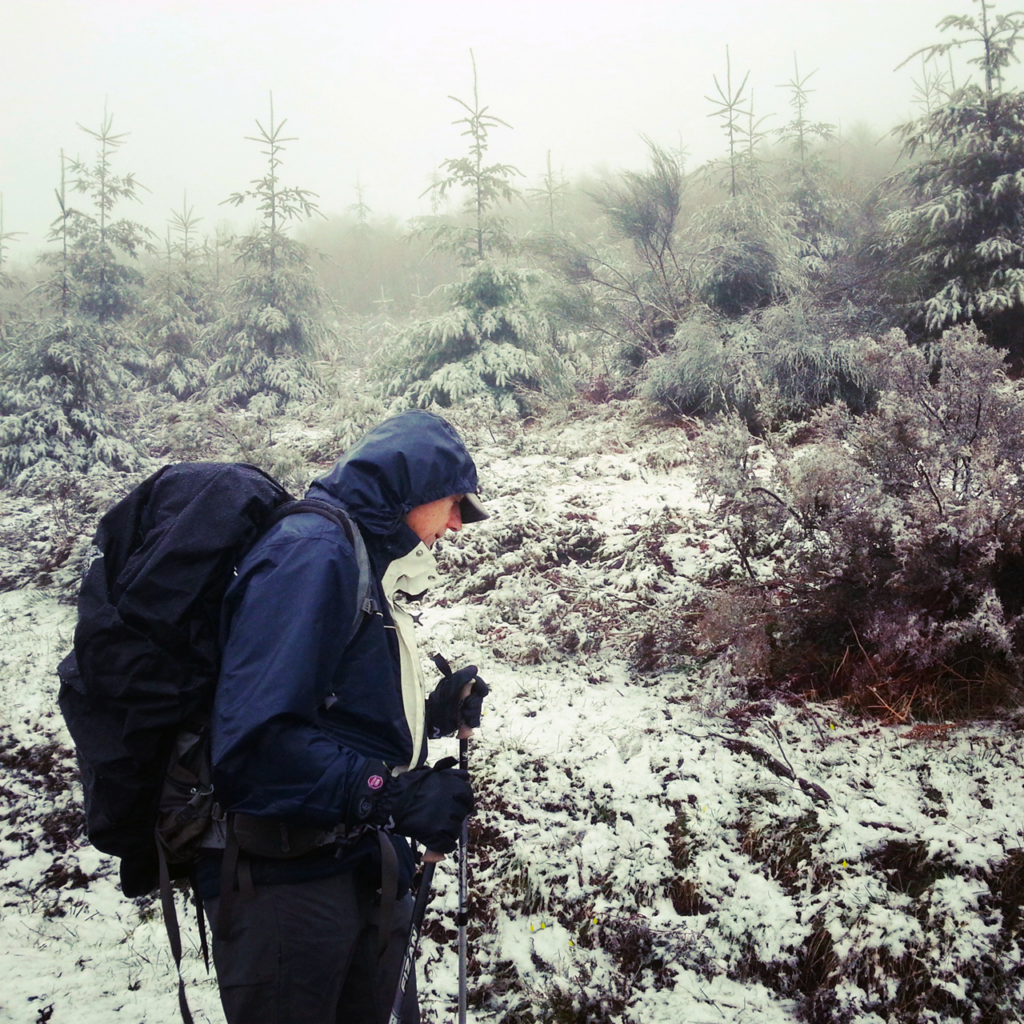
But I also began to like walking alone, especially after having a little realization, once my stomach problems passed after two days, appetite returned and I could walk with no hesitation for hours on end: pilgrimage (even a messy, non-religious one like the one we had signed for) reveals the gap between life rigidities (the official stories about us, the social weight of who we need to be, our little insecurities, etc.) and personal truths that emerge.
Early forks in the road and paths not taken
This realization perhaps prepared the ground for the introduction of Priscillianism, a heresy born of someone long ago who sought inner spirituality against the prevailing orthodoxy of his time. Between what personal experience and intuition can tell us, and the
Like The Garden of Forking Paths, a 1941 short story by Jorge Luis Borges, where a World War I spy reaches a mysterious labyrinth novel written by his ancestor, in which there’s a multiverse where all possible timelines and choices coexist, the Camino is also an opportunity for people to contest their personal narratives, to doubt what’s written on the wall.
Perhaps, my encounter with the mysterious theologian had made me more skeptical, not less. I was more ready to contest the official history of things and more willing to hear secondary stories and the heterodox seekers. I also peered over the precipice of perceiving reality as a conspiracy, something we see more clearly nowadays, after the internet has given way to eco chambers and parallel universes that leave the rabbit hole of Alice in Wonderland in the dust.
That said, it was clear to me from then on that, especially in rigid societies like most European ones, every life quest has at least two paths, just like a pilgrimage: the signposted one that everyone follows and will make your grandmother happy about you if it happens to suit you, and the subterranean one that resists the institutional power of the incumbents. The remains can be Santiago’s or Priscillian’s. But they can’t belong to both of them.
Early geopolitics
In those pre-smartphone (and actually, mostly pre-cellphone) days of the summer of 1996, I regret having passed up the opportunity to bond with the young almond-loving theologian. He never asked for a phone number or an email address, nor did I. But in retrospect it must have been clear to me that he was instrumental in showing me that, contrary to my opinionated idea that the Camino de Santiago was a mere political instrument from medieval Christian Europe to help northern Iberia’s weak kingdoms with the Reconquista, it became much more than that: it became a bonding project that survived during centuries, and above all, a palimpsest of suppressed histories, like that of Priscillian, probably the accidental originator of the whole party.
When I stumbled upon Priscillian again in that random college elective, I finally understood that the obscure heretic from Gallaecia was far more than a historical curiosity. His teachings spread so widely among commoners that he became dangerous to the authorities of his time—dangerous to bishops in Hispania, to Rome, even to the Emperor himself.
While alive, he was likely a symbol of resistance against central authority. His determination to seek personal illumination outside institutions proved a step too far. Compared to the Gnostics and Manichaeans praying alone in the desert, Priscillian was less a mystic outsider than a well-read scholar willing to interpret things beyond the beaten path.
That aspect made the figure especially appealing to me, as I sought my own voice. As we become adults, it’s probably a healthy sign when we question the official scripts that society hands us: what to study, who to be, how to live, what to believe. Get too far out of the official path, and you’ll begin to bruise yourself against the walls that propel you forward.
Counter-narratives and possible lives forward
Today, it’s becoming clear that there’s a hunger for meaning outside the beaten path and outside institutions, and the general distrust of institutions and official narratives proves it. Nonetheless, the alternative can’t be, shouldn’t be, a dangerous and naïve embrace of conspiracies and echo chambers, and we are reminded every day of the risk of falling for easy alternative stories.
What I liked about my walking partner, the mysterious lone theologian, was his willingness to accept inquiry above dogma, his willingness to pursue thinking to discern illumination from delusion, something I had attributed to scientific thought until then, realizing that it’s something that any honest discourse can have, even one set within a religious framework.
Now that the internet has given way to echo chambers and parallel universes, I recall how I first stumbled upon the story of Priscillian and the shrine in northwestern Spain, where the wealthy nobleman might or might not rest. After all, he was decapitated far away in Augusta Treverorum—present-day Trier.
It all feels like the game of mirrors facing the protagonists of The Name of the Rose: beneath the official story, there often lies another. Not necessarily more “true,” but often more human and more searching.
Why do modern people—including me—still walk pilgrimages? Perhaps this is what we seek in life and in work: a story more intimate than the official one, a narrative that breathes. Before I knew I needed it, the Camino became the origin of an imperfect quest for transcendence, one we all need. A search for autonomy. A rebellion against postmodern alienation. And, above all, a counter-narrative against the selves we pretend to be.