They are the first wave of life after fire. Yet fungi, usually overlooked, do far more: shaping medicine, fermentation, and soil regeneration.
During the next few hours, you will probably hear and read a great deal about AI, and may well use it too. But compared with fungi, its impact on your daily life is still marginal.
You’ll probably spend much of today in the company of fungi without noticing, and I don’t mean mold. If you need over-the-counter medicine today, it may be partially derived from fungi. If you eat bread or cheese or chocolate, drink coffee (or beer, wine, spirits, fermented beverages like kombucha), take a supplement, use natural cosmetics, wear naturally dyed fabrics, maintain a well-managed compost pile, or use fertilizer in the garden, you’re benefiting greatly from fungal labor.
We culturally omit mentioning fungi, except when they can make us sick. Despite our lack of recognition, this kingdom is behind fermentation, preservation, pigmentation, decomposition, soil renewal, and many potential regenerative fields in the future.
Yet we still know little about the real potential of one of the major branches of life that includes, mushrooms, molds, yeasts, and countless microscopic species, other than, at a basic level, fungi are nature’s recyclers, decomposing organic matter into nutrients.
Hidden ubiquity
Our idea that scientific knowledge fights bias can be debunked by just analyzing our perception of reality, which favors individuation: science has historically focused on studying neat, bounded elements we can easily count, isolate, and analyze.
This is perhaps our fundamental problem with the apparent arbitrariness of fields like quantum physics, which bypass determinism and cause-and-effect rules, leading Albert Einstein to express his frustration to physicist Max Born in a 1926 letter: “God does not play dice.”
In a way, science is biased toward discrete objects because they’re easy to spot and fit the philosophical ideals already expressed by classic philosophers, whereas distributed systems (in life, in physics, in technology) are difficult to spot, isolate, and study.
In biology, there’s a field that defies classical understanding almost as much as quantum mechanics does in physics: fungi were not only recognized as a kingdom as late as 1969, but we’re still uncovering their hidden, distributed complexity, catching up with their complex, decentralized, process-based and mostly invisible activity, which has historically defied classification.
Perhaps we’ve culturally failed to admire and truly profit from fungi (which are essential in food production and preservation, and medicine) because we’re used to looking for creatures we can easily identify and classify (the tree, the horse, the human face) and fail to see a system in evolution: fungi are distributed, labyrinthine, hidden, and literally everywhere:
“Fungi create soil, sequester vast amounts of carbon, and contribute $55 trillion to the global economy, but knowledge about them is scarce.”
Jim Robbins, Long Overlooked as Crucial to Life, Fungi Start to Get Their Due
Fungi are much more than edible mushrooms
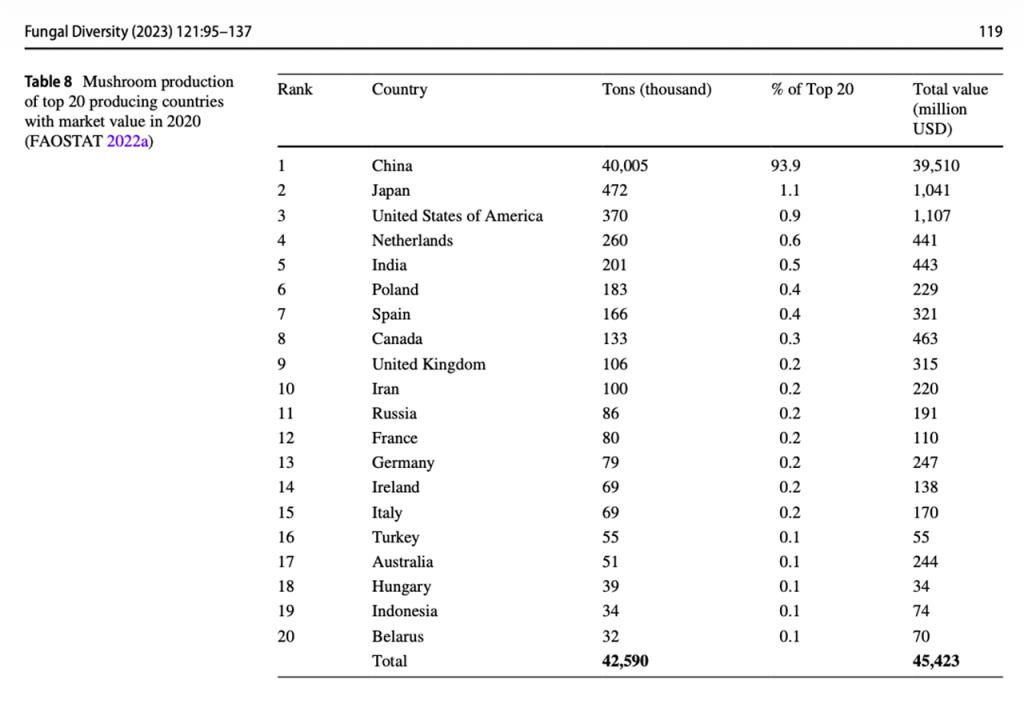
According to the 2023 estimate, the largest share of fungi’s economic value lies not in hospitals, grocery stores, breweries, or supplement aisles, but in what this underrated kingdom does quietly under our feet. By comparison, the visible mushroom market accounted for a tiny fraction of fungi’s total accounted value.
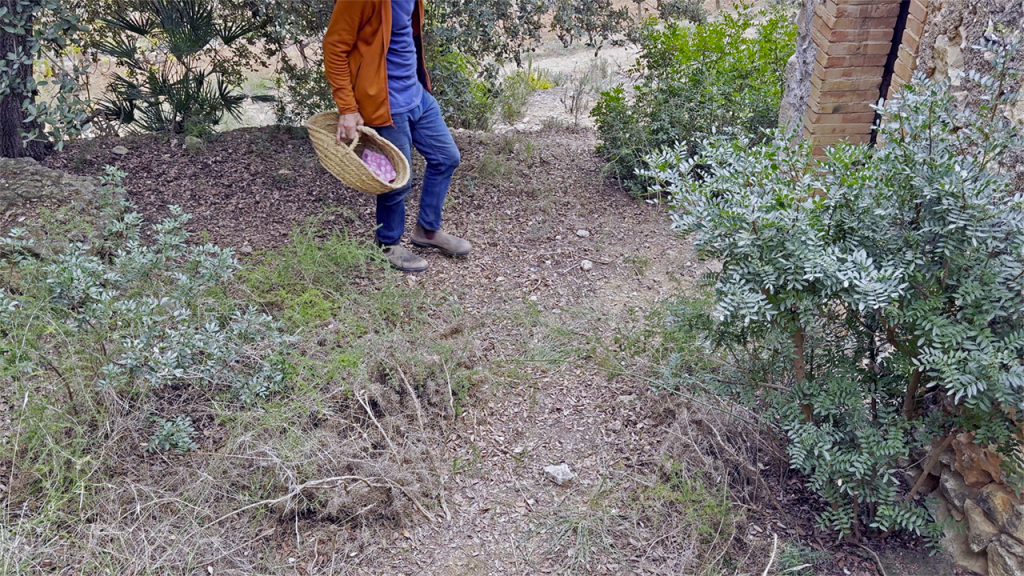
There’s that, but mushrooms are delicious, regardless of their position in the great scheme of things: our family is fortunate to live within walking distance of a legendary grocery store in the East Bay, so we contribute, in our small way, to the visible mushroom economy. But gathering wild mushrooms remains for me the more meaningful form of encounter.
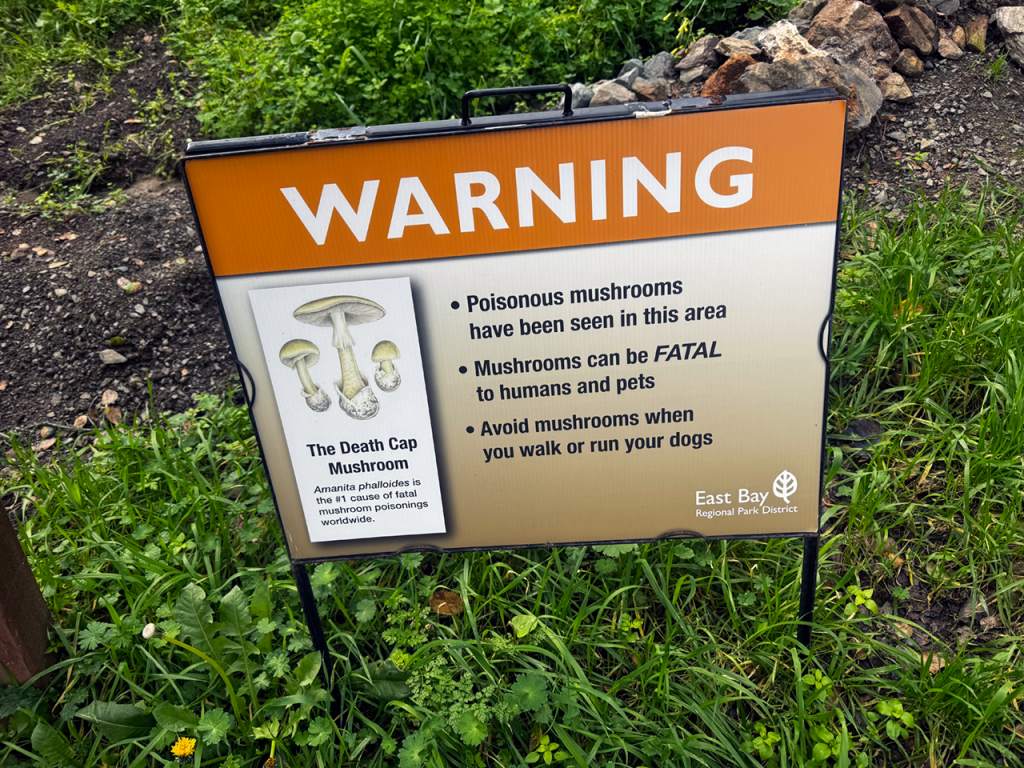
Harvesting mushrooms in the wild is a delightful practice, and one I grew up with in Catalonia, for that matter, though one that demands knowledge and restraint, since non-experts can easily confuse edible species with poisonous ones (as of February 2026, 4 people had already died just in California so far this year after eating poisonous wild mushrooms).
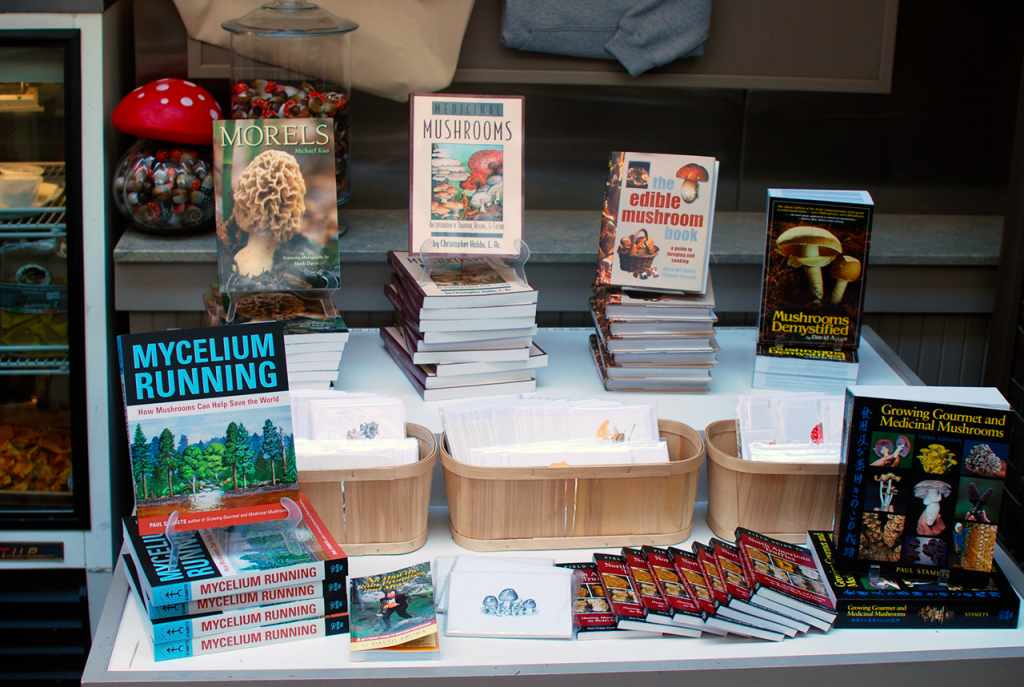
Regarding the tranquil pleasure of mushroom “hunting,” I agree with Michael Pollan’s depiction of the activity in his chapter dedicated to the matter in The Omnivore’s Dilemma (Gathering: The Fungi). Foraging mushrooms indeed sharpens attention and helps us detach from day-to-day modern life pressure. During mushroom (or asparagus, or truffle) gathering, the ordinary landscape feels coded with possibility.
Heck, Pollan even quotes Ortega y Gasset in the chapter… But his fascination is inseparable from the omnivore’s oldest problem, a moment that we face since the dawn of our species as hunter-gatherers: the thrill of finding the perfect food specimen is only comparable to the risk of misrecognition, which can kill us.
Spotting an apple instead of the whole tree
We still know less than we should about fungi because this organism hides in plain sight: we notice only its temporary fruiting body, the mushroom, which often pops up above ground. To mycologists, with many fungi we’re used of spotting an apple instead of the whole tree, or seeing a flower and not the entire plant. Other species, because of their tiny size or extreme specialization, are even harder to perceive in all their complexity.
Back to the forest, where we might spot a mushroom near a particular tree. Despite of what we see, most of the organism lies elsewhere: in filaments creeping underground like a nervous system (mycorrhizae help trees communicate with each other indeed), or proliferating in different states inside organic matter and other organisms, from plants (root systems below the soil line, buttress, bark, inner wood, branches, crevices) to animals:
“Endophytic fungi, for example, live between and also within the cells of virtually all vascular plants. They are critical for plant growth, resilience, and survival. They emit molecules — natural antibiotics — that protect the plants against disease. They help repel herbivores and insects. They also enhance the uptake of phosphorus, nitrogen, and other nutrients; improve water retention; and help plants tolerate stress. Scientists are studying these fungi to accelerate the discovery of other compounds, from medicines to diesel fuel.”
Jim Robbins, Long Overlooked as Crucial to Life, Fungi Start to Get Their Due
A communication system for trees
Below the ground is where the action happens. In its vegetative, root-like network state, called mycelia (an extensive subterranean world of branching, thread-like filaments called hyphae), fungi perform the equivalent of non-random, emergent computation: mycelia are adaptive to their environment and evolve towards natural optimization, the equivalent in biology to processes that are the subject of computer science PhD studies.
But beyond their high efficiency and interconnectedness in vast networks (mycorrhizae) that create the real “world wide web”: underground, symbiotic relations between roots of different trees, which “communicate” with each other through mycelia. We now know that, thanks to mycorrhizal networks, ecosystems regulate the exchange of water, carbon, and nutrients in entire areas. Yet fungi are still poorly understood and hardly known.
“It’s estimated that there are, on the low end, 2.2 million species and on the high end up to 12 million species of fungi in the world. Yet there are just 155,000 or so known species, leaving vast numbers undiscovered and undescribed.
“The lack of knowledge about the world’s fungal kingdom, in spite of its essential role in maintaining life, has led to a campaign to elevate the importance of fungi to the same level as flora and fauna. Increased recognition, advocates say, would lead to greater inclusion of fungi in research, policy, and preservation considerations. Just 10 percent of the world’s mycorrhizal hotspots, for example, occur in protected areas.”
Jim Robbins, Long Overlooked as Crucial to Life, Fungi Start to Get Their Due
This is partly due to the elusive nature of fungi, as they are much harder to see, collect, culture, or classify than plants or animals. On top of that, early taxonomists expressed their frustration with the most visible manifestations of their forests. Visible fungi looked “plant-like” because they grew rooted in place and had a similar apparent composition.
It may walk and run like a duck, but there’s no chlorophyll
In the late eighteen century, early taxonomists observed that plants need light to transform water and carbon dioxide into energy (glucose), releasing oxygen as a byproduct. To them, it was odd to see that the “plant-like” mushrooms they observed, which grew in soil and wood, lacked chlorophyll and didn’t seem to be capable of photosynthesizing.
A few decades later, Christiaan Hendrik Persoon and Elias Magnus Fries, founders of mycology as a discipline, tried to develop a system to classify fungi, but didn’t convince colleagues of creating an entire new taxonomical group, housing the strange, rooted creatures (not chlorophyll-bearing, somewhat mysterious, and associated by folklore to the moon).
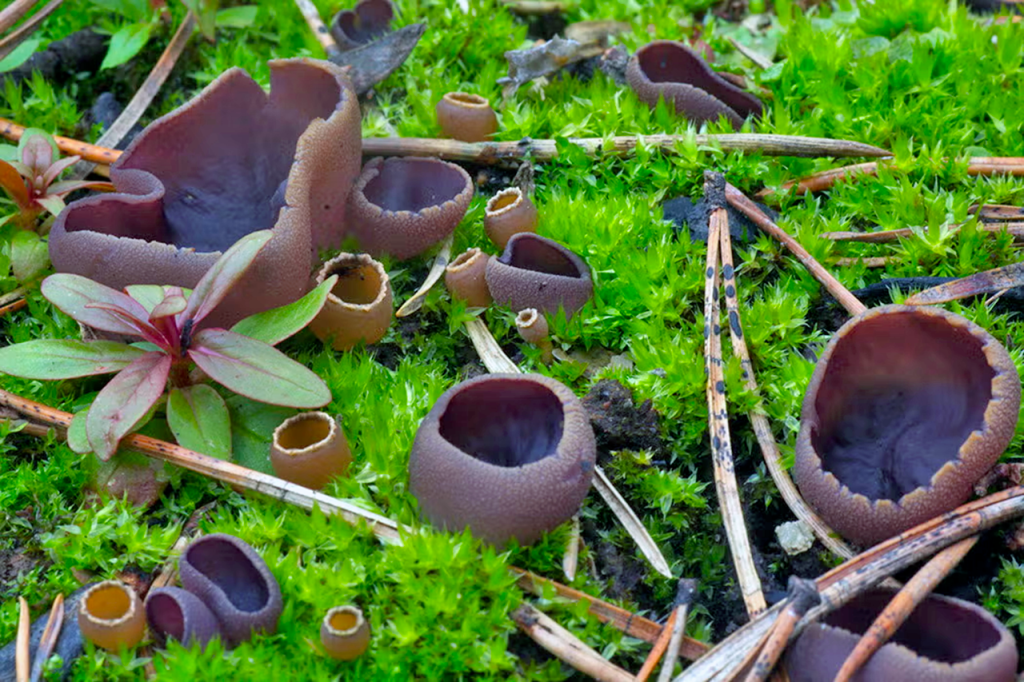
Given the recognition of mushrooms as a different force in the forest, often appearing intertwined with processes of decomposition and “lower natural life,” why then did science wait until 1969 to establish a five-kingdom system of living organisms that finally clearly separated fungi from plants?
We had to wait for advances in evolutionary genetics to confirm that fungi are closer to animals than to plants. Unlike plants, fungi are heterotrophs: they absorb nutrients from the environment, transforming soil and making it more hospitable to other organisms (including plants) in the process. As primary decomposers and nutrient recyclers, they speed decomposition, whereas some species of mycorrhiza help tree roots reach naturally occurring minerals in the soil, even when there’s toxic-metal contamination.
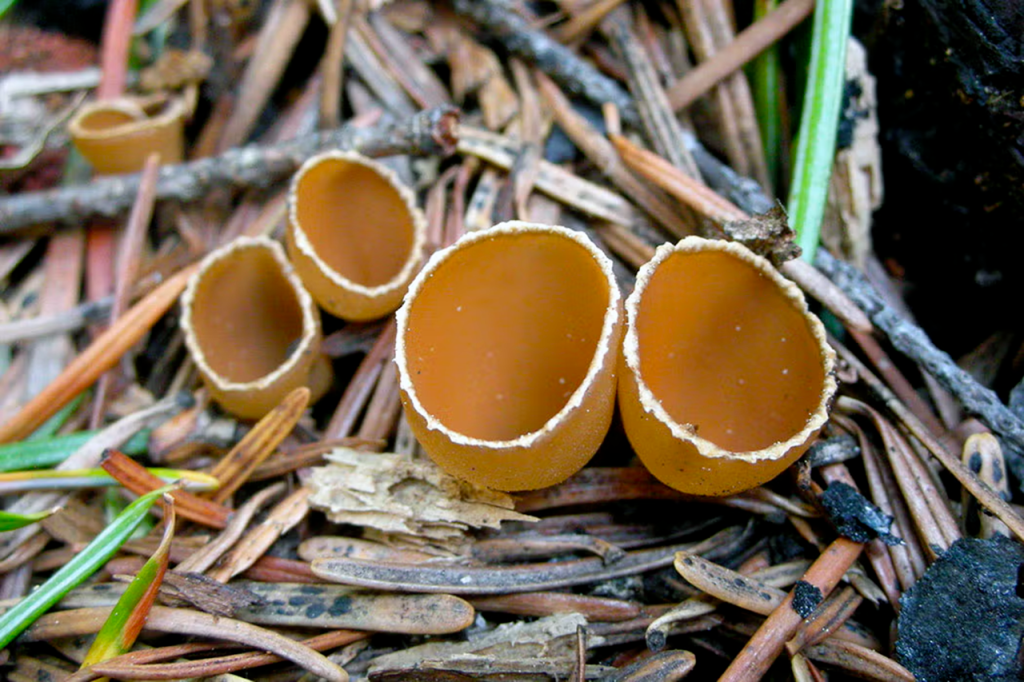
Researchers studying the decline of particular species of fungi in areas like the Pacific Northwest express how little we know about other populations of mushrooms, mildews, lichens, mycorrhiza, and other fungi, despite their importance in ecosystems:
“As many as 90 percent of plants use their roots to form symbiotic relationships with vast webs of mycorrhizal fungi to, among other things, increase their nutrient and water absorption by orders of magnitude beyond what soil alone can provide.”
Jim Robbins, Long Overlooked as Crucial to Life, Fungi Start to Get Their Due
The mushrooms that adapted to feed from charred dirt
Fungi help produce antibiotics like penicillin and ampicillin, statins, and antifungals. Fermented foods and beverages also depend on them, and so do most colorants, cosmetics, and fertilizers. In aggregate, the value of all products that depend on them reaches $55 trillion, according to a 2023 paper (or the 2024 aggregate GDP of the United States, China, Germany, and Japan, together).
Researchers believe that many species of this elusive kingdom, which helped plants and animals conquer the earth’s land by breaking down rocks and recycling nutrients about 900 million years ago, hold a key potential for the future, acting as fire and contaminated soil remediators.
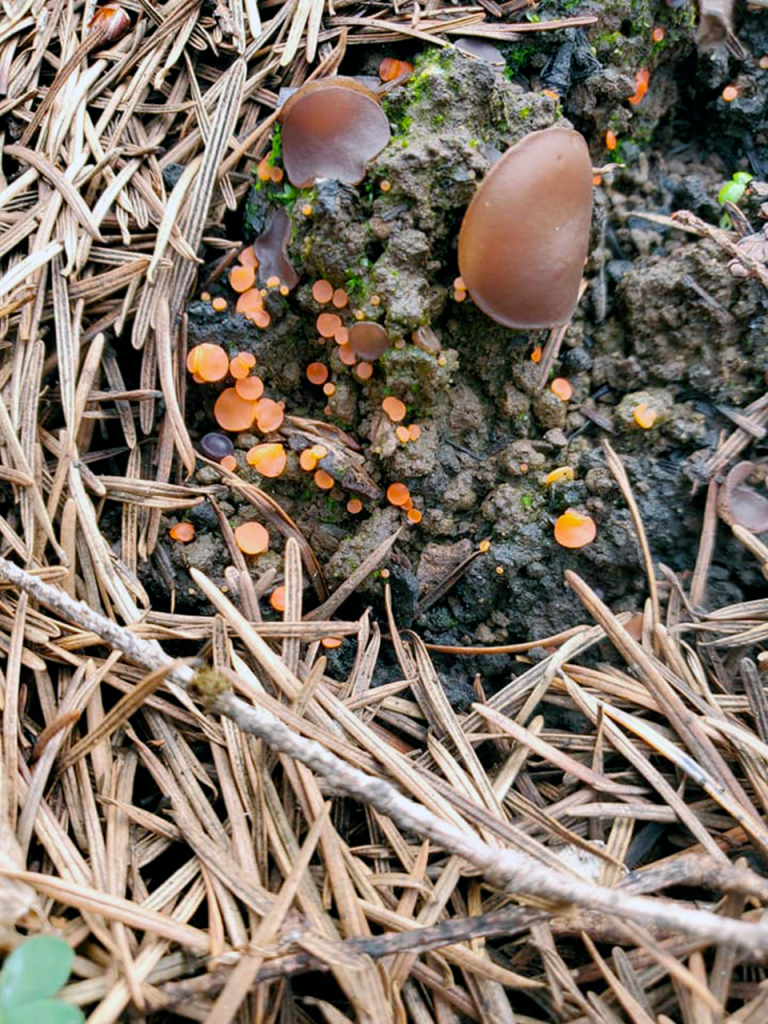
Now, mycologists are cultivating fungi species found in areas ravaged by wildfires. Sydney Glassman, a microbial ecologist at the University of California, Riverside, had the plots she had planted during her PhD studies burned down by wildfires:
“So I ended up having the situation where I had sampling pre- and post- a mega fire. … And what we found was that certain fungi are really increased in abundance after a fire.”
Kunjal Bastola, These Charcoal-Eating Fungi Flourish After Fires. Uncovering Their Genetic Secrets Could Help Rebuild Burned Ecosystems
Some fungi species of interest
That’s how Glassman got interested in pyrophilous fungi. These fire-loving species not only survive but thrive in the challenging charred aftermath of mega-fire conflagrations, feeding from carbon-rich residue like charcoal, soot, and ash. They are among the first colonizers of areas that quickly regenerate their soil nutrients, thanks, in part, to their pioneering activity.
“We knew certain fungi were heat-resistant, that some could grow quickly in scars where competitors have been burned away, and that others could consume nutrients in charcoal. Now we know the genetics behind these incredible abilities.”
Jules Bernstein, How fire-loving fungi learned to eat charcoal
According to Erin Spear, a mycologist at the Smithsonian Tropical Research Institute, they regenerate the soil structure, allowing water to filter through once again, and preventing soil erosion and soil pollution spread during flash rains after wildfires. But, despite the known benefits of pyrophilous fungi, science knows little about their ability to proliferate after disasters, so Glassman co-authored a study that sequenced the genomes of 18 species of pyrophilous fungi, collected from seven wildfire locations across California.
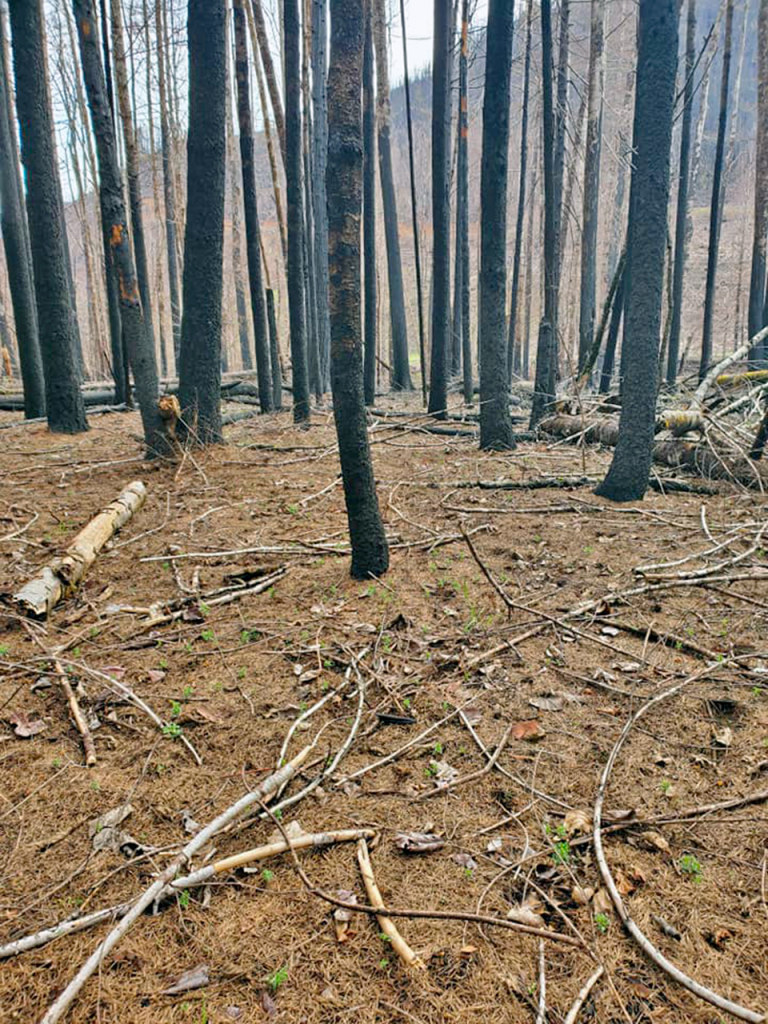
The study, published in January in the Proceedings of the National Academy of Sciences (PNAS), explains how these fungi go from undetectable presences in the soil to a sudden postfire dominance in charred areas.
What researchers found is less a single adaptation than an evolutionary toolkit from which we should learn: some species amplify the genes that can code the specialized enzymes capable of digesting charcoal, whereas others rely on genetic recombination to foster the most needed traits in any given environment. Finally, one species, Coniochaeta hoffmannii, has acquired genes from bacteria so they perceive the burned landscape as an opportunity for uncontested proliferation.
Thanks to these pioneer species, the blackened ground left by the wildfire is far from inert. It is quickly transformed into a carbon-rich substrate, one liberated (thanks to the pioneering labor of fire-loving fungi) from the compounds that most organisms can’t thrive in.
The value opportunity of knowing more about fungi
Fire-loving fungi aren’t new to science. As Anna Marija Helt wrote in a 2024 article for JSTOR Daily, early taxonomists were already describing their flourishing after fires:
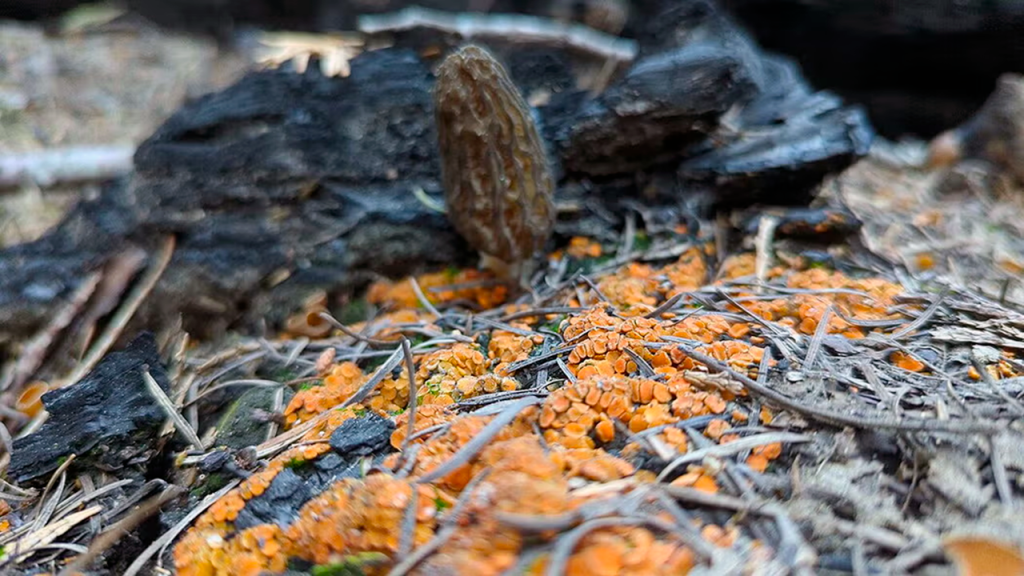
In 1834, German naturalist Carl Gustav Carus and his daughter Mariane were walking in a forest when she spotted a pile of burned wood and charred earth that looked aglow. Closer inspection revealed it to be masses of bright orange “peculiar mold vegetation,” as Carus later described it; he named it Pyronema marianum, reflecting its association with fire and honoring his child. He published microscopic studies of Pyronema marianum that year, writing “the effect was as if a mass of coal, no longer smoking, was glowing, poorly concealed, out of the black earth.” And so, appropriately, a fungus resembling embers kicked off the science of “pyrophilous,” or fire-loving, fungi.
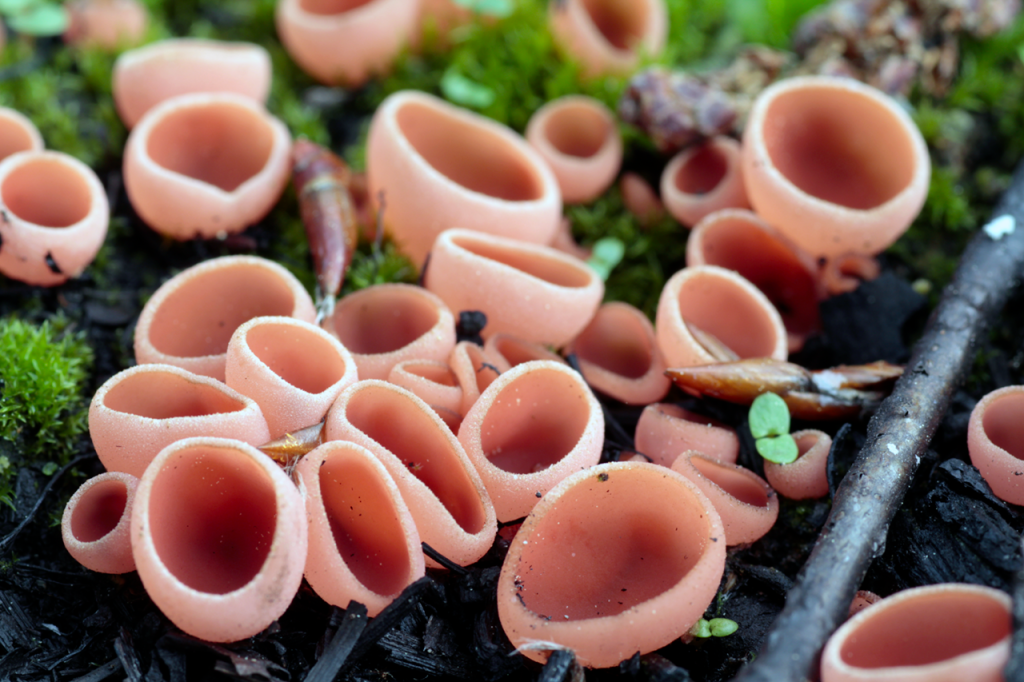
Now called Pyronema omphalodes, this fascinating fungus and its cousin Pyronema domesticum rapidly cover charred ground with masses of tiny, brightly hued fruiting bodies that are to fungi what pears are to trees—sex organs. Technically not mushrooms, which have a cap and stalk, the fruiting bodies are blob- to cup-shaped, while the fungus itself lives hidden underground.
Anna Marija Helt, The Vital Near-Magic of Fire-Eating Fungi
If specialized fungi are crucial in restarting the ecological metabolism of charred landscapes after traumatic blasts, why is there so little scientific literature and understanding regarding such processes?
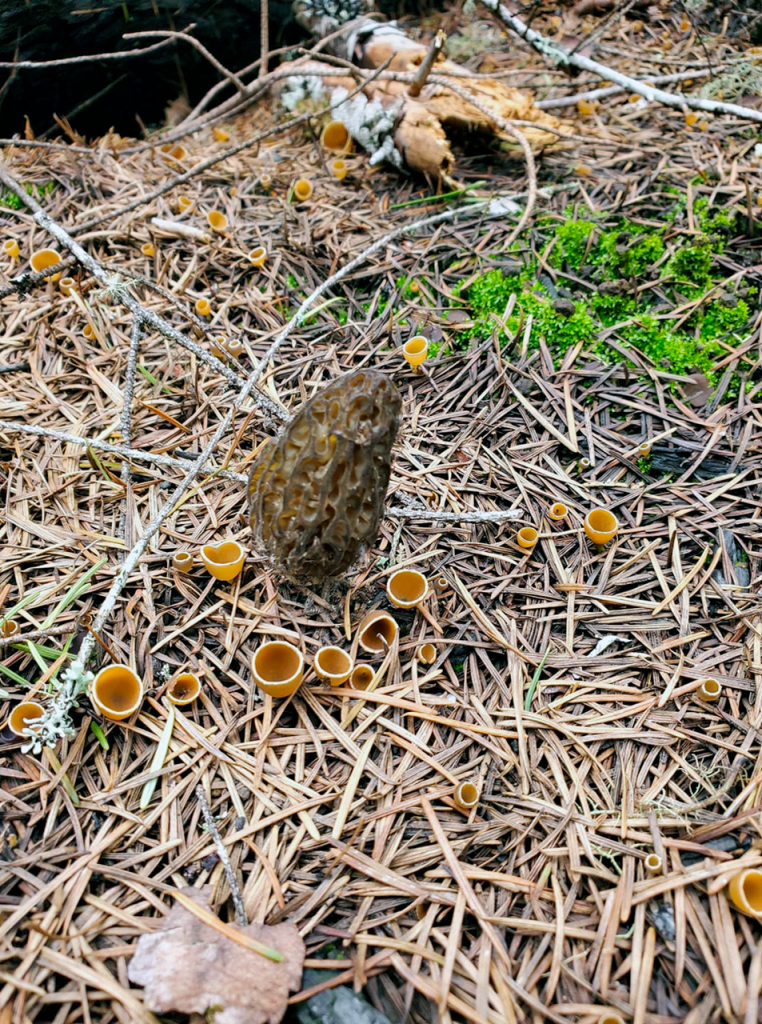
The implications may extend well beyond forests. Because charcoal resembles the composition of industrial pollutants, the same fungi could prove useful in the remediation of urban wildfires, oil spills, mining waste, and other contaminated landscapes.
In their book The Future Is Fungi, Michael Lim and Yun Shu look at the future of fungi as our knowledge regarding this kingdom expands. The potential applications in food, medicine, remediation, and frontier science are promising. Perhaps AI, for all the noise surrounding it, could even help accelerate those discoveries.
And, while we’re on the subject: during the next few hours, you’ll probably keep hearing about AI, and perhaps even use AI, long before our machines began to imitate intelligence, fungi had been mastering distributed problem-solving for millions of years, literally helping terraform the earth’s land. They help forests, soils, and crops, and remain an open encyclopedia for medicine discovery.
The living kingdom, overlooked as marginal, turns out to be one of the great infrastructures of life.