On the “dissonance of circadian rhythms,” the unique vision of a color-blind painter who sees beyond color, and why beauty is a collaborative act of deep time.
One thing about living in California as a European is the time difference with your family.
When you’re about to start the day and talk to your relatives living a reality nine hours ahead, a dissonance between each other’s circadian rhythms develops: you are starting your day, full of energy, and on the other side of the conversation, they are winding down. And vice versa.
So, when I recently celebrated my birthday with a weekend day of what I see as normality, though with the twist of waking up a little later than normal, I experienced this phenomenon once again. At the other end of the line, they are trying to sound cheerful and celebratory, though you can sense that it’s been a long day for them already. Knowing this, I try to be aware of the other person’s reality, and a 9-hour time difference with Spain is worth noting.
A working-day distance
It’s not much different from my sister’s, who is married to an Englishman and living in Oxford; eight hours still makes a long workday. So when I talked to my sister and brother-in-law, I could tell we found a common ground and tried to keep things simple in the conversation.
They made an effort to show interest in keeping the chat going, even though I heard the characteristic sound signal used by Apple’s Time to Bed feature that marks the start of what the phone calls “sleep focus.” In today’s etiquette, the soft, melodic notes that seem inspired by Brahms Lullaby are a polite way to tell people it’s time to go to bed.
That said, in twenty minutes we had time to catch up a bit and talk about our latest visit to England last winter, as well as opportunities to see each other in the future. And so, my brother-in-law, a teacher, shared that he was back at painting: he’s been producing work as a visual artist on and off for years, and he thought that perhaps there wasn’t time anymore for it, but on our last visit, he confessed that he needed to express himself through painting.
Though I don’t remember his exact words, he explained the need to reconnect with something that’s much more than a hobby. To some, the flow state they attain when working on something that they feel is part of their purpose is as necessary as the air we breathe. And, unlike trying to rememorate things and moments with a quick gesture to grab our phone from our pocket and snap a picture or video of something we consider memorable, artists choose more profound ways to interact with what they are trying to depict.
How to capture the enchantment of the world
Now, that’s the challenge (and supreme impossibility) of the old-school artist: how to grasp a memorable part of the elusive reality and make it resonate in a format (a canvas) that’s bidimensional and reductionistic (or, in the age of AI generative visual engines like Stable Difussion, synthetic).
Yet, when we look at a painting, we can be moved by the action or “expanded time” of what we see, which may feel much more than just an instant or photo snap. I guess it feels less of a challenge to capture the progression of time in other ways of expression, like a song made out of repetitive patterns; think Philip Glass or Steve Reich.
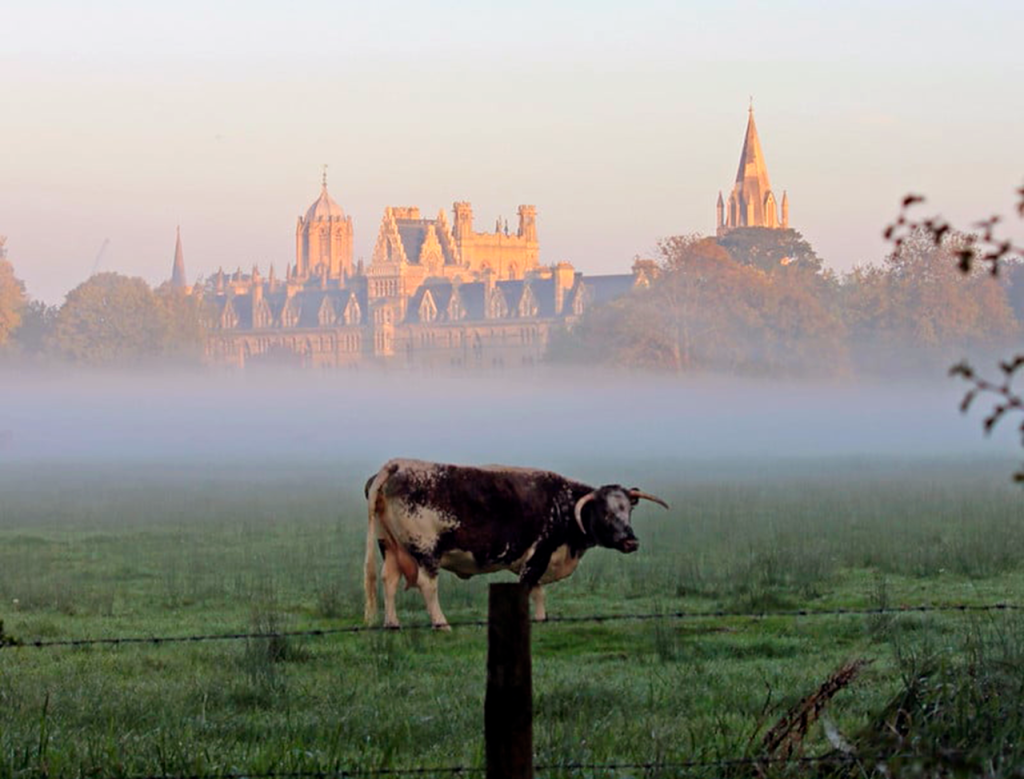
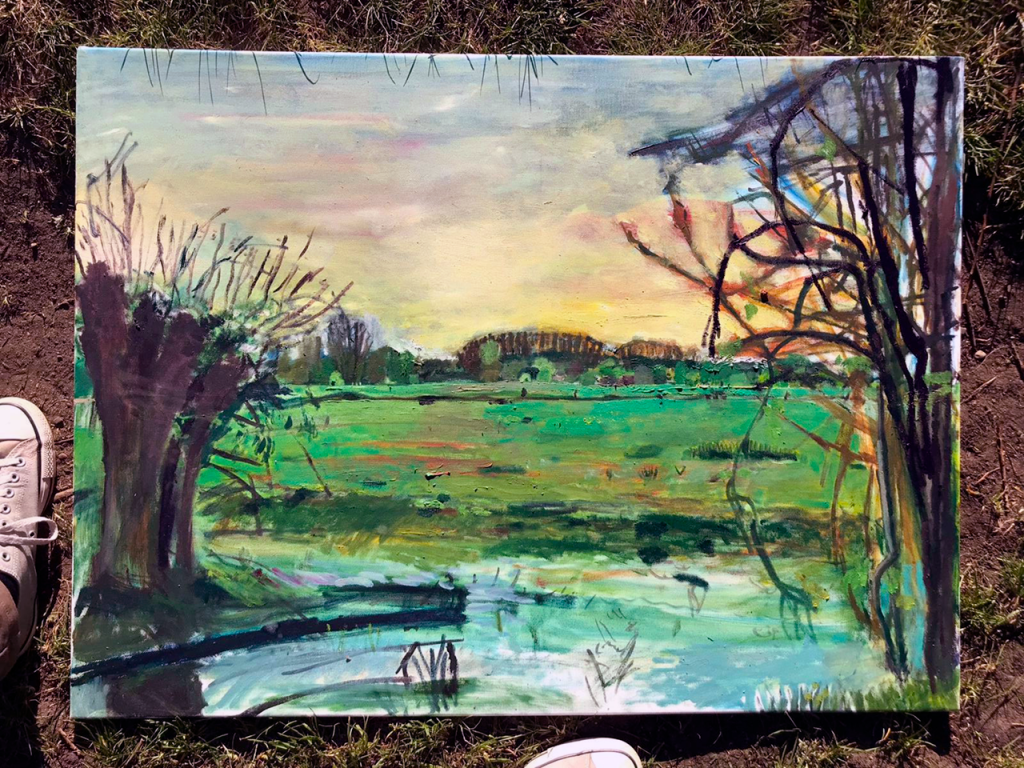
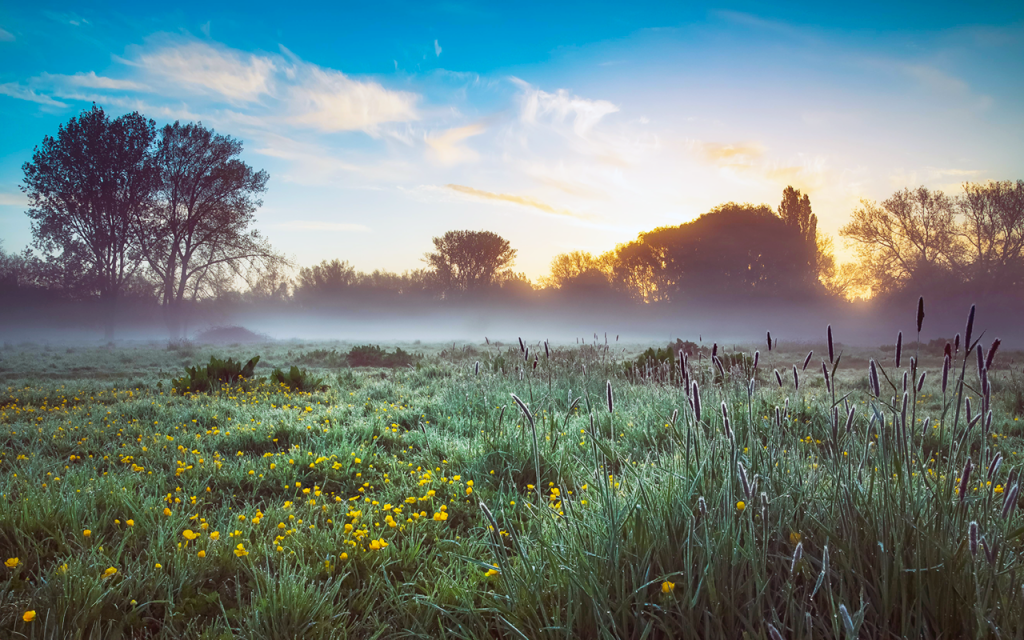
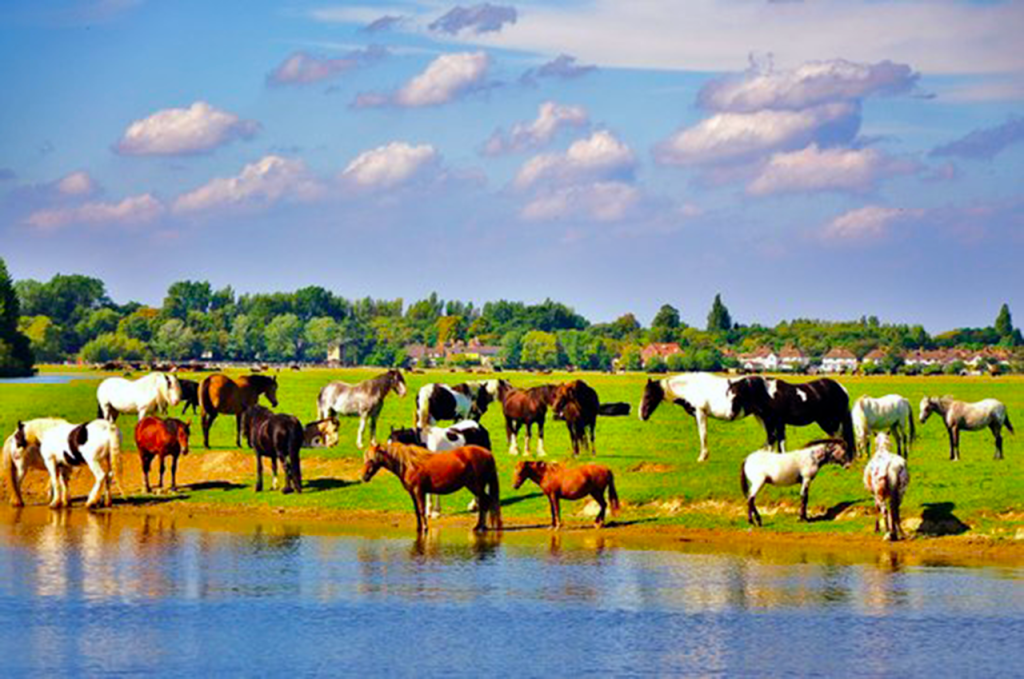
Born and raised in Oxford, he explained that there’s a pleasant place along the River Thames to walk. Over the years, he had been drawn to it, so a couple of months ago, he decided to make it happen at a time of year when soft light and mist make it very special. It’s a particular corner of Port Meadow, an old protected pasture, managed and favored by the public for long walks, and a connection to the Thames Path (linking one of the river’s sources at Kemble in Gloucestershire to the outskirts of London).
He chose to set the regard from close to Walton Well Road car park, looking west. And so, by looking at a painting-in-progress by a relative, I think about the prospect of taking that walk from Gloucestershire to the sea. Perhaps one day.
I asked how the painting was going, and he reminded me of the painter and sculptor Alberto Giacometti and his struggle to finish anything at all while working on a given piece of art. He told me that he’s going there after work many days a week, and he’s been going for quite a while, yet it’s hard to reach the moment when the artist says, “This is it, it’s finished.”
About the impossibility of “finishing” art
Some people never reach such a conclusion and need external catalysts forcing them to declare the process concluded, if only for the sake of moving on and starting over. He shared a picture of the work in progress, and I very much liked it, even though I decided not to mention things I didn’t know or hint that it looked “finished enough” to me.
I didn’t ask either how he gets all the nuances I already see in the unfinished canvas, like the wonderful, fleeting sense of light that I always admire during early morning outings in winter in the places we’ve visited and lived over the years in Europe and North America. And yes, meadows are quite a special sight for me, especially when in the place where they seem to belong, Britain.
I would describe my brother-in-law’s style as modern yet still figurative: you can “interpret” it right away; he’s not abstract or close to it. I guess you would call it impressionistic, prioritizing the “sensation” of the landscape in him rather than the need expressed by many (often talented) hyper-realistic artists trying to depict the visual rigors of reality (like, say, Spanish painter Antonio López).
In a painting that tries to “see” reality but not depict it in photorealistic detail, the goal is to capture how does it feel to really “see” a place, to go beyond the veil of blandness that wraps everyday life to the point of making us forget on our way to our daily routines that there’s beauty in everything around us, not only in the natural and architectural landmarks, but in our experience interacting with what David Deutsch called “the fabric of reality.”
Color palette when you see color differently
Now, in the case of my brother-in-law, an amateur painter that you don’t know and it’s not celebrated (yet) by many people but us relatives and many friends, the impressionistic effort manifests in a brushwork that is energetic and gestural, particularly in the foregroud water and the skeletal “winter” trees framing the view closer to our point of view, but not as abstract as many celebrated authors.
The color palette is coherent and rich, with the sophisticated tonal relationships of a true painter: lush and saturated greens, so typical of rainy England (a type of green that pops in my Mediterranean perception, even though, growing up, I visited Galicia in Northwestern “lush-green” Spain every year).
Yet the green of the Thames floodplain is its own kind of green. Instead of a saturated blue of particular days and places that tend to be more to the south in winter, the sky is, up to now, a pale, lemon-yellow wash that suggests one of the two moments of the day that, like French writer Romain Gary reminded us, express an innocence, a possibility, a “promise.”
“With maternal love, life makes a promise at dawn that it can never hold. You are forced to eat cold food until your days end. After that, each time a woman holds you in her arms and against her chest, these are merely condolences. You always come back to yell at your mother’s grave like an abandoned dog. Never again, never again, never again.”
Romain Gary, Promise at Dawn (La promesse de l’aube, 1960)
As for the shawos and the water, there’s an effective use of deep blues and teals, rather than a muddy, darker, more “realistic” water in winter.
Though in this case, the author is not in it for celebration, but because he needs it. Compromise with one’s own life purposes doesn’t end with the obligations of adulthood or the milestones of mature life, as we picture ourselves approaching middle life. It’s worth remembering that we celebrate many late bloomers in all disciplines, and painting isn’t an exception: Paul Gauguin was a stockbroker and a “family man” before he walked away from his life in his mid-30s, once he realized he had enough to live and, more importantly, that he not only wanted to paint full-time, but also that he could sell his paintings.
“Seeing” with your eyes vs. trusting your instincts
Mary Delany was also a late bloomer; she began her painfully detailed “paper-mosaics” of flowers and other natural motifs at 72, producing 1,000 pieces now in the British Museum; talk about an amateur hobby. And Anna Mary Robertson Moses, simply known as Grandma Moses, began painting in earnest at… 78, and just because her arthritis made another passion, embroidery, too difficult; and, like my brother-in-law, she had a style more focused on rhythmic patterns of the human-managed “rural” landscape than the ephemeral veracity of a still picture.
Interestingly, I didn’t ask my brother-in-law about one important biographical detail that literally conditions the way he looks into the world at any given time: like roughly 8% of males and 0.5% of females, he was born with color blindness, a defficiency also known as daltonism (after John Dalton, developer of the modern atomic theory, who had red-green dichromacy, which caused significant difficulty distinguishing reds and greens.
Now, if my brother-in-law suffers the same type of dichromacy, how is he able to give his work-in-progress so much texture and nuance, including subtle brushes of reddish color across several layers of different greens?
I mention this because, in looking at this painting, I recalled something I read about Claude Monet’s style in his later works, which feel even more contemporary than the rest of his work, given the visually-altered depiction of color they show, as the artist developed severe cataracts and, to him, the world turned blurred and tilted towards heavy reds and yellow. Perhaps this limitation forced Monet to “see more” by being forced to go beyond simple, lazy, “normie” perception:
“I see less and less… I trust my eyes less and less.”
Claude Monet
Perhaps my brother-in-law is in the same process of trusting an enhanced perception that doesn’t rely only on what his eyes ought to be interpreting, but on experience. Instead of missing color, he’s reinterpreting it his way. One can feel that, instead of relying on “hue” (a matter-of-fact reliance on the pure color family, which consists of red, yellow, blue, etc.), he prioritizes “value,” or the nuances of luminosity when light hits objects of different colors at different wavelengths and intensities.
The landscapes with which we feel connected
I think this is a very effective way of seeing the “pastoral,” dreamy English landscape that a meadow represents. If you’ve ever walked through one of them in early morning or later in the afternoon on a misty yet clear day, you can’t help but admire how much such a place resonates in us. A meadow lacks the saturated distractions and condensed beauty of a well-tended garden: it’s monochromatic and invites us to focus on the purity of the pulse, light, and form, almost like the repetitive distillation of Philip Glass’s or Steve Reich’s musical styles. The very idea of the English garden, with its unkempt, irregular scenes over the geometric formality of Italian or French gardens, is an in-between inspired by the country’s misty and grassy meadows, surrounded by trees.
As a creature of the Mare Nostrum myself, I feel like I’m at home sometimes in California, especially when I look at a series of rolling hills still green in spring, spotted with majestic oaks here and there, and the occasional home or little vineyard here and there.
It’s a type of landscape already present in places like the Mediterranean basin during the Roman period and even earlier; now, we observe its idealized remnants scattered here and there, with corners of Tuscany or Provence shared once again. We even own a house in Penedès, an hour southwest of Barcelona, a valley with many things in common with other wine-producing regions around the world, including Napa and Sonoma, not far from where we live.
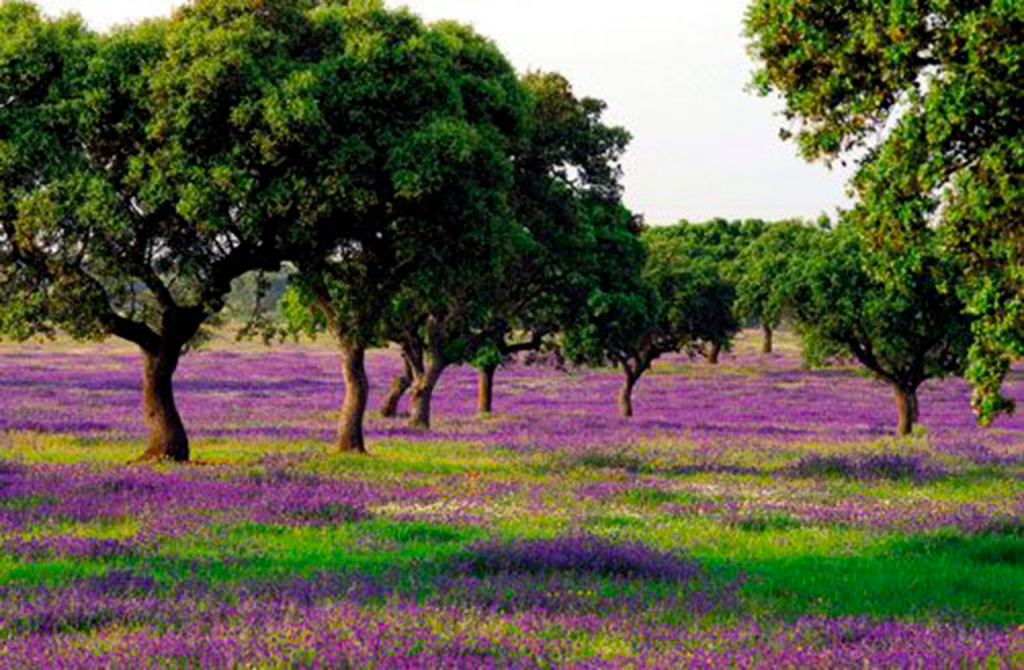
When we visit such places, we see rolling hills and well-tended agrarian lots amid tree-covered hedges and the occasional human habitation. In places like Southern France, one also sees the olive groves and the lavender fields, and I came to cherish many places in Catalonia not far from where I grew up. Walking or biking through such places offers a sense of promise and an understanding of the human role in nature, as we perceive these highly managed landscapes as a gentle interaction between rurality and urbanism.
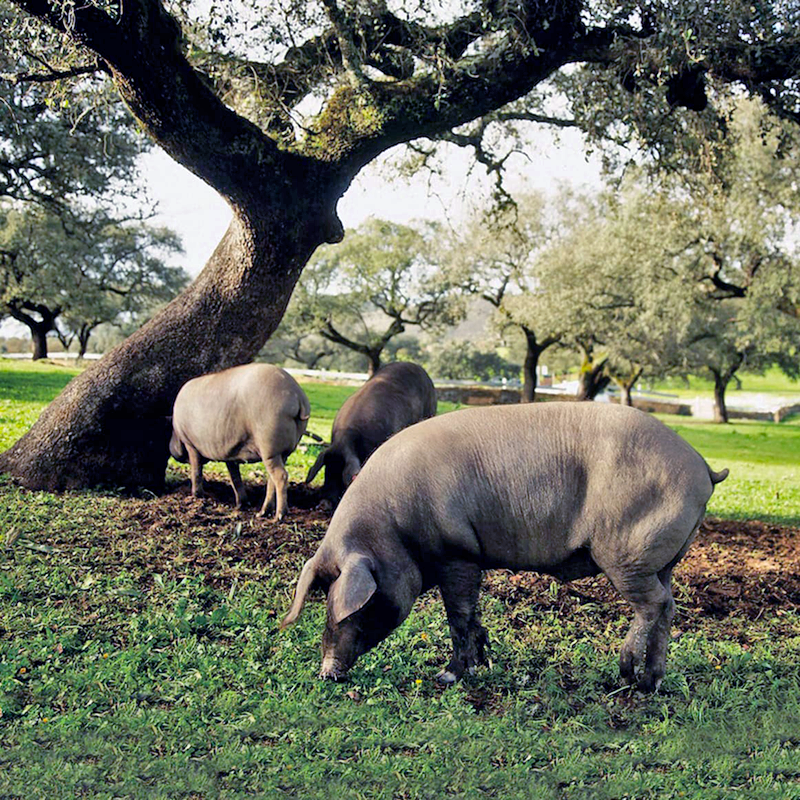
In some parts of the world, pastoral management can make sense economically, like the never-ending fields of holly oaks in the interior of the Iberian peninsula, a sustainably managed landscape of spare woodlands used for grazing, where bulls and Iberian pigs can be seen near the road walking from natural ponds to the forests where they feed amid tall grass and the occasional rocky landmark.
View of Port Meadow from Oxford, looking west
I remember seeing these big stretches of idealized land—with healthy animals grazing freely by the side of the road amid the morning mist—as a kid from the back seat of my parents’ car when we drove across the Iberian central highlands, “Meseta,” each early summer. The landscapes we’ve seen, lived in in, and cherish are also part of who we are and what we want to achieve as stewards of the places we choose to live as adults.
And, sometimes, this sense of establishing deeper connections with well-tended landscapes that show a coexistence between human habitation and natural regeneration feels like an extension of our longing for creating something, for making an impact, either by building or managing in the strict sense (a dehesa, a homestead), or by creating. Or said by Romain Gary:
“My longing for perfection, my dream of dealing with life as if it were ink and paper, and with destiny as if it were literature, made me attack with impatient hands a shapeless lump of clay which no human determination can ever mold, but which has itself the frightening power insidiously to shape a human being according to its will. The harder you try to leave your mark upon it, the better it succeeds in imposing on you a form of its own, tragic, grotesque, insignificant or comic, until at last you find yourself lying on the ocean edge, in a solitude broken by the barking of a seal and the cries of gulls, surrounded by thousands of motionless sea birds reflected in the mirror of wet sand. Instead of juggling to the best of my ability with three, four, or five balls, as all artists have done, I was trying to live something which can only be sung. I have wandered in pursuit of something for which art had given me a thirst but which life could not quench. I have long since ceased to be the dupe of my poetical inspiration and, if I still dream of transforming the world into a happy garden, I know now that it is not so much because I love my fellow men as because I love gardens.”
Romain Gary, Promise at Dawn, 1961 (chapter 23, p.269)
A painting in the works can open a whole stream of thought regarding what anonymous human stewardships over countless generations can do for our collective and individual well-being.
Thinking about the big expanse of common land dating back to early medieval times, also a floodplain of the River Thames, I realized that much of what we call rural or “natural” landscapes is properly managed, long-term cultural artifacts.
What landscapes tell us
In the Mediterranean, a drier landscape than the one that favors the green meadow surrounded by towering deciduous trees, as in England, old olive trees are almost a perfect symbol of this. Research shows that the spread and success of this tree across the Mediterranean basin for almost four millennia wouldn’t have been possible without active human planning. In other words, studies show that trade, cultivation, and pruning “made” the Mediterranean landscape, and not climate and the mere random interaction of different species within ecosystems.
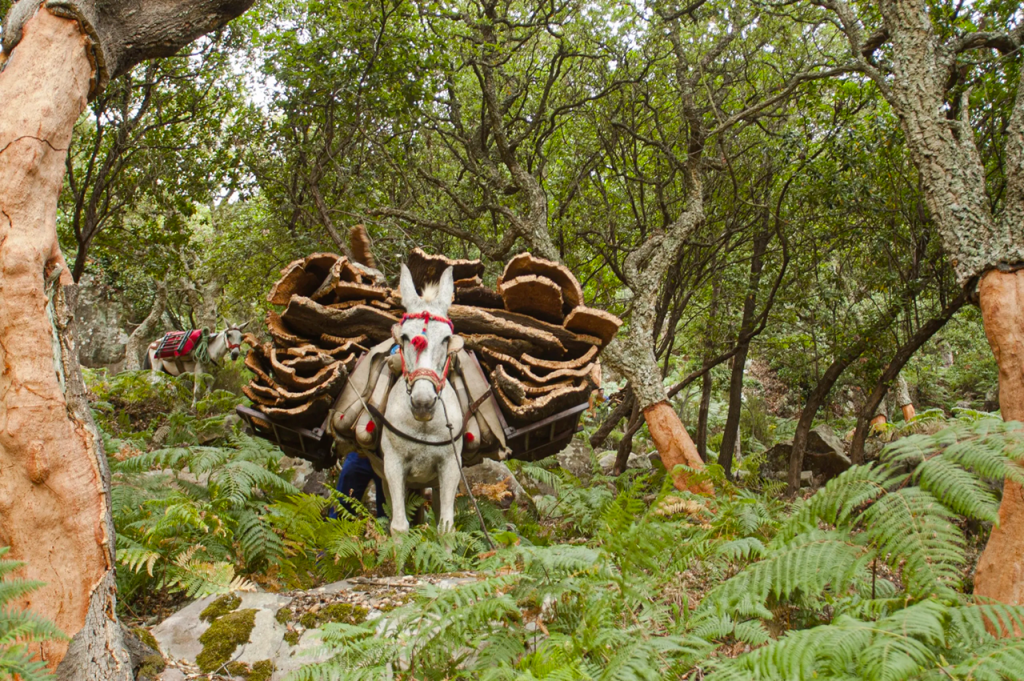
When we see old olive trees, which we sometimes come to idealize as sage trees in the Mediterranean landscape, we think about their resilience. Instead, studies show that we should be aware that groves of very old olive trees are a testimony of human stewardship.
How many people know that olive trees live only for a hundred years on their own before decaying? If left uncared for, they grow into bushy shrubs. If you’ve ever seen a very old olive tree, it’s because it has been continuously pruned and cared for, sometimes by 20 generations of humans or more. If that isn’t “deep time,” I don’t know what the expression means.
Perhaps, depicting a meadow is an act of recognition and celebration of human stewardship of what we call “the commons,” a reminder in our times of hyper-individuality that voluntary collaboration among peers over generations brings stability, prosperity, and beauty. Beauty is important in this world, especially as synthetic intelligence begins to deliver its promise: when we see beauty in a “rural” landscape, we don’t think of humans caring for it, but what attracts us to it is our deep understanding of long-term work and collaboration. I’m not sure machines will ever be capable of painting a meadow to celebrate it. Of truly “seeing” its beauty. It’s not processing it. It’s feeling it.
The commons and art
Perhaps, human stewardship is ultimately the biggest and most subversive act of Art. Stewardship is an art we can enjoy sensorially, but also something that makes sense for ecosystems and feels nice for plants, animals, and us.
When I’ve seen a meadow in the misty morning, I’ve felt something similar to what I feel when looking at a big-format picture by Brazilian photographer Sebastião Salgado, which is the sense of any “promise at dawn,” of a worried but optimistic new beginning of the day, like the one described by Romain Gary in his autobiographical book.
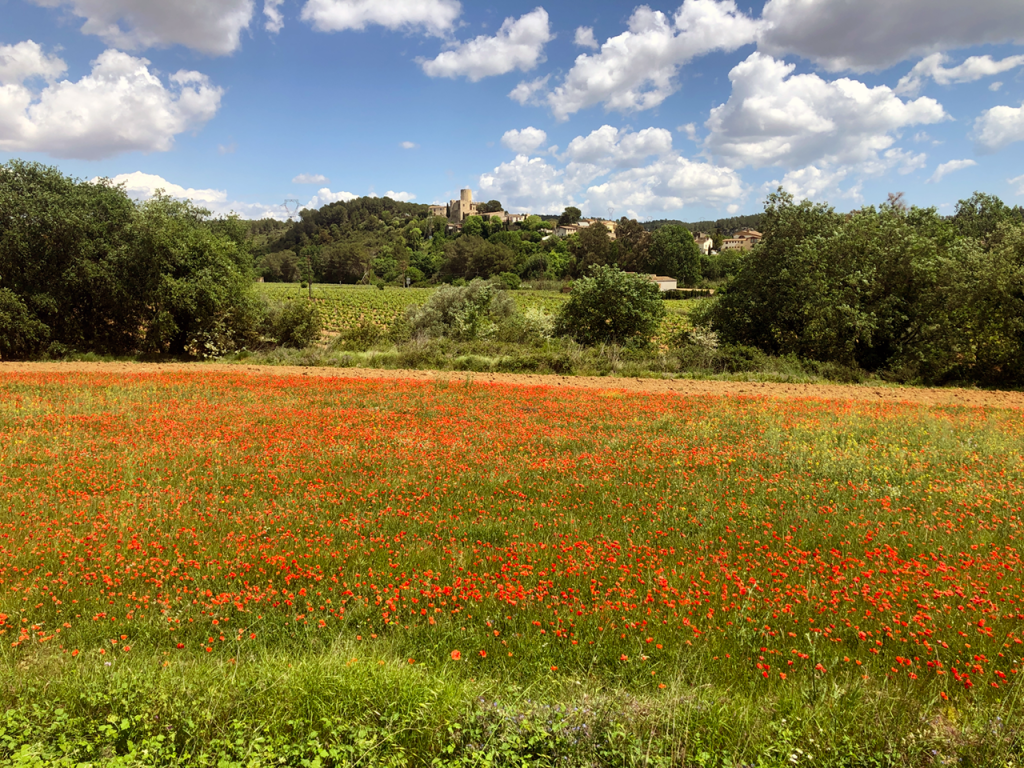
We love meadows because they feel like the breath of the earth, the savannah from where our species set forth in its adventure across the world. They are the result of centuries of collaboration among different people and interspecies collaboration; they are the outcome of centuries of grazing, mowing, and mindful management. It’s a testimony at dawn that whispers to us in the ear, “We cared, and you should, too, because if you care, then your children, and the children of your children, will care, too.”
Without us, the meadow would eventually surrender to the forest, because it thrives when it’s appreciated and celebrated. It is a landscape held in a permanent state of “becoming” by the collective will of generations.
What are the landscapes you cherish and care about?